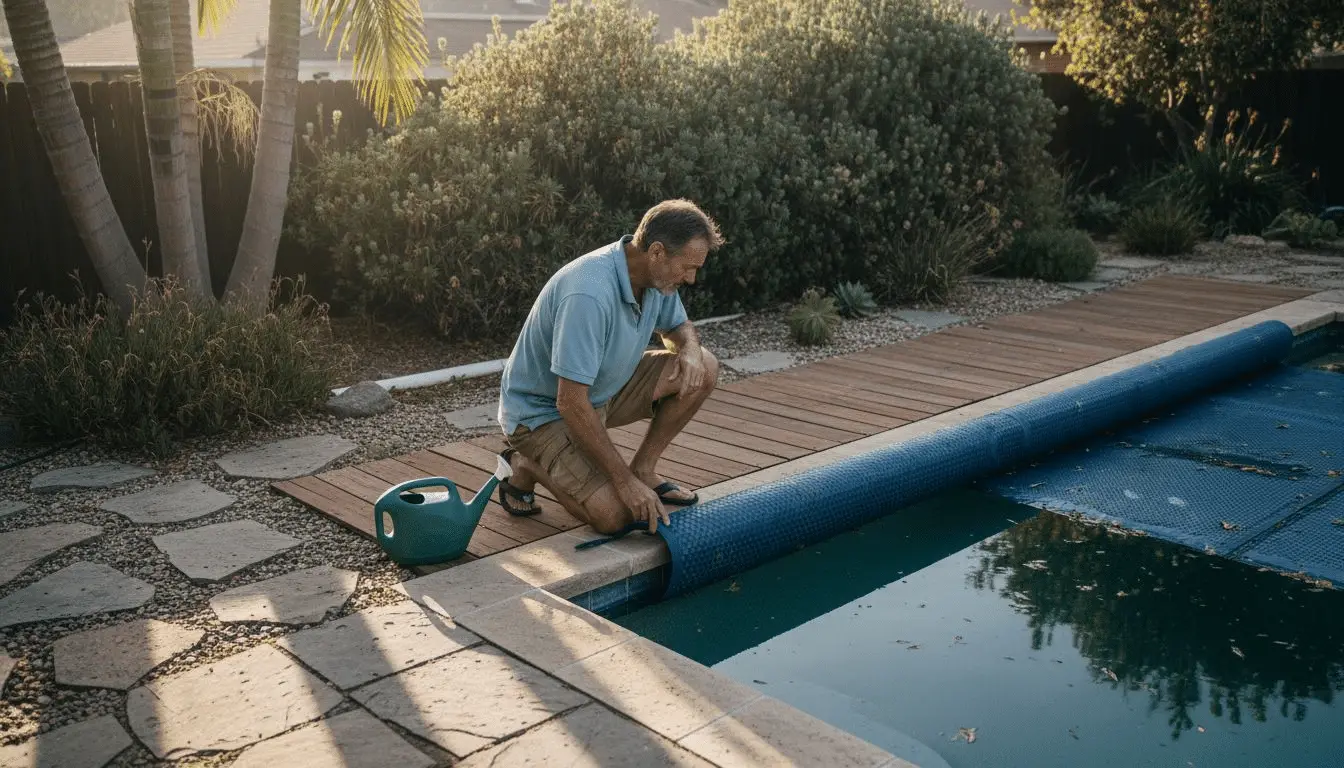
Choosing sustainable pool renovation options in Florida means more than just keeping up with trends. Homeowners in Orlando and Jacksonville are realizing that every decision, from material selection to equipment upgrades, affects both their local environment and their wallets. With Florida’s water resources under increasing pressure, meeting present needs without compromising future generations’ ability to meet theirs is key. This guide shows how practical upgrades can deliver lasting beauty, durability, and reduced environmental impact for your backyard oasis.
Table of Contents
- Defining Sustainability In Pool Renovation
- Eco-Friendly Pool Surface Materials Explained
- Energy-Efficient Upgrades For Pools
- Water Conservation Solutions For Renovated Pools
- Cost, Risks, And Common Mistakes To Avoid
Key Takeaways
| Point | Details |
|---|---|
| Sustainability in Pool Renovation | Focus on upgrading materials and systems to enhance environmental responsibility while cutting long-term costs. |
| Eco-Friendly Materials | Choosing durable, non-toxic pool finishes can significantly reduce chemical use and improve water quality. |
| Energy Efficient Solutions | Implementing variable speed pumps and LED lighting can lower energy consumption by up to 90% and decrease utility bills. |
| Water Conservation Techniques | Installing covers and automated systems can drastically reduce water loss and maintenance costs over time. |
Defining Sustainability in Pool Renovation
Sustainability in pool renovation means making choices today that preserve water resources, reduce energy consumption, and minimize environmental damage without sacrificing the quality or longevity of your pool. At its core, sustainability operates on a simple principle: meeting present needs without compromising future generations’ ability to meet theirs. For your pool specifically, this translates into renovation decisions that balance three critical areas: environmental responsibility (protecting Florida’s water systems), social equity (ensuring quality upgrades are accessible), and economic sense (choosing durable materials that won’t require replacement in five years).
When you’re thinking about renovating your pool in Orlando or Jacksonville, sustainability isn’t just about feeling good about the environment. It’s about making practical choices that directly affect your wallet and your property’s value. A pool resurfaced with high-quality, durable finishes requires fewer replacements over time, cutting down on waste and repeated renovation costs. Similarly, updating circulation systems and choosing energy-efficient equipment reduces your monthly utility bills while reducing greenhouse gas emissions and water usage. The connection is direct: every gallon of water saved is a gallon that stays in Florida’s aquifer; every kilowatt of energy eliminated is pollution prevented at the source.
What makes sustainability in pool renovation unique for Florida homeowners is the regional context. Our state faces genuine water pressure from population growth, agricultural demands, and rising sea levels. When you opt for sustainable renovation practices, like installing advanced pool monitoring systems that detect leaks early or choosing resurfacing materials that require less frequent chemical treatment, you’re not just improving your property. You’re contributing to a broader shift toward responsible resource management across Central Florida. Many homeowners don’t realize that proper pool remodeling using quality materials can dramatically reduce environmental impact compared to neglecting pool maintenance and allowing deterioration that requires more intensive future renovation.
Pro tip: Ask your renovation contractor specifically about material durability ratings and energy efficiency improvements before selecting your resurfacing project, as these two factors have the greatest impact on both your environmental footprint and long-term financial savings.
Eco-Friendly Pool Surface Materials Explained
When you’re planning a pool renovation in Florida, the surface material you choose matters far more than most homeowners realize. It’s not just about aesthetics. The material directly impacts water chemistry, chemical usage, durability, and your pool’s overall environmental footprint. Eco-friendly pool surface materials are finishes designed to minimize toxic chemical leaching, resist algae growth naturally, last longer than conventional alternatives, and reduce the need for harsh treatments. These materials include recycled aggregate finishes, low-VOC coatings, non-toxic sealants, and naturally durable stone-based composites that outperform basic plaster in both performance and sustainability.
The market has evolved significantly. Traditional pool plaster requires constant chemical balancing, bleeds lime into the water, and typically lasts 7 to 10 years before needing replacement. Modern eco-conscious alternatives like recycled glass finishes, pebble-based surfaces, and aggregate blends not only last 15 to 20 years but also create a natural barrier that reduces algae development without excessive chlorine. Non-toxic coatings and recycled aggregates actively improve water quality by eliminating harmful chemical runoff and reducing the overall chemical load your pool requires. For Orlando and Jacksonville homeowners, this matters because Florida’s groundwater is precious and every pool impacts the broader water system. When you select a material that requires less chemical treatment, you’re directly reducing what seeps into the aquifer.
What’s particularly compelling is how these materials score within sustainability rating frameworks that evaluate projects on environmental impact, materials sourcing, and lifecycle longevity. Products like Pebble Tec or similar aggregate finishes earn higher marks because they use recycled content, have extended lifespans, and reduce toxic chemical dependencies. You can also request materials with low-VOC sealants, which protect indoor air quality if you have an indoor or covered pool area. The durability advantage cannot be overstated: replacing your pool surface every decade creates significant waste, consumes resources, and costs money repeatedly. A surface that lasts 20 years instead of 10 cuts your renovation waste in half over a 40-year period.
Here’s how popular eco-friendly pool surface materials compare:
| Material Type | Typical Lifespan | Chemical Reduction Impact | Sustainability Notes |
|---|---|---|---|
| Recycled glass finish | 15-20 years | Reduces chlorine by 30% | Made from post-consumer glass |
| Pebble/aggregate | 15-20 years | Inhibits algae, less acid use | Natural minerals, low maintenance |
| Low-VOC coatings | 10-15 years | Minimizes toxic leaching | Improves indoor air quality |
| Stone-based composite | 15-25 years | Fewer harsh treatments needed | Sourced from durable stone materials |
Why Material Choice Matters for Florida Pools
Florida’s climate accelerates wear and salt exposure. Materials that resist degradation from UV, salt spray, and algae pressure are not luxuries but practical investments. Eco-friendly finishes handle these stressors better because they’re engineered specifically for durability rather than just initial cost savings.
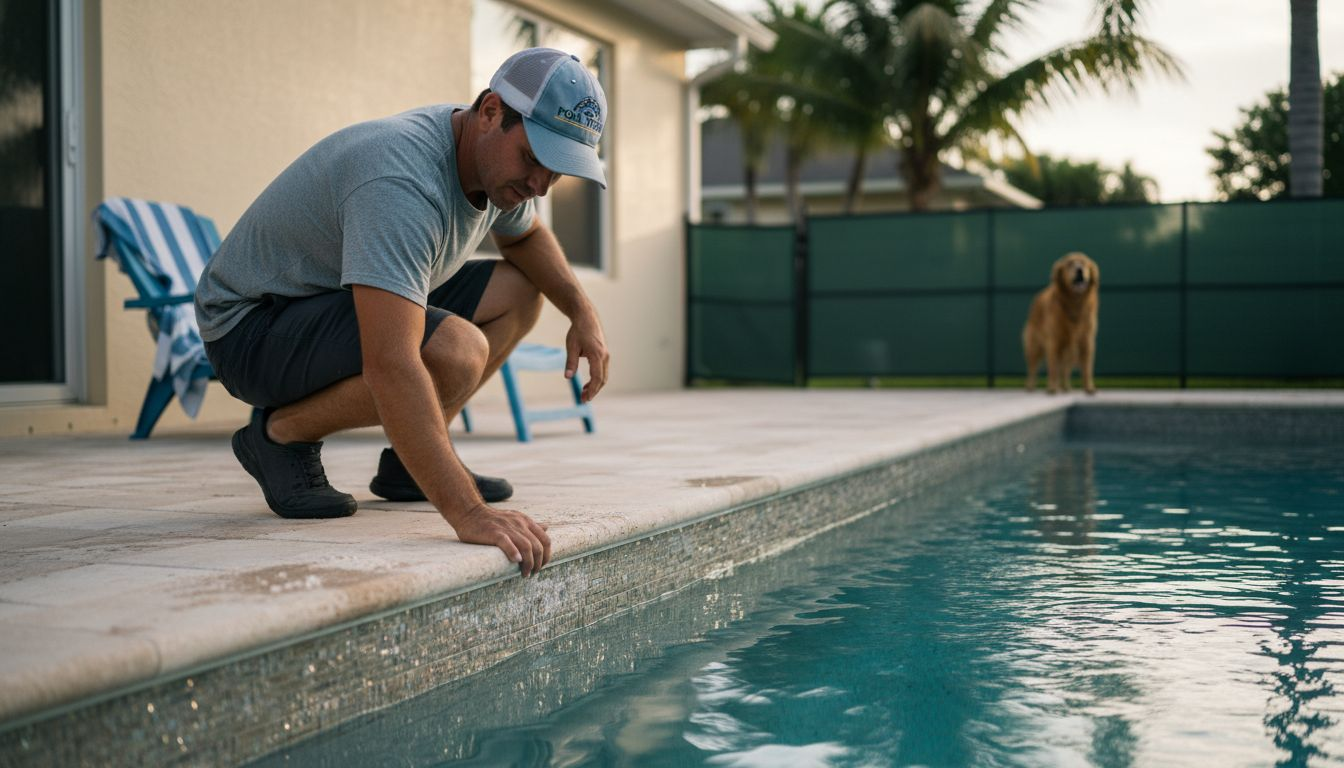
Pro tip: When comparing pool resurfacing options, ask your contractor for the material’s lifespan, recyclability at end-of-life, and what chemical treatment requirements it demands so you can calculate the true environmental and financial cost over 20 years, not just the upfront price.
Energy-Efficient Upgrades for Pools
Energy-efficient pool upgrades are among the fastest ways to reduce your pool’s environmental impact while cutting your monthly utility bills. Most Orlando and Jacksonville homeowners don’t realize that pool equipment, particularly pumps and heaters, consumes more electricity than almost any other backyard system. A traditional single-speed pump runs at constant power whether your pool needs circulation or not, wasting energy continuously. By upgrading to variable speed pumps, you can reduce energy consumption by 50 to 90 percent compared to older models. These pumps automatically adjust their speed based on actual circulation demand, meaning you’re never paying to run equipment at full power when your pool doesn’t need it. The upfront cost difference pays for itself in energy savings within 3 to 5 years.
Heating and lighting represent the second major energy drain. Energy-efficient technologies like solar heating, heat pumps, and LED lighting directly reduce greenhouse gas emissions while maintaining comfortable water temperatures and illumination. Solar pool heaters work exceptionally well in Florida’s climate, extending your swim season without drawing grid electricity. Heat pump heaters operate more efficiently than gas heaters in warm climates because they transfer existing heat rather than generating new heat from fuel. LED pool lighting uses 80 percent less electricity than traditional incandescent or halogen bulbs and lasts 25 times longer, eliminating frequent replacements. When combined, these upgrades can reduce your pool’s energy consumption by 40 to 60 percent annually.
Smart control systems and automation complete the efficiency picture. Modern pool controllers monitor water temperature, chemistry, and pump runtime, optimizing equipment operation automatically. You can program schedules that reduce energy usage during peak rate hours and monitor everything from your phone. The International Swimming Pool and Spa Code promotes variable speed pumps, high-efficiency heaters, and advanced lighting as standard efficiency measures, meaning these upgrades align with building code best practices across the industry. For Florida pools, which operate year-round or nearly so, the cumulative savings compound significantly. A pool running 8 to 12 hours daily with efficient equipment versus older equipment can save 3,000 to 5,000 kilowatt-hours annually, translating to $300 to $600 in yearly electricity costs depending on your utility rates.
Pro tip: Start with a variable speed pump replacement as your first upgrade since it delivers the biggest energy savings with the shortest payback period, then layer in solar heating or heat pump technology and LED lighting over time to spread costs while building a fully optimized system.
Compare long-term financial benefits of upgrades:
| Upgrade Type | Payback Period | Annual Savings Potential | Key Long-Term Benefit |
|---|---|---|---|
| Variable speed pump | 3-5 years | $200-$400 | 50-90% lower electricity |
| Solar heating system | 5-7 years | $200-$300 | Reduces grid energy use |
| Cartridge filter | 2-4 years | $40-$80 (water savings) | Major reduction in backwash |
| LED lighting | 1-3 years | $30-$50 | Lasts 25x longer than bulbs |
Water Conservation Solutions for Renovated Pools
Water scarcity is real in Florida. Between population growth, agricultural demands, and climate pressures, every gallon saved matters. Water conservation solutions for renovated pools go far beyond simply using less water; they involve strategic upgrades that prevent waste, recycle water efficiently, and maintain pool health with minimal environmental impact. When you renovate your pool, you have the opportunity to install technologies that would be expensive or impossible to add to an existing, aging system. This is your moment to build water efficiency into the foundation of your pool’s operation.
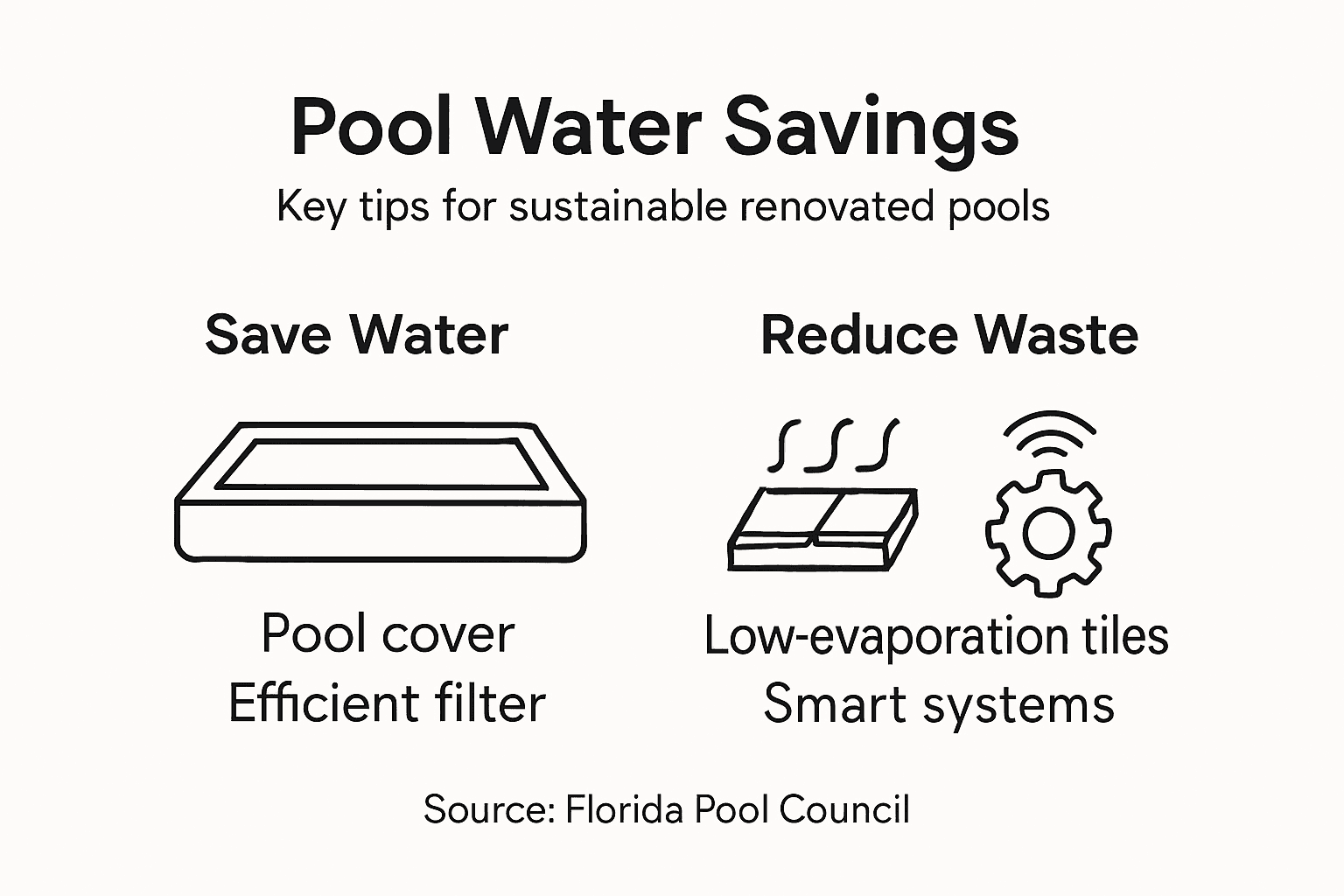
The simplest yet most effective conservation measure is a pool cover, which prevents 90 percent of water loss through evaporation. In Florida’s heat, an uncovered pool loses 1,000 to 2,000 gallons per month to evaporation alone. A quality cover pays for itself in water savings within a single season. Beyond covers, modern renovated pools can integrate rainwater harvesting systems and automated water level controls that capture free rainwater and maintain optimal levels without manual topping off. These systems redirect gutters and downspouts to a collection tank, allowing you to reduce municipal water usage by 30 to 50 percent depending on rainfall patterns. Automated controls detect water loss from evaporation or minor leaks and top the pool only when necessary, preventing the waste of intentional overfilling. During a Florida summer, these technologies can save 20,000 to 40,000 gallons annually per household.
Advanced filtration and backwash systems represent the second conservation frontier. Traditional pool filters require backwashing every 7 to 10 days, which dumps thousands of gallons of clean water down the drain. Modern cartridge filters and variable speed pump systems reduce backwashing frequency by 60 to 80 percent. Some renovated pools now use regenerative media filters that can operate for months before requiring substantial water discharge. Additionally, water-use efficiency measures including sustainable freshwater management align with global water conservation goals and reduce your pool’s strain on local aquifers. When combined with regular leak detection during your renovation assessment, these upgrades ensure that every drop fills your pool intentionally, not accidentally.
The economics reinforce the sustainability argument. A pool consuming 50,000 gallons annually at an average rate of $3 to $5 per 1,000 gallons costs $150 to $250 yearly just for water. Conservation upgrades that reduce consumption by 40 percent save $60 to $100 annually while preserving Florida’s precious water supply for future generations and other users.
Pro tip: When planning your pool renovation, prioritize adding a motorized cover system and upgrading to a cartridge filter as your water conservation foundation; these two changes alone reduce water consumption more than any other single investments and require minimal ongoing maintenance.
Cost, Risks, and Common Mistakes to Avoid
Sustainable pool renovation costs more upfront than cutting corners, but many homeowners underestimate how much their shortcuts will cost later. The biggest financial mistake is treating sustainability as optional rather than foundational. You might see a quote for basic plaster resurfacing at $3,000 to $5,000 and think upgrading to durable aggregate finishes at $6,000 to $8,000 is wasteful spending. Here’s the reality: that basic plaster fails in 7 to 10 years, requiring another $4,000 to $6,000 renovation. The premium finish lasts 15 to 20 years. Over 40 years, you either renovate four times or twice. The sustainable choice costs less in total dollars, not more. What trips up homeowners is seeing only the first price tag.
A second critical mistake is neglecting code compliance and material compatibility during planning. When you choose incompatible materials or skip proper assessment, you create cascading problems. Using low-quality sealants with high-end finishes causes premature deterioration. Installing efficient pumps with outdated plumbing creates pressure issues that damage equipment. Compliance with safety, energy, and environmental standards prevents costly mistakes by ensuring that every component works together properly. Florida’s building codes exist for good reason. A renovation that cuts corners on code compliance might cost $2,000 less today but requires $15,000 in repairs in three years when equipment fails or water chemistry becomes unmanageable. Getting permits, having inspections, and using qualified contractors costs time upfront but eliminates these catastrophic risks.
The third major pitfall is ignoring long-term operational costs when making material and equipment selections. Poor assessment of long-term operational costs and failure to integrate sustainability in design inflate expenses dramatically over time. You might save $2,000 by choosing a standard single-speed pump instead of a variable speed model, but that pump costs $1,200 yearly in excess electricity versus $300 yearly for the efficient model. Over a pump’s 10-year lifespan, the cheap choice costs $12,000 while the efficient choice costs $3,000 total. The efficient model pays for the upfront savings difference plus $6,000 more. Many Orlando and Jacksonville homeowners make these calculations backwards, focusing only on installation price rather than total cost of ownership.
Hidden Risks to Budget For
- Structural discoveries: Renovation often reveals problems like plumbing leaks or deck instability that require addressing before resurfacing
- Material delivery delays: Specialty finishes sometimes require 4 to 8 week lead times that impact project schedules
- Permit complications: Older pools sometimes require upgrades to meet current code, adding $2,000 to $5,000 to timelines
- Equipment incompatibility: Aging filtration systems may not support modern efficient pumps without upgrades
Pro tip: Request a detailed 20-year cost analysis from your contractor that includes material longevity, maintenance requirements, energy consumption, and water usage rather than comparing quotes based on installation price alone.
Elevate Your Pool Renovation with Sustainable Expertise
Sustainability in pool renovation means choosing materials and upgrades that protect Florida’s precious water and reduce energy consumption while enhancing your pool’s durability and beauty. If you want to avoid common pitfalls like costly frequent repairs or inefficient equipment, it is essential to partner with a company experienced in eco-friendly pool solutions that last. Classic Marcite has resurfaced over 100,000 pools since 1988, specializing in durable finishes like Pebble Tec® that reduce chemical use and withstand Florida’s harsh climate. Their knowledgeable team also offers energy-efficient equipment upgrades and water-saving technologies to protect your investment and the environment.

Don’t settle for short-term fixes that increase waste and bills over time. Discover how a sustainable pool renovation can enhance your home’s value while conserving vital resources. Visit Classic Marcite to learn about their comprehensive pool resurfacing services and expert remodeling solutions designed specifically for Florida homeowners. Request your free estimate today to start saving water and energy with a renovation built to last.
Frequently Asked Questions
What are the sustainable benefits of pool renovation?
Sustainable pool renovation reduces water and energy consumption, minimizes environmental impact, and lowers long-term operational costs through durable materials and efficient systems.
How do eco-friendly pool surface materials contribute to sustainability?
Eco-friendly pool surface materials limit toxic chemical leaching, resist algae growth, and last longer than conventional options, thereby reducing chemical usage and maintenance needs.
What energy-efficient upgrades can I make to my pool?
Upgrades such as variable speed pumps, solar heating systems, and LED lighting can significantly reduce energy consumption, making your pool more sustainable and cost-effective over time.
How can I conserve water during pool renovation?
Implementing measures like pool covers, rainwater harvesting systems, and advanced filtration can effectively conserve water, significantly reducing evaporation and unnecessary water use.
Recommended
- Why Renovate Your Pool: Boost Beauty And Value
- Pool Renovation Process: Transforming Florida Pools
- Pool Resurfacing Updates 2025: Florida Homeowner Impact
- Remodeling Older Pools For Lasting Beauty And Durability
- Why Recyclable Swimwear Matters for Families – Le Club Original
- Pool Refinishing Windermere FL
- Pool Renovation Winter Park FL
- Swimming Pool Remodeling The Villages FL
