TL;DR:
- Pool waterproofing is essential to prevent water migration, steel reinforcement corrosion, and structural damage. Regular inspection, proper maintenance, and choosing the right waterproofing method based on the pool type extend its lifespan and reduce costly repairs. Visual signs like loose tiles or damp ground indicate potential membrane failure, requiring prompt professional assessment.
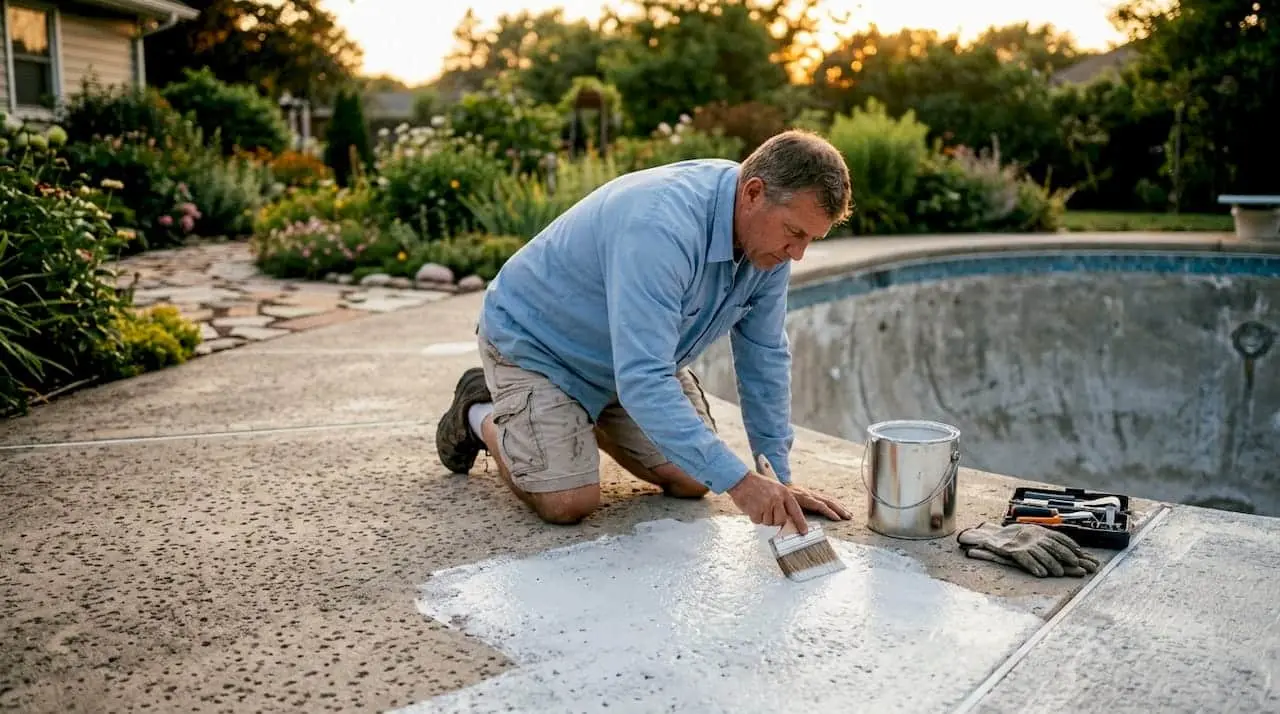
Pool waterproofing is defined as the process of applying a protective membrane or barrier to a pool’s shell to prevent water from escaping into surrounding soil and structural components. The importance of pool waterproofing goes far beyond aesthetics. Concrete is porous by nature, and without a proper membrane, water migrates through the shell, corrodes steel reinforcement, and erodes the ground beneath your pool. TCNA P602 guidelines require cementitious or specialized waterproof membranes beneath finishes for exactly this reason. Classicmarcite has resurfaced over 100,000 pools across Florida since 1988, and the pattern is consistent: pools without proper waterproofing age faster and cost far more to repair.
Why is waterproofing critical to preventing pool leaks and structural damage?
Concrete pools develop micro-cracks from curing stress and ground movement over time. Those cracks are invisible at first, but they allow water to reach the steel reinforcement inside the shell. Once water contacts rebar, corrosion begins, and the expanding rust pushes outward, cracking the concrete further from the inside.
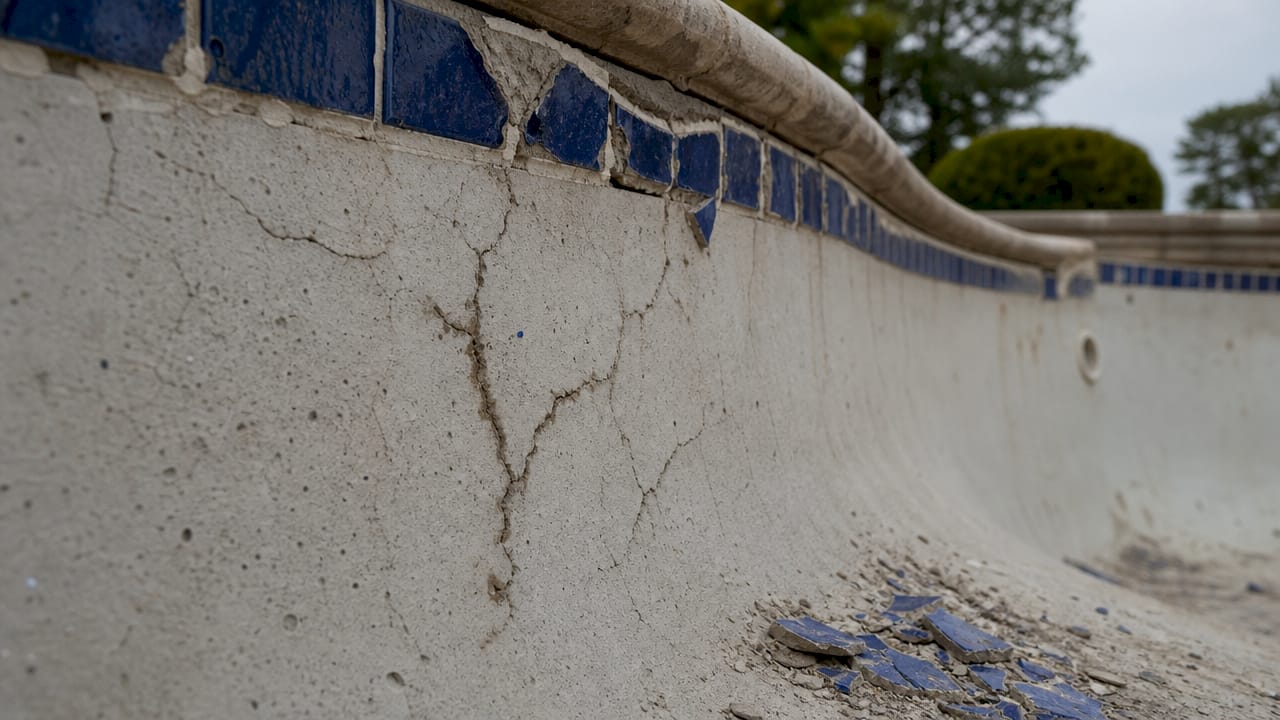
The consequences compound quickly. Water seeping through the shell loosens tile adhesive, causing detachment. It saturates the surrounding soil, which then shifts and settles unevenly beneath the pool. Left unchecked, that soil erosion undermines the pool’s structural footing entirely.
The most dangerous aspect of membrane failure is its invisibility. Visible symptoms like loose tiles or damp ground typically appear only after months or years of hidden damage. By the time you notice a problem, the repair bill is already much larger than it would have been with preventive waterproofing.
Pro Tip: Inspect the soil and decking around your pool every spring. Soft spots, cracks in the deck surface, or unexplained wet patches near the pool edge are early indicators of water migration beneath the shell.
The financial case for prevention is clear. Preventive maintenance is 10 times more cost-effective than repairing major structural damage after the fact. That ratio alone makes waterproofing one of the highest-return investments a pool owner can make.
Key structural risks from inadequate waterproofing include:
- Tile detachment caused by water undermining adhesive bonds
- Steel reinforcement corrosion leading to internal concrete fracturing
- Soil erosion beneath the pool shell causing uneven settling
- Efflorescence (white mineral deposits) appearing on pool walls
- Escalating repair costs as damage compounds over time
What are the main waterproofing methods and materials for pools?
The right waterproofing system depends on your pool’s construction type, age, and finish. Concrete and gunite pools each have specific requirements, and the membrane must be applied beneath the finish layer to function correctly.
| Method | Material | Durability | Best For | Notes |
|---|---|---|---|---|
| Cementitious membrane | Portland cement-based coating | 10–15 years | Concrete and gunite pools | Bonds well to masonry; requires proper surface prep |
| Crystalline waterproofing | Penetrating chemical treatment | 15–20 years | New concrete construction | Reacts with concrete to block water paths permanently |
| Sheet membrane | PVC or polyurethane liner | 10–20 years | Pools with complex shapes | Requires professional installation; seams are critical |
| Liquid-applied membrane | Polyurethane or acrylic coating | 8–12 years | Repair and renovation projects | Fast application; flexible over minor cracks |
| Epoxy coating | Two-part epoxy system | 5–10 years | Older pools needing a refresh | Good chemical resistance; less flexible than other options |
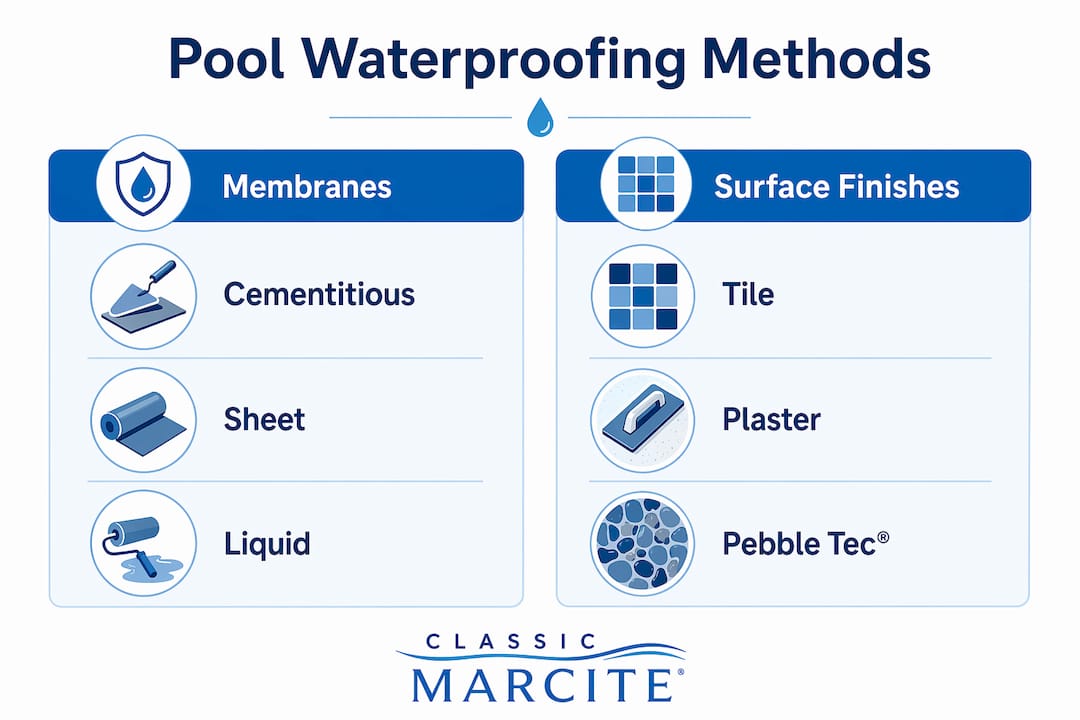
Cementitious membranes are the most widely used option for residential concrete pools. They bond directly to the shell surface and provide a stable base for plaster or tile finishes. Crystalline waterproofing goes a step further by chemically reacting with the concrete itself, filling micro-pores permanently rather than just coating the surface.
Sheet membranes made from PVC or polyurethane offer flexibility and are well-suited to pools with irregular shapes or significant surface movement. The seams between sheets are the most vulnerable point, so professional installation is non-negotiable. Liquid-applied membranes work well for renovation projects where the existing surface is sound but needs reinforcement.
Surface finishes like plaster, Pebble Tec®, or tile do not serve as waterproofing layers. They protect the membrane and provide the visual finish, but they cannot stop water migration on their own. Understanding that distinction is the foundation of sound pool construction waterproofing decisions.
How to maintain your pool’s waterproofing system for longevity
Waterproofing is not a one-time installation. The membrane’s lifespan depends directly on how well you manage water chemistry, equipment seals, and routine inspections.
Water chemistry is the most overlooked factor in membrane longevity. Maintaining pH between 7.4 and 7.6 prevents acidic water from etching plaster and degrading the waterproof barrier beneath it. Water that runs too acidic attacks the membrane surface slowly and consistently, shortening its effective life by years.
Equipment seals matter just as much as the membrane itself. Pool equipment typically lasts about 8 years, and O-rings and gaskets should be lubricated twice per season to prevent leaks at fittings, skimmers, and return lines. A failed O-ring at a return fitting can introduce water behind the shell wall, bypassing the membrane entirely.
Pro Tip: Use a silicone-based lubricant on O-rings and gaskets rather than petroleum-based products. Petroleum degrades rubber over time and accelerates seal failure.
A routine maintenance schedule for homeowners and property managers:
- Test water chemistry weekly. Keep pH at 7.4–7.6, alkalinity at 80–120 ppm, and calcium hardness at 200–400 ppm.
- Lubricate O-rings and gaskets twice per season. Focus on pump lids, filter housings, and return fittings.
- Inspect skimmer baskets and seals monthly. Cracks in skimmer bodies are a leading source of shell leaks.
- Schedule an annual professional inspection. A licensed pool technician checks seals, fittings, and surface integrity that homeowners cannot assess visually.
- Repair confirmed leaks within 2–4 weeks. Delayed repairs allow soil erosion to begin, which compounds structural risk significantly.
- Check the pool deck for cracks each season. Deck cracks near the coping can channel surface water behind the shell wall.
Annual professional inspections are the single most impactful maintenance step you can take. They catch membrane degradation, fitting failures, and surface cracks before visible symptoms appear.
What are the signs that your waterproofing system is failing?
Recognizing early warning signs gives you time to act before damage becomes structural. Most homeowners wait too long because the early signs are easy to dismiss.
Watch for these indicators of a compromised waterproof barrier:
- Loose or hollow-sounding tiles. Tap tiles with a coin. A hollow sound means water has undermined the adhesive bond beneath.
- Efflorescence on pool walls. White, chalky deposits indicate mineral-laden water is migrating through the shell.
- Damp or soft ground around the pool. Wet soil that does not dry after rain stops is a strong sign of subsurface water migration.
- Unexplained water loss. Losing more than a quarter inch of water per day exceeds normal evaporation rates.
- Staining or discoloration on the pool surface. Brown or rust-colored stains often indicate corroding rebar beneath the shell.
- Cracks in the pool shell or coping. Even hairline cracks allow water to bypass the membrane.
The bucket test is the standard DIY method to confirm a leak. Fill a bucket with pool water, mark the water level inside the bucket and on the pool wall, and check both after 24 hours with the pump off. If the pool loses more water than the bucket, you have a leak beyond normal evaporation. You can find detailed leak detection steps to guide you through the process.
Liquid pool sealers are not a solution for membrane or structural failures. Liquid sealants only address pinhole leaks in plumbing temporarily. They do not bond to concrete, cannot bridge cracks, and wash away with water flow. Using them on a structural problem delays proper repair and allows damage to worsen. When the bucket test confirms a leak, professional leak detection services are the correct next step.
For a clear picture of what surface damage looks like before it becomes structural, reviewing signs of pool surface damage helps you identify problems at the earliest possible stage.
Key Takeaways
Proper pool waterproofing is a structural necessity, not an optional upgrade, and preventive maintenance costs a fraction of what structural repairs demand.
| Point | Details |
|---|---|
| Waterproofing is structural | Concrete is porous; a membrane beneath the finish is required to prevent water migration and steel corrosion. |
| Prevention beats repair | Preventive maintenance is 10 times more cost-effective than repairing major leaks and structural damage. |
| Water chemistry protects membranes | Keeping pH at 7.4–7.6 prevents acidic water from degrading the waterproof barrier over time. |
| Early signs are subtle | Hollow tiles, efflorescence, and damp soil appear before visible structural failure. Act on them immediately. |
| Liquid sealers are not a fix | They address pinhole plumbing leaks only and are ineffective for shell cracks or membrane failures. |
What I’ve learned after watching pools age without proper waterproofing
The most common mistake I see is homeowners treating waterproofing as something that happens automatically during construction. They assume the plaster or tile finish is doing the protective work. It is not. The finish is the visible layer. The membrane beneath it is what actually keeps water inside the pool and out of the surrounding structure.
The second mistake is waiting for a visible problem before acting. By the time tiles are popping off or the ground around the pool feels soft, the membrane has been failing for a long time. The repair at that stage involves not just the membrane but often the tile, the plaster, and sometimes the structural shell itself. That is a very different budget conversation than a scheduled membrane inspection and recoating.
Waterproofing is also not permanent. Membranes degrade. Water chemistry that runs acidic for even one season accelerates that degradation measurably. The homeowners who get the longest life from their pools are the ones who treat water chemistry and seal maintenance as non-negotiable routine tasks, not occasional concerns.
The upfront cost of proper waterproofing during construction or renovation is real. So is the cost of ignoring it. In my experience, the pools that hold up best over 20 or 30 years are the ones where the owner understood from the start that the membrane is the foundation, and everything else sits on top of it.
— Results
Classicmarcite’s resurfacing services and your waterproofing investment
Resurfacing and waterproofing work together. A new surface finish applied over a compromised or aging membrane does not solve the underlying problem. Classicmarcite’s approach addresses both layers, pairing high-performance finishes like Pebble Tec® with the membrane integrity your pool needs for lasting protection.

Classic Marcite serves homeowners and property managers across Central Florida, including The Villages, Winter Park, and Maitland. With over 100,000 pools resurfaced since 1988, the team brings the kind of experience that catches problems early and applies the right solution the first time. If your pool is showing any of the warning signs covered here, a professional assessment is the right starting point. Request a free estimate for pool resurfacing in The Villages or explore pool resurfacing options in Winter Park to get a clear picture of what your pool needs.
FAQ
What does pool waterproofing actually do?
Pool waterproofing creates a protective membrane between the pool shell and its finish layer that stops water from migrating through porous concrete into the surrounding soil and structural components. Without it, water reaches steel reinforcement and causes corrosion, tile detachment, and eventual structural failure.
How often should pool waterproofing be inspected?
Annual professional inspections are the standard recommendation. A licensed technician checks seals, fittings, and surface integrity that visual checks from the pool deck cannot reveal.
Can I waterproof my pool myself?
DIY waterproofing products exist for minor surface repairs, but membrane application beneath finishes requires professional preparation and installation. Improper application creates gaps that allow water migration and void any material warranty.
What is the bucket test and when should I use it?
The bucket test is the standard DIY method to confirm a pool leak. Mark water levels in a filled bucket and on the pool wall, wait 24 hours with the pump off, and compare the loss. Greater loss in the pool than the bucket confirms a leak beyond normal evaporation.
Does resurfacing fix waterproofing problems?
Resurfacing alone does not fix a failing membrane. The membrane must be assessed and repaired before a new finish is applied. Classicmarcite evaluates membrane condition as part of its pool resurfacing process to make sure the new surface has a sound foundation beneath it.
