TL;DR:
- Proper identification of pool stains is essential before treatment to avoid permanent damage. Metal, organic, and calcium scale stains each require specific chemical approaches for effective removal. When stains persist despite correct treatment, professional resurfacing may be necessary to restore pool surfaces.
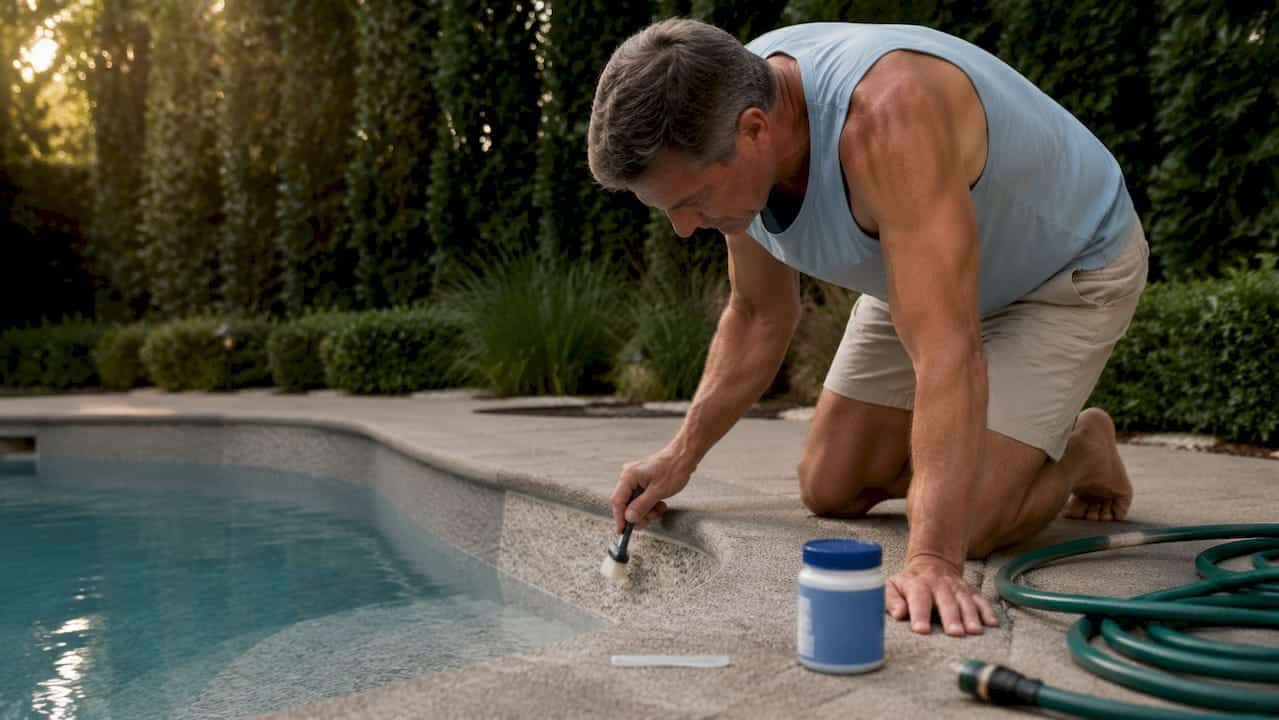
Pool stains are defined as discolorations on pool surfaces caused by metals, organic debris, or mineral deposits, and treating them incorrectly can make them permanent. This removing pool stains guide covers every stain type you will encounter, from rust-colored iron marks to green algae shadows, with exact chemical dosages and step-by-step procedures. The single most important rule in pool stain removal is this: identify the stain before you treat it. Wrong treatment wastes money and can lock stains into the surface for good. Proper water chemistry management is the foundation every effective treatment builds on.
What does a removing pool stains guide actually cover?
Pool stains fall into three categories: metal stains, organic stains, and calcium scale. Each category requires a completely different treatment approach. Applying the wrong chemical not only fails to remove the stain but can deepen it or spread it across the surface.
Metal stains
Metal stains come from iron, copper, and manganese dissolved in pool water. Iron produces reddish-brown or rust-colored marks. Copper causes blue-green or teal discoloration, often from corroding pool equipment or algaecides. Manganese leaves dark brown or black patches that look like mold.
Organic stains
Organic stains result from leaves, berries, algae, and other debris that decompose on pool surfaces. They typically appear green, brown, or yellowish and follow the shape of the debris that caused them. Algae stains can cover large areas and often feel slightly slippery to the touch.
Calcium scale
Calcium scale forms when water hardness and pH run too high. It appears as white, gray, or rough crusty deposits on the waterline or pool floor. Scale is not a stain in the chemical sense but is often mistaken for one.
Quick identification tests
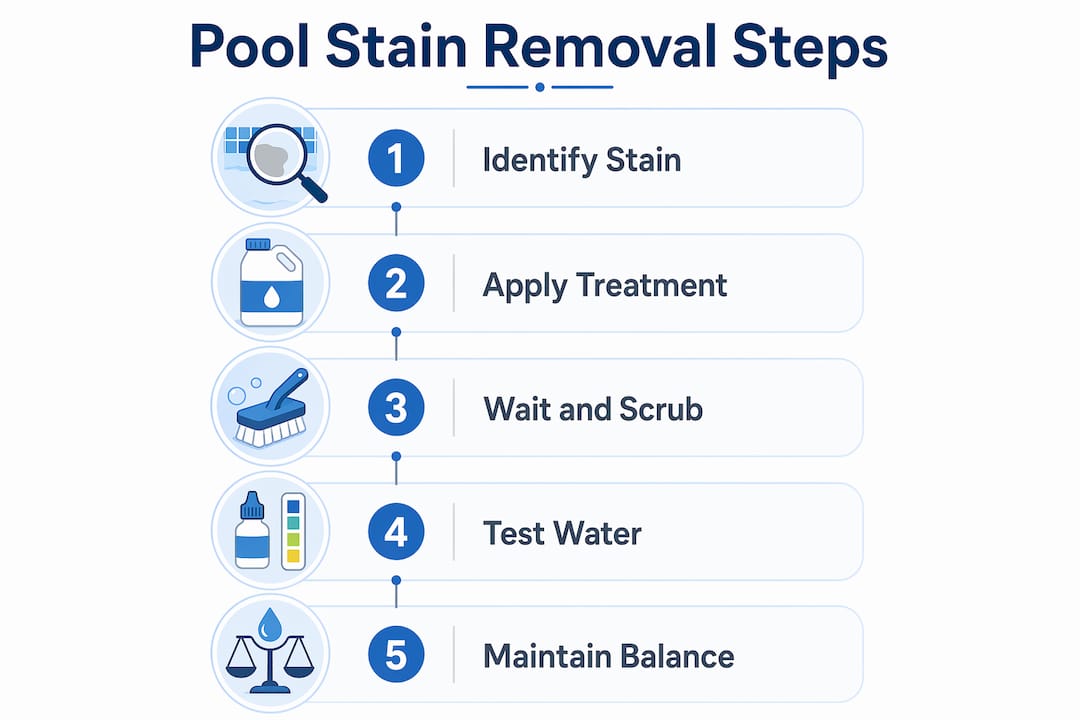
Stain identification is straightforward with two simple tests. Place a vitamin C tablet directly on the stain. If it lightens within a minute, you have a metal stain. If a chlorine tablet lightens it instead, the stain is organic. Scale deposits will fizz when you apply a few drops of muriatic acid.
| Stain type | Color | Vitamin C test | Chlorine test | Acid test |
|---|---|---|---|---|
| Metal (iron) | Red, brown, rust | Lightens | No change | No change |
| Metal (copper) | Blue, green, teal | Lightens | No change | No change |
| Organic | Green, brown, yellow | No change | Lightens | No change |
| Calcium scale | White, gray, crusty | No change | No change | Fizzes |
Pro Tip: Run the vitamin C test before you buy any chemicals. A $0.10 tablet saves you from buying the wrong product entirely.
How do you remove metal stains from pool surfaces?
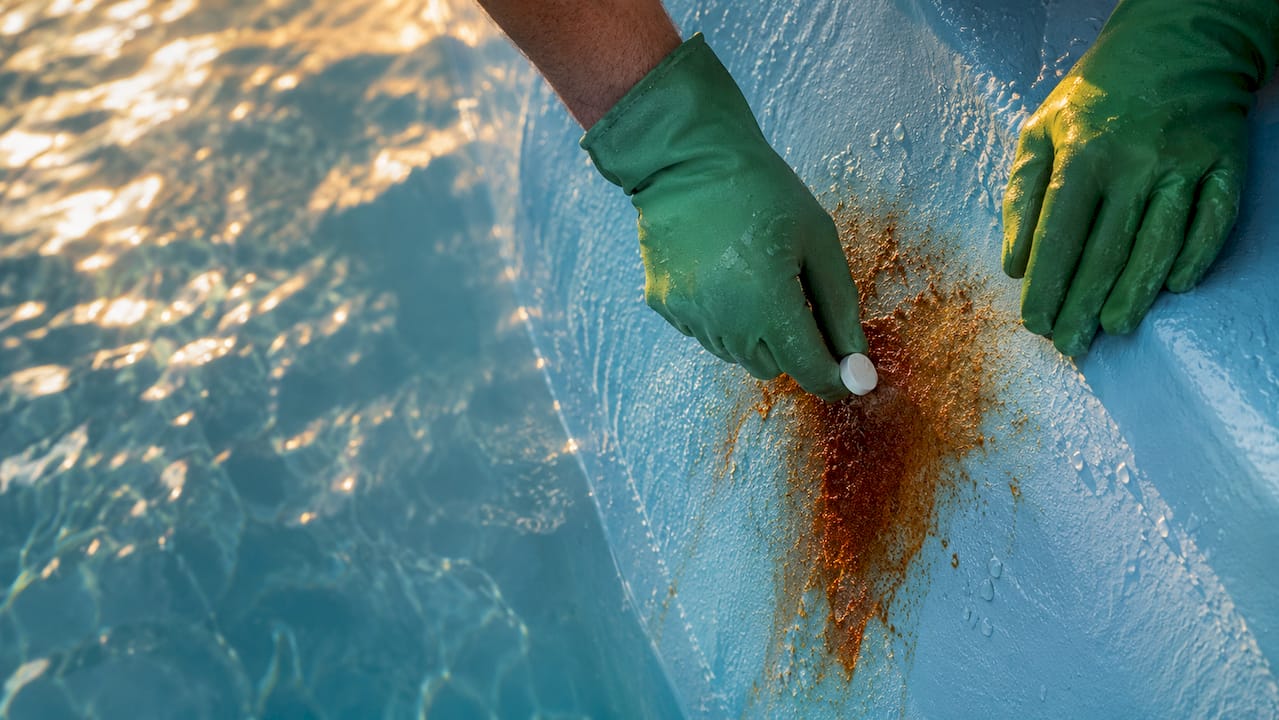
Metal stain removal follows a precise chemical sequence. Skipping any step causes the metals to re-deposit, often worse than before. Treating metal stains requires lowering chlorine to 0–1 ppm and reducing pH to 7.0–7.2 before you add any treatment chemical.
Step-by-step metal stain removal
- Test your water and confirm chlorine is at 0–1 ppm. Stop adding chlorine 24–48 hours before treatment if needed.
- Adjust pH to 7.0–7.2 using pH decreaser. Lower pH helps ascorbic acid work faster and more completely.
- Apply 1 lb of ascorbic acid per 10,000 gallons of pool water. Broadcast it evenly across the surface or apply it directly on heavy stain areas.
- Brush the stained areas immediately after application. Visible results appear within 15–30 minutes for most metal stains.
- Run the pump continuously for at least 30 minutes to circulate the treatment.
- Apply a metal sequestrant immediately after the stains clear. This step is non-negotiable.
- Restore chlorine gradually over 2–3 days. Do not shock the pool during this period.
Why sequestrants matter
Metal sequestrants bind dissolved metals and keep them suspended in water so the filter can remove them. Without sequestrant, the metals simply re-deposit on the surface, often darker than the original stain. Sequestrants do not remove metals from the water. They hold metals in suspension until filtration clears them out. Misunderstanding this leads pool owners to stop dosing too early and watch the stains return.
- Dose sequestrant every 1–2 weeks through the swimming season.
- Test for metals monthly using a metal test kit, not just a standard water test strip.
- Never shock the pool within 48 hours of ascorbic acid treatment.
- Stain removal chemicals for residential cases cost under $30 and deliver visible results fast.
Pro Tip: Add a maintenance dose of sequestrant every two weeks from may through september. This prevents metals from reaching staining concentration in the first place.
How do you remove organic stains using chlorine shock?
Organic stain removal relies on oxidation. Chlorine shock raises the free chlorine level high enough to break down the organic compounds embedded in the pool surface. The standard treatment uses calcium hypochlorite at 3 lbs per 10,000 gallons for severe stains.
Organic stain removal steps
- Test water chemistry and confirm pH is between 7.2 and 7.4 before shocking.
- Dissolve calcium hypochlorite in a bucket of water before adding it to the pool.
- Broadcast the shock solution evenly across the pool surface, focusing on stained areas.
- Brush all stained surfaces immediately after adding the shock.
- Run the filter continuously for 24–48 hours after treatment.
- Backwash or clean the filter after the treatment cycle completes.
For isolated stains, place a chlorine tablet directly on the spot and let it sit for several minutes before brushing. This spot treatment works well for small leaf stains or berry marks in corners.
Surface-specific cautions
Vinyl and fiberglass pools require lower shock concentrations than plaster or marcite surfaces. High chlorine concentrations can bleach vinyl liners or damage fiberglass gel coats. For these surfaces, use a non-chlorine shock oxidizer or reduce the calcium hypochlorite dose by half and repeat if needed.
Prevention cuts treatment frequency significantly. Remove leaves and debris daily. Keep pH between 7.2 and 7.6 at all times. Brush pool walls weekly to prevent organic matter from bonding to the surface. Consistent pool surface maintenance is always cheaper than repeated stain treatments.
How do you address calcium scale and mineral deposits?
Calcium scale forms when total hardness exceeds 400 ppm or when pH climbs above 7.8 consistently. The deposits feel rough and look white or grayish, often concentrated at the waterline. Unlike metal or organic stains, scale is a physical buildup, not a chemical reaction with the surface.
| Surface type | Recommended treatment | Caution level |
|---|---|---|
| Plaster/marcite | Descaling chemical or diluted vinegar | Moderate: avoid aggressive acids |
| Tile | Pumice stone or approved abrasive | Low: tiles are durable |
| Vinyl | Diluted vinegar only | High: no abrasives |
| Fiberglass | Descaling chemical, soft brush | High: avoid scratching gel coat |
Descaling chemicals and diluted vinegar work well for light to moderate scale. Apply the solution to the affected area, let it dwell for 5–10 minutes, then scrub with an appropriate brush. Rinse thoroughly before allowing the area to contact pool water.
Acid washing removes heavy scale from plaster pools but strips a thin layer of the surface each time. Reserve acid washing for severe cases and always involve a professional. Repeated acid washing shortens the life of a plaster or marcite finish significantly.
Pro Tip: Keep total alkalinity between 80–120 ppm and calcium hardness between 200–400 ppm year-round. These two numbers control scale formation more than any other factor.
What are the most common pool stain removal mistakes?
The most costly mistake in pool stain removal is shocking a pool with metal stains present. Shocking oxidizes dissolved metals, turning them darker and bonding them more firmly to the surface. What started as a treatable rust stain can become a permanent discoloration after one misapplied shock treatment.
- Skipping water testing before treatment leads to chemical conflicts and wasted product.
- Applying ascorbic acid without lowering chlorine first reduces effectiveness and wastes chemical.
- Stopping sequestrant dosing after the first treatment allows metals to re-deposit within days.
- Using abrasive tools on vinyl or fiberglass surfaces causes permanent surface damage.
- Misreading scale as a metal stain and applying ascorbic acid produces no result and delays correct treatment.
Testing for metals before any chemical treatment is the single step that prevents the most expensive mistakes. A metal test kit costs under $15 and takes two minutes to use. Run it before every stain treatment, not just when you suspect a metal problem.
Pro Tip: Mark a small test area with tape before treating the full pool. Apply your chosen chemical to that spot first and wait 15 minutes. If it works, treat the whole surface. If it does not, you have identified the wrong stain type without wasting a full chemical dose.
Persistent stains after two full treatment cycles signal either a misidentification or a surface problem deeper than chemistry can fix. At that point, a professional assessment is the right call. Worn or porous plaster surfaces absorb stains more deeply and may require pool surface repairs or resurfacing to fully resolve.
Key Takeaways
Correct stain identification before treatment is the single factor that separates a $25 fix from a costly, repeated failure that damages your pool surface.
| Point | Details |
|---|---|
| Identify before treating | Use the vitamin C or chlorine tablet test to confirm stain type before buying chemicals. |
| Metal stain protocol | Lower chlorine to 0–1 ppm, adjust pH to 7.0–7.2, apply 1 lb ascorbic acid per 10,000 gallons. |
| Sequestrant is mandatory | Apply metal sequestrant immediately after ascorbic acid treatment and re-dose every 1–2 weeks. |
| Organic stains need shock | Use 3 lbs calcium hypochlorite per 10,000 gallons with continuous filtration for 24–48 hours. |
| Scale needs balance, not shock | Control calcium hardness and pH year-round to prevent scale; use descalers for existing deposits. |
What I have learned from watching pool owners treat stains the hard way
Pool owners consistently underestimate how much water chemistry drives stain outcomes. The chemistry has to be right before any treatment chemical can do its job. I have seen ascorbic acid treatments fail completely because the pool owner skipped the pH adjustment step, then concluded the product did not work and moved on to more aggressive options that damaged the surface.
Patience is genuinely underrated in this process. Metal stains that took months to form will not always vanish in 15 minutes. Sometimes a second ascorbic acid treatment is needed after the first round of sequestrant dosing. Pool owners who stop after one attempt and assume the stain is permanent are usually wrong.
The other pattern I see repeatedly is treating the symptom without addressing the source. A pool with recurring copper stains almost always has a corroding heater element or a copper-based algaecide in the maintenance routine. Removing the stain without fixing the source guarantees the stain returns within weeks. Identifying stain origins, not just stain types, is what separates effective maintenance from a cycle of repeated treatments. Reviewing common renovation mistakes can help you spot the upstream causes before they create downstream stain problems.
— Classicmarcite
When stain removal is not enough: professional resurfacing options
Some pool surfaces reach a point where stains are a symptom of a deeper problem. Porous, worn, or cracked plaster absorbs metals and organics at a level no chemical treatment fully reverses. At that stage, resurfacing is the practical solution, not a luxury.

Classic Marcite has resurfaced over 100,000 pools across Florida since 1988, including residential, commercial, and resort properties. As the largest Pebble Tec® applicator in Central Florida, Classicmarcite applies finishes that resist staining far better than aging plaster. Pebble Tec® and similar aggregate finishes create a denser, less porous surface that gives metals and organics fewer places to bond. If your pool has recurring stains despite correct chemical treatment, explore professional pool resurfacing as a long-term fix. Classicmarcite offers free estimates for homeowners and property managers across the Orlando and Jacksonville areas.
FAQ
What is the fastest way to remove pool stains?
Metal stains respond fastest: ascorbic acid at 1 lb per 10,000 gallons produces visible results within 15–30 minutes when chlorine and pH are correctly adjusted first.
Can I remove pool stains without draining the water?
Yes. Ascorbic acid for metal stains and calcium hypochlorite shock for organic stains both work in a full pool without draining.
Why do my pool stains keep coming back?
Recurring stains almost always mean the metal or organic source has not been addressed. For metal stains, ongoing sequestrant dosing every 1–2 weeks is required to prevent re-deposition.
Is it safe to shock a pool with metal stains?
No. Shocking a pool with active metal stains oxidizes the dissolved metals and drives them deeper into the surface, making stains darker and harder to remove.
When should I call a professional for pool stains?
Call a professional when stains persist after two full treatment cycles, when acid washing is needed for heavy scale, or when the pool surface shows signs of wear that chemical treatment cannot fix.