TL;DR:
- Hydroblasting uses high-pressure water jets to strip pool surfaces quickly and gently, minimizing structural damage. It offers faster, safer, and more environmentally friendly prep compared to traditional mechanical methods, improving surface quality for resurfacing. Proper calibration and professional execution ensure optimal results, reducing downtime and extending the lifespan of pool finishes.
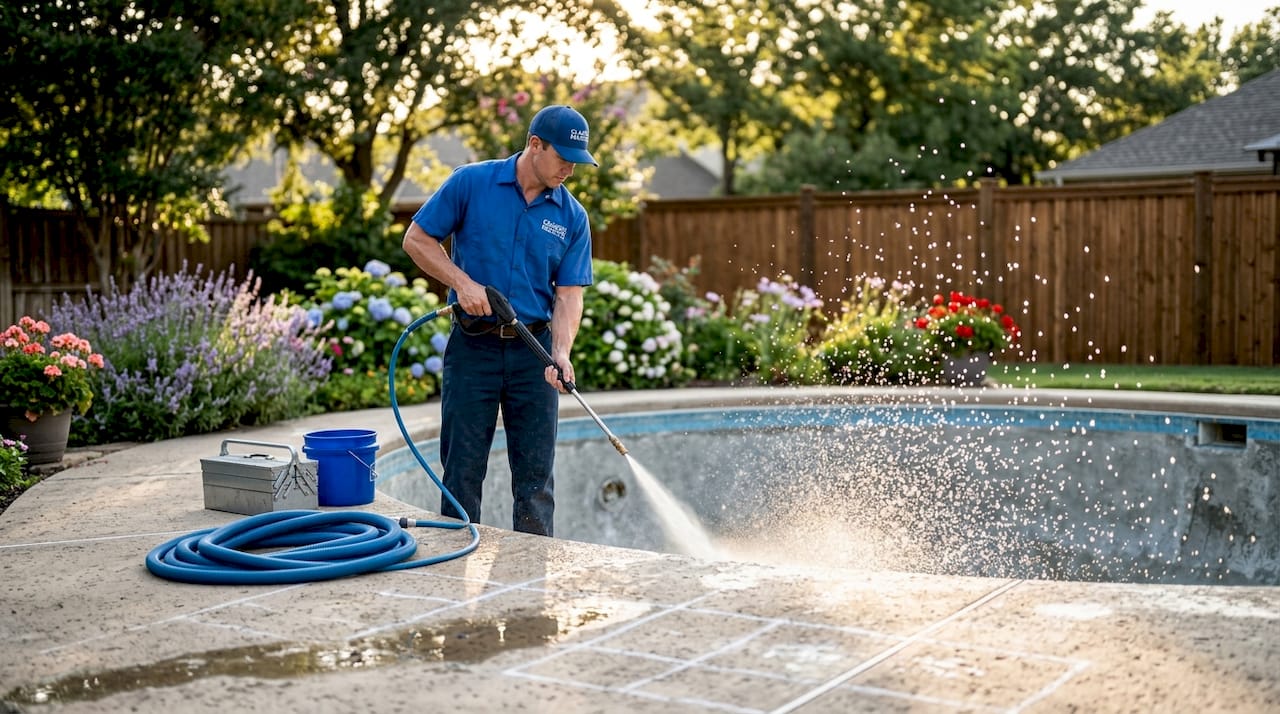
Most property owners first hear “hydroblasting” and picture something that sounds aggressive enough to crack concrete. That instinct is understandable but wrong, and it’s costing people time and money on their pool maintenance decisions. Pool hydroblasting is a high-pressure water jetting method used to strip old plaster, coatings, and buildup from pool surfaces, and it does this faster and more gently than the mechanical methods most contractors still default to. This guide breaks down exactly how it works, what it costs you in time and money, and when it makes sense for your property.
Table of Contents
- Key Takeaways
- What pool hydroblasting is and how it works
- Benefits of hydroblasting for pools
- The hydroblasting process step by step
- Hydroblasting vs other pool surface prep methods
- How hydroblasting fits into pool maintenance and resurfacing
- My take on hydroblasting after seeing it up close
- Hydroblasting and professional pool resurfacing in Florida
- FAQ
Key Takeaways
| Point | Details |
|---|---|
| Hydroblasting defined | High-pressure water up to 40,000 PSI strips pool surfaces without abrasives or chemicals. |
| Speed advantage | Hydroblasting completes surface prep 3 to 5 times faster than traditional chipping or grinding. |
| Structural safety | Properly tuned pressure removes plaster without causing micro-fractures in the pool shell. |
| Eco-friendly process | No dust, no abrasive media, and no chemical waste make it a cleaner method for any property. |
| Best used as prep | Hydroblasting works best as surface preparation before replastering or applying a new pool finish. |
What pool hydroblasting is and how it works
Pool hydroblasting is the use of an ultra-high-pressure water stream to remove old plaster, paint, rubber coatings, and other surface materials from a pool shell. The machines involved force water through precision nozzles at pressures that can reach up to 40,000 PSI, which is enough to strip decades of built-up material without a single chip of a hammer or gram of abrasive media.
The physics behind it are straightforward. Water is accelerated to speeds exceeding 600 mph through the nozzle, and at that velocity, the kinetic energy of the water does the cutting. There is no sandblasting, no grinding wheel, and no jackhammer. Just water, pressure, and physics working together.
Equipment overview:
- Handheld wands and lances for small pools or tight areas where maneuverability matters
- Diesel trailer-mounted units for mid-to-large residential pools and commercial projects
- Semi-automated spin jet machines that improve coverage speed and reduce operator fatigue
- High-volume pumps that maintain consistent pressure across the full surface area
Equipment selection depends entirely on the job size and the condition of the surface. A 10,000-gallon residential pool needs different tooling than a commercial waterpark slide basin.
Hydroblasting is also notably versatile. It can remove multiple surface types including old plaster, rubber coatings, vinyl liners, and anti-slip finishes. This makes it a practical choice for both residential pools sitting in Florida backyards and large commercial pools at resorts and hotels.
Pro Tip: Ask your contractor about the operating PSI they plan to use before work begins. The right pressure varies by surface type and pool age. Too high on a thin older shell creates problems. A qualified crew calibrates this before the first pass.
Benefits of hydroblasting for pools
The case for hydroblasting over traditional mechanical methods is built on four concrete advantages: speed, surface quality, worker safety, and environmental impact. Each one carries real financial weight for property owners and managers.
Speed and labor cost. Hydroblasting strips approximately 2,000 square feet per hour, which means a typical 20-foot by 36-foot residential pool can be fully prepped in about four hours. Compare that to mechanical chipping, which often requires multiple workers over multiple days. The result is that plaster removal can be completed in a single day, cutting labor hours significantly and reducing the amount of time your pool is out of service.
Surface preservation. This is the benefit most property owners miss. Mechanical chipping hammers create micro-vibrations that travel through the concrete shell. Over time, and especially in older pools, those vibrations cause micro-fractures that weaken structural integrity. Hydroblasting, when set to the correct pressure, strips only the plaster and weak bonding layers. The shell stays intact.
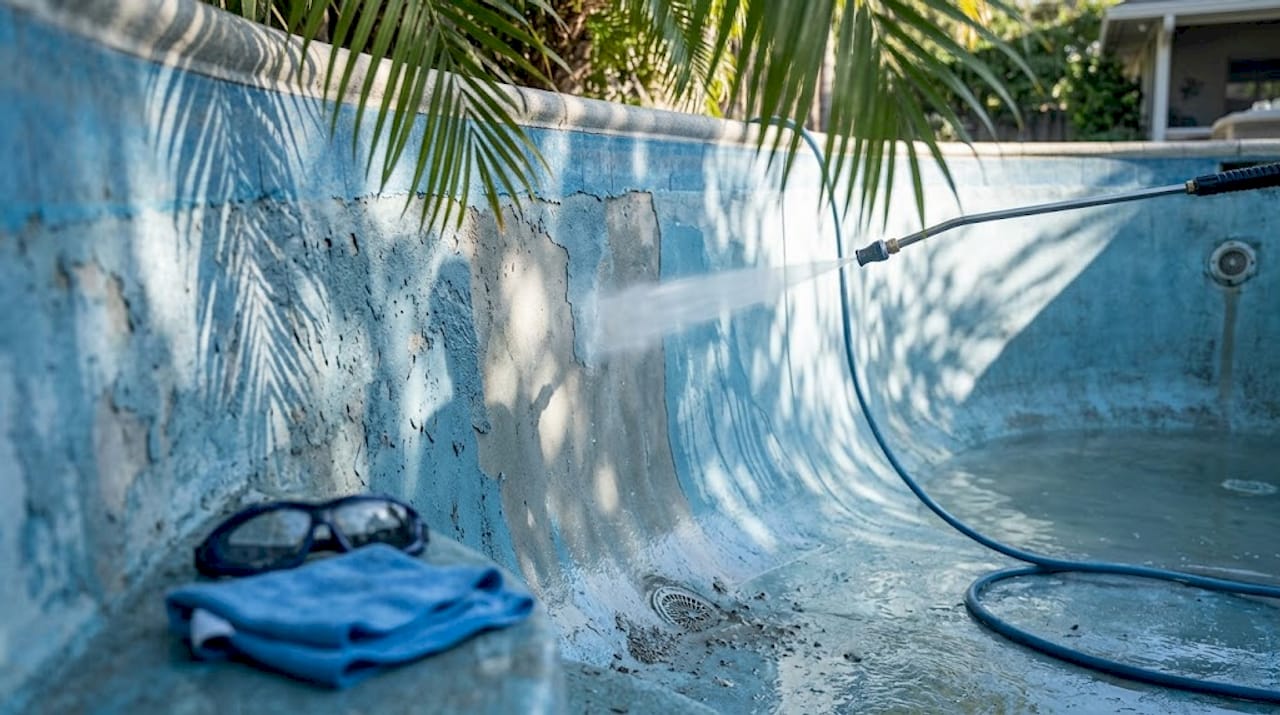
Environmental footprint. Hydroblasting produces zero dust and requires no abrasive media disposal. That matters both practically and legally. In Florida, disposal of abrasive blasting media is regulated, and the dust from dry mechanical methods can affect neighboring properties. With hydroblasting, the only byproduct is water mixed with plaster slurry, which is far easier to contain and manage.
Worker safety. Wet water blasting generates up to 92% less dust than dry abrasive methods. Less airborne dust means lower respiratory risk for the crew, fewer liability concerns for the property owner, and no need for full respiratory protection setups at the job site.
Pro Tip: If your pool is in a residential neighborhood, the reduced dust and noise from hydroblasting versus chipping is a real courtesy to your neighbors. Contractors using mechanical chipping in tight suburban lots are a common source of neighbor complaints during renovation projects.
The cost savings from faster turnaround add up quickly. Fewer labor days, reduced equipment rental, and a faster return to service make hydroblasting a financially sound choice for commercial properties where every day of downtime has a dollar value attached.
The hydroblasting process step by step
Understanding the process helps you set realistic expectations and ask better questions when talking to contractors. Here is how a standard pool hydroblasting job unfolds.
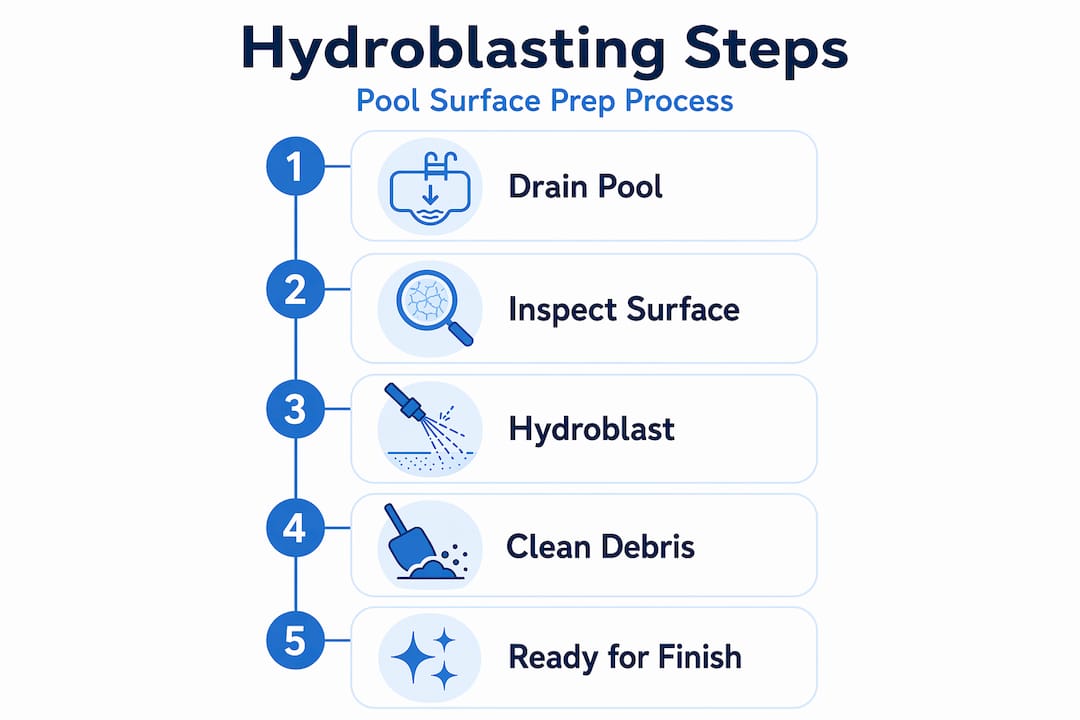
- Surface assessment. The contractor inspects the pool shell for existing cracks, delamination, and the condition of current plaster. This determines the PSI setting needed and identifies areas that may need manual attention.
- Water supply setup. Hydroblasting requires a reliable water source. The crew connects to a water line or brings a tank. Larger trailer-mounted units consume water at a high rate, so supply logistics matter.
- Containment preparation. Drainage paths for the water and plaster slurry are mapped out. Some systems reclaim water for reuse, reducing total water consumption.
- Main surface blasting. The operator runs the nozzle across the pool floor, walls, and steps in overlapping passes. Large flat surfaces like floors are done first for efficiency.
- Intricate area handling. Contractors combine hydroblasting with manual chipping for areas near light fixtures, decorative tile borders, return fittings, and drain covers. These spots cannot tolerate the full force of a high-pressure jet without risking damage to hardware.
- Surface inspection and cleanup. After blasting, the shell is inspected for remaining plaster, weak bonding spots, and any micro-damage. The slurry is cleared and the surface is allowed to dry before the next phase.
- Handoff for resurfacing. A properly hydroblasted surface is clean, profiled, and ready for a new plaster, pebble, or tile finish to bond properly. You can learn more about prepping pools for resurfacing to understand what comes next.
Pro Tip: Plan for the pool to be out of service for one to three days total, accounting for blasting, drying, and the start of resurfacing work. This is significantly less downtime than chipping-based projects, which commonly run five to seven days before resurfacing can even begin.
Hydroblasting vs other pool surface prep methods
Property owners often compare hydroblasting against three other methods: sandblasting, mechanical chipping, and grinding. Each has a use case, but the differences in outcomes are stark enough to matter when you are making a real decision.
| Method | Pressure / Mechanism | Dust Generated | Surface Damage Risk | Typical Speed | Chemical Use |
|---|---|---|---|---|---|
| Hydroblasting | Water up to 40,000 PSI | None | Very Low | Fastest | None |
| Sandblasting | Abrasive media, pressurized air | High | Moderate | Moderate | None |
| Mechanical chipping | Hammer/chisel impact | Moderate | Higher | Slowest | None |
| Grinding | Rotary abrasive tools | Moderate | Moderate | Slow | None |
The table makes the tradeoffs visible. Sandblasting is safer and cleaner than chipping but still creates significant dust and requires proper media disposal. Mechanical chipping is the slowest method and carries the highest risk of micro-fracturing the shell, especially in pools older than 15 years. Grinding works well for small spots but does not scale to full-pool prep without enormous time investment.
Hydroblasting is not automatically the right answer in every situation. Very thin pool shells, certain fiberglass constructions, or pools with extensive cracking may require a different approach or a hybrid strategy. A contractor experienced with multiple methods will assess this before committing to a single technique.
A choosing between methods decision comes down to the specific project. Hydroblasting excels in precision and environmental safety. When speed and surface quality are the priorities, and they almost always are for commercial properties, hydroblasting wins the comparison consistently.
How hydroblasting fits into pool maintenance and resurfacing
Hydroblasting is rarely the end goal. It is the preparation step that determines whether everything that comes after actually lasts. A new plaster or Pebble Tec® finish bonds to a clean, profiled surface. If the old plaster is not removed down to a sound substrate, the new finish will fail prematurely. This is where hydroblasting pays for itself several times over.
For property managers running multiple pools at resorts, hotels, or apartment complexes, the scheduling advantage compounds. Faster prep means tighter renovation windows, which keeps pools in service longer across the season. A pool that goes down for resurfacing on a Monday and returns to service by Wednesday is far less disruptive than one that sits empty for a week.
Practical considerations for your next project:
- Schedule hydroblasting at the start of the resurfacing contract, not as an afterthought. Contractors who plan the full project know how the blasting results affect their finishing timeline.
- Confirm that the resurfacing contractor oversees the hydroblasting. When the same team handles prep and finish, accountability for surface quality stays with one party.
- Factor in post-hydroblasting maintenance. A freshly resurfaced pool requires specific care in the first weeks. Understanding pool maintenance after resurfacing protects your investment.
- Ask about the finish options once the surface is clean. Hydroblasting creates the ideal bonding surface for premium finishes. If you are already down to bare shell, it is the right time to choose the right pool finish rather than simply replaster with what was there before.
The long-term math is straightforward. A properly prepped surface holds a new finish longer, which pushes the next resurfacing cycle further into the future. For a commercial pool that would otherwise resurface every eight to ten years, adding even two years to that cycle translates directly to cost savings.
My take on hydroblasting after seeing it up close
I’ve watched a lot of pool resurfacing projects unfold, and the ones that go sideways almost always trace back to inadequate prep. The chipping crew leaves bonded plaster in the corners, or they push too hard and hairline cracks appear in the shell by the time the plasterers show up. Then everyone argues about who is responsible for the callbacks.
What I’ve found with hydroblasting is that it removes the ambiguity. The surface either passes inspection or it gets another pass. There’s no gray area around whether old plaster is “good enough to bond over.” The water strips it or it stays, and a trained eye can tell the difference immediately.
The piece that most property owners never consider is what happens to older pools during chipping. A 30-year-old pool with thin plaster and a shell that has been through years of Florida heat, ground movement, and chemical cycling is not well served by a jackhammer approach. I’ve seen pools with no visible damage before chipping that showed cracks after. Hydroblasting, calibrated correctly, does not create that problem.
My advice is to ask every contractor you interview whether they offer hydroblasting and, if not, why they default to chipping. The answer tells you a lot about how current their methods are.
— Classicmarcite
Hydroblasting and professional pool resurfacing in Florida
Classic Marcite has been resurfacing pools across Florida since 1988, with over 100,000 pools completed across residential, commercial, and resort properties. Hydroblasting is part of how that prep work gets done right. A clean, profiled shell is the foundation for every Pebble Tec® and plaster finish the team applies.

If your pool is showing its age, whether through rough texture, staining, delaminating plaster, or visible wear, the first real question is whether the surface has been properly stripped and assessed. Classicmarcite serves property owners and managers across Winter Park, The Villages, Maitland, and Windermere. Contact the team for a free estimate and a clear assessment of what your pool actually needs.
FAQ
What is pool hydroblasting exactly?
Pool hydroblasting is a high-pressure water jetting process that uses water at pressures up to 40,000 PSI to strip old plaster, paint, and coatings from pool surfaces without abrasives or chemicals. It is used primarily as surface preparation before replastering or applying a new pool finish.
How does hydroblasting differ from pressure washing?
Hydroblasting operates at dramatically higher pressures than standard pressure washing and is designed to remove bonded surface materials, not just clean debris. Pressure washing for pool cleaning tops out around 3,000 to 4,000 PSI, while hydroblasting systems run ten times higher to strip plaster down to the pool shell.
Is hydroblasting safe for pool surfaces?
Yes, when calibrated correctly. Properly tuned hydroblasting removes plaster without causing the micro-fractures that mechanical chipping hammers commonly produce. Older or thin-shelled pools benefit the most from this approach because it reduces structural risk during preparation.
How long does pool hydroblasting take?
A standard residential pool can be hydroblasted in approximately four hours at a stripping rate of about 2,000 square feet per hour. Total project downtime including drying and resurfacing typically runs one to three days, compared to five to seven days with traditional chipping methods.
When should a pool be hydroblasted?
Hydroblasting is most appropriate when a pool needs replastering, resurfacing with a new finish, or when old coatings need full removal before repairs. It is also the better choice when the pool shell is older and at higher risk of damage from mechanical chipping.