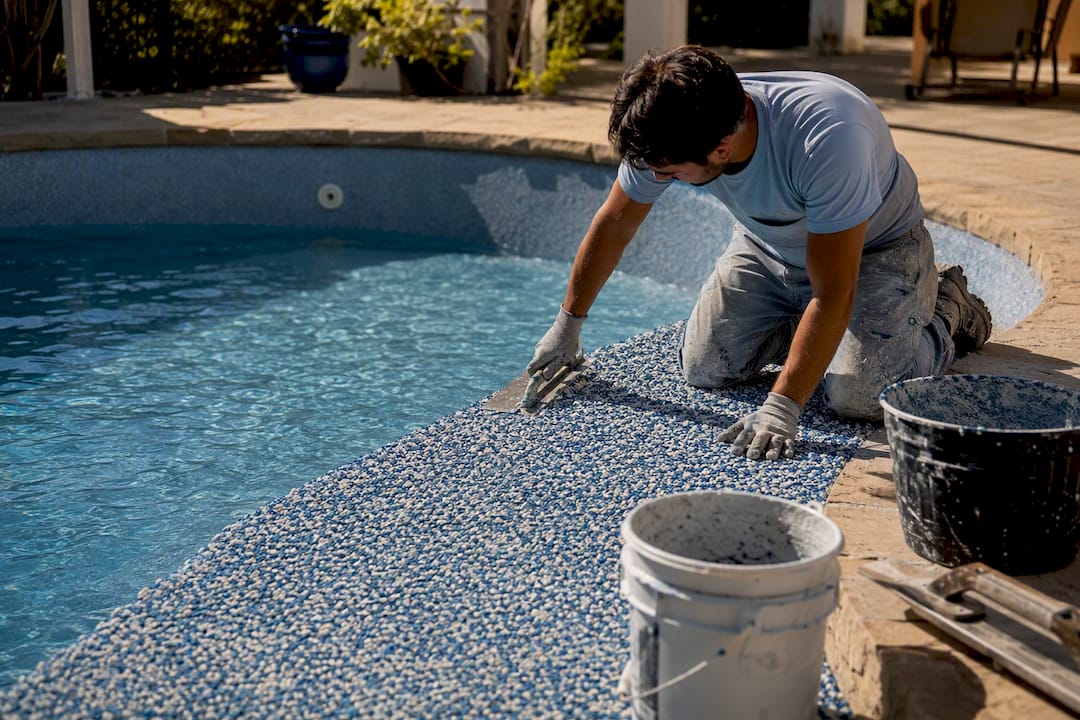
Yes, saltwater pools need resurfacing choices and precautions that differ from standard chlorine pools. The salt in the water raises conductivity, and that speeds up wear on soft cementitious finishes and corrodes unprotected metal fixtures faster than fresh chlorine tanks ever would.
Your fastest path to a durable result: choose a pebble or quartz aggregate finish over plain plaster, confirm your ladder rails, lights, and heat exchanger are rated for salt exposure, and keep pH between 7.4 and 7.6 with monthly salinity checks. Watch for two urgent red flags:
- Rough, sandpaper-like texture on the pool floor or walls, often the first sign plaster is breaking down under salt exposure.
- Rust bleed or pitting around ladders, rails, or light housings, which signals metal components are corroding faster than the schedule calls for.
Pro Tip: Before you resurface, have your contractor test your water’s saturation index. Scaling and etching often trace back to imbalanced calcium hardness, not the salt itself.
Key Takeaways
Saltwater pools need aggregate finishes like pebble or quartz, salt-rated hardware, and monthly chemistry checks to avoid premature resurfacing.
| Point | Details |
|---|---|
| Choose the right finish | Pebble and quartz aggregate outlast plaster under salt chemistry and reduce resurfacing frequency. |
| Watch for early warning signs | Roughness, salt creep, and metal pitting signal it’s time to act before damage spreads. |
| Control chemistry monthly | Keep pH between 7.4 and 7.6 and check salinity monthly to prevent scaling. |
| Upgrade hardware proactively | Zinc anodes and salt-rated fixtures cut corrosion risk on ladders, lights, and heaters. |
| Hire saltwater-specific experience | Classic Marcite has resurfaced over 100,000 pools since 1988, with Pebble Tec® as its lead saltwater finish. |
Table of Contents
- What Is Pool Resurfacing, and How Is It Different From Replastering?
- What Are the Warning Signs a Saltwater Pool Needs Resurfacing?
- Which Resurfacing Materials Work Best for Saltwater Pools?
- What Does the Resurfacing Process and Timeline Look Like?
- How Much Does It Cost to Resurface a Saltwater Pool?
- How Should You Maintain a Saltwater Pool After Resurfacing?
- When Should You Hire a Professional Instead of DIY?
- Which Finish Actually Makes Sense for a Salt Conversion?
- How Classic Marcite Handles Saltwater Pool Resurfacing
- Sources
What Is Pool Resurfacing, and How Is It Different From Replastering?
Resurfacing means removing or covering the pool’s entire interior finish and applying a new surface layer, from bond coat to top coat. Replastering is really just one method of resurfacing, specific to cementitious plaster finishes. The distinction matters for saltwater pools because plaster and pebble finishes age at different rates under a salt chlorine generator, and picking the wrong one locks you into a shorter cycle of repairs.
A properly resurfaced pool delivers four things at once:
- Cosmetic renewal: stains, discoloration, and dull patches disappear under a fresh finish.
- Structural repair: hairline cracks and voids in the shell get addressed before they become leaks.
- Safety: a smooth, even surface eliminates the rough patches that scrape swimmers’ feet.
- Longevity: a new finish resets the clock on your pool’s service life, often for a decade or more.
Common finish categories include plaster or marcite, pebble aggregate, quartz aggregate, tile, and glass bead. Each behaves differently once salt enters the equation, which is exactly what the next sections walk through.
What Are the Warning Signs a Saltwater Pool Needs Resurfacing?
Saltwater pools tend to show wear differently than chlorine-tablet pools, and the signs are worth learning before they become expensive.
Look for these physical indicators:
- Rough or pitted texture you can feel underfoot
- Etching or a chalky, faded look across the shell
- Hairline cracks spreading beyond a single spot
- Delamination, where the finish bubbles or separates from the shell
- Staining that scrubbing no longer removes
- White, crusty salt creep along the coping or tile line
- Stubborn algae patches that return within days of treatment
- Visible leaks or unexplained water loss
Two of these deserve extra attention in salt systems specifically: plaster wearing noticeably faster than the manufacturer’s stated lifespan, and pitting on metal fixtures that outpaces normal aging. A single hairline crack or a small stain often calls for a spot repair. Widespread roughness, delamination, or leaks across multiple areas usually means it’s time for a full resurface rather than a patch job.
Which Resurfacing Materials Work Best for Saltwater Pools?
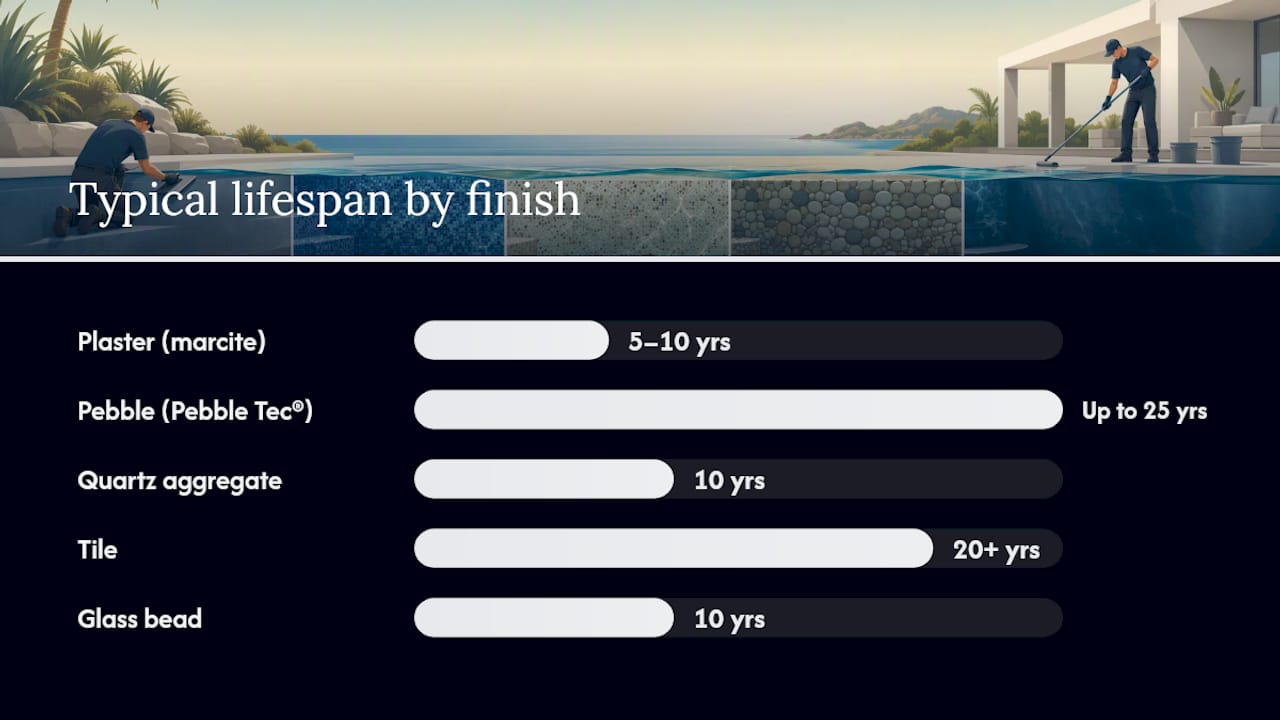
Not every finish tolerates a salt chlorine generator equally well, and this is where most resurfacing budgets are won or lost. Plain plaster, sometimes called marcite, is the traditional choice and the least expensive up front. It’s also the most vulnerable to salt. Cementitious finishes wear faster under salt systems if chemistry isn’t tightly managed, and River Pools and Spas advises against resurfacing with standard plaster unless owners accept a shorter interval between resurfaces, often five to seven years instead of the ten-plus years plaster can achieve in a traditional chlorine pool.
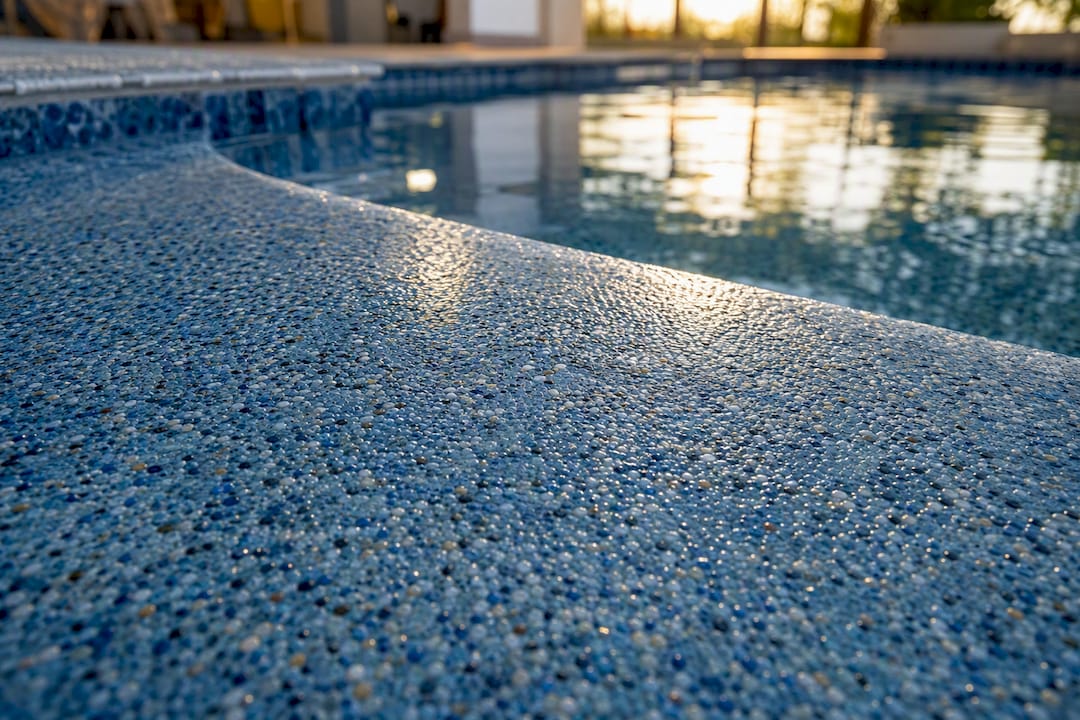
Pebble finishes, including Pebble Tec®, sit at the other end of the spectrum. The aggregate structure resists the chemistry swings that come with salt generation, and Cornerstone Pool & Remodel points to pebble and quartz aggregate finishes as the standard recommendation when converting a pool to salt or resurfacing one that already runs a salt system. Classic Marcite installs Pebble Tec® as its primary recommendation for saltwater resurfacing, citing manufacturer lifespan claims that run up to 25 years under proper chemistry, well beyond what plaster typically offers.
Quartz aggregate splits the difference. It’s smoother than pebble, more resistant to salt than plain plaster, and available in a wider color range if you want a specific look. Tile is essentially inert. It shrugs off salt exposure almost entirely, but full tile pools cost significantly more and take longer to install. Glass bead finishes are newer to the market, offering vibrant color and decent salt tolerance, though long-term saltwater performance data is thinner than what exists for pebble.
| Finish | Lifespan | Cost Shape | Saltwater Compatibility | Install Time |
|---|---|---|---|---|
| Plaster/marcite | 5–10 years | Lowest | Weakest, needs tight chemistry control | Fastest |
| Pebble (Pebble Tec®) | Up to 25 years | Mid to high | Strongest, salt-resistant aggregate | Moderate |
| Quartz aggregate | 10 years | Mid | Good, more durable than plaster | Moderate |
| Tile | 20+ years | Highest | Excellent, essentially inert | Longest |
| Glass bead | 10 years | Mid to high | Good, limited long-term salt data | Moderate |
If you’re weighing options against your budget, our comparison of the best pool resurfacing materials breaks down durability ratings finish by finish. The short version for salt owners: pebble and quartz aggregate finishes hold up longer and need less babysitting than plain plaster, which usually offsets the higher upfront cost within the first resurfacing cycle you skip.
What Does the Resurfacing Process and Timeline Look Like?
A resurfacing job follows a predictable sequence, and knowing the steps helps you sanity check any contractor’s quote.
- Assessment: the contractor inspects the shell, checks equipment compatibility with your salt system, and tests water chemistry.
- Draining and repair: the pool is drained, and cracks, voids, or delamination in the substrate get patched.
- Surface prep: the old finish is blasted or ground down to create a surface the new material can bond to.
- Bond coat: a primer layer goes on where the finish type requires it, especially for pebble and quartz applications.
- Finish application: the chosen material, whether pebble, quartz, plaster, or tile, is applied by hand or sprayed.
- Curing: the new surface cures for a set window before water touches it.
- Refill and balance: the pool refills, and chemistry gets balanced before the salt cell restarts.
Most residential projects run three to seven days from drain to refill, though repairs to the shell or bad weather can stretch that to two weeks. A honest quote should list bonding checks, salt-system equipment compatibility, and warranty terms in writing, not just a price per square foot. Installers should also confirm the electrical bonding meets NFPA 70 (NEC) Article 680 before reconnecting salt-system equipment.
How Much Does It Cost to Resurface a Saltwater Pool?
Costs vary by finish, pool size, and how much substrate repair is needed, but rough ranges hold across most residential jobs:
- Plaster/marcite: lower end of the market, though shorter lifespan under salt often erases the savings over time
- Quartz aggregate: mid-range pricing with better salt tolerance than plaster
- Pebble (Pebble Tec®): mid to higher pricing, offset by the longest realistic lifespan among common finishes
- Tile: the highest cost per square foot, justified by near-total salt resistance
For a typical 20,000-gallon residential pool, which usually works out to roughly 400 to 500 square feet of interior surface, a pebble resurface generally lands in the mid-thousands of dollars once prep and repair are factored in. Plaster on the same pool costs less upfront but statistically needs replacing again sooner.
Curious how your pool’s age and current finish stack up? Our lifespan breakdown walks through the factors that shorten or extend a resurface’s useful life.
How Should You Maintain a Saltwater Pool After Resurfacing?
A fresh finish only lasts as long as the chemistry protecting it. Salt chlorine generators tend to push pH upward over time, so The Pool Factory recommends testing salt and chemical levels at least monthly to head off scaling before it etches a new surface. Keep pH in the 7.4 to 7.6 range, alkalinity between 80 and 120 ppm, and calcium hardness between 200 and 400 ppm.
On the hardware side, a few upgrades pay for themselves. Salt concentrations of roughly 3,000 ppm are enough to accelerate galvanic corrosion on unprotected metal, so sacrificial zinc anodes, salt-rated ladders and rails, and a cupro-nickel heat exchanger are standard defenses. Verify electrical bonding is intact, since most corrosion complaints trace back to bonding gaps or stray current rather than the salt itself.
| Task | Frequency |
|---|---|
| Salinity check | Monthly |
| pH and alkalinity test | Weekly to monthly |
| Salt cell cleaning | Every 3–6 months |
| Zinc anode inspection | Every 1–2 years |
Pro Tip: Rinse coping and deck edges with fresh water after heavy splash-out. Salt creep left to dry on stone or concrete accelerates surface pitting over time, a problem the landscaping guidance from Fernandez & Sons touches on when discussing coping and hardscape choices around saltwater pools.
When Should You Hire a Professional Instead of DIY?
Saltwater resurfacing has more failure points than a standard chlorine pool job, which is exactly where an experienced contractor earns their fee. Salt systems require compatibility checks on lights, rails, and heaters that a general handyman may not know to test, along with substrate prep that determines whether the new finish bonds correctly or delaminates within a year.
Before signing a contract, check for:
- Active licensing and insurance in your state
- A before-and-after portfolio you can actually review
- Documented saltwater-specific resurfacing experience, not just general pool work
- Written warranty terms and a maintenance handoff at project completion
Classic Marcite has resurfaced more than 100,000 pools since 1988 and stands as the largest Pebble Tec® applicator in Central Florida, a track record worth weighing against any contractor’s promises.
Which Finish Actually Makes Sense for a Salt Conversion?
In my experience advising owners through this decision, the tradeoff almost always comes down to upfront cost against how often you want to redo the job. Plaster is cheaper today and more expensive over ten years. Pebble or quartz costs more now and usually wins on total cost of ownership for salt systems. My default recommendation leans pebble unless budget is the deciding constraint. If your heater or coping is already failing, fix those first. Resurfacing over compromised equipment just means redoing work twice.
How Classic Marcite Handles Saltwater Pool Resurfacing
You’ve got the finish types, the costs, and the maintenance schedule. What you might still need is someone who’s applied Pebble Tec® to a salt pool a few thousand times and knows exactly where the equipment compatibility checks matter most. Classic Marcite has been resurfacing Florida pools since 1988, and salt systems make up a large share of the residential work coming through Orlando and Jacksonville.
A free estimate includes a full inspection of your shell, an equipment compatibility check for your salt cell and metal fixtures, and an itemized quote that spells out finish options, timeline, and warranty terms before you sign anything. If you’re in the Orlando area, request a resurfacing estimate and get a straight answer on what your pool actually needs, not just an upsell to the priciest finish on the list.
Sources
- Salt Water Pools Guide — intheswim
- How to maintain a saltwater pool — The Pool Factory
- Chlorine-generator
- Are Salt Water Systems Bad for Concrete Pools? — River Pools and Spas