A quartz pool finish typically lasts about a decade to nearly two decades, with premium products and factory-trained installation pushing that toward the upper part of that range. The biggest swing factor isn’t the material itself. It’s water chemistry and installation quality, which together explain the overwhelming majority of finishes that fail early. Climate, bather load, and maintenance habits shift a pool within that range, but rarely outside it.
TL;DR:
- Water chemistry and installation quality are the main factors influencing the lifespan of a quartz pool finish, with poor maintenance reducing durability.
- Proper start-up procedures, regular testing, and cautious cleaning can extend a quartz finish’s life by several years and prevent early failure.
- Premium quartz formulations with dense aggregate loading last closer to 18 years, while budget blends behave more like plaster, lasting around 12 years.
- Signs of wear include color fading, rough texture, and cracks, which should prompt water testing and professional inspection to address underlying issues.
- Resurfacing costs depend on pool size, shape, and substrate repairs, with planned replacement generally more affordable and less stressful than emergency fixes.
Table of Contents
- Quartz Pool Finish Lifespan Compared to Other Pool Surfaces
- What Actually Determines How Long Quartz Finish Lasts
- Early Warning Signs Your Quartz Finish Is Wearing Out
- Extending Quartz Finish Life: Start-Up and Maintenance Plan
- Planning for Resurfacing: Timing and Cost Factors
- What Experienced Applicators See in the Field
- What to Do If Your Quartz Finish Is Nearing the End of Its Life
- Sources
Quartz Pool Finish Lifespan Compared to Other Pool Surfaces
Pool finish lifespan isn’t a single number. It’s a spectrum, and where your pool sits on it depends heavily on which material went into the shell.
Standard white or gray marcite plaster sits at the shorter end, generally lasting 7 to 10 years before the surface roughens and needs replacement. Quartz aggregate finishes sit in the middle of the pack, with a realistic average lifespan spanning roughly a decade to nearly two decades. Pebble and exposed-aggregate finishes last the longest, commonly running 20 years or more.
That middle position makes sense once you understand what quartz actually is. It’s a cement matrix, the same material used in plaster, blended with ground quartz aggregate for hardness and color retention. The cement binder is still vulnerable to the same chemical attacks that wear down plaster. The quartz aggregate just slows the damage and holds color better over time.
- Plaster: roughly 7 to 10 years, sometimes stretching to 12 with excellent care
- Quartz: roughly 12 to 18 years, with premium product lines reaching the top of that range
- Pebble/exposed aggregate: 20 years or more, the longest-lasting cementitious option
Product grade matters more than most homeowners realize. A budget quartz blend with thin aggregate coverage behaves a lot more like plaster than a premium formulation with denser aggregate loading. Climate plays a role too. Pools in regions with hard, mineral-heavy water or extreme freeze/thaw cycles tend to land on the lower end of the range regardless of which finish went in.
What Actually Determines How Long Quartz Finish Lasts
Two forces do almost all the damage to a quartz finish, and neither one is the quartz itself.
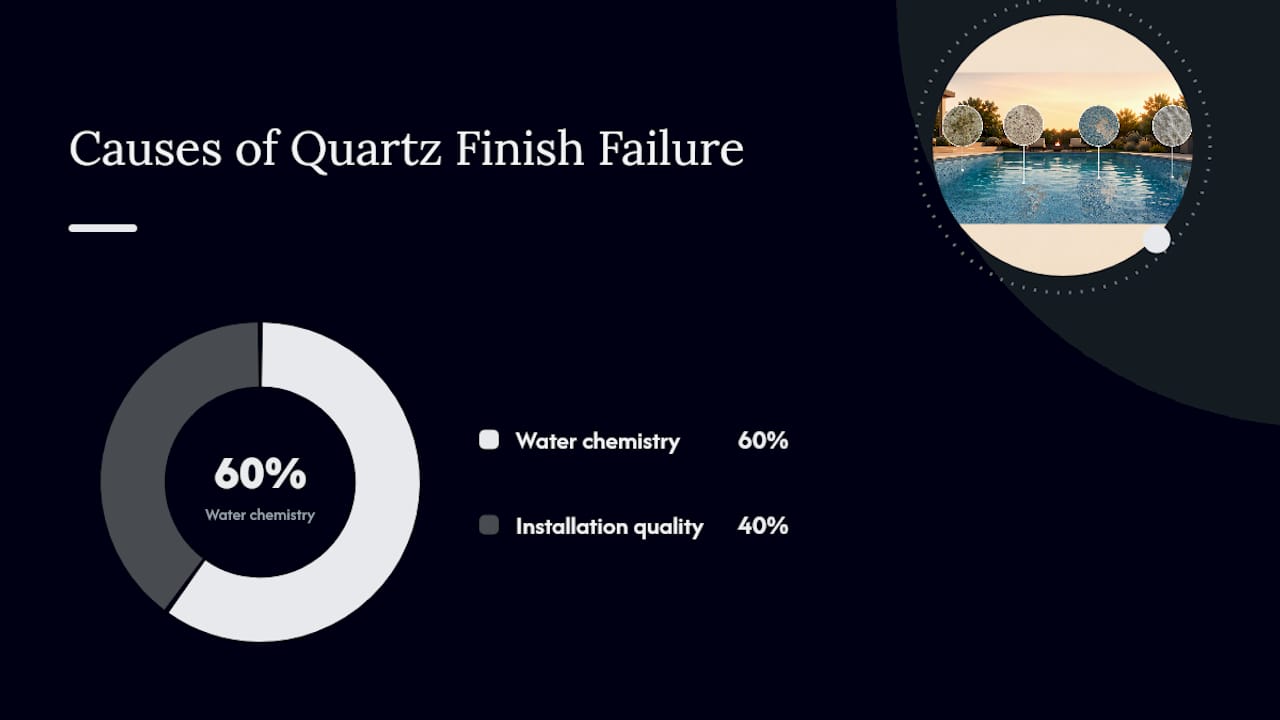
Industry analysis attributes roughly 60% of pool finish failures to poor water chemistry, and about 40% to installation-related problems like surface prep, bond coat application, and curing. That split tells you where to focus attention, both before you sign a resurfacing contract and every week after.
- Water chemistry. The National Plasterers Council defines “aggressive water” as chemistry that falls outside balanced ranges for pH, alkalinity, and calcium hardness. Aggressive water dissolves the cement matrix at a microscopic level, which shows up later as etching and pigment loss. The Saturation Index is the tool professionals use to track this risk, and the NPC recommends keeping it near 0.0 to +0.3, tighter than the older APSP range of negative 0.3 to positive 0.5.
- Installation quality. Surface prep, the water-to-cement ratio in the mix, and how well the crew manages curing time all affect long-term durability. A rushed bond coat or an improperly cured surface can shave years off a finish before a single swimmer gets in the water. Background on curing and water-to-cement ratios applies to cementitious pool surfaces just as it does to concrete work generally.
- Environmental and use factors. Freeze/thaw cycles stress the surface in colder climates, intense sun fades pigment over time, and heavy bather load accelerates wear on high-traffic pools like those at resorts or apartment complexes.
- Material formulation. Polymer-modified mixes and better pigment stability push a finish toward the top of its expected range, while denser aggregate grading improves both feel and durability.
That’s why a factory-trained applicator and a disciplined testing routine matter more than which specific quartz product you choose.
Early Warning Signs Your Quartz Finish Is Wearing Out
Not every mark on a quartz surface means trouble. Learning to tell cosmetic wear from structural failure saves you from either ignoring a real problem or panicking over a harmless one.
- Fading or blotchy color loss. Once pigment leaches out of the cement matrix, it’s usually gone for good. This is often the first visible sign of aggressive water exposure.
- White or hazy patches. This can be calcium salt masking the true color rather than actual pigment damage. It often responds to acid washing rather than resurfacing.
- Rough or pitted texture. A finish that used to feel smooth underfoot but now feels gritty or pitted has likely lost material to chemical etching.
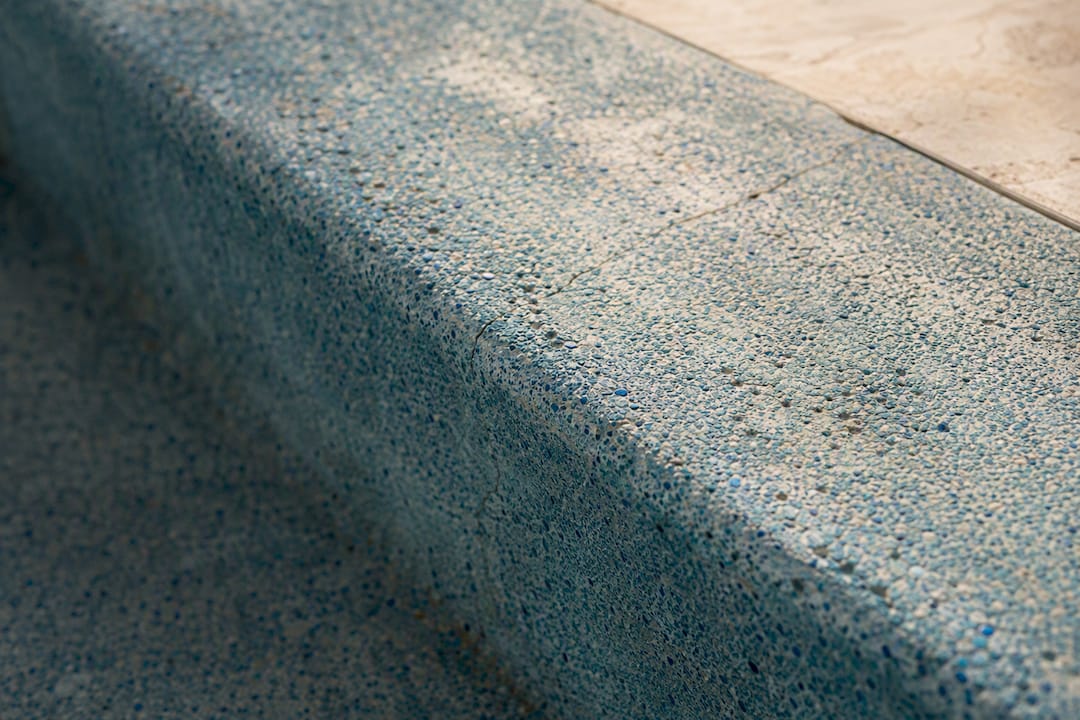
- Fine hairline cracks (crazing). This is typically cosmetic in cementitious finishes and not a sign of structural failure on its own.
- Wide or stepped cracks. These point to structural movement in the shell and warrant an inspection, not a wait-and-see approach.
Pro Tip: Evaluate color and texture with the pool full, under natural daylight. Dry, on-land inspections can be misleading because aggregate shading and cement hydration patterns look different once the surface is wet.
When you see fading, test your water first. When you see roughness or pitting, call for a professional inspection. When you see wide cracking, start planning for resurfacing.
Extending Quartz Finish Life: Start-Up and Maintenance Plan
The single highest-leverage window for a quartz finish’s lifespan is the first week after it’s installed. What happens next matters for the next 15 years.
- Nail the start-up. New plaster and quartz surfaces release calcium hydroxide as the cement hydrates. Removing plaster dust and filtering it out during the first 3 to 5 days prevents calcium carbonate from bonding to the surface and masking color.
- Test frequently early on, then settle into a rhythm. Check pH and alkalinity weekly, calcium hardness biweekly, and cyanuric acid and total dissolved solids monthly or seasonally.
- Keep the Saturation Index in range. Hovering near 0.0 to +0.3 meaningfully reduces etching risk over the life of the surface.
- Brush regularly with a soft brush. This prevents scale buildup without abrading the aggregate, which a stiff or metal brush can damage over time.
- Shock in a controlled way, and avoid dumping undissolved chlorine directly onto the surface, which causes localized bleaching.
- Winterize properly in cold climates. Freeze/thaw cycling is one of the more underrated stressors on cementitious finishes.
Pro Tip: If your Saturation Index keeps drifting despite regular dosing, that’s a sign of an underlying chemistry imbalance, like scale-forming calcium hardness or fluctuating alkalinity, not just a dosing problem. Bring in a professional rather than chasing the number with more chemicals.
A detailed maintenance checklist can help you build this into a routine instead of reacting only when something looks off. Call in a professional anytime you’re troubleshooting a chemistry issue you can’t resolve in a week or two, or whenever you notice texture changes that testing alone can’t explain.
Planning for Resurfacing: Timing and Cost Factors
Resurfacing decisions usually fall into one of two buckets: planned replacement near the end of a finish’s expected life, or emergency replacement triggered by structural failure or a leak. Planned resurfacing is almost always cheaper and less stressful, because you control the timeline instead of the timeline controlling you.
The workflow itself follows a predictable sequence: draining the pool, prepping and repairing the substrate, applying the new finish, curing, and refilling. Total downtime commonly runs one to two weeks depending on substrate repairs and weather.
- Finish selection drives a meaningful share of total cost, with quartz typically priced above standard plaster and below premium pebble finishes.
- Pool size and shape affect both material quantity and labor time.
- Substrate repairs, like fixing cracks or spalling before the new finish goes on, can add significantly to a project if the underlying shell needs work.
- Local labor rates vary by region and season, so identical jobs can carry different price tags depending on where you live.
Because quartz outlasts standard plaster by several years on average, it also means fewer replaster cycles over the life of a pool, which offsets some of its higher upfront cost.
What Experienced Applicators See in the Field
After enough resurfacing jobs, the pattern becomes obvious: pools that fail early almost always show either chronically unbalanced water or a shortcut somewhere in the original installation, not a defective batch of quartz. Pools that hit or exceed 18 years usually had disciplined start-ups and owners who tested water on a schedule rather than by feel.
Before hiring anyone, confirm the applicator’s start-up procedure, their water-to-cement ratio approach, and how they handle curing time. After the job, confirm your own testing routine matches NPC-recommended targets. Those two checks prevent most of the early failures we see.
— Results
What to Do If Your Quartz Finish Is Nearing the End of Its Life
If your pool is showing fading, roughness, or persistent chemistry problems after 12 or more years, an inspection tells you whether you’re looking at a maintenance fix or a resurfacing project. A professional pool resurfacing company with extensive experience has seen firsthand how installation quality separates a finish that lasts 12 years from one that lasts 18 or more.
To get an accurate estimate, have your pool’s age, current finish type, and recent water test results ready. That information lets an inspector diagnose whether you’re dealing with cosmetic wear, chemistry damage, or a structural issue that needs attention before any new finish goes on. Whether you’re comparing quartz against other resurfacing materials or you already know you want quartz again, a free resurfacing estimate is the fastest way to turn a “should I resurface this year” question into an actual number and timeline.
Sources
- The Life (and Death) of a Pool Finish
- Pool interior finish deterioration / NPC
- Pool Interior Finish Disclosure | NPC