TL;DR:
- Neglecting pool maintenance in Florida leads to costly repairs and equipment failure.
- Regular, proactive upkeep extends equipment lifespan and keeps pools visually appealing.
- Combining DIY care with professional inspections offers the best balance of cost savings and reliability.
Most Orlando and Jacksonville homeowners are shocked when they realize a single neglected pool season can trigger repair bills that dwarf an entire year of routine care. Unplanned repairs for neglected pools can reach $1,500 to $3,500 or more annually, while a solid preventative maintenance plan typically costs less and keeps your pool running smoothly year-round. Florida’s heat, humidity, and heavy rain cycles make pools especially vulnerable to algae, surface damage, and equipment wear. This guide breaks down the real numbers, the right habits, and the insider tips that Florida pool owners need to protect their investment and actually enjoy their backyard.
Table of Contents
- The true cost of skipping pool maintenance
- What preventative pool maintenance includes
- How preventative care boosts pool equipment lifespan
- Preventative maintenance and your pool’s appearance
- Is professional service worth it? DIY vs. hiring a pro
- The secret to lower pool bills and more joy: Our take
- Take your pool’s health further with Classic Marcite
- Frequently asked questions
Key Takeaways
| Point | Details |
|---|---|
| Saves money long-term | Preventative maintenance costs far less than surprise repairs and helps avoid major expenses. |
| Protects equipment lifespan | Consistent care extends pump and filter life by up to 60 percent. |
| Boosts appearance and value | Regular service keeps your pool beautiful, clean, and adds to your home’s market appeal. |
| Smart DIY with pro support | DIY saves money but periodic professional help avoids costly errors. |
The true cost of skipping pool maintenance
Let’s talk numbers, because this is where most homeowners get surprised. Many people assume skipping a few weeks of maintenance saves money. It doesn’t. What it actually does is set up a chain reaction of problems that costs far more to fix than prevent.
Professional pool maintenance in Florida typically runs $1,560 to $3,960 per year, depending on pool size and service frequency. DIY maintenance brings that down to roughly $500 to $1,500 annually when you factor in chemicals, equipment, and your time. But annual repair costs for neglected pools in Florida regularly hit $1,500 to $3,500 or higher, and that’s before you factor in resurfacing or equipment replacement.
| Approach | Estimated annual cost | Risk level |
|---|---|---|
| Professional maintenance | $1,560–$3,960 | Low |
| DIY maintenance | $500–$1,500 | Medium |
| Reactive repairs only | $1,500–$3,500+ | Very high |
The reactive repair path is the most expensive and the most stressful. You’re not saving money. You’re deferring costs and adding interest in the form of bigger problems.
Skimping on routine pool repairs also accelerates equipment failure. Pumps, filters, and heaters that run dirty or unbalanced wear out faster. Energy costs climb when circulation is poor. And once a surface starts to deteriorate, you’re looking at resurfacing expenses that can run several thousand dollars. The mistakes of DIY pool upkeep often come from underestimating how quickly small problems compound in Florida’s climate.
- Algae blooms from missed chemical treatments
- Pump burnout from clogged filters
- Surface etching and staining from unbalanced water
- Cracked tiles from pressure buildup
- Higher electricity bills from inefficient equipment
The math is clear. Preventative maintenance is not an expense. It’s the cheaper option.
What preventative pool maintenance includes
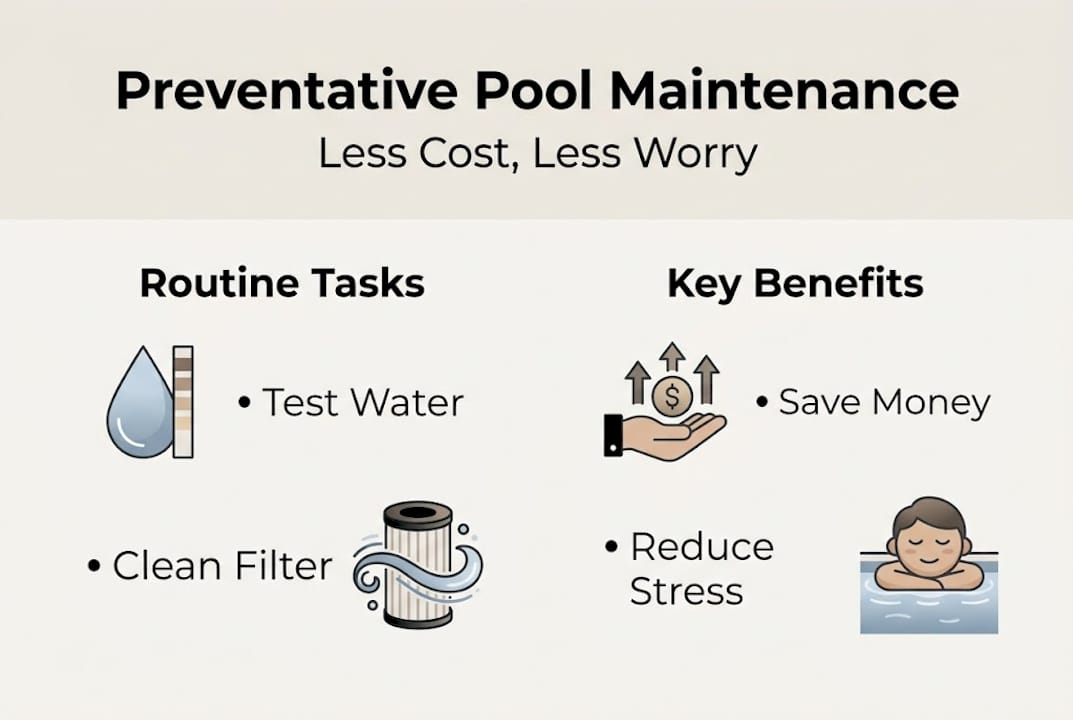
Understanding what falls under preventative maintenance will help you see what truly makes a difference. It’s not just throwing chemicals in the water once a month. It’s a consistent, layered approach that addresses water chemistry, physical cleaning, and equipment health together.
Here are the core tasks every Florida pool owner should be doing:
- Test and balance water chemistry at least twice a week, checking pH, chlorine, alkalinity, and calcium hardness.
- Skim the surface daily or every other day to remove leaves, debris, and insects before they sink and decompose.
- Brush pool walls and floor weekly to prevent algae from taking hold on surfaces.
- Clean or backwash the filter every two to four weeks depending on usage and debris load.
- Check circulation and pump operation weekly to catch any unusual sounds, pressure drops, or flow issues early.
- Inspect pool equipment monthly, including heaters, valves, and automation systems.
| Task | Recommended frequency |
|---|---|
| Water chemistry testing | 2–3 times per week |
| Surface skimming | Daily or every other day |
| Wall and floor brushing | Weekly |
| Filter cleaning or backwash | Every 2–4 weeks |
| Equipment inspection | Monthly |
| Professional inspection | Every 6–12 months |
Regular pool maintenance extends pump life by as much as 40 to 60 percent in Florida’s climate, which translates directly to fewer replacement costs and more reliable performance.
Pro Tip: Florida’s wet season runs from June through September, bringing heavy rain that dilutes chemicals and throws off water balance fast. Adjust your testing frequency upward during these months and check chemistry after every major storm. Your long-lasting pool surfaces depend on consistent water balance more than almost anything else. Scheduling pool inspections in Florida at the start of each season gives you a clean baseline to work from.
How preventative care boosts pool equipment lifespan
But the benefits aren’t just about saving on repairs. They’re also about extending the life and performance of your most valuable pool equipment.
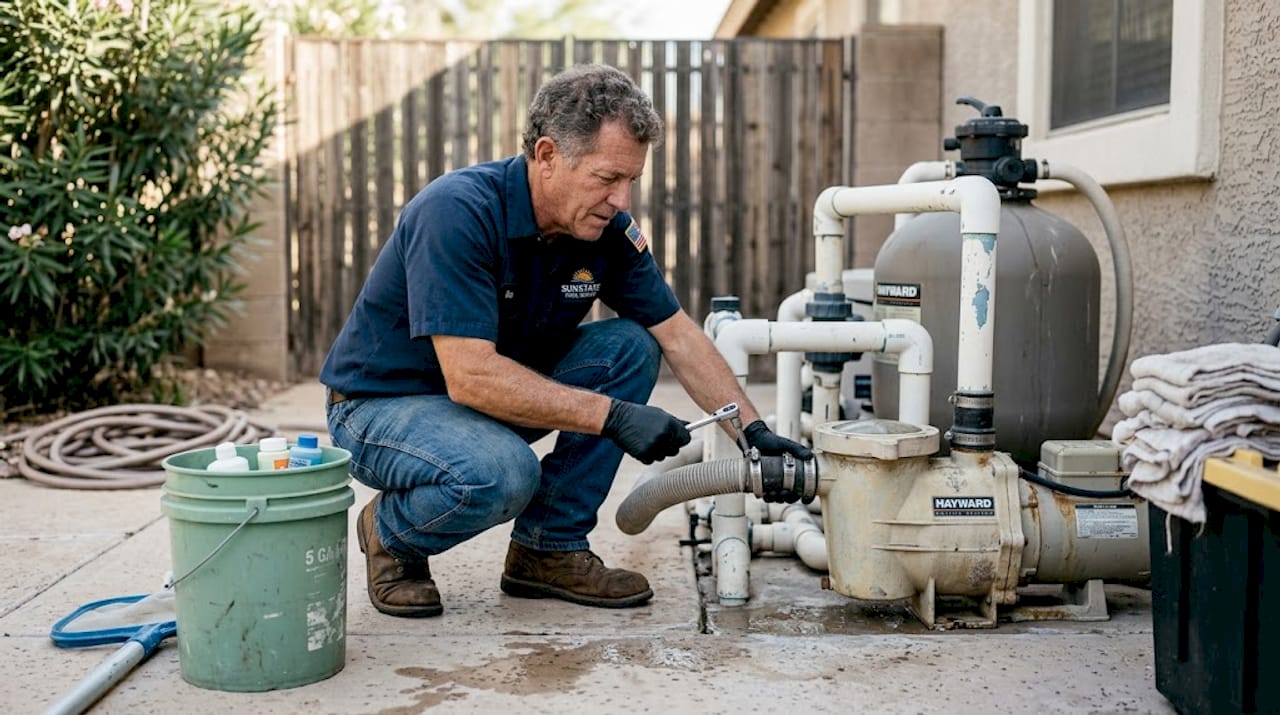
A Florida pool pump in good condition lasts 8 to 12 years. Without proper maintenance, that lifespan can shrink by 40 percent or more. That means a pump you’d normally replace after a decade might need to go after just five or six years. Multiply that across all your major equipment and you’re looking at thousands of dollars in premature replacements.
Here’s what costs the most when equipment fails:
- Pool pump: $500–$1,500 to replace
- Pool filter: $300–$900 to replace
- Pool heater: $1,500–$3,500 to replace
- Automation system: $1,000–$3,000 to replace
- Pool light fixtures: $100–$500 each
Regular maintenance extends pump lifespan by 40 to 60 percent, and variable-speed pumps can save $40 to $60 per month on energy bills compared to single-speed models.
“The biggest mistake we see Florida pool owners make is waiting until something breaks to call for help. By then, the damage is done and the bill is much bigger than it needed to be.”
Pro Tip: If you’re still running a single-speed pump, upgrading to a variable-speed model is one of the smartest moves you can make. Pair it with a consistent cleaning schedule and you’ll see the savings in both your energy bill and your equipment replacement timeline. Extending pool lifespan starts with protecting the equipment that keeps water moving. And regular maintenance for longevity is the foundation every long-lasting pool is built on.
Preventative maintenance and your pool’s appearance
Of course, a well-maintained pool is about more than just savings and equipment. It’s also about pride of ownership and visual enjoyment.
A pool that gets consistent care looks better. Full stop. Water stays clear and blue rather than cloudy or green. Surfaces stay smooth and bright rather than stained, etched, or rough. And that visual difference matters, both for your daily enjoyment and for your home’s value.
Monthly pool service prevents staining, etching, and helps maintain a beautiful, inviting look year-round. In Florida’s real estate market, a clean, well-maintained pool is a genuine selling point. A neglected one can actually lower perceived home value.
Here’s what regular maintenance actively prevents on your pool’s surface:
- Calcium scaling: White, crusty deposits that form when calcium hardness gets too high
- Algae staining: Green, black, or yellow discoloration that penetrates porous surfaces
- Acid etching: Rough, pitted texture caused by low pH eating into plaster or marcite
- Waterline buildup: Oily, dark residue that accumulates from sunscreen and body oils
- Rust staining: Orange or brown marks from metal objects or corroded fittings
You can also reduce chlorine needs significantly when your water chemistry stays balanced consistently, which means less chemical cost and a more comfortable swimming experience. The benefits of professional pool service go well beyond what most homeowners expect when they first consider hiring help.
Is professional service worth it? DIY vs. hiring a pro
The final piece: how do you choose between rolling up your sleeves and calling in an expert?
| Factor | DIY | Professional service |
|---|---|---|
| Annual cost | $500–$1,500 | $1,560–$3,960 |
| Time required | 3–5 hours/week | Minimal |
| Risk of error | Medium to high | Low |
| Equipment knowledge | Variable | Expert level |
| Response to problems | Delayed | Fast |
DIY pool maintenance saves $500 to $1,000 per year but increases the risk of user error, which can be costly. That’s a real trade-off worth thinking through.
Common mistakes first-time DIYers make:
- Over-chlorinating, which damages surfaces and irritates swimmers
- Ignoring filter pressure readings until the filter fails
- Skipping brushing because the water looks clean
- Misreading test strips and adding the wrong chemicals
- Neglecting equipment inspections until a breakdown happens
Pro Tip: Even if you handle day-to-day maintenance yourself, scheduling a professional pool service inspection twice a year is smart. A trained technician catches early signs of equipment wear, surface damage, and chemical imbalance that most homeowners miss until they become expensive problems.
The honest answer is that most Florida homeowners benefit from some combination of both. DIY for routine weekly tasks, professional help for seasonal inspections and anything that involves equipment repair or surface work.
The secret to lower pool bills and more joy: Our take
Here’s what 35-plus years of working on pools across Central Florida has taught us: the homeowners who spend the least on their pools over time are not the ones with the fanciest equipment or the biggest budgets. They’re the ones who are consistent.
It’s not about doing everything perfectly. It’s about showing up every week, testing the water, skimming the surface, and catching small problems before they grow. A pool that gets that kind of attention rarely needs emergency service. It rarely needs early resurfacing. And it almost never becomes a source of stress.
Most of the costly repairs we see come from the same place: the basics got skipped. Not for months, sometimes just for a few weeks during a busy stretch. Florida’s climate doesn’t give pools much grace time. Heat and humidity accelerate everything, including damage.
Think of preventative maintenance the way you think about Florida pool prep tips: a little effort before the season saves a lot of pain during it. The investment is small. The return is a pool that looks great, runs efficiently, and adds genuine value to your home and your life.
Take your pool’s health further with Classic Marcite
Preventative maintenance keeps your pool healthy day to day, but sometimes surfaces wear down, equipment ages, or you simply want to upgrade to something better. That’s where we come in.

Classic Marcite has been serving Orlando and Jacksonville homeowners since 1988, with over 100,000 pools resurfaced and a reputation built on quality and reliability. Whether you need guidance on pool resurfacing basics, want to understand how regular pool maintenance connects to long-term surface health, or are ready to explore a full renovation, our team is here to help. Contact us today for a free estimate and find out what your pool could look like with the right care behind it.
Frequently asked questions
How often should I schedule preventative pool maintenance in Florida?
Weekly or bi-weekly service is the standard recommendation for residential pools in Florida, given the climate’s tendency to accelerate algae growth and chemical depletion.
Does DIY pool care actually save money compared to hiring a professional?
DIY saves $500 to $1,000 per year on average, but the risk of costly errors means those savings can disappear quickly if something goes wrong.
What’s the impact of preventative maintenance on pool equipment lifespan?
Regular maintenance extends pump life by 40 to 60 percent, which directly reduces how often you need to pay for major equipment replacements.
Will monthly maintenance improve my pool’s appearance?
Yes. Monthly service prevents staining and scaling, keeps water clear, and ensures your pool looks inviting and well-kept throughout the year.