TL;DR:
- Maintaining proper pool chemical balance involves managing six interacting parameters to protect surfaces and equipment.
- Consistent testing and early adjustments prevent costly damage and ensure effective sanitation.
Pool chemical balance is the precise management of interacting water parameters that controls sanitizer effectiveness, protects equipment, and keeps swimmers safe. The role of pool chemical balance goes far beyond adding chlorine on schedule. Balanced chemical levels reduce total sanitizer use by 40% and prevent 85% of equipment-related maintenance issues. That single fact explains why pool water chemistry is the foundation of every maintenance decision you make. Whether you manage a backyard pool in Orlando or a commercial facility in Jacksonville, understanding what drives balance, and what breaks it, saves you money and prevents serious damage.
What is the role of pool chemical balance?
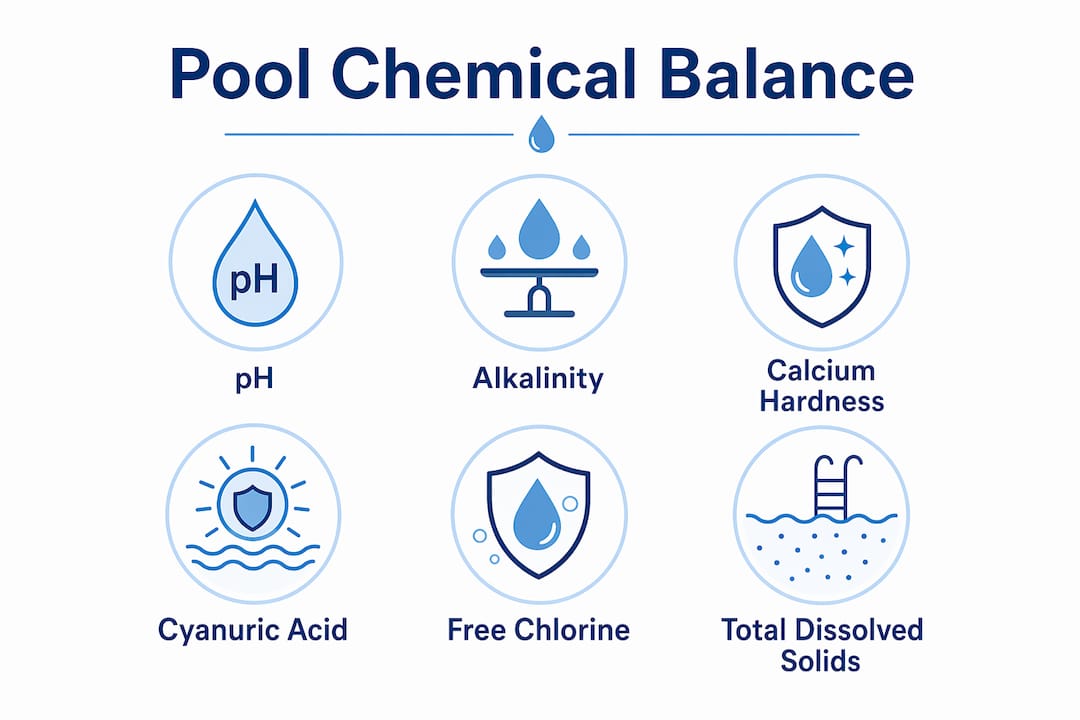
Pool chemical balance, known in the industry as water chemistry management, is the practice of keeping six key parameters within defined ranges simultaneously. Those parameters are pH, free chlorine, total alkalinity, calcium hardness, cyanuric acid, and total dissolved solids. No single number tells the full story. Each parameter interacts with the others, and a shift in one triggers a chain reaction across the rest.
The industry-standard pH range is 7.2–7.8, with free chlorine held at 2.0–4.0 ppm for effective sanitation. These numbers come from decades of testing across residential and commercial pools. They represent the window where chlorine works efficiently, surfaces stay intact, and swimmers stay comfortable.
Pool water chemistry matters because chlorine alone cannot do its job without the right conditions. A pool with correct chlorine levels but wrong pH can still fail to sanitize properly. That is the core insight most pool owners miss.
Which chemical parameters most affect pool balance?
pH: the master variable
pH is the single most influential parameter in pool water chemistry. pH controls sanitizer activity and directly influences surface integrity, which is why professionals call it the master variable. A pH of 8.0 reduces chlorine’s sanitizing power to just 20–40% compared to pH 7.5. That means your chlorine is present but largely inactive, even when the test strip reads “fine.”
Low pH creates aggressive, acidic water that leaches calcium from plaster and marcite surfaces. High pH causes calcium carbonate to precipitate out of solution, forming scale on pipes, heaters, and tile grout.
Total alkalinity and calcium hardness
Total alkalinity acts as a buffer for pH. When alkalinity sits in the 80–120 ppm range, pH resists sudden swings from rain, bather load, or chemical additions. Without adequate alkalinity, pH bounces unpredictably, making the pool hard to manage and expensive to correct.
Calcium hardness protects your pool’s surface finish. Water with low calcium hardness is “hungry” for minerals and pulls them directly from plaster, marcite, and grout. High calcium hardness causes scaling that clogs filters and reduces heater efficiency. The target range is typically 200–400 ppm for most pool types.
Cyanuric acid and total dissolved solids
Cyanuric acid (CYA) stabilizes free chlorine against UV degradation in sunlight. Without CYA, outdoor pools lose a significant portion of their chlorine within hours of direct sun exposure. The recommended range is 30–50 ppm. Above 80–100 ppm, CYA actually suppresses chlorine activity, creating a condition called “chlorine lock.”
Total dissolved solids (TDS) accumulate over time from chemicals, body oils, sunscreen, and evaporation. High TDS reduces the effectiveness of every chemical you add and signals that partial dilution is overdue.
| Parameter | Target Range | Primary Risk if Out of Range |
|---|---|---|
| pH | 7.2–7.8 | Sanitizer failure, surface corrosion or scale |
| Free chlorine | 2.0–4.0 ppm | Inadequate sanitation, algae growth |
| Total alkalinity | 80–120 ppm | pH instability |
| Calcium hardness | 200–400 ppm | Plaster etching or scale buildup |
| Cyanuric acid | 30–50 ppm | Chlorine loss or chlorine lock |
Pro Tip: Test cyanuric acid monthly, not weekly. It accumulates slowly but causes problems that weekly chlorine testing will not reveal until the damage is done.
What damage does poor chemical balance cause?
The effects of poor chemical balance fall into two categories: corrosive water and scale-forming water. Both destroy pool components, but they do it differently.
Corrosive water, caused by low pH or low calcium hardness, attacks pool surfaces from the inside out. Low pH causes plaster damage by leaching calcium, leaving permanent pitting and roughness. It also corrodes metal fittings, pump housings, and heat exchangers. Chemical imbalance can lead to repair costs of $500 to $1,000 or more, not counting surface resurfacing.
Scale-forming water, caused by high pH or high calcium hardness, deposits calcium carbonate on every surface it touches. Scale clogs filter media, coats heating elements, and reduces flow through pipes. A scaled heater can lose significant efficiency before the problem becomes visible.
The impact on swimmers is equally real. Water with a pH above 7.8 causes eye and skin irritation even when chlorine levels appear normal. Cloudy water, a common sign of imbalance, signals that chlorine is not working effectively.
“The most common mistake pool owners make is blaming chlorine quantity for poor water quality when the real culprit is pH. A pool at pH 8.0 with correct chlorine levels has less than half the sanitizing power of a pool at pH 7.5 with the same chlorine reading.”
Common problems linked directly to chemical imbalance include:
- Algae blooms despite regular chlorination (usually a pH or CYA problem)
- Cloudy or green water after heavy rain (pH crash from dilution)
- Rough or pitted plaster surfaces (low calcium hardness over time)
- White scale deposits on tile and waterline (high pH combined with high calcium)
- Corroded ladder rails or pump fittings (low pH, low alkalinity)
How do chemical parameters interact with each other?
Pool chemistry is a system, not a checklist. Adjusting one parameter affects others, and treating each number in isolation leads to corrections that create new problems. This is the most common source of frustration for pool owners who follow instructions but still cannot get their water right.
The clearest example is the alkalinity-pH relationship. Total alkalinity buffers pH, meaning it resists change. When you raise alkalinity, pH tends to rise with it. When you lower pH with acid, alkalinity drops as well. You cannot adjust one without affecting the other, which is why the sequence of adjustments matters so much.
pH, in turn, governs how much of your free chlorine is actually active. At pH 7.5, roughly 50% of free chlorine exists as hypochlorous acid, the form that kills bacteria and algae. At pH 8.0, that fraction drops sharply. Cyanuric acid adds another layer of complexity by binding to free chlorine, reducing the active fraction further. High CYA combined with high pH can render a pool nearly unable to sanitize despite a chlorine reading that looks acceptable.
The Langelier Saturation Index
The Langelier Saturation Index (LSI) is the most reliable single indicator of overall water balance. It integrates pH, calcium hardness, total alkalinity, temperature, and TDS into one number. An LSI between -0.3 and +0.3 indicates balanced water. Below -0.3 means corrosive. Above +0.3 means scale-forming.
Individual readings can all fall within their target ranges while the LSI still signals a problem. That is why professionals calculate LSI rather than relying on parameter-by-parameter checks alone. It gives you the full picture in one number.
Pro Tip: Free LSI calculators are available from pool supply associations. Run one monthly and you will catch imbalance trends before they cause visible damage.
How do you balance pool chemicals effectively?
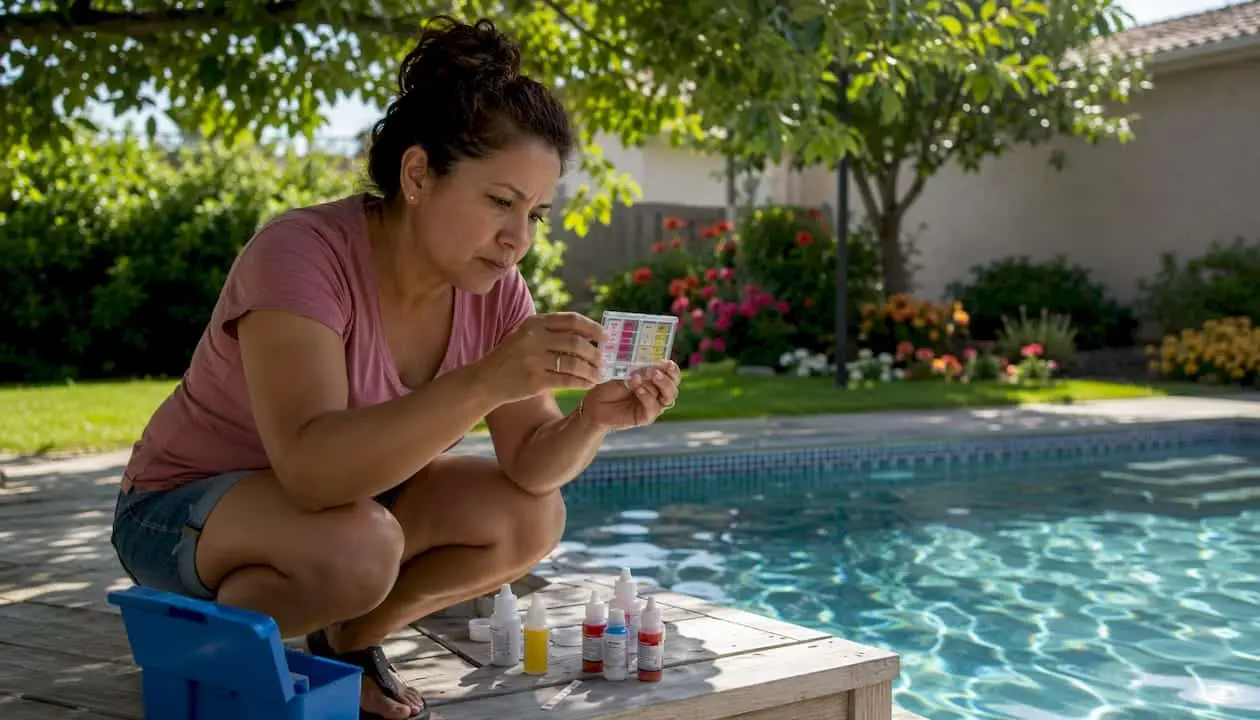
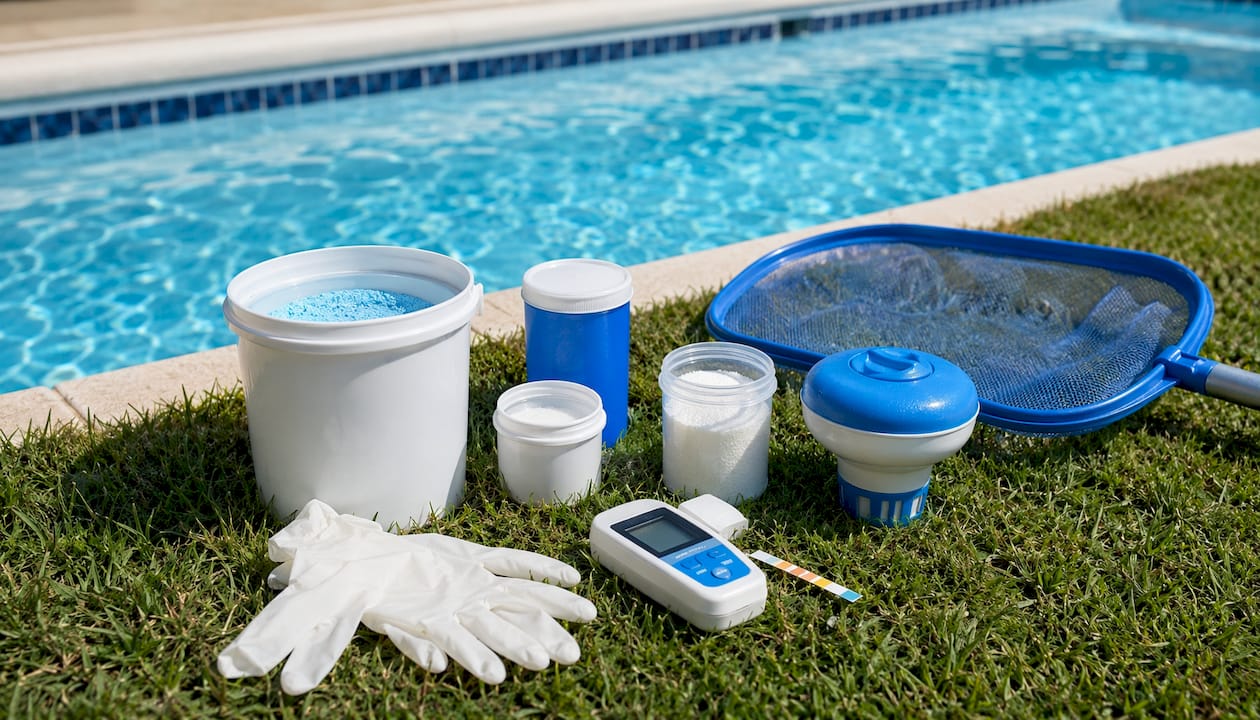
Consistent testing is the foundation of good pool water maintenance. Test pH and free chlorine at least twice per week during swim season. Test total alkalinity, calcium hardness, and cyanuric acid monthly. Use a reliable test kit, either a liquid drop kit or a digital photometer, rather than relying solely on test strips for critical readings.
The recommended adjustment sequence is total alkalinity first, then pH, followed by free chlorine and calcium hardness. This order matters because alkalinity stabilizes pH, and pH controls how effectively chlorine works. Adjusting chlorine before fixing pH wastes product and money.
Follow these steps for a systematic adjustment:
- Test all parameters before adding any chemicals. Record the readings so you have a baseline.
- Adjust total alkalinity to 80–120 ppm using sodium bicarbonate to raise it or muriatic acid to lower it.
- Adjust pH to 7.2–7.6 using sodium carbonate (soda ash) to raise it or muriatic acid to lower it.
- Add sanitizer (chlorine) after pH is stable. Chlorine works best within the correct pH window.
- Adjust calcium hardness if needed, adding calcium chloride slowly with the pump running.
- Wait and retest after each adjustment. Allow at least 4–6 hours of circulation before retesting.
Never add two chemicals simultaneously. Adding treatments one at a time with circulation in between prevents chemical reactions in the water that can cause cloudiness, scaling, or surface damage. Pre-dissolve dry chemicals in a bucket of pool water before broadcasting them. Pre-dissolving dry chemicals prevents chemical hot spots that bleach or etch plaster surfaces.
When cyanuric acid or TDS accumulates beyond correctable levels, partial draining becomes necessary. Partial draining should not exceed one-third of pool volume at once to avoid structural stress on the shell. Draining is a last resort, not a routine fix.
Pro Tip: Keep a simple log of your test results and chemical additions. Patterns in the data will tell you when your pool is drifting before it becomes a visible problem.
For Florida pool owners dealing with intense sun and heavy bather loads, cutting chlorine use through proper balance management is both practical and cost-effective.
What I have learned from years of watching pools fail and thrive
The pools that stay in the best condition share one trait: their owners treat chemistry as a system, not a series of isolated fixes. I have seen pools with perfect individual readings develop scale and corrosion because no one ever calculated the LSI. I have also seen pools with slightly off numbers stay in excellent condition for years because the owner made small, consistent adjustments and never let imbalance compound.
The biggest pitfall is chasing numbers. When a pool owner adds acid to drop pH, then adds soda ash because it dropped too far, then adds more chlorine because the acid consumed it, they are not managing chemistry. They are reacting to it. Understanding chemical relationships is what separates maintenance from firefighting.
High-quality chemicals matter more than most people realize. Cheap stabilized chlorine tablets add cyanuric acid with every dose. Over a season, CYA accumulates past 80 ppm and the pool enters chlorine lock. Switching to unstabilized chlorine for routine dosing and using stabilized products only when CYA is low is a simple change that prevents a frustrating problem.
The most cost-effective pool maintenance strategy is also the least exciting one: test regularly, adjust early, and never let a small imbalance sit for two weeks. Consistent small adjustments prevent the kind of chemical corrections and equipment failures that cost hundreds of dollars to fix. Professional support, whether for a quarterly water analysis or a surface inspection, pays for itself quickly when it catches problems before they escalate.
— Results
How Classicmarcite supports your pool’s long-term health
Proper pool water chemistry does more than keep water clear. It directly protects your pool’s surface finish. Corrosive or scale-forming water degrades marcite, plaster, and aggregate finishes faster than any other factor. When the surface breaks down, no amount of chemical correction restores it.

Classic Marcite has resurfaced over 100,000 pools across Florida since 1988, and the team sees the same pattern repeatedly: pools with consistent chemical balance last significantly longer between resurfacing cycles. For pools in The Villages, Winter Park, and surrounding Central Florida communities, Classicmarcite offers professional pool resurfacing using Pebble Tec® and other premium finishes that hold up to Florida’s climate. Maintaining your water chemistry is the best way to protect that investment. When the surface does reach the end of its life, Classicmarcite delivers the craftsmanship and materials to restore it fully. Request a free estimate to get started.
FAQ
What is pool chemical balance?
Pool chemical balance is the simultaneous management of pH, free chlorine, total alkalinity, calcium hardness, cyanuric acid, and total dissolved solids within defined target ranges. All six parameters interact, so balance requires treating them as a connected system rather than independent readings.
What happens if pool chemicals are out of balance?
Unbalanced pool water causes corrosion of surfaces and equipment, scale buildup on pipes and heaters, ineffective sanitation, and swimmer discomfort. Chemical imbalance can lead to repair costs of $500 to $1,000 or more, depending on the damage.
How often should you test pool water chemistry?
Test pH and free chlorine at least twice per week during swim season. Test total alkalinity, calcium hardness, and cyanuric acid once per month. More frequent testing is warranted after heavy rain, high bather loads, or chemical additions.
Why does pH matter so much for pool sanitation?
A high pH of 8.0 reduces chlorine’s sanitizing power to 20–40% compared to pH 7.5. This means a pool can have correct chlorine levels and still fail to sanitize effectively if pH is not controlled first.
When should you partially drain a pool to fix chemical balance?
Partial draining is necessary when cyanuric acid or total dissolved solids accumulate beyond levels that chemical adjustment can correct. Never drain more than one-third of pool volume at once to avoid structural damage to the pool shell.
Key takeaways
Proper pool chemical balance requires managing six interacting parameters as a system, not a checklist, to protect surfaces, equipment, and swimmer health.
| Point | Details |
|---|---|
| pH is the master variable | Keeping pH between 7.2 and 7.6 maximizes chlorine effectiveness and protects pool surfaces. |
| Adjust in the right sequence | Fix total alkalinity first, then pH, then chlorine to prevent chemical conflicts and wasted product. |
| Use the LSI for full-system balance | The Langelier Saturation Index integrates multiple parameters to reveal corrosive or scale-forming trends individual readings miss. |
| Small adjustments prevent big costs | Consistent testing and early corrections avoid equipment failures and surface damage costing $500 or more. |
| Surface finish depends on water chemistry | Corrosive or scale-forming water degrades pool surfaces faster than any other factor, shortening resurfacing intervals. |
