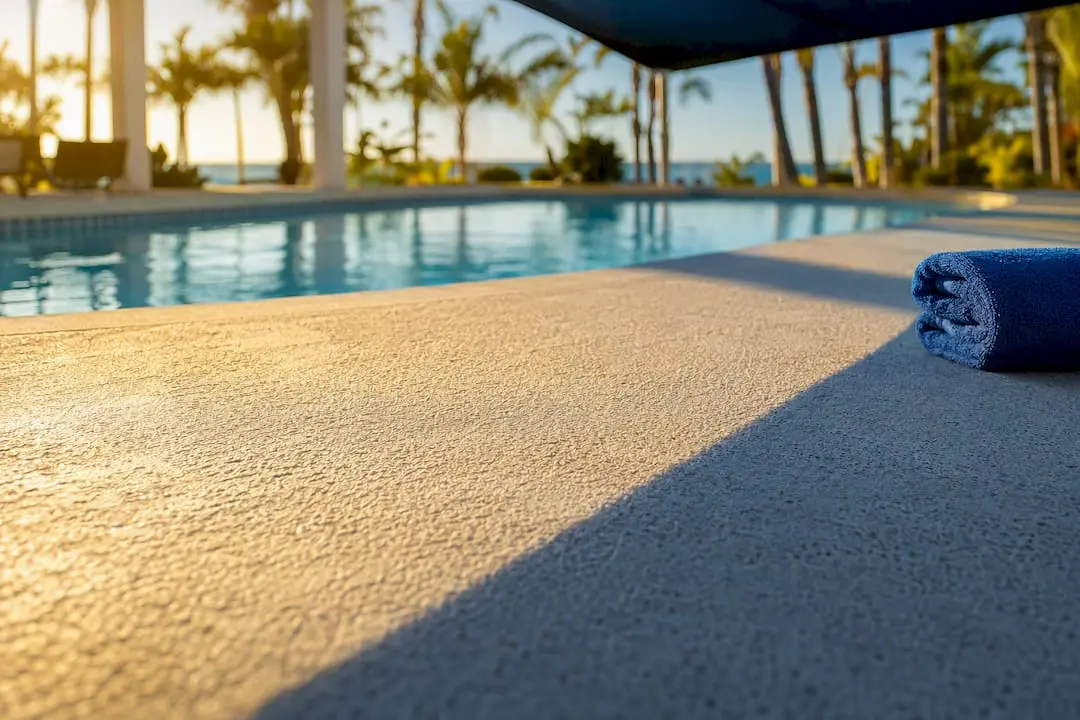
Cooling a hot pool deck takes two moves working together: temporary measures like shade and mats that bring quick relief today, plus permanent upgrades like high-SRI coatings or light-colored materials that solve the problem for good. Temporary fixes typically knock 10 to 15°F off surface temperature. A properly specified coating or material swap can cut it by 15 to 30°F. The right choice depends on your budget, your climate, and how long you’re willing to wait for results.
TL;DR:
- Shade structures and misting systems can lower surface temperatures by about 10 to 15°F in the short term but require ongoing water use and maintenance.
- Travertine is the most effective natural material for keeping a pool deck cool, often 20 to 40°F cooler than standard concrete but comes with higher initial costs and sealing needs.
- Reflective coatings and light-colored surfaces can reduce heat by 15 to 30°F, but proper surface prep is essential to prevent delamination, and rubberized or textured coatings add cushioning.
- Regarding long-term costs, cheaper coatings may need reapplication every few years, while durable materials like travertine can last decades with resealing; budget accordingly.
- It’s important to assess your deck’s structural integrity and sun exposure before choosing a permanent fix, and requesting a sample panel can help evaluate color and texture under real sunlight.
Table of Contents
- Quick Fixes for Pool Deck Heat Reduction You Can Use Today
- Which Permanent Materials Stay Coolest Underfoot?
- Do Cool-Deck Coatings and Resurfacing Actually Work?
- Design Choices That Lower Deck Temperature Without New Materials
- What Does a Cool Deck Actually Cost Over Time?
- How to Choose the Right Fix: A Contractor Checklist
- A Contractor’s View on When to Call in the Pros
- Get a Free Estimate on Cool-Deck Resurfacing
- Sources
Quick Fixes for Pool Deck Heat Reduction You Can Use Today
Waiting on a resurfacing quote isn’t practical when the deck is scorching your feet this weekend. Shade structures are the fastest lever. A cantilevered umbrella or a shade sail positioned to block afternoon sun (typically the west and southwest exposure) can drop surface temperature noticeably within the shaded footprint. Direct sun is the main driver of concrete surface heat.
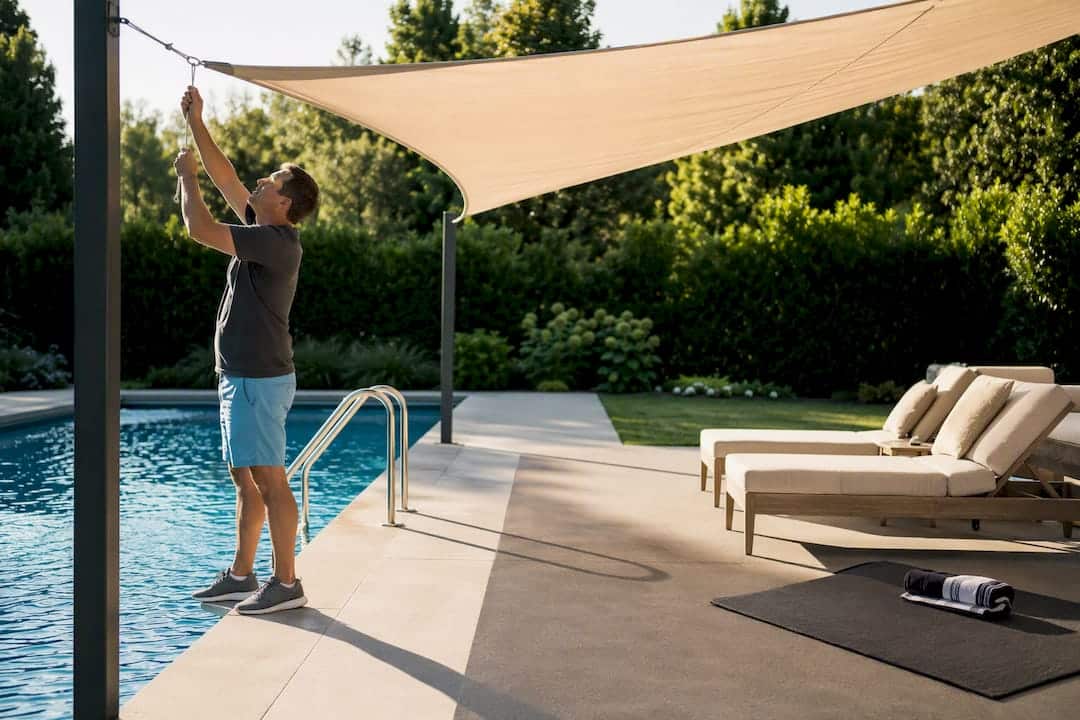
Misting systems work differently. They cool the air and surface actively, delivering roughly 10 to 15°F of temperature drop while running. The tradeoff is water use and a surface that stays damp, which brings its own footing concerns.
For a no-install option, roll-out pool tiles, rubber mats, and glued-down vinyl flooring create an instant thermal barrier over hot concrete:
- Interlocking deck tiles for pathways from the house to the pool edge
- Rubberized wet-area matting near ladders and steps
- Vinyl flooring with cooling-technology backing for glued-down applications
- Outdoor area rugs rated for wet, chlorinated environments
Choose quick-dry, open-weave materials over anything that traps moisture underneath. A soggy mat breeds mildew and turns into a slip hazard fast.
Pro Tip: Stage your fixes. Put mats and shade only where people actually walk and stand, like the pool ladder and lounge area, instead of covering the whole deck. You get most of the comfort benefit for a fraction of the cost.
Which Permanent Materials Stay Coolest Underfoot?
If you’re replacing or building a deck from scratch, material choice does more heavy lifting than any coating applied later. Travertine consistently ranks as the top natural-stone performer in hot climates. Field comparisons in extreme heat conditions found travertine running 20 to 40°F cooler than standard poured concrete, thanks to its naturally porous, light-reflective surface. It also offers solid slip resistance when honed or tumbled, though it does need periodic sealing to stay that way, typically every one to three years depending on sun exposure.
Concrete and porcelain pavers are the budget-conscious alternative. Light colors and proper joint drainage matter more here than the material itself. Porcelain pavers, in particular, resist staining and fading better than poured concrete over a decade of pool chemical exposure.
Composite and capped polymer decking, more common around pools with wood-style aesthetics, offer real heat-resistant advantages over traditional wood, but don’t assume “composite” automatically means cool. Darker composite colors still absorb significant heat, sometimes rivaling dark concrete. Stick to lighter tones if heat is your priority.
A few guidelines worth remembering:
- Travertine: best cooling performance, highest material cost, needs sealing
- Porcelain and concrete pavers: strong middle ground on cost and durability
- Composite decking: comfortable underfoot in light colors, less so in dark tones
- Existing sound concrete: usually a candidate for resurfacing rather than full replacement
Full replacement typically makes sense only when the existing slab has structural cracking or extensive spalling. A structurally sound slab is almost always cheaper to resurface than to tear out.
Do Cool-Deck Coatings and Resurfacing Actually Work?
Yes, and the mechanism is straightforward: reflective pigments and light colors bounce solar radiation instead of absorbing it, while a textured surface profile reduces the actual skin contact area on the hottest square inches. High-quality reflective coatings can lower surface temperatures by roughly 15 to 30°F compared to bare, untreated concrete.
Three systems dominate the market:
- Acrylic “cool deck” coatings: the traditional option, affordable, but shorter-lived under intense UV and prone to peeling if prep work is skipped
- Polyurea systems: faster cure times and stronger UV stability, often blended with light flake for added reflectance and a lower-maintenance profile
- Rubberized coatings: added cushioning underfoot, useful around diving boards or play areas, though generally the priciest per square foot
Some manufacturers now market dedicated heat-relief formulations built specifically to reduce surface heat and improve barefoot comfort, which is worth asking about by name when you’re comparing quotes. Any pool deck coating needs proper slab prep, acid etching or grinding, before application, or the finish delaminates within a couple of seasons. Most systems cure enough for foot traffic within 24 to 48 hours, though full chemical cure can take a week or more.
Design Choices That Lower Deck Temperature Without New Materials
Color and layout decisions cost nothing extra during a renovation but shift surface temperature substantially.
- Pick light neutrals over dark tones. Sand, buff, ivory, and pale gray reflect far more solar energy than charcoal or terracotta, while still hiding dirt better than pure white does.
- Add texture strategically. A textured or knockdown finish reduces the direct contact area between skin and hot surface, but balance it against traction needs near steps and ladders.
- Plan for airflow and shade. Placing trees, pergolas, or tall plantings on the western side of the deck blocks the harshest afternoon sun without permanent structure.
- Layer shade over cool surfaces. Combining a light-colored coating with even partial shade coverage delivers more consistent, more reliable cooling than either approach alone.
What Does a Cool Deck Actually Cost Over Time?
Installed cost varies by material, and so does how often you’ll pay for upkeep:
- Acrylic cool-deck coatings: lower upfront cost, but recoating every 3 to 5 years in intense sun
- Polyurea coatings: higher upfront cost, generally 7 to 10 years before recoating is needed
- Travertine: highest material cost, but decades of service life with periodic resealing
- Concrete or porcelain pavers: mid-range cost, joint sand or grout maintenance every few years
- Composite decking: mid to high cost, minimal maintenance beyond occasional cleaning
Harsh Florida sun and constant pool chemical splash accelerate wear on any surface, which is why a cheaper coating with a shorter lifespan sometimes costs more over 15 years than a pricier material installed once. Budget for the full life cycle, not just the invoice.
How to Choose the Right Fix: A Contractor Checklist
Before signing anything, walk through this:
- What’s your climate and sun exposure, and how many hours of direct afternoon sun does the deck get?
- Is the existing slab structurally sound, or does it show cracking that points toward replacement?
- Who uses the deck, kids, pets, guests with mobility needs, and how does that affect texture and slip requirements?
- What’s your tolerance for recoating or resealing every few years versus a longer-lived material?
When comparing bids, ask each contractor for written warranty terms, actual SRI or reflectance data on the proposed product, a description of surface prep steps, and photos of past projects in similar sun conditions. A proposal with no warranty, no prep detail, and no references is a red flag regardless of price.
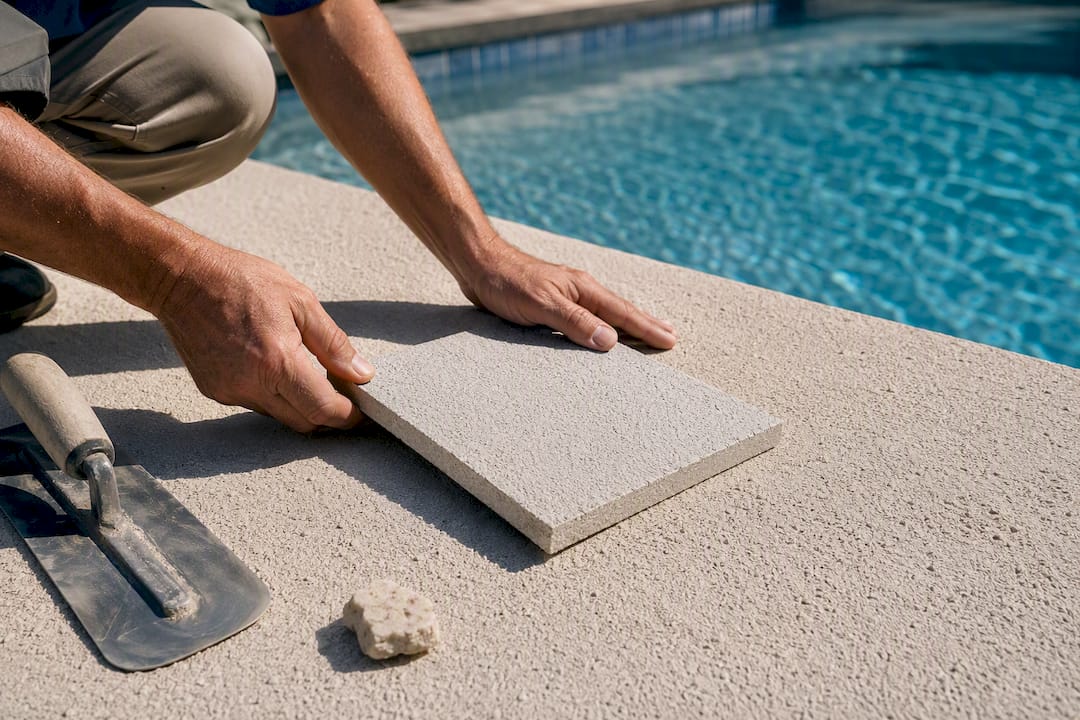
Pro Tip: Ask for a small sample panel installed poolside for 48 hours before committing. Color and texture look different under real midday sun than they do on a showroom chip.
A Contractor’s View on When to Call in the Pros
Experience with a large number of pool resurfacing projects shows the difference between a deck that just needs a coating refresh and one with structural cracking or repeated spalling that keeps coming back after patch jobs. A leading Pebble Tec® applicator in Central Florida recommends pairing cool-deck performance upgrades with aesthetic renovation whenever a resurfacing project is already on the table, since doing both at once saves labor costs down the road.
— Results
Get a Free Estimate on Cool-Deck Resurfacing
If your deck is past the point where mats and shade sails solve the problem, resurfacing delivers the permanent fix. The company’s crews handle color consultation, textured reflective coatings, and full travertine and paver installation, backed by a project history few competitors in Orlando or Jacksonville can match.
A free estimate includes a real condition check on your existing slab, a rundown of which materials fit your sun exposure and budget, and a ballpark cost range before you commit to anything. There’s no obligation attached to finding out what your options actually cost. If you’re in the Orlando area, request your free pool deck estimate and get a straight answer on what it takes to make your deck comfortable again.
Sources
For deeper background on reflectance standards, check the CRRC’s SRI documentation. For color inspiration that stays practical, see this pool deck color guide.
- What can we use to make our pool deck not burn feet? — Greatmats
- Cool Pool Deck Coatings: Heat-Reducing Options That Won’t Burn Your Feet — Croc Coatings
- Pool Deck Surface Showdown: Travertine vs Cool Deck vs Stamped Concrete in 115°F Las Vegas Heat — Salzam Turf & Pavers Design
- Pool Deck & Walkway with HEAT RELIEF TECHNOLOGY™ — Valspar
