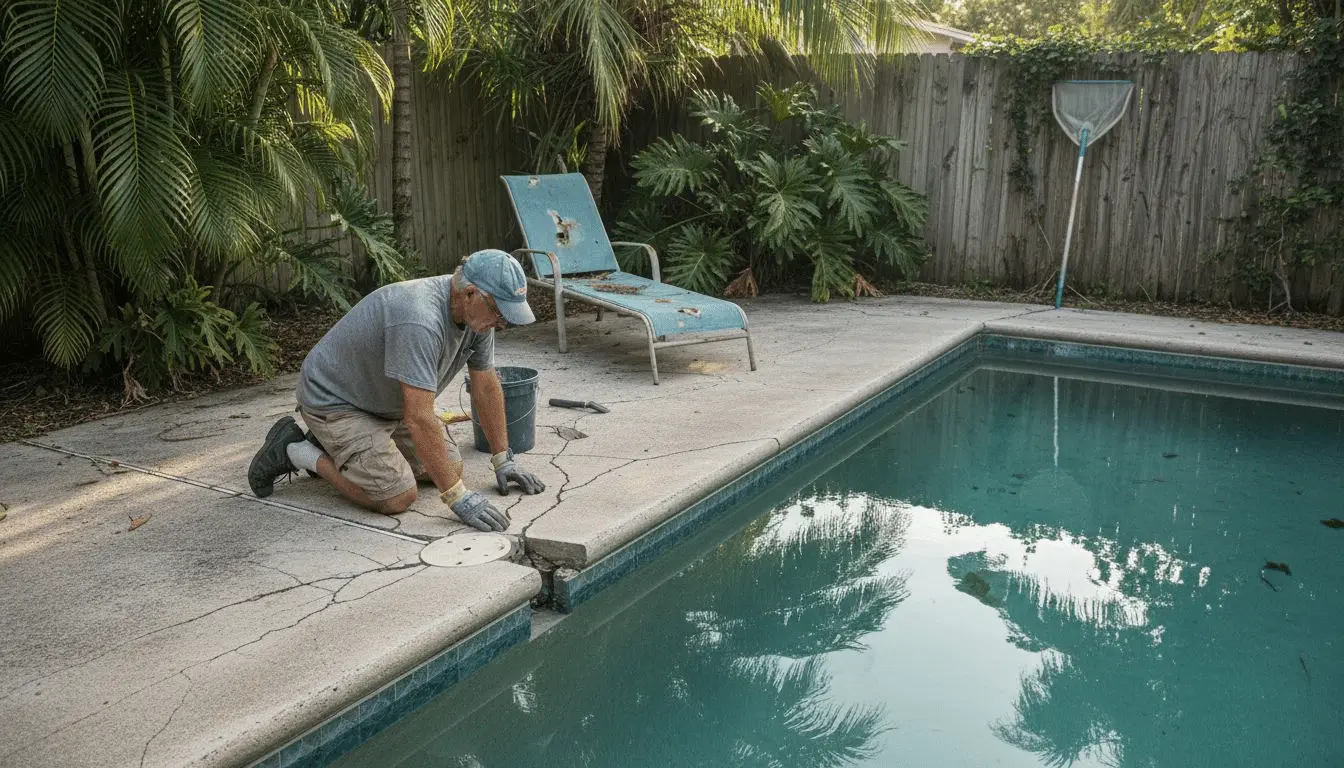
Florida homeowners know that an attractive pool deck is more than just a luxury, especially under the relentless sun and sudden downpours that define an American summer in Orlando or Jacksonville. Over 60 percent of American pool decks suffer from weather-related wear within five years. This makes renovation not only a design upgrade but a crucial step for safety and easy maintenance. Here, you will find clear, reliable strategies to boost both style and year-round durability for your outdoor oasis.
Table of Contents
- 1. Assess Current Deck Condition Before Renovating
- 2. Choose the Right Deck Material for Florida Weather
- 3. Plan Drainage Solutions to Prevent Water Damage
- 4. Prioritize Slip-Resistant and Safe Deck Surfaces
- 5. Select Durable Finishes Like Pebble Tec4
- 6. Enhance Curb Appeal with Stylish Design Options
- 7. Schedule Regular Maintenance for Lasting Results
Quick Summary
| Takeaway | Explanation |
|---|---|
| 1. Assess Deck Condition Thoroughly | Inspect for cracks, discoloration, and water retention to identify structural issues before renovation. |
| 2. Choose Weather-Resistant Materials | Utilize concrete, natural stone, or composite materials that withstand Florida’s humidity and heat. |
| 3. Implement Effective Drainage Solutions | Create gentle slopes and install various drainage types to manage water flow and prevent moisture damage. |
| 4. Ensure Slip Resistance for Safety | Select textured surfaces and maintain visibility through color contrasts to minimize slip hazards on the deck. |
| 5. Schedule Regular Maintenance | Establish a maintenance routine to keep the pool deck in optimal condition and prevent costly repairs. |
1. Assess Current Deck Condition Before Renovating
Renovating a pool deck in Florida begins with a thorough condition assessment that goes far beyond a quick glance. Understanding the current state of your pool deck is crucial for planning an effective and long lasting renovation strategy.
Pool deck surfaces in Florida face extreme challenges from intense sunlight, high humidity, and frequent rainfall. These conditions create unique deterioration patterns that require systematic evaluation. Homeowners should conduct a comprehensive pool deck condition inspection that examines multiple aspects of surface integrity.
Start by looking for visible signs of damage including surface cracks, uneven areas, discoloration, and potential water retention zones. These indicators reveal underlying structural issues that might compromise your renovation efforts. Pay special attention to areas near pool edges, where water exposure is most frequent and potential damage most likely.
Moisture penetration represents a significant risk for pool decks in Florida’s humid climate. Watch for signs of water absorption, algae growth, or subtle surface degradation that could indicate deeper structural problems. Checking for proper drainage and identifying potential water retention spots helps prevent future renovation complications.
Consider using professional assessment tools or consulting experts who can perform a detailed evaluation. They can identify microscopic damage and potential stress points that might not be immediately visible to an untrained eye.
Pro Tip: Take multiple high resolution photographs of your pool deck from different angles to document its current condition and track renovation progress.
2. Choose the Right Deck Material for Florida Weather
Selecting the perfect pool deck material demands more than aesthetic considerations especially in Florida’s challenging climate. Your choice directly impacts durability, maintenance requirements, and long term performance.
Florida’s unique weather conditions create extreme challenges for pool deck materials. High humidity, intense sunlight, frequent rainfall, and temperature fluctuations require specialized materials that can withstand these harsh environmental stressors. Pool resurfacing techniques play a crucial role in material selection and longevity.
Consider materials with exceptional heat resistance and slip prevention. Concrete, natural stone, and high quality composite materials offer superior performance in Florida’s environment. These materials resist UV damage, minimize heat absorption, and provide excellent traction even when wet.
Natural stone options like travertine or granite provide excellent durability and aesthetic appeal. They remain cooler under direct sunlight and offer natural slip resistance. Concrete with specialized coatings can also deliver remarkable performance while allowing customizable design options.
Composite materials represent another excellent choice for Florida pool decks. These engineered materials combine synthetic and natural components to create surfaces that resist moisture, prevent heat buildup, and require minimal maintenance. Their engineered construction ensures consistent performance across varying weather conditions.
Pro Tip: Request material samples and conduct sunlight and water resistance tests before making a final deck material selection.
3. Plan Drainage Solutions to Prevent Water Damage
Effective pool deck drainage is crucial in Florida where frequent rainfall and humidity create significant water management challenges. Your drainage strategy can mean the difference between a durable pool area and expensive water damage repairs.
Understanding local hydrology and landscape characteristics is essential for designing an optimal drainage system. Pool drainage design principles require careful consideration of surface slope, water flow patterns, and potential runoff accumulation points.
Create a gentle slope away from your pool deck to ensure water naturally flows away from the structure. Most professional recommendations suggest a minimum slope of one quarter inch per foot to prevent water pooling. This subtle grade helps direct rainfall and splashout water toward designated drainage areas.
Implement multiple drainage solutions including surface drains, french drains, and strategically placed gutters. Permeable materials like porous concrete or interlocking pavers can also help manage water absorption and reduce surface runoff. These solutions work together to protect your deck from potential moisture damage.
Consider incorporating landscaping elements that support drainage. Strategically placed swales or small berms can redirect water flow and prevent accumulation near your pool deck. Native Florida plants with strong root systems can also help manage water absorption and soil stability.
Pro Tip: Conduct a water flow test during heavy rain to identify potential drainage weak points before completing your pool deck renovation.
4. Prioritize Slip-Resistant and Safe Deck Surfaces
Pool deck safety begins with understanding how surface materials can prevent dangerous accidents. In Florida’s wet environment, slip resistance is not just a design choice but a critical safety requirement.
Understanding slip-resistant surface technologies helps homeowners make informed choices about pool deck materials. Advanced coating innovations now offer sustainable solutions that maintain low friction even under wet conditions.
Texture plays a crucial role in preventing slips. Rough surfaced materials like brushed concrete, textured natural stone, or specialized non slip tiles provide better traction. These surfaces interrupt water flow and create friction points that reduce the likelihood of accidents.
Color and edge markings also contribute to safety. Contrasting colors along pool deck edges and steps improve visibility and help swimmers identify potential level changes. This is especially important for areas with varying elevations or transitional surfaces.
Regular maintenance is key to preserving slip resistance. Periodic cleaning prevents algae and mold buildup that can create hazardous surface conditions. Consider using specialized non slip sealants that can be reapplied periodically to maintain surface integrity and safety.
Pro Tip: Test potential deck materials by simulating wet conditions and walking on samples to personally assess their slip resistance.
5. Select Durable Finishes Like Pebble Tec4
Selecting the right pool deck finish is critical for maintaining long term aesthetics and performance in Florida’s challenging climate. Your deck finish must withstand intense sunlight, frequent moisture, and dramatic temperature variations.
Understanding pool resurfacing material options helps homeowners make informed decisions about durability and appearance. Premium finishes like Pebble Tec4 offer superior resistance to wear and environmental stress.
Premium finishes provide more than just visual appeal. They create a protective layer that shields your pool deck from UV damage, prevents water absorption, and resists algae growth. Specialized materials can reduce surface temperature and provide better slip resistance.
Consider materials that balance aesthetics with functionality. Natural stone inspired finishes like Pebble Tec4 offer texture and visual depth while providing exceptional durability. These advanced surfaces can mimic natural stone appearances while delivering superior performance in Florida’s extreme weather conditions.
Factor in maintenance requirements when selecting your finish. Some premium materials require less frequent resealing and offer longer lasting protection. Understanding the lifecycle and care requirements of different finishes helps you make a more strategic renovation investment.
Pro Tip: Request material samples and test them under direct sunlight to assess heat reflection and color stability before making a final selection.
6. Enhance Curb Appeal with Stylish Design Options
Your pool deck is more than just a functional space. It is an opportunity to create a stunning outdoor aesthetic that transforms your Florida home’s entire landscape and increases property value.
Exploring sustainable landscaping design options helps homeowners integrate pool decks seamlessly with their surrounding environment. Strategic design choices can make your outdoor space feel like a cohesive extension of your home.
Consider incorporating natural stone patterns or decorative concrete finishes that complement your home’s architectural style. Textured surfaces with varied color palettes can create visual interest and break up monotonous deck areas. Native Florida plants around the pool perimeter can soften hard surfaces and create a lush tropical feel.
Color selection plays a critical role in design aesthetics. Lighter color tones reflect heat and create a cooler surface area while darker tones can provide dramatic contrast. Selecting colors that harmonize with your home’s exterior paint and surrounding landscape ensures a unified and sophisticated appearance.
Think beyond traditional rectangular designs. Curved edges, geometric patterns, and multi level deck areas can add architectural intrigue. Integrating seating areas, potted plant zones, or subtle lighting can transform your pool deck from a simple functional space to an elegant outdoor living environment.
Pro Tip: Create a design mood board with material samples, color swatches, and landscape inspiration to visualize your pool deck transformation before making final selections.
7. Schedule Regular Maintenance for Lasting Results
Pool deck maintenance is not a luxury but a necessary investment in preserving your pool area’s beauty and functionality. Consistent care protects your renovation investment and ensures long term performance in Florida’s challenging environment.
Understanding pool maintenance best practices helps homeowners develop strategic care routines. Regular maintenance prevents minor issues from becoming expensive repairs and maintains your deck’s aesthetic appeal.
Create a comprehensive maintenance schedule that includes quarterly professional inspections and monthly self maintenance tasks. This routine should encompass surface cleaning, chemical balance checks, drainage system evaluations, and structural integrity assessments. Pay special attention to areas prone to water accumulation or high foot traffic.
Cleaning procedures require careful approach. Use specialized cleaning solutions appropriate for your specific deck material. Avoid harsh chemical treatments that might damage surface finishes. Soft washing techniques with appropriate pressure and cleaning agents help remove algae, dirt, and potential contaminants without causing surface degradation.
Seasonally adjust your maintenance strategy. Florida’s intense summer heat and frequent rainstorms demand more frequent inspections and protective treatments. Consider professional resealing every two to three years to maintain surface integrity and prevent moisture penetration.
Pro Tip: Document each maintenance session with photographs to track potential developing issues and create a comprehensive maintenance history for your pool deck.
Below is a comprehensive table summarizing the essential steps and strategies for renovating a pool deck in Florida as described in the article.
| Aspect | Key Details | Importance |
|---|---|---|
| Assess Current Deck Condition | Examine aspects like cracks, water retention, and discoloration; employ professional assessment tools as needed. | Understanding current conditions ensures successful renovation outcomes. |
| Choose Appropriate Materials | Opt for heat-resistant materials like concrete, natural stone, and composites suited for Florida’s climate. | Ensures durability and low maintenance requirements. |
| Plan Effective Drainage | Implement slopes, french drains, and permeable materials to manage water efficiently. | Prevents water damage and prolongs deck lifespan. |
| Prioritize Safety Features | Select slip-resistant surfaces and maintain them to prevent algae buildup and accidents. | Improves user safety and aesthetic appeal. |
| Apply Durable Finishes | Use advanced materials like Pebble Tec4 that offer environmental and aesthetic benefits. | Balances functionality with design in the long term. |
| Integrate Stylish Designs | Incorporate elements like curved edges and cohesive landscaping for visual enhancement. | Elevates property appeal and utility. |
| Schedule Regular Maintenance | Perform routine inspections and cleanings with appropriate methods and tools. | Maintains the deck’s integrity and value over time. |
Transform Your Florida Pool Deck with Expert Renovation Solutions
Facing challenges like harsh sunlight damage, moisture issues, or unsafe slippery surfaces in your pool area can turn your backyard retreat into a constant worry. The article highlights critical points such as selecting the right materials like Pebble Tec4 for durability, planning effective drainage to prevent water damage, and prioritizing slip-resistant finishes to keep your poolside safe and stylish. These concerns are common for Florida homeowners who want a deck that is not only beautiful but built to withstand the state’s unique climate.
At Classic Marcite, we specialize in pool deck renovation services tailored specifically to Florida’s environment. With over three decades of experience resurfacing more than 100,000 pools in Orlando, Jacksonville, and beyond, we offer durable, weather-resistant solutions using premium materials like Pebble Tec®. Our expert team handles everything from pool resurfacing to deck remodeling with a focus on lasting performance and curb appeal. Don’t wait until minor issues turn into costly repairs — upgrade your pool deck now to enjoy safe, stunning results all year round.

Discover how our proven pool resurfacing techniques and high-quality finishes can revitalize your outdoor space. Visit Classic Marcite today for a free estimate and join countless Florida homeowners who trust us for their pool renovation needs. Secure your pool deck’s future with expert craftsmanship designed to handle Florida’s toughest weather.
Frequently Asked Questions
How do I assess the current condition of my pool deck before renovation?
To assess your pool deck’s condition, inspect for cracks, discoloration, and uneven areas. Document your findings with high-resolution photographs from different angles to track any necessary repairs during the renovation process.
What pool deck materials are best for Florida’s weather?
Choose materials that resist UV damage and heat absorption, such as concrete, natural stone, or high-quality composites. Test material samples for slip resistance and durability before finalizing your choice.
How can I ensure proper drainage for my pool deck?
Design a drainage system with a gentle slope away from the deck to direct water flow and prevent pooling. Implement surface drains and use permeable materials to enhance water absorption and avoid moisture damage.
What surfaces offer the best slip resistance for my pool deck?
Opt for rough textures like brushed concrete or textured natural stones, which provide better traction. Ensure that your chosen materials are assessed in wet conditions to confirm their slip resistance before installing.
How often should I perform maintenance on my pool deck?
Regular maintenance should occur quarterly, with a comprehensive inspection and upkeep of surfaces every month. Schedule professional resealing every two to three years to protect your deck from the elements and maintain its integrity.
What design options can enhance the aesthetic of my pool deck?
Incorporate decorative elements such as varied color palettes, natural stone patterns, or geometric shapes to enhance visual appeal. Use a design mood board to visualize materials and colors, ensuring they complement your home’s architecture.
Recommended
- What Is Deck Resurfacing? Transforming Poolside Spaces
- 7 Types Of Pool Remodeling Every Homeowner Should Know
- 7 Essential Pool Remodeling Ideas For Florida Properties
- Pool Deck Repair Process: Step-by-Step Guide For Success
- A Homeowner’s Guide to the Best Waterproof Flooring for Basements
- Pool Resurfacing Maitland FL
- Pool Resurfacing Winter Park FL
