TL;DR:
- Pool curing takes 28 days for concrete, gunite, or plaster finishes to reach full strength and durability. Maintaining consistent moisture and temperature during this period prevents cracking, shrinking, and surface damage that cannot be reversed. Rushing or ignoring the curing process often results in long-term issues and higher repair costs.
Curing time for pools is defined as the period during which new concrete, gunite, or plaster finishes chemically harden to reach full structural strength and surface durability. The industry standard for this process is 28 days, with the most critical activity occurring in the first 7 days. During that window, the material undergoes hydration, forming crystalline bonds that give the pool its long-term integrity. Skipping or rushing this phase leads to cracking, shrinking, and surface damage that no amount of maintenance can fully reverse. Understanding what is curing time for pools is the first step toward protecting your investment.
What is curing time for pools, and how long does it take?
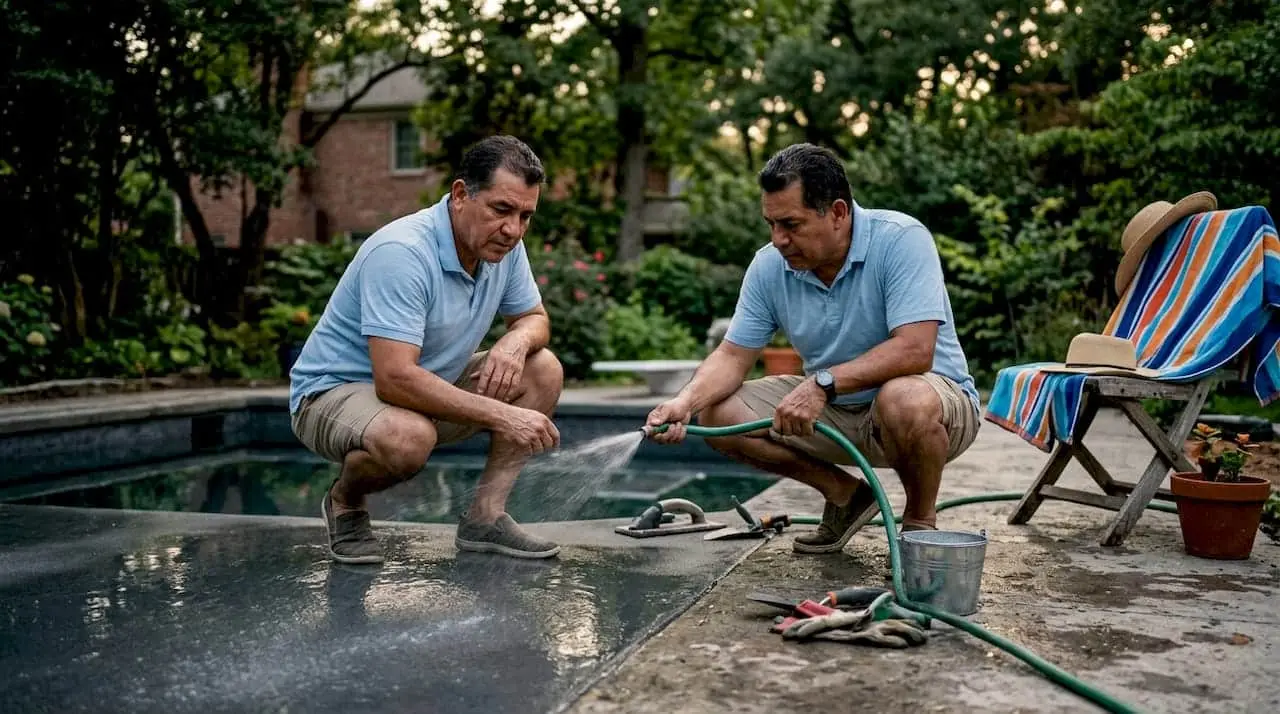
Pool curing is a chemical hydration process, not a drying process. That distinction matters more than most homeowners realize. When concrete or gunite is sprayed or poured, water molecules bond with cement particles to form a crystalline matrix. That matrix is what gives the shell its strength. If the material dries out before those bonds fully form, the structure is permanently weaker.
The 28-day curing standard applies to gunite and concrete pool shells. By day 7, the shell typically reaches 70–85% of its final design strength. That sounds like enough, but the remaining 15–30% matters for long-term load-bearing capacity and resistance to ground movement.
For a full resurfacing project, the total timeline runs 4–6 weeks, with the last 28 days dedicated entirely to curing the interior finish. That means the clock does not start on day one of the project. It starts the day the finish goes on.
Curing also continues slowly beyond 28 days, strengthening progressively for months. Normal use is generally safe after the initial cure period, but the first month is where the heavy lifting happens.
How long does the curing process for a new concrete or gunite pool shell take?
The concrete or gunite pool shell follows a clear, staged timeline. Each stage carries specific risks if ignored.
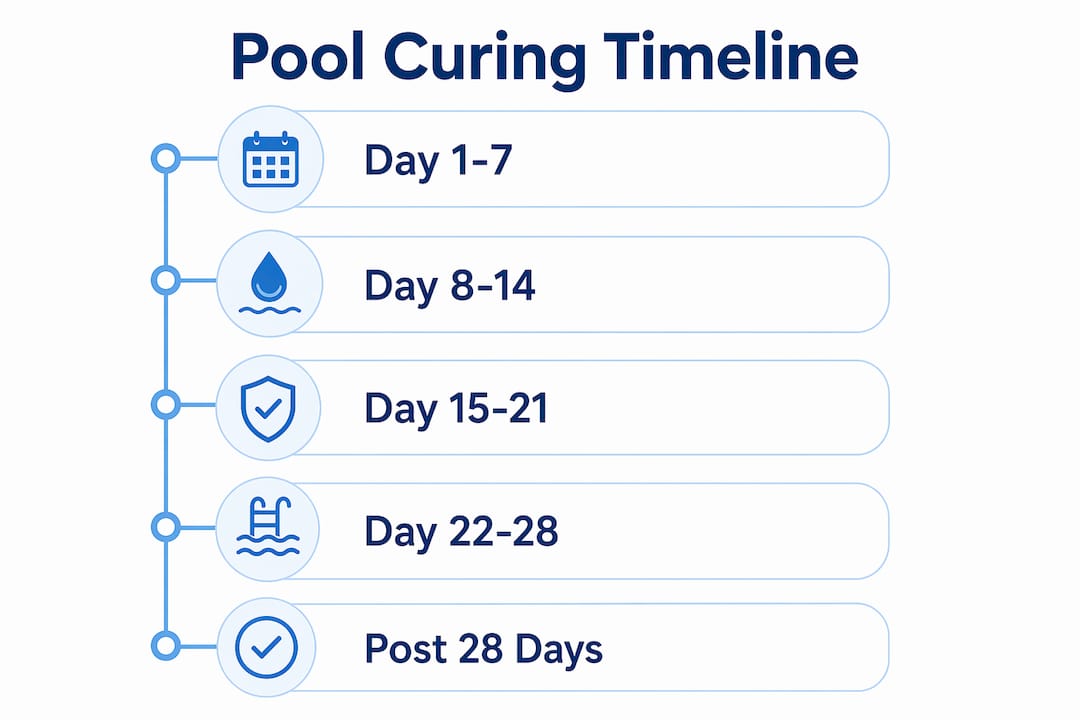
- Days 1–3: The shell achieves walk-on strength within 2–3 days, meaning light foot traffic is possible. Heavy equipment, stone features, or waterfalls must stay off the shell entirely.
- Days 1–7: Hydration is most active. Moisture must be maintained continuously. Letting the shell dry out during this window causes micro-cracks that grow over time.
- Day 7: The shell reaches approximately 70–85% of its final design strength. Visual inspection may show a solid, finished surface, but the chemistry is still working.
- Days 14–28: Structural loads become safer to apply. Builders typically wait the full 28 days before installing heavy stone coping, water features, or equipment that bears directly on the shell.
- Day 28: Full design strength of approximately 4,000 PSI is reached. The shell is ready for normal structural demands.
The gunite shell looks solid within days of spraying. That appearance is misleading. The material remains chemically vulnerable for weeks, and controlled moisture is the only thing keeping the hydration process on track.
Pro Tip: Keep the shell consistently damp during the first 7 days by misting it with water two to three times daily, especially in hot or windy conditions. A dry shell is a weak shell.
Moisture maintenance during pool concrete curing time is not optional. It is the single most controllable factor in determining final shell strength.
What is the typical curing timeline for plaster or other pool interior finishes?
Plaster curing works differently from shell curing because it begins underwater. The moment the pool is filled after plastering, the curing process starts. That means the pool curing duration for the interior finish runs concurrently with water being present, not before it.
The recommended steps for managing plaster curing correctly are:
- Fill the pool immediately after plastering. Leaving fresh plaster exposed to air causes uneven drying and surface discoloration.
- Wait at least 7 days before swimming. The 7-day minimum protects the soft surface from physical damage caused by foot traffic and pool equipment.
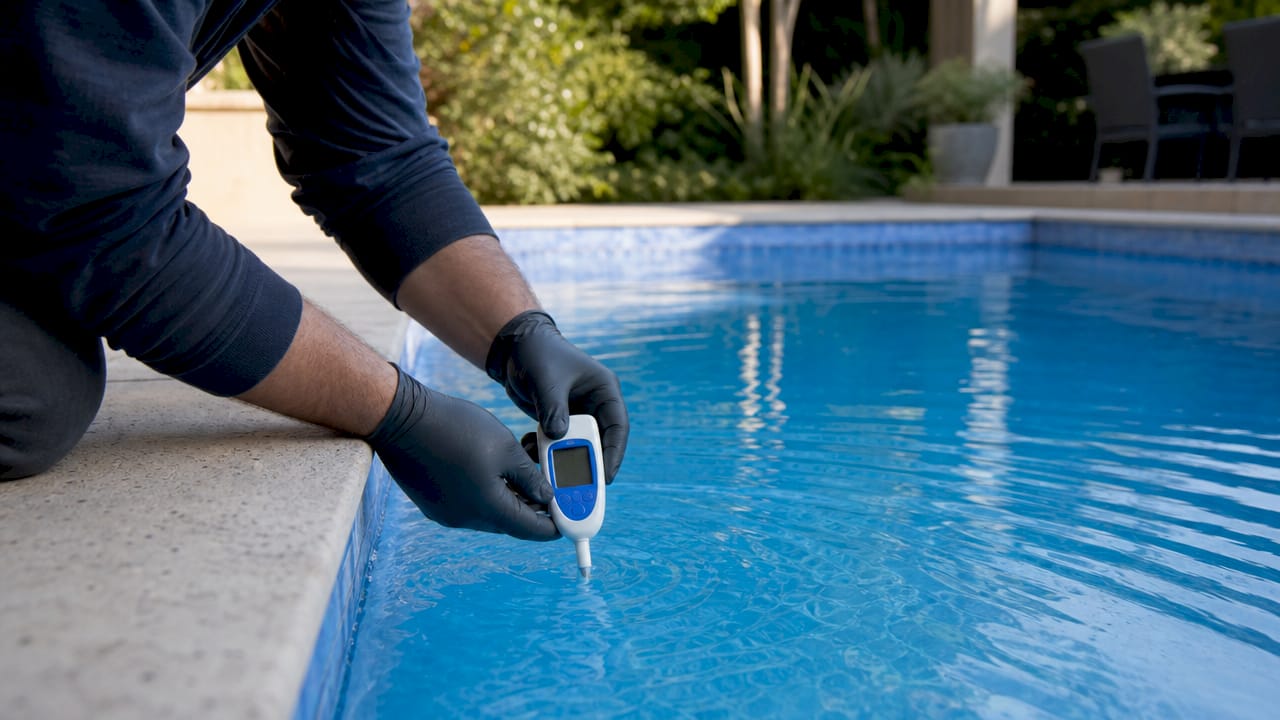
- Monitor water chemistry daily during the first 28 days. Chemical reactions between plaster and water continue throughout the curing phase. pH, calcium hardness, and alkalinity will fluctuate more than normal.
- Delay aggressive chemical treatments. Adding shock or algaecide too early disrupts the chemical reactions happening at the plaster surface. Follow your pool professional’s schedule for chemical additions.
- Allow 28 days for full stabilization. At the 28-day mark, both the finish and the water chemistry normalize. Surface durability and color consistency reach their intended levels.
Proper pool maintenance after resurfacing during these 28 days determines how the finish looks and performs for years. Rushing any of these steps creates problems that show up months later as scaling, staining, or surface roughness.
Pro Tip: Test your water chemistry every 2–3 days during the first month. Early detection of imbalances prevents permanent surface scaling before the plaster fully hardens.
How does temperature affect pool curing duration and quality?
Temperature is the environmental factor with the greatest impact on pool curing quality. The optimal range for curing is 50°F to 90°F. Outside that range, the hydration chemistry either slows down or accelerates in ways that compromise the final result.
Key environmental risks to watch for:
- High heat (above 90°F): Water evaporates from the surface faster than hydration can use it. The result is premature drying, surface cracking, and reduced final strength. Florida summers create this risk regularly.
- Cold temperatures (below 50°F): Hydration slows significantly. The curing process extends beyond 28 days, and in freezing conditions, water in the concrete can expand and fracture the matrix before it fully forms.
- Wind exposure: Wind accelerates surface evaporation even at moderate temperatures. A breezy day can dry out a freshly sprayed shell as effectively as direct sun.
- High humidity: Humidity slows surface evaporation, which generally benefits curing. However, it can also affect water chemistry in the pool during plaster curing.
- Direct sun on fresh plaster: Sunlight heats the surface unevenly, causing differential expansion that leads to hairline cracks.
Mitigating these risks requires active monitoring. Shade structures, misting schedules, and timing construction to avoid peak summer heat are all standard practices on professional pool builds. For homeowners, the practical takeaway is simple: do not let the surface dry out, and do not rush filling or use based on how the surface looks. Appearance is not a reliable indicator of cure completion. Proper waterproofing and moisture management during curing applies to pool surfaces just as it does to other construction materials.
What are common mistakes homeowners make during pool curing?
Most curing failures trace back to a small set of avoidable errors. Knowing them in advance saves significant repair costs.
- Treating curing as drying. The most damaging misconception is that curing is just waiting for concrete to dry. Premature drying is actually the enemy of curing. Moisture must stay present for hydration to complete.
- Swimming before 7 days. Foot traffic on fresh plaster scratches and pits the surface. Those marks are permanent. The 7-day minimum is not a conservative suggestion. It is the minimum threshold for avoiding physical damage.
- Adding pool chemicals too early. Chlorine, pH adjusters, and algaecides added before the plaster has partially cured react with the surface chemistry and cause permanent scaling or staining.
- Installing heavy features before day 14. Stone coping, waterfalls, and heavy equipment placed on the shell before it reaches adequate strength risk structural failure. Even if the shell holds initially, stress fractures can develop later.
- Ignoring water chemistry fluctuations. During the first 28 days, pH and calcium levels shift constantly. Homeowners who set their chemistry once and walk away often return to a stained or scaled finish.
- Skipping moisture maintenance on the shell. The first 7 days require active moisture management. A single day of neglect in hot weather can undo days of proper curing.
Pro Tip: Schedule a professional water chemistry check at day 7 and day 14 after plastering. Early corrections prevent the kind of surface damage that requires a full pool plaster repair down the road.
The pool resurfacing timeline for Florida owners accounts for all of these variables. Working with a professional who understands local climate conditions removes most of the guesswork from the curing phase.
Key Takeaways
Proper pool curing requires 28 days of consistent moisture, temperature control, and chemical management to achieve full structural strength and a durable surface finish.
| Point | Details |
|---|---|
| Standard curing period | Concrete, gunite, and plaster finishes need 28 days to reach full strength and stability. |
| First 7 days are critical | The shell reaches 70–85% strength by day 7, making moisture maintenance non-negotiable during this window. |
| Swimming wait time | Wait at least 7 days before entering a freshly plastered pool to avoid permanent surface damage. |
| Temperature range matters | Curing works best between 50°F and 90°F; heat, cold, and wind all compromise the hydration process. |
| Chemical timing is key | Aggressive chemical treatments added before partial cure cause scaling and staining that cannot be reversed. |
Why patience during pool curing pays off more than most homeowners expect
After working with pools across Florida for years, the pattern is consistent: the homeowners who push back on curing timelines are the same ones calling about surface problems 18 months later. A cracked shell or a scaled plaster finish is not bad luck. It is almost always the result of a decision made in the first 28 days.
The part that surprises people is how deceptive a curing pool looks. The shell feels solid underfoot by day 3. The plaster looks finished the moment the pool fills. Everything appears ready. But the chemistry happening beneath that surface is still weeks from complete. Treating appearance as a proxy for readiness is the most common and most costly mistake I see.
What has changed in recent years is the quality of guidance available to homeowners. The 28-day standard is well-documented, the temperature ranges are specific, and the chemical management protocols are clear. There is no longer a reason to guess. The information exists. The gap is between knowing the standard and actually following it when the pool looks done and the kids want to swim.
My honest recommendation: build the 28-day curing period into your project plan before construction starts. Do not treat it as a delay. Treat it as the last and most important phase of the build. A pool that cures correctly will look better, last longer, and cost less to maintain over its lifetime than one that was rushed by even a week.
— Results
Classicmarcite’s approach to pool resurfacing and curing
Classicmarcite has resurfaced over 100,000 pools across Florida since 1988, and proper curing protocol is built into every project. The company’s work as the largest Pebble Tec® applicator in Central Florida means its crews follow material-specific curing standards on every finish applied.

If you are planning a resurfacing project or dealing with surface damage from a rushed cure, Classic Marcite offers free estimates and professional guidance from start to finish. Their pool resurfacing services in The Villages and across Central Florida cover the full process, including post-application care. Reach out to schedule a consultation and get a finish that holds up for decades.
FAQ
What is curing time for pools?
Pool curing time is the period during which concrete, gunite, or plaster finishes chemically harden through hydration. The standard curing period is 28 days for full structural strength.
How long should you wait before swimming in a newly plastered pool?
Wait at least 7 days before swimming in a freshly plastered pool. The full 28-day curing period is recommended for complete surface and water chemistry stabilization.
What temperature is best for pool curing?
The optimal temperature range for pool curing is 50°F to 90°F. Temperatures outside this range slow hydration or cause premature drying that weakens the finish.
Can you add pool chemicals during the curing process?
Aggressive chemical treatments should be delayed until the plaster has partially cured. Adding chemicals too early causes permanent surface scaling and staining.
Does pool curing stop after 28 days?
No. Curing continues slowly beyond 28 days, with the finish strengthening progressively for months. Normal pool use is generally safe after the initial 28-day period, but the first month is the most critical phase.
