TL;DR:
- Draining and refilling a pool removes exhausted water and restores chemical balance to protect surfaces. Proper preparation, timing, and regulation compliance are essential to avoid structural damage, fines, or environmental harm. After refilling, rebalancing chemistry in sequence ensures safe water and pool longevity.
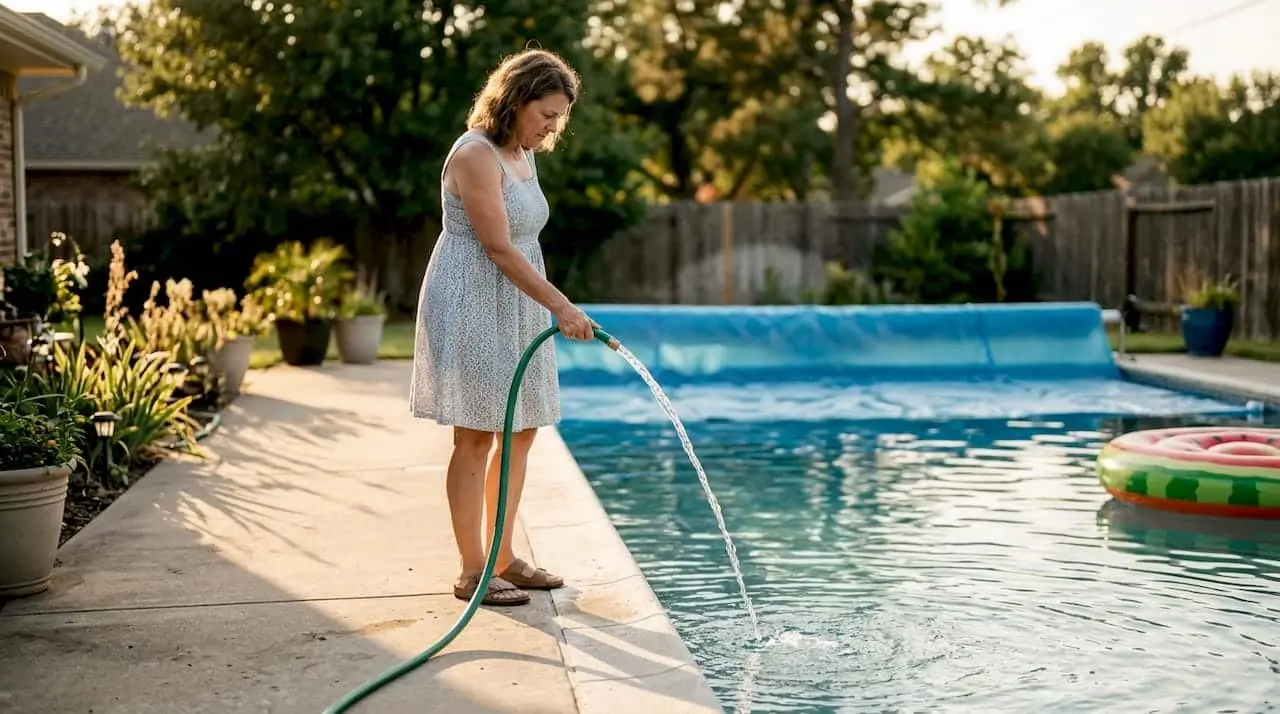
Draining and refilling a pool is a controlled maintenance process that removes chemically exhausted water and replaces it with fresh water to restore balance and protect pool surfaces. Pool professionals call this a “drain and refill” or “water replacement,” and it serves a specific purpose: correcting problems that chemicals alone cannot fix, such as high total dissolved solids (TDS), excessive cyanuric acid (CYA), or severe calcium buildup. Done correctly, it protects your pool’s structural integrity and keeps water safe. Done wrong, it can crack your shell, trigger regulatory fines, or leave your water worse than before. This drain and refill pool guide covers every step from prep to post-fill chemistry.
What do you need before draining your pool?
Preparation separates a successful drain from an expensive mistake. Before you touch the pump, you need the right tools, the right chemical levels, and a clear understanding of your local rules.
Tools and equipment checklist
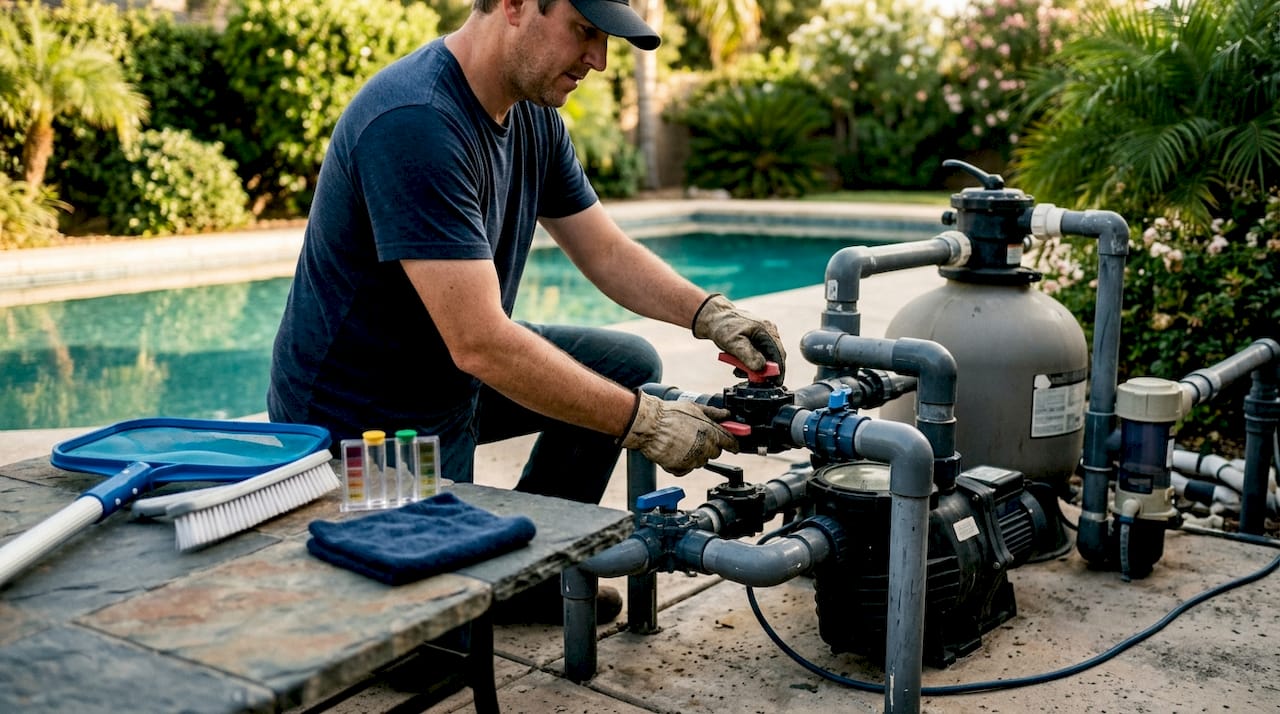
Gather these before you start:
- Submersible pump (rated at 2,500 GPH or higher for standard residential pools)
- Discharge hose long enough to reach an approved disposal point
- Chemical test kit or digital tester for chlorine, pH, alkalinity, CYA, and calcium hardness
- Dechlorinator (sodium thiosulfate) if you need to drop chlorine quickly
- Protective gloves and eyewear
- Wet/dry vacuum for removing the last few inches of water
- Permanent marker or tape to mark your target water level on the pool wall if partially draining
Chemical prep: lower chlorine first
Chlorine must drop below 0.1–0.5 ppm before you discharge pool water anywhere. That level protects plants, soil, and local waterways from chemical damage. The standard method is to stop all chlorine additions 3–5 days before draining and let sunlight break it down naturally. If your timeline is tighter, add a sodium thiosulfate dechlorinator the night before draining. Test the water the morning of the drain to confirm you have hit the target.
Pro Tip: Run your pump without adding chlorine for three days before the drain. Test on day four. If levels are still above 0.5 ppm, add dechlorinator and retest after four hours.
Regulatory requirements
Chlorinated water must not enter storm drains and should be directed to a sanitary sewer cleanout or dechlorinated before reaching landscaping. Regulations vary by city and county. Call your local water department or check their website before you schedule the drain. Improper discharge can result in fines ranging from $500 to $1,000. That is a cost no homeowner needs to absorb for a maintenance task.
| Preparation task | Why it matters |
|---|---|
| Lower chlorine to under 0.5 ppm | Prevents environmental fines and plant damage |
| Check local discharge rules | Avoids penalties of $500–$1,000 |
| Mark target water level | Prevents over-draining and structural risk |
| Gather pump and hoses | Ensures uninterrupted draining process |
| Test full chemical panel | Establishes baseline for post-refill rebalancing |
How do you drain a pool step by step?
The draining process follows a clear sequence. Skipping steps or rushing creates the two most common problems: structural damage and environmental violations.
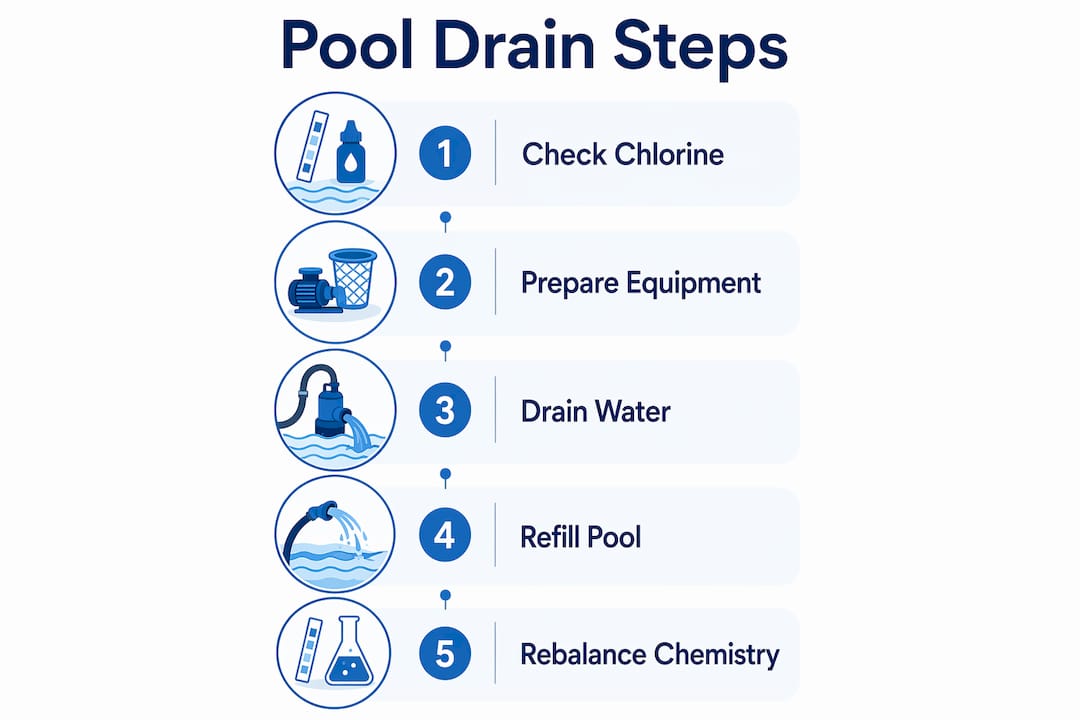
- Confirm chlorine is below 0.5 ppm. Do not start until you have a test result in hand.
- Identify your discharge point. Route your hose to a sanitary sewer cleanout, not a storm drain or street gutter.
- Place the submersible pump at the deepest end of the pool. Connect the discharge hose securely.
- Start the pump and monitor water levels every 30–60 minutes. Do not walk away and leave it unattended for hours.
- Stop at your target level. For most chemical corrections, draining 30%–50% of the water is sufficient.
- Remove the last few inches with a wet/dry vacuum or large sponge. The pump cannot reach this layer efficiently.
- Inspect the pool surface while it is exposed. Look for cracks, staining, or surface deterioration that needs attention before refilling.
How long does draining take?
A standard 15,000 to 20,000-gallon residential pool takes 8–14 hours to drain 50% using a 2,500 GPH submersible pump. That estimate assumes continuous operation with no hose kinks or pump interruptions. Plan the drain for early morning on a mild day so you finish before afternoon heat peaks.
Draining during extreme heat is one of the most damaging things you can do to a plaster pool. Avoid draining on days when surface temperatures exceed 95°F. The exposed plaster dries and shrinks rapidly, causing hairline cracks that worsen over time. Early morning in spring or fall is the safest window. Winter draining carries freeze damage risk in climates where temperatures drop below freezing.
The hydrostatic pressure warning
Fully draining an inground pool without professional oversight risks hydrostatic lift, a condition where groundwater pressure pushes up under the empty shell and causes it to crack or float. This structural failure can happen within hours of emptying the pool. Partial drains, where you remove 30%–50% of the water, carry far less risk and solve most chemical problems just as effectively. Full drains require a professional to evaluate soil conditions and, in many cases, to open the hydrostatic relief valve at the pool floor.
How do you refill and rebalance pool chemistry?
Refilling is not just running a hose. The chemistry work that follows the refill determines whether your pool water is safe and whether your surfaces stay intact.
Refill timing and flow rates
A standard garden hose flows at 400–600 gallons per hour. A 15,000-gallon pool refilled from empty takes 25–37 hours at that rate. For a 50% drain, expect 12–18 hours. Run the hose continuously and keep the filtration system running throughout the refill. Continuous filtration prevents chemical layering, where fresh and old water sit in separate strata, and helps detect impurities early.
Pro Tip: Place the hose at the deep end return jet or near a circulation point. This mixes water as it fills and gives your filter a head start on balancing.
Chemical rebalancing order after refill
Run the filtration system for 24–48 hours after the pool reaches its target level before you finalize your chemical adjustments. Then test and adjust in this order:
- Total alkalinity (target: 80–120 ppm). Adjust this first because it buffers pH.
- pH (target: 7.4–7.6). Adjust after alkalinity is stable.
- Calcium hardness (target: 200–400 ppm). Low calcium causes plaster to leach minerals from the pool surface.
- Cyanuric acid / stabilizer (CYA) (target: 30–50 ppm for outdoor pools). Municipal tap water contains zero CYA.
- Free chlorine (target: 1–3 ppm). Add last, then shock the pool.
Tap water typically has a pH of 7.8–8.4 and zero stabilizer. That combination means your fresh fill water is already out of range on two critical parameters before you add a single chemical. Adjust alkalinity and pH before adding CYA or chlorine, or the chlorine will burn off rapidly and the stabilizer will not register accurately.
Comparison: partial drain vs. full drain for chemical correction
| Factor | Partial drain (30%–50%) | Full drain |
|---|---|---|
| Structural risk | Low | High without professional oversight |
| Time to refill | 12–18 hours | 25–37 hours |
| Best use case | High CYA, TDS, or calcium | Severe algae, surface resurfacing |
| Cost estimate | Lower water and chemical cost | $150–$350 including pump rental |
| Requires professional? | Usually no | Strongly recommended |
After refilling, brush all pool surfaces thoroughly. Brushing removes residue left by the old water and helps new chemicals distribute evenly across plaster, pebble, or tile finishes. Check your pool water quality tips for a full post-refill maintenance checklist.
What mistakes do homeowners make when draining and refilling?
Most drain-refill problems are avoidable. They follow predictable patterns.
- Fully draining without professional help. Hydrostatic pressure can cause structural failure within hours of emptying an inground pool. Never fully drain without evaluating soil saturation and opening the hydrostatic relief valve.
- Skipping the chlorine reduction step. Discharging water above 0.5 ppm chlorine damages landscaping and can trigger fines. Test before you pump.
- Ignoring local discharge regulations. Municipal enforcement varies, but penalties are real. Check the rules before the drain, not after.
- Leaving the pool empty too long. Every hour an inground pool sits empty increases structural risk. Refill the same day you finish draining.
- Draining in peak summer heat. Surface temperatures above 95°F crack exposed plaster fast. Schedule drains for spring or fall mornings.
- Skipping chemical rebalancing after refill. Fresh tap water is not pool-ready. Without adjusting alkalinity, pH, calcium, CYA, and chlorine in sequence, you risk plaster damage and ineffective sanitation.
- Over-draining to fix a chemical problem. Partial drains are often sufficient to correct high CYA or TDS. Calculate the exact percentage needed rather than guessing. The formula is: percent to drain equals (current value minus target value) divided by current value.
- Delaying professional consultation. If your pool has visible cracks, a history of structural issues, or sits in an area with high groundwater, call a professional before draining. The cost of a consultation is far less than repairing a floated shell.
For a broader look at pool renovation mistakes that compound these issues, Classicmarcite has documented the most common errors homeowners make during maintenance and renovation projects.
Key Takeaways
A successful pool drain and refill depends on lowering chlorine before discharge, avoiding full drains without professional oversight, and rebalancing all five chemistry parameters immediately after refilling.
| Point | Details |
|---|---|
| Lower chlorine before draining | Drop chlorine below 0.5 ppm using sunlight or dechlorinator 3–5 days prior. |
| Partial drains reduce risk | Draining 30%–50% solves most chemical problems without structural danger. |
| Refill timing matters | Use a 400–600 GPH hose and run filtration continuously during and after refill. |
| Rebalance chemistry in order | Adjust alkalinity, pH, calcium, CYA, and chlorine in sequence after refilling. |
| Full drains need a professional | Hydrostatic pressure can crack or float an empty inground pool within hours. |
What I’ve learned from watching homeowners drain pools the wrong way
The most consistent mistake I see is treating a full drain as the default solution. Homeowners discover their CYA is at 120 ppm or their TDS is off the charts, and they immediately assume they need to empty the pool completely. That instinct is wrong most of the time. A calculated partial drain targeting exactly the percentage needed to hit your chemical goal uses less water, takes less time, and carries a fraction of the structural risk.
The second pattern I see is the post-refill chemistry rush. Homeowners fill the pool, throw in a chlorine tab, and call it done. Fresh municipal water has a pH above 7.8 and zero stabilizer. Without correcting those two issues first, the chlorine burns off in hours and the plaster starts absorbing minerals from the water to compensate for low calcium. That is how you get etching and staining on a surface that was perfectly fine before the drain.
The third thing worth saying plainly: draining is a 5–7 year maintenance event for most pools, not an annual fix. Weekly testing and consistent maintenance eliminate most of the chemical triggers that push homeowners toward a drain in the first place. If you are draining every year, the problem is not the water. The problem is the maintenance routine.
Respect the regulations too. Municipal enforcement of pool discharge rules is stricter than most homeowners expect. A $500 fine for improper discharge is a real outcome, not a theoretical one.
— Results
When a drain reveals more than just chemistry issues

Draining your pool exposes the surface in a way that normal operation never does. Staining, etching, rough texture, and hairline cracks become visible the moment the water drops. For many homeowners, a drain-refill cycle is the moment they realize the pool surface itself needs attention, not just the water chemistry.
Classic Marcite has resurfaced over 100,000 pools across Florida since 1988, and a significant share of those projects started with a homeowner noticing surface damage during a routine drain. Whether your pool needs a fresh pool resurfacing in Winter Park or a full renovation, Classicmarcite’s team can assess the surface condition and recommend the right finish, including Pebble Tec®, the most durable option available for Florida’s climate. Get a free estimate and find out what your pool’s surface actually needs.
FAQ
How often should you drain and refill a pool?
Draining is a 5–7 year maintenance cycle for most residential pools. Consistent weekly maintenance and partial water replacement reduce the need for full or major drains.
What chlorine level is safe before draining pool water?
Chlorine must be below 0.1–0.5 ppm before discharge. Stop chlorine additions 3–5 days before draining or use a sodium thiosulfate dechlorinator to reach that level quickly.
Can you fully drain an inground pool yourself?
Full drains carry serious hydrostatic pressure risk and are not recommended without professional oversight. Partial drains of 30%–50% are safer and solve most chemical imbalance problems without structural danger.
How long does it take to refill a pool with a garden hose?
A standard garden hose flows at 400–600 gallons per hour. A 15,000-gallon pool takes 25–37 hours to refill from empty. A 50% refill takes approximately 12–18 hours.
What chemicals do you add first after refilling a pool?
Adjust total alkalinity first, then pH, then calcium hardness, then CYA, and add chlorine last. Tap water starts with high pH and zero stabilizer, so skipping this sequence leads to plaster damage and ineffective chlorination.
