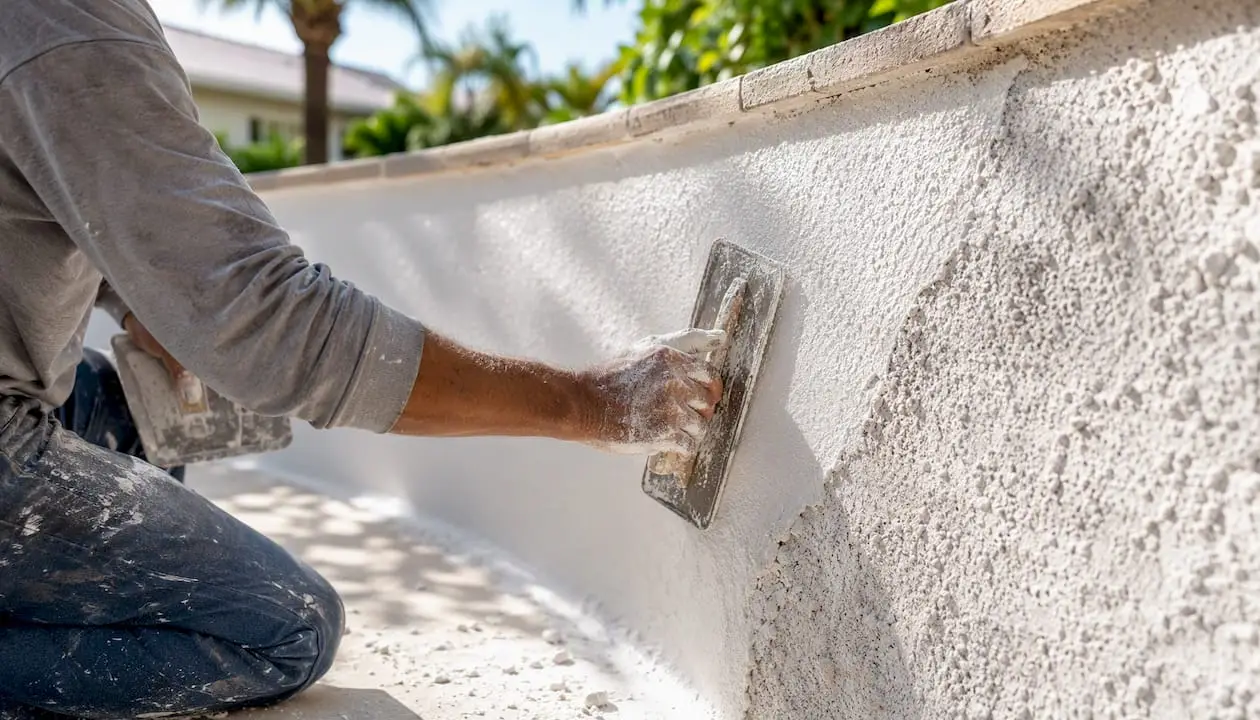
Marcite, the traditional white pool plaster made from Portland cement and marble dust, typically lasts 7–15 years under normal U.S. conditions. That range is wide because the finish is chemically reactive: water chemistry, installation quality, climate, and how the pool was started up after filling all pull the number in different directions. In Florida’s high-UV, hard-water environment, local service life commonly runs 7–12 years before roughness, etching, or discoloration triggers resurfacing.
Three things to do right now:
- Inspect the surface. Run your hand along the steps and floor. Roughness that scratches skin, visible pitting, or chalky white dusting are the clearest early warnings.
- Test your water. Check pH, total alkalinity, and calcium hardness. Aggressive (low-SI) water is the leading cause of early finish failure, according to National Plasterers Council (NPC) guidance.
- Call a resurfacing professional if you see heavy etching, delamination, or active leaks. Classicmarcite offers free estimates for pool resurfacing in Orlando and Jacksonville.
Aggregate finishes like Pebble Tec® and quartz last considerably longer, typically 15–25 years, and are worth considering when you reach the replastering decision point.
Key Takeaways
Marcite typically lasts 7–15 years in the U.S., with Florida pools often reaching the lower end of that range, and water chemistry management accounts for the majority of finish failures.
| Point | Details |
|---|---|
| Typical marcite lifespan | Expect 7–15 years nationally; Florida conditions commonly compress this to 7–12 years. |
| Water chemistry is the top risk | NPC targets SI at 0.0 to +0.3; aggressive water below that range etches and pits marcite faster than any other factor. |
| Start-up determines long-term outcome | The first 28 days after fill set the finish’s durability; improper start-up can permanently weaken plaster before it cures. |
| Aggregate finishes last longer | Quartz and Pebble Tec® finishes typically last 15–25 years, making them the better long-term value at the replastering decision point. |
| Classicmarcite for professional resurfacing | With 100,000+ pools resurfaced since 1988, Classicmarcite handles marcite replastering and Pebble Tec® installations across Orlando and Jacksonville. |
Table of Contents
- What is marcite, and how does it differ from other pool finishes?
- How long does marcite last, and what do the numbers really mean?
- What factors shorten or extend a marcite finish’s life?
- How can you tell your marcite finish needs repair or replacement?
- What maintenance plan actually extends marcite life?
- Repair vs. full resurfacing: what are your options and what do they cost?
- How do you choose a resurfacing contractor?
- Why professional application changes the outcome
- A realistic planning timeline for homeowners and property managers
- Classicmarcite: experienced resurfacing for Florida pools
- Sources
What is marcite, and how does it differ from other pool finishes?
Marcite is the trade name for standard white pool plaster: a blend of white Portland cement and marble dust (calcium carbonate) troweled onto a concrete shell. The marble dust gives it a smooth, bright-white appearance and contributes to its initial hardness, but the cement paste is inherently porous and chemically reactive with pool water.
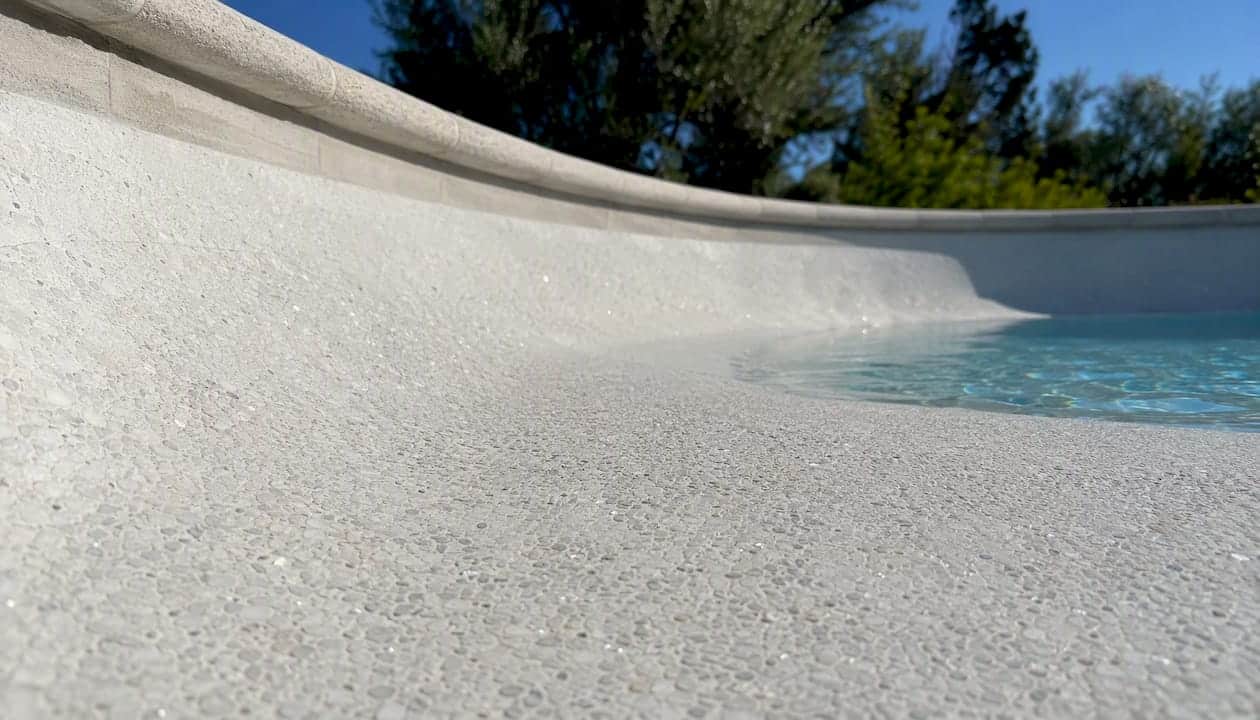
That porosity is the key difference between marcite and aggregate finishes. Quartz finishes embed quartz crystals into the cement matrix, creating a harder, denser surface that resists etching and staining more effectively. Pebble Tec® and similar pebble/aggregate finishes go further: the exposed stone aggregate is far less reactive than cement paste, which is why aggregate finishes commonly last 15–25 years while marcite typically fails earlier. Fiberglass pools use a gel-coat shell rather than a cementitious finish entirely, so the chemistry comparison is different.
Practically speaking, marcite requires tighter water-chemistry management than quartz or pebble finishes. The same slightly aggressive water that a pebble finish tolerates for months can visibly etch marcite in weeks.
How long does marcite last, and what do the numbers really mean?
The commonly referenced U.S. range is 7–15 years, though the specific conditions of each pool determine where a finish lands within that window. In Florida, standard white marcite has a typical service life around 7–12 years under local conditions, with high UV exposure, warm water temperatures year-round, and frequent heavy rain events that dilute and destabilize water chemistry all compressing that timeline.
It helps to separate two different definitions of “lifespan.” Functional lifespan is when the finish still seals the shell and performs its job. Cosmetic lifespan is shorter: the surface may look rough, stained, or dull well before it structurally fails. Most homeowners resurface for cosmetic and comfort reasons (rough surface that tears swimwear, persistent staining that won’t brush out) rather than because the shell is leaking.
Regional variance is real. A pool in Phoenix or Las Vegas faces hard water and intense UV but low rainfall, so calcium scaling is a bigger threat than leaching. A pool in the Southeast faces warm water, high bather loads, and frequent chemistry swings. Both climates shorten marcite life compared to a well-maintained pool in a mild, temperate climate with soft municipal water.
Statistic: Industry comparisons show aggregate finishes like quartz and pebble commonly lasting 15–25 years, while plaster/marcite typically fails earlier and is often replaced with aggregate at the resurfacing decision point.
What factors shorten or extend a marcite finish’s life?
Water chemistry is the dominant variable. Industry practitioners estimate roughly 60% of finish failures trace back to water chemistry management, with the remaining 40% attributable to application quality. The NPC refines the ideal Saturation Index (SI) to 0.0 to +0.3, a slightly positive range that keeps water from actively dissolving the cement paste. Water below that range is chemically aggressive and will leach calcium hydroxide from the matrix, producing the etching and pitting that shortens marcite life.
| Factor | How it affects lifespan | What to control |
|---|---|---|
| pH | Low pH drives aggressive water; high pH causes scaling | Target 7.4–7.6 |
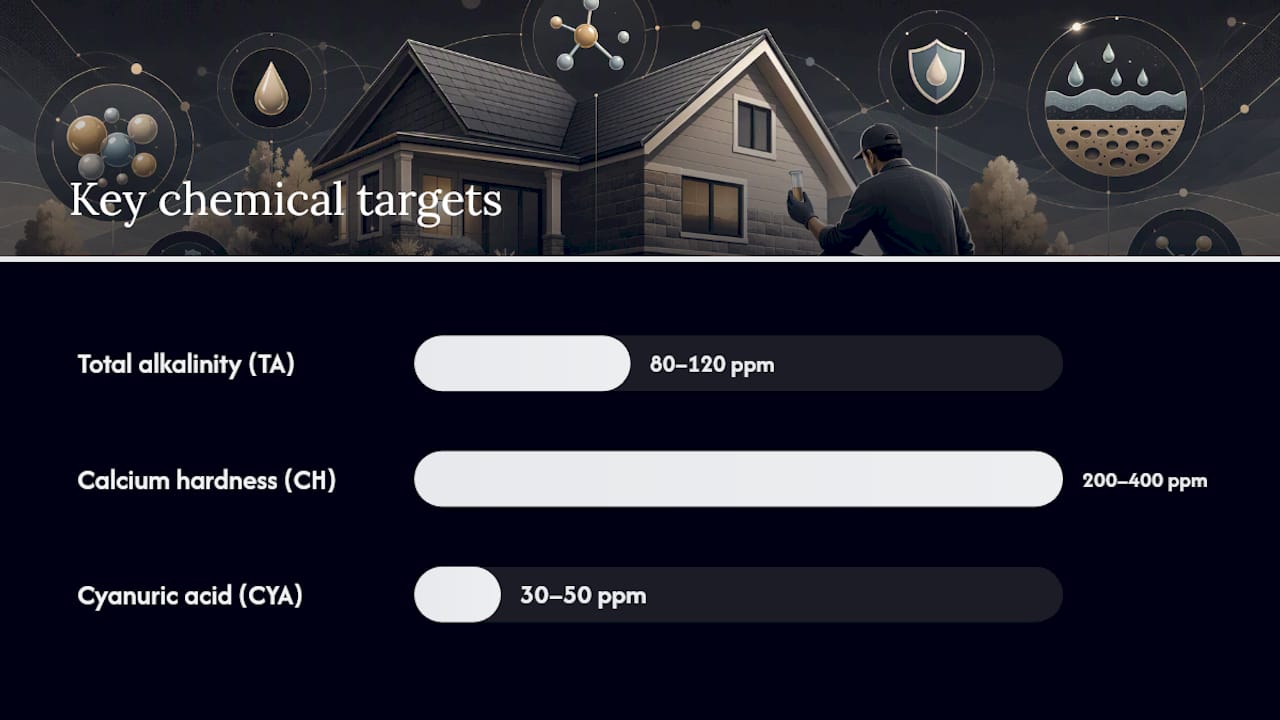
| Total alkalinity | Low TA destabilizes pH; high TA raises SI | Target 80–120 ppm |
| Calcium hardness | Low CH leaches calcium from plaster; high CH scales | Target 200–400 ppm |
| Cyanuric acid (CYA) | High CYA reduces effective chlorine; interacts with SI | Target 30–50 ppm |
| Salt level | Salt systems raise TDS and can affect SI; monitor more frequently | Per manufacturer spec |
| Total dissolved solids | High TDS reduces water’s ability to stay balanced | Dilute when above fill water level |
Installation quality is the second major lever. Adding water during troweling creates micro-porosity and weak spots that accelerate localized etching and spot pitting years later. Overtroweling has a similar effect. These are avoidable contractor errors that permanently compromise the finish before the pool is even filled.
Environmental and operational factors compound the chemistry risk. High UV accelerates surface oxidation. Freeze/thaw cycles in northern climates cause expansion and contraction that can crack or delaminate plaster. Heavy bather loads introduce organic contamination that consumes chlorine and destabilizes pH. Salt chlorinator systems interact with alkalinity and hardness in ways that raise the risk profile for cementitious finishes, so owners with salt pools should monitor SI and CYA more frequently than the standard schedule.
Pro Tip: Salt pool owners should test SI weekly, not monthly. The combination of elevated TDS, chloride ions, and CYA drift can push water into aggressive territory faster than a traditional chlorine pool, and marcite gives you little warning before etching begins.
How can you tell your marcite finish needs repair or replacement?
The surface tells you before the chemistry log does. Here are the signs to check, roughly in order of urgency:
- Roughness that scratches skin or tears swimwear — the most common complaint and a clear signal that the cement matrix has eroded enough to expose aggregate or create a sandpaper texture.
- Etching and pitting — small craters or a matte, chalky appearance where the surface was once smooth and reflective. Widespread pitting means the leaching process is well advanced.
- Dusting — a white, chalky residue that brushes off the surface and clouds the water. Common in the first weeks after a new plaster job (normal) but a problem sign in an older finish.
- Discoloration and staining — brown or gray staining from metals (iron, copper), algae, or organic matter that won’t respond to brushing or chemical treatment.
- Visible aggregate exposure — when the marble dust has eroded enough that the underlying aggregate is visible, the finish has lost its protective layer.
- Delamination or cracking — sections of plaster separating from the shell, or visible cracks that allow water to reach the substrate. This is the most urgent category.
Inspect the waterline tile interface, steps, and areas around return fittings and skimmers first. Those spots experience the most chemical concentration and mechanical wear. If you see delamination or cracks near fittings, schedule a professional inspection promptly to understand how driveway maintenance explained practices can similarly boost your property’s curb appeal and longevity. Leaks at those points can undermine the shell and turn a resurfacing job into a structural repair.
What maintenance plan actually extends marcite life?
Start-up protocol (first 2–4 weeks after fill)
The first two to three weeks after filling are when portlandite can be preferentially leached from fresh plaster. Correct balancing during start-up reduces leaching and dusting and preserves matrix strength long-term. During this period:
- Fill the pool continuously without stopping (air pockets cause staining).
- Start brushing the entire surface twice daily from day one, using a white nylon brush (not a steel brush).
- Balance water to the NPC target SI of 0.0 to +0.3 before adding any sanitizer.
- Avoid heavy chlorine shock doses for the first two weeks; use only enough to establish a residual.
- Test pH and alkalinity daily for the first week, then every other day through week two.
- Keep the pump running continuously for the first 24–48 hours.
Routine maintenance schedule
The NPC and ANSI/APSP guidance sets the practical baseline for testing cadence. Follow this schedule:
Weekly: pH (target 7.4–7.6), total alkalinity (80–120 ppm), free chlorine (1–3 ppm). Calculate or measure SI and correct if it falls below 0.0.
Monthly: Calcium hardness (200–400 ppm), cyanuric acid (30–50 ppm), total dissolved solids. For salt pools, also check salt level and cell output.
Annually: Full water panel at a pool supply lab, professional surface inspection, filter deep-clean, and equipment check.
Brush the entire surface at least twice per week. Brushing dislodges early algae colonies before they stain and keeps chemistry circulating evenly across the surface. Avoid acid shocking (adding muriatic acid directly to the pool without dilution) — it creates localized low-pH zones that etch the surface directly beneath the entry point.
Pro Tip: Keep a written water log with date, test results, and any chemicals added. A six-month log lets you spot drift patterns before they become surface damage, and it’s the first thing a reputable contractor will ask to see when diagnosing a problem finish.
For more on why water balance matters for your finish, Classicmarcite’s chemistry guide walks through SI calculation and correction in plain language.
Repair vs. full resurfacing: what are your options and what do they cost?
The right choice depends on how widespread the damage is and how many years remain in the finish’s functional life.
Spot patching works when damage is isolated: a cracked step, a small delaminated section, or a single area of deep pitting. Patches are visible in most cases because new plaster cures to a different shade than aged plaster. They buy time but don’t reset the clock on the overall finish.
Full replastering (marcite/plaster) replaces the entire interior surface. It returns the pool to a fresh start but delivers the same material with the same lifespan range. If water chemistry or application quality caused the original failure, replastering without addressing those root causes produces the same result in the same timeframe.
Aggregate overlays (quartz or pebble) are applied over a properly prepared substrate and deliver a longer service life. Quartz and pebble finishes commonly last 15–25 years, making them the better long-term value for most homeowners who are already at the replastering decision point. Pebble Tec® and similar premium pebble finishes sit at the upper end of that range.
Cost drivers include pool size (square footage of interior surface), substrate condition (chipping, crack repair, and bond coat add cost), plumbing or equipment repairs needed before resurfacing, and material choice. The cure period matters: the finish continues to harden for 28 days after fill, and water chemistry must stay within NPC targets throughout that window or the new surface can fail early.
For a broader look at pool renovation materials and their lifespans, Classicmarcite’s material guide covers the full range of finish options.
How do you choose a resurfacing contractor?
The contractor controls the variables that most affect whether a finish reaches its upper lifespan range: substrate preparation, mix quality, troweling technique, and start-up protocol. Choosing the wrong crew is the fastest way to cut a 15-year finish down to 5.
Questions to ask before signing
- How many pools have you resurfaced with this specific material?
- Can you provide before/after photos and references from jobs completed 3–5 years ago?
- What is your start-up protocol, and do you provide written start-up instructions?
- How do you control water-to-cement ratio during mixing?
- What is your cure method, and how long before the pool is swimmer-ready?
- What does your warranty cover, and for how long?
Red flags
- No references or portfolio from completed jobs.
- Vague or verbal-only start-up plan (“just keep the water balanced”).
- Unwillingness to provide material data sheets or a written warranty.
- A bid significantly below other estimates without a clear explanation of what’s excluded.
- No mention of substrate preparation or crack repair in the scope of work.
Documentation to request
| Document | Why it matters |
|---|---|
| Written warranty | Defines what’s covered and for how long; verbal warranties are unenforceable |
| Material data sheet | Confirms the specific product, mix design, and w/c ratio targets |
| Start-up plan | Written protocol for the first 28 days; the single biggest predictor of long-term success |
| References (3–5 years post-job) | Lets you verify how the finish held up, not just how it looked at turnover |
| Timeline and cure schedule | Sets expectations for downtime and when the pool is swimmer-ready |
Application mistakes like adding water during troweling are invisible at turnover but show up as spot pitting within 12–18 months. A contractor who can’t explain their troweling and mixing controls in specific terms is a contractor who hasn’t thought carefully about them.
Why professional application changes the outcome
What a professional crew controls goes well beyond showing up with the right materials. Substrate preparation — chipping the old finish to the correct depth, repairing cracks and voids, applying a bond coat — determines whether the new finish adheres uniformly or develops delamination zones within a few years. Mix design and water-to-cement ratio control determine porosity. Troweling technique determines surface density. And the start-up water balance in the first 28 days determines whether the finish cures to its full potential hardness or begins leaching calcium hydroxide before it has a chance to set.
Classicmarcite has resurfaced over 100,000 pools since 1988, including residential, commercial, and international projects and holds the position of the largest Pebble Tec® applicator in Central Florida. That volume of work means the crew has seen every substrate condition, every failure mode, and every regional water-chemistry challenge that Florida pools present. You can review completed projects in the Classicmarcite gallery to see the range of finishes and conditions the team works with.
What to expect from a reputable professional crew: a documented start-up plan delivered at turnover, a written warranty that specifies what’s covered and for how long, and a clear cure/turnover workflow so you know exactly when the pool is ready for normal use. For more on what the pool surface lifespan process looks like from the homeowner’s side, Classicmarcite’s resource page covers the full decision sequence.
A realistic planning timeline for homeowners and property managers
Most homeowners wait too long. By the time the surface is visibly rough and staining is widespread, the pool has often been in decline for two to three years, and some of that time could have been used to plan the resurfacing during the off-season when contractor schedules are more open and costs may be lower.
A practical planning sequence looks like this: inspection and water testing (now, or at least annually), followed by a professional estimate once you identify surface deterioration, then permit and material ordering (allow 2–6 weeks depending on jurisdiction and material availability), then prep and resurfacing (typically 3–5 days of active work), and finally fill and 28-day cure before normal use resumes.
If your marcite is 8–10 years old and showing early signs of etching or roughness, the right move is to get an estimate now rather than wait for the surface to fail completely. A planned resurfacing during fall or early winter avoids the peak-season backlog and gives you a fresh surface ready for spring.
On the material choice question: if you’re replastering for the second time, the math on aggregate finishes usually favors upgrading. Paying more upfront for a quartz or Pebble Tec® finish that lasts 15–25 years is almost always less expensive over a 20-year horizon than replastering with marcite twice. The marcite finish impact on Florida pool renovation page covers the regional cost and durability tradeoffs in more detail.
For homeowners managing multiple properties, the same logic applies at scale: tracking finish age across a portfolio and scheduling resurfacing in planned cycles prevents emergency repairs and keeps pools in service.
Classicmarcite: experienced resurfacing for Florida pools
Resurfacing a pool is a long-term investment, and the contractor you choose determines whether that investment holds up for 10 years or 25. Classic Marcite brings over three decades of experience and more than 100,000 completed pools to every project, from standard marcite replastering to full Pebble Tec® installations and Pool Resurfacing in Orlando and the surrounding Central Florida region.
The estimate process is straightforward. A Classicmarcite specialist reviews your pool’s current surface condition, substrate, size, and any equipment or tile repairs needed, then provides a written scope and cost estimate. Having your water test results and a rough sense of the finish’s age on hand speeds up the conversation. Whether you’re planning a standard replaster or considering an upgrade to a Pebble Tec® finish for longer-term durability, the team can walk you through the material options and what each delivers over time. Request a free estimate to get a clear picture of what your pool needs and what it will cost.
Sources
The following references were used in preparing this article. Each covers a distinct aspect of marcite lifespan and pool surface maintenance:
- The Life (and Death) of a Pool Finish
- Florida Pool Surface Care and Resurfacing Indicators | Central FL Pool Service
- Pool Resurfacing on the Treasure Coast: Materials and Methods
- What Deteriorates Pool Plaster the Most? | PoolHelp
