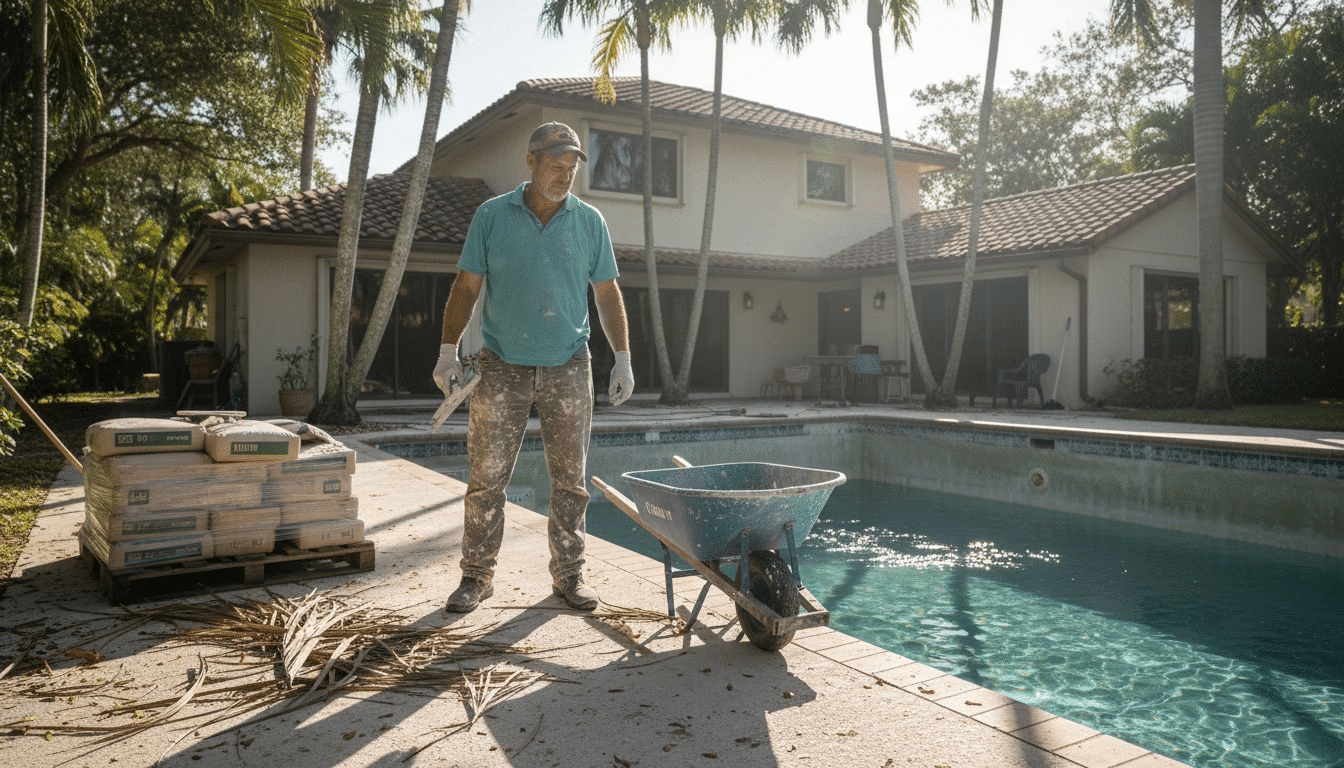
Most American pool owners in Orlando and Jacksonville underestimate how quickly water chemistry can affect marcite surfaces. This classic finish delivers a smooth, elegant look but demands careful upkeep in Florida’s unique climate. With average marcite pools requiring resurfacing every 8 to 12 years, understanding the real pros and cons helps local homeowners decide whether marcite is worth the investment and upkeep for a beautiful, long-lasting pool.
Table of Contents
- Marcite Finish Defined And Common Misconceptions
- Types Of Marcite And How It’s Applied
- Key Benefits And Limitations For Pool Owners
- Maintenance, Longevity, And Cost Factors
- Comparing Marcite With Pebble And Quartz Finishes
Key Takeaways
| Point | Details |
|---|---|
| Marcite Characteristics | Marcite offers an affordable and smooth pool surface, but its lifespan is typically 8-12 years, requiring consistent maintenance. |
| Water Chemistry Importance | Proper water chemistry is critical for prolonging marcite’s life; homeowners should schedule quarterly professional tests. |
| Comparative Value | While marcite has the lowest initial cost, its longevity and maintenance needs may lead to higher long-term expenses compared to quartz and pebble finishes. |
| Professional Installation | Selecting a qualified installer familiar with marcite techniques is essential for ensuring a durable finish and optimal performance. |
Marcite Finish Defined and Common Misconceptions
Marcite is a specialized swimming pool surface material that represents a classic and affordable approach to pool interior finishing. Composed of a precise blend of white cement, marble dust, and water, marcite provides a smooth and visually appealing surface for residential and commercial pools throughout Florida. Pool finishes like marcite have unique characteristics that homeowners should understand before selecting their ideal pool surface.
Unlike more modern pool finishes, marcite has specific performance characteristics that many pool owners misunderstand. Contrary to popular belief, this material is not universally suitable for all pool environments. The finish performs best in areas with well-balanced water chemistry and can deteriorate quickly in regions with hard or mineralized water. Homeowners in Orlando and Jacksonville should recognize that marcite’s smooth texture comes with potential maintenance challenges, including vulnerability to staining, roughness, and potential discoloration over time.
Key characteristics of marcite include:
- Affordable pool surface option
- Smooth, classic white appearance
- Relatively quick installation process
- Susceptible to wear in challenging water conditions
- Requires consistent water chemistry maintenance
Proper water balance is critical for extending marcite’s lifespan. Aggressive water chemistry can accelerate surface degradation, causing premature roughening or etching of the pool interior. Florida’s unique water conditions mean that homeowners must pay special attention to maintaining proper pH levels, calcium hardness, and total alkalinity to preserve their marcite finish.
Pro tip: Schedule professional water testing every three months to monitor your pool’s chemical balance and protect your marcite surface from potential damage.
Types of Marcite and How It’s Applied
Marcite is a versatile pool surface material with several variations designed to meet different aesthetic and functional requirements for swimming pools across Florida. Traditional marcite compositions involve precise mixing techniques that blend white Portland cement with marble dust, creating a foundational pool finish that has been trusted by homeowners for decades. Modern adaptations now include color pigments and specialized additives that expand the material’s visual and performance characteristics.
The primary types of marcite finishes include:
- Classic White Marcite: Traditional, smooth surface with standard white appearance
- Colored Marcite: Incorporates pigments for custom color options
- Enhanced Marcite: Includes additives for improved durability and stain resistance
Application of marcite requires significant technical expertise and precise environmental conditions. Professionals begin by thoroughly preparing the pool shell, creating a roughened surface that allows optimal plaster adhesion. The mixture must be prepared on site and applied swiftly using specialized troweling techniques. Timing is critical during installation, as the surface must remain consistently moist during the curing process to prevent premature cracking or structural inconsistencies.
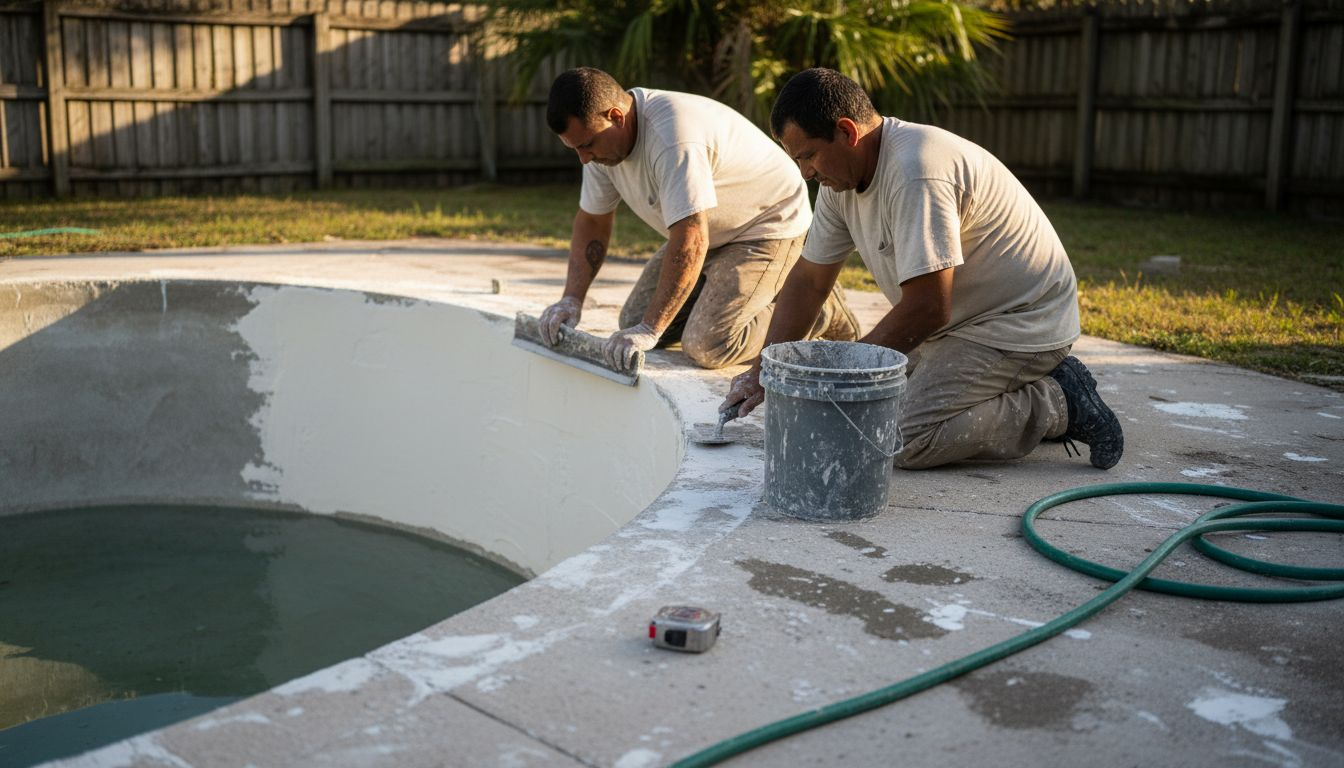
Water chemistry interactions play a crucial role in marcite performance. The finish is sensitive to chemical balance, with improper water conditions potentially causing accelerated surface degradation. Professional installers understand that successful marcite application depends on multiple technical factors beyond simple mixing and spreading.
Pro tip: Select a professional installer with demonstrated experience in marcite application, ensuring they understand the nuanced techniques required for a long-lasting, smooth pool surface.
Key Benefits and Limitations for Pool Owners
Marcite offers Florida pool owners a compelling combination of aesthetic appeal and affordability that makes it an attractive surface option. Pool owners should carefully evaluate the material’s unique characteristics before making a final decision, understanding both its strengths and potential drawbacks in the challenging Florida pool environment.
Key Benefits of Marcite:
- Low initial installation cost
- Smooth, comfortable surface texture
- Classic white appearance that creates bright, inviting water
- Relatively easy to repair compared to more complex finishes
- Customizable with color pigment options
Potential Limitations to Consider:
- Shorter service life (typically 8-12 years)
- Higher susceptibility to staining and surface degradation
- More sensitive to water chemistry fluctuations
- Increased likelihood of etching and roughening over time
Water chemistry management becomes critical when using marcite, as improper chemical balance can accelerate surface deterioration. Florida’s unique environmental conditions—including high temperatures, frequent rain, and mineral-rich water—can challenge marcite’s durability. Homeowners must commit to regular professional water testing and maintenance to maximize their pool surface’s longevity and appearance.
For Orlando and Jacksonville residents, marcite represents a budget-friendly option that requires informed maintenance. While the initial cost is lower than more advanced finishes, the long-term investment demands consistent care and proactive monitoring to prevent premature surface breakdown.
Pro tip: Invest in quarterly professional water chemistry testing and maintain a detailed log of chemical treatments to extend your marcite pool surface’s effective lifespan.
Maintenance, Longevity, and Cost Factors
Pool owners considering marcite must understand its comprehensive maintenance requirements and long-term financial implications. Marcite resurfacing represents a significant investment that requires careful planning and proactive care to maximize both performance and value throughout the pool’s lifecycle.
Cost Breakdown for Marcite Pools:
- Initial installation: $5–$8 per square foot
- Average total project cost: $5,000–$8,000
- Recommended replacement interval: 8–12 years
- Maintenance costs: Moderate to high
Water chemistry management becomes the most critical factor in extending marcite’s lifespan. Routine maintenance involves carefully monitoring pH, alkalinity, and calcium hardness to prevent surface degradation. Florida’s challenging environmental conditions—including intense sunlight, frequent rainfall, and mineral-rich water—demand consistent professional attention to preserve the pool’s surface integrity.
Homeowners should anticipate periodic maintenance tasks such as:
- Quarterly professional water testing
- Regular surface brushing
- Prompt stain removal
- Limited acid washing
- Professional inspection every 2-3 years
While marcite offers a lower upfront cost compared to more advanced finishes, the long-term expenses can accumulate. Orlando and Jacksonville pool owners must balance the initial savings against potential frequent resurfacing needs, making comprehensive maintenance a financial priority.
This summary outlines the main factors affecting marcite pool ownership in Florida:
| Factor | Influence on Marcite Pools | Recommended Action |
|---|---|---|
| Water Chemistry | Major impact on durability | Schedule quarterly testing |
| Sunlight and Rain | Accelerates wear and staining | Regular brushing, early care |
| Maintenance Frequency | Determines surface appearance | Develop consistent routine |
| Environmental Minerals | Can cause etching and roughness | Monitor calcium and hardness |
Pro tip: Create a dedicated maintenance fund that sets aside approximately 10% of the original pool installation cost annually to cover potential resurfacing and unexpected repair expenses.
Comparing Marcite With Pebble and Quartz Finishes
Pool finish selection represents a critical decision for Florida homeowners, with each material offering distinct advantages and limitations. Swimming pool interior finishes vary significantly in durability, texture, and long-term performance, making a comprehensive comparison essential for informed decision-making.
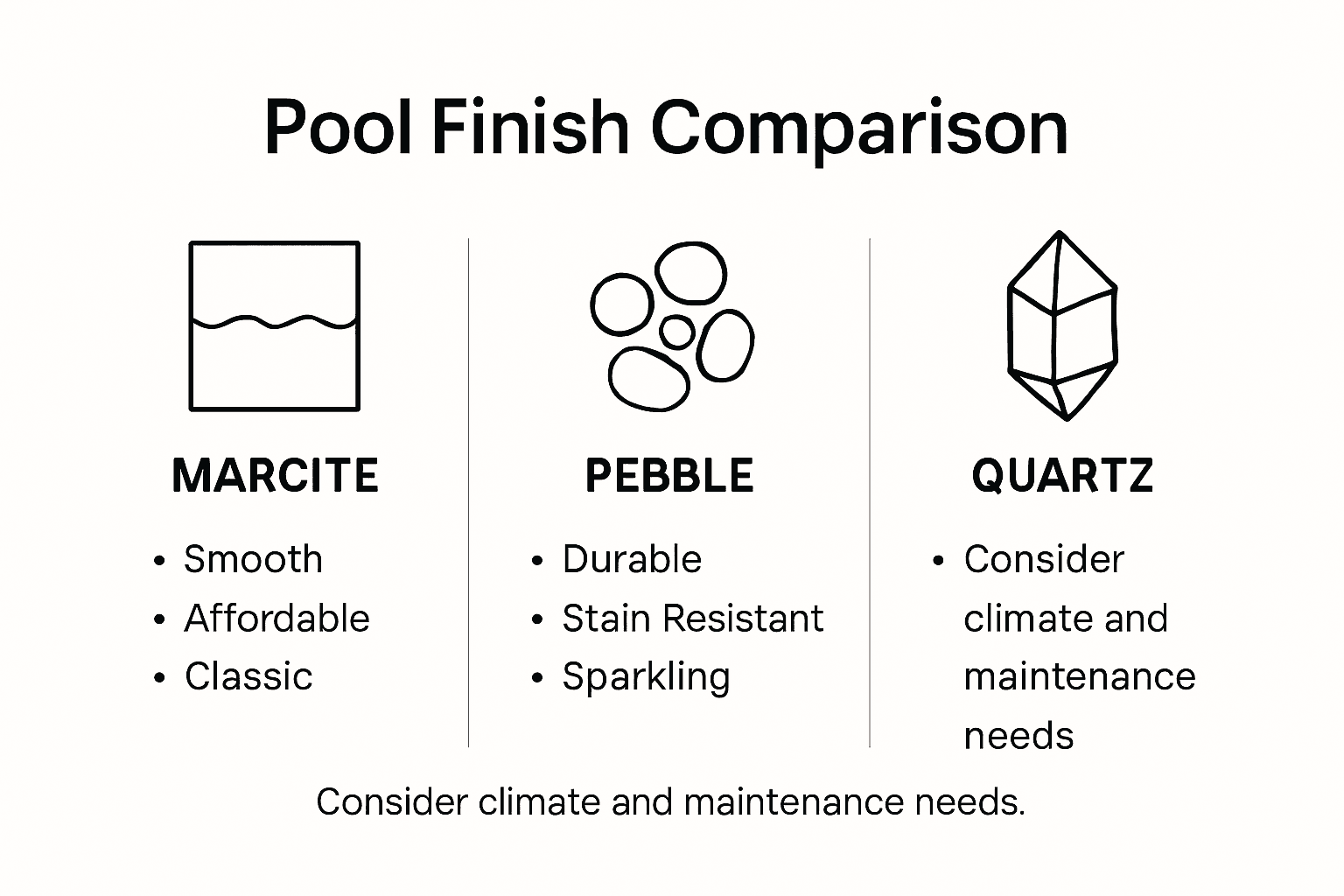
Comparative Overview of Pool Finishes:
- Marcite:
- Lowest initial cost
- Smooth, classic white appearance
- Lifespan: 8-12 years
- Most susceptible to chemical wear
- Quartz:
- Mid-range pricing
- Better chemical resistance
- Lifespan: 12-20 years
- Multiple color options
- Pebble:
- Highest initial investment
- Most durable finish
- Lifespan: 15-25 years
- Natural, textured appearance
Chemical resistance and longevity become increasingly important in Florida’s challenging pool environment. Quartz finishes provide a balanced compromise between marcite’s affordability and pebble’s durability, offering homeowners a mid-tier solution that combines aesthetic flexibility with improved performance.
For Orlando and Jacksonville residents, the decision extends beyond initial costs. Factors like water chemistry, maintenance commitment, and aesthetic preferences play crucial roles in selecting the most appropriate pool finish. While marcite remains budget-friendly, its shorter lifespan may result in higher long-term expenses compared to more resilient alternatives.
Pro tip: Consult with a professional pool renovation specialist who can assess your specific pool environment and provide personalized recommendations based on your unique maintenance capabilities and budget constraints.
Revitalize Your Florida Pool with Expert Marcite Renovation Solutions
Marcite finish pools can face serious challenges in Florida’s unique water conditions including staining, surface roughness, and shortened lifespan due to improper water chemistry. If you are struggling with maintaining a smooth, bright pool surface or worried about the impact of harsh mineral-rich water, you are not alone. Proper renovation using high-quality materials like Pebble Tec® and experienced resurfacing techniques is essential to restore your pool’s durability and aesthetic appeal.

At Classic Marcite, we specialize in precisely this challenge. Serving Orlando and Jacksonville since 1988, we have resurfaced over 100,000 pools with industry-leading craftsmanship and materials designed to withstand Florida’s environmental demands. Whether your goal is to repair worn marcite surfaces, upgrade to a longer-lasting finish, or improve water chemistry resilience, our team delivers personalized solutions including pool resurfacing, tile repairs, and full remodeling. Don’t let pool surface degradation reduce your enjoyment. Visit our website today to request a free estimate and take the first step toward a stunning, worry-free pool experience. Discover how expert Marcite renovation impacts your pool’s lifespan and beauty at Classic Marcite.
Frequently Asked Questions
What is marcite and why is it used for pool renovations?
Marcite is a swimming pool surface material made from a mix of white cement, marble dust, and water. It provides a smooth, classic finish, making it a popular and affordable choice for both residential and commercial pools.
How long does a marcite pool finish typically last?
A marcite pool finish generally has a lifespan of 8 to 12 years, depending on maintenance and water chemistry. Regular upkeep is vital to prolong its appearance and durability.
What are the maintenance requirements for marcite pools?
Marcite pools require consistent water chemistry management, including monitoring pH, alkalinity, and calcium hardness. Regular surface brushing, stain removal, and professional inspections every few years are also necessary to maintain the surface integrity.
How does marcite compare to other pool finishes like pebble or quartz?
Marcite typically has the lowest initial cost and offers a smooth, classic look, but it is also the most susceptible to wear from chemical exposure. In contrast, quartz finishes provide greater chemical resistance and durability, while pebble finishes are the most durable but come with a higher initial investment.