TL;DR:
- Maintaining pool water quality involves controlling six chemical parameters, not just chlorine, through proper testing and adjustments.
- A disciplined weekly routine, including mechanical checks and chemical sequencing, preserves water clarity and safety efficiently.
Optimizing pool water quality is the process of maintaining balanced chemistry and consistent physical upkeep to keep swimming conditions safe, clear, and comfortable. Pool professionals call this water balance management, and it covers six interdependent chemical parameters, not just chlorine levels. Get one parameter wrong and the others shift with it. This guide walks homeowners, property managers, and pool maintenance professionals through the correct parameters to test, the right sequence for chemical adjustments, and the weekly tasks that keep water clean without wasting money on chemicals.
How to optimize pool water quality: the core parameters
Water balance management starts with knowing what to measure. Six chemical parameters control pool water quality, and each one affects the others. Testing all six on a consistent schedule is the foundation of any reliable maintenance process.
The six parameters and their target ranges
| Parameter | Target Range | Why It Matters |
|---|---|---|
| Free Chlorine (FC) | 1–3 ppm | Primary sanitizer; kills bacteria and algae |
| pH | 7.2–7.6 | Controls chlorine effectiveness and swimmer comfort |
| Total Alkalinity (TA) | 80–120 ppm | Buffers pH to prevent rapid swings |
| Calcium Hardness | 175–275 ppm | Protects plaster and equipment from corrosion |
| Cyanuric Acid (CYA) | 30–50 ppm | Shields chlorine from UV degradation |
| Combined Chlorine (CC) | Below 0.5 ppm | Measures chloramine buildup; triggers shock treatment |
Free chlorine between 1–3 ppm is the standard target for residential and commercial pools. Drop below 1 ppm and bacteria can multiply faster than the sanitizer can eliminate them.
pH is the most frequently tested parameter for good reason. A pH above 7.6 reduces chlorine effectiveness dramatically, even when FC reads at the correct level. A pH below 7.2 causes eye irritation and accelerates corrosion of metal fittings and pool surfaces.
Cyanuric acid protects chlorine from UV degradation. Without stable CYA, free chlorine can degrade by 90% within two hours of direct sunlight. Keep CYA between 30–50 ppm. Above 80 ppm, the only fix is a partial drain and refill.
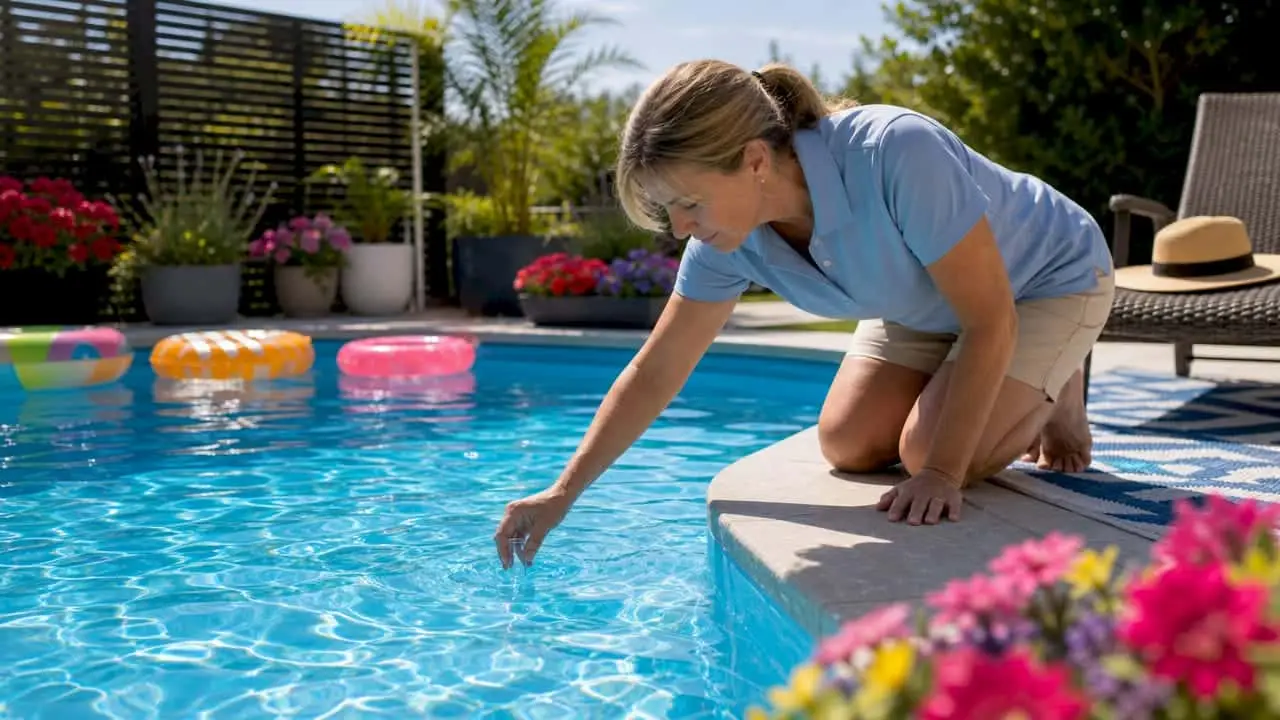
Pro Tip: Collect water samples 12–18 inches below the surface for the most accurate test results. Surface water skews readings because it concentrates sunscreen, body oils, and airborne debris.
Testing frequency matters as much as the parameters themselves. Test water chemistry two to three times per week during swim season. Liquid reagent test kits deliver more reliable readings than test strips, especially for pH and free chlorine.
What is the correct sequence for chemical adjustments?
Chemical adjustments follow a specific order. Skipping steps or reversing the sequence causes pH bounce, chemical waste, and unstable water that costs more to fix than to prevent.
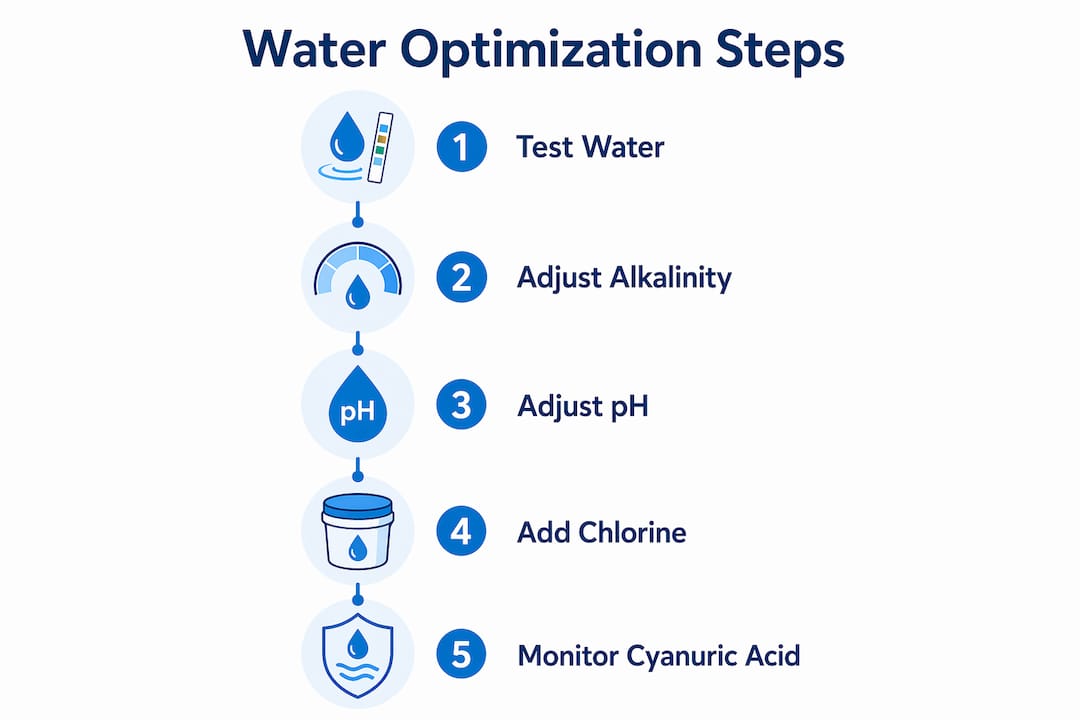
The correct sequence is:
- Adjust Total Alkalinity first. TA acts as a buffer for pH. If you adjust pH before TA is stable, the pH will drift back within hours. Target 80–120 ppm before touching anything else.
- Adjust pH second. Once TA is in range, bring pH to 7.2–7.6. Use sodium carbonate (soda ash) to raise pH or muriatic acid to lower it.
- Add chlorine sanitizer third. Chlorine works most efficiently when pH and TA are already stable. Adding chlorine to unbalanced water wastes product and produces inconsistent results.
- Adjust Calcium Hardness or CYA last. These parameters change slowly and rarely need weekly adjustment. Address them only when testing confirms they are out of range.
- Wait between additions. Allow 15–30 minutes with the pump running between each chemical addition. For calcium hardness adjustments, wait up to four hours before retesting.
Adjusting pH before alkalinity causes a condition called pH bounce, where the pH reading appears correct but shifts again within hours. This wastes acid or soda ash and leaves the water unstable.
Pro Tip: Never add two chemicals to the pool at the same time. Even chemicals that seem compatible can react when concentrated together, producing gas or reducing effectiveness.
The Langelier Saturation Index (LSI) is the professional standard for assessing overall water balance. It combines pH, temperature, calcium hardness, alkalinity, and total dissolved solids into a single score. The LSI target range is -0.3 to +0.3. A score outside that range signals that water is either scaling or corrosive, even if individual parameters look acceptable.
How to build a weekly pool maintenance routine
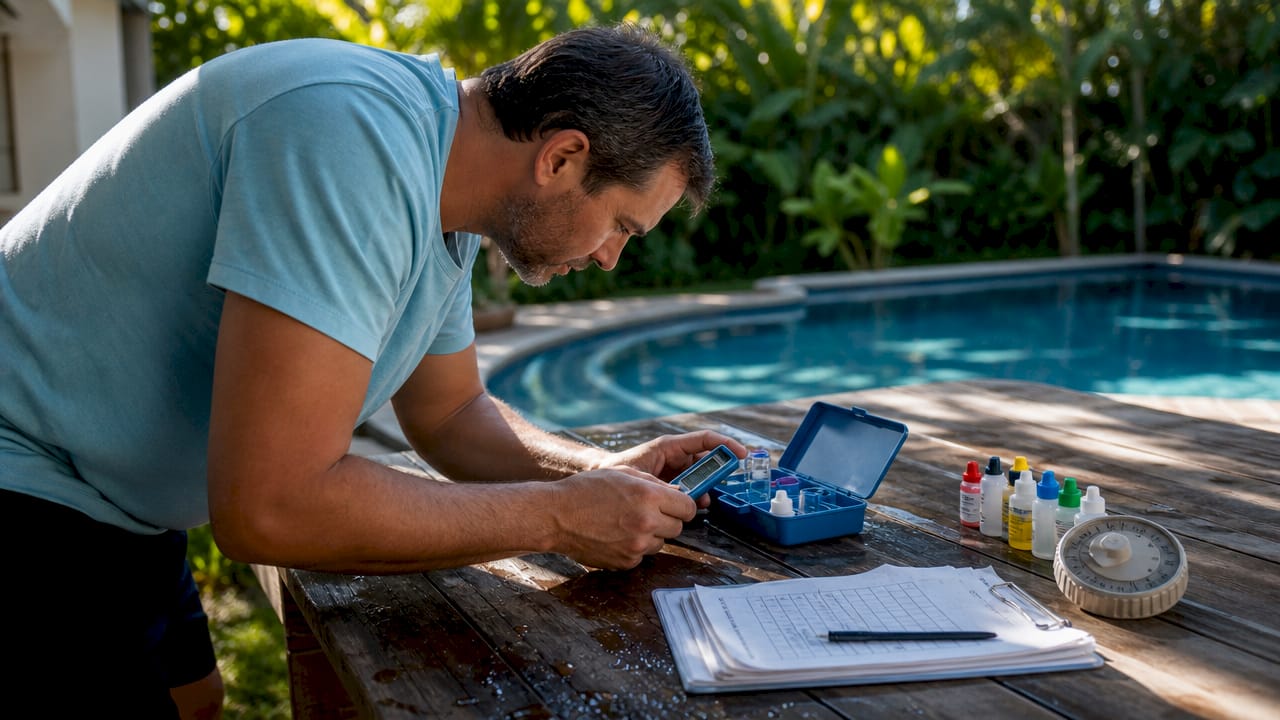
A consistent weekly routine is the most cost-effective strategy to preserve pool value and water safety. Weekly pool maintenance takes 1.5 to 2 hours of active work, split across two or three sessions. Spreading tasks across the week is more effective than doing everything in one long session.
A practical weekly schedule looks like this:
- Test water chemistry before adding any chemicals. Never add chemicals based on guesswork.
- Brush walls, steps, and corners before skimming. Brushing dislodges algae and debris so the skimmer and filter can capture it.
- Skim the surface to remove floating debris before it sinks and decomposes.
- Vacuum the pool floor to remove settled debris that brushing loosened.
- Clean pump and skimmer baskets to maintain water flow. Clogged baskets reduce pump efficiency and shorten equipment life.
- Check filter pressure. A rise of 8–10 psi above baseline signals that the filter needs backwashing or cleaning.
- Make chemical adjustments based on test results, following the correct sequence.
| Task | Frequency | Time Estimate |
|---|---|---|
| Water chemistry testing | 2–3 times per week | 10–15 minutes |
| Skimming and basket cleaning | 2–3 times per week | 15–20 minutes |
| Brushing walls and floor | Once per week | 15–20 minutes |
| Vacuuming | Once per week | 20–30 minutes |
| Filter pressure check | Once per week | 5 minutes |
| Chemical adjustments | As needed after testing | 15–20 minutes |
Running the pump 8–12 hours daily during swim season keeps chemicals distributed and debris moving toward the filter. Cutting pump runtime to save electricity is a false economy. Under-circulated water develops dead zones where algae and bacteria thrive.
Neglected physical maintenance is the root cause of most chemical crises. Decomposing leaves consume chlorine faster than any dosing schedule can replace it. Brushing and skimming are not optional steps. They directly protect your chemical investment.
Pro Tip: Test water before adding chemicals, not after. Adding chemicals based on yesterday’s test results means you are reacting to conditions that may have already changed.
A pool maintenance checklist keeps the routine consistent across different people managing the same pool. Property managers with multiple pools benefit especially from a written task log that tracks what was done and when.
What to do when combined chlorine is high or water turns cloudy
Cloudy water and eye irritation are the two most common complaints from pool owners. Both usually trace back to one of two causes: elevated combined chlorine (chloramines) or a mechanical problem with filtration.
Combined chlorine above 0.5 ppm means chloramines are present. Chloramines form when free chlorine reacts with nitrogen compounds from sweat, urine, and sunscreen. They cause the sharp chemical smell most people associate with pools. That smell is not a sign of too much chlorine. It is a sign of too little free chlorine relative to the contamination load.
The fix is breakpoint chlorination. Raise free chlorine to 10 times the CC level to destroy chloramines completely. For example, a CC reading of 0.8 ppm requires raising FC to at least 8 ppm. Run the pump continuously during this process and retest after four hours.
Before adding any chemicals for cloudy water, check the mechanical systems first:
- Filter pressure: A clogged filter cannot remove suspended particles regardless of chemical levels.
- Pump operation: Low flow means chemicals are not distributing evenly.
- Circulation patterns: Dead zones in corners or near steps accumulate debris and bacteria.
Dirty filters and low circulation cause most cloudy water problems, even when chemistry readings appear normal. Verify mechanical function before reaching for chemicals.
“Throwing chemicals at a circulation problem is like adding more fuel to a car with a clogged fuel line. Fix the mechanical issue first, then address the chemistry.”
Advanced installations use supplemental ozone systems to oxidize chloramines and organic contaminants before they build up. Ozone reduces the chlorine demand on the pool and produces noticeably clearer water. It does not replace chlorine, but it reduces the frequency of shock treatments significantly.
For pool water quality tips covering both chemical and mechanical troubleshooting, a structured reference guide helps maintenance professionals work through problems systematically rather than guessing.
Key Takeaways
Maintaining pool water quality requires a disciplined sequence of chemical adjustments, consistent physical maintenance, and mechanical checks before any chemical treatment.
| Point | Details |
|---|---|
| Test before you treat | Always test water chemistry before adding chemicals; never dose based on guesswork or prior readings. |
| Follow the chemical sequence | Adjust Total Alkalinity first, then pH, then chlorine; skipping steps wastes chemicals and destabilizes water. |
| Run the pump daily | Operate the pump 8–12 hours per day during swim season to distribute chemicals and prevent dead zones. |
| Check filters before chemicals | A rise of 8–10 psi above baseline signals a clogged filter; fix mechanical issues before adding chemicals. |
| Breakpoint chlorination for chloramines | When combined chlorine exceeds 0.5 ppm, raise free chlorine to 10 times the CC level to eliminate chloramines. |
What years of pool chemistry work actually taught me
Most pool problems I have seen come down to one habit: owners treat chemistry as a single-variable problem. They check chlorine, add chlorine, and call it done. The reality is that pH, alkalinity, calcium hardness, and CYA all interact. Adjusting one without checking the others is like tuning one string on a guitar and wondering why the chord still sounds wrong.
The second mistake is patience. Owners add a chemical, wait 20 minutes, retest, and add more because the number has not moved enough. Chemicals need time to circulate and react. Retesting too soon leads to overdosing, which creates a new imbalance in the opposite direction. High-dose chlorine causes skin irritation and accelerates equipment corrosion. A balanced approach with proper filtration and LSI monitoring produces better water with less chemical spend.
Physical maintenance is where discipline separates good pool owners from reactive ones. Brushing and skimming are not glamorous tasks, but consistent weekly maintenance is the single most cost-effective strategy for keeping water safe and equipment running. Every hour of prevention eliminates several hours of chemical correction later.
The pools I have seen stay cleanest year after year share one trait: a written schedule that does not depend on memory or mood. Whether you manage one backyard pool or a property with multiple pools, a documented routine beats intuition every time.
— Classicmarcite
How pool resurfacing supports your water quality efforts
A well-maintained pool surface does more than look good. Pitted, cracked, or deteriorating plaster creates microscopic pockets where algae and bacteria anchor themselves, making chemical treatment harder and less effective. When the surface is sound, chemicals work as intended and water stays clearer with less effort.

Classic Marcite has resurfaced over 100,000 pools across Florida since 1988, using materials like Pebble Tec® that resist chemical wear and UV damage. A fresh surface gives your water quality process a clean foundation to work from. If your pool surface is rough, stained, or showing signs of wear, professional pool resurfacing restores the smooth, durable finish that supports balanced water chemistry. For homeowners and property managers in Central Florida, Classicmarcite offers pool resurfacing in Winter Park and surrounding areas with free estimates.
FAQ
What chemicals should I test in pool water every week?
Test free chlorine, pH, and total alkalinity two to three times per week. Test calcium hardness and cyanuric acid monthly or when water conditions change significantly.
How do I balance pool chemicals in the right order?
Adjust total alkalinity first, then pH, then add chlorine. Adjusting pH before alkalinity causes pH bounce and wastes chemicals.
What causes cloudy pool water?
Cloudy water most often results from a clogged filter, low circulation, or elevated combined chlorine. Check filter pressure and pump operation before adding any chemicals.
How long should I run my pool pump each day?
Run the pump 8–12 hours daily during swim season to keep chemicals evenly distributed and debris moving toward the filter.
When should I shock my pool?
Shock the pool when combined chlorine exceeds 0.5 ppm. Use breakpoint chlorination by raising free chlorine to 10 times the combined chlorine reading to fully destroy chloramines.
