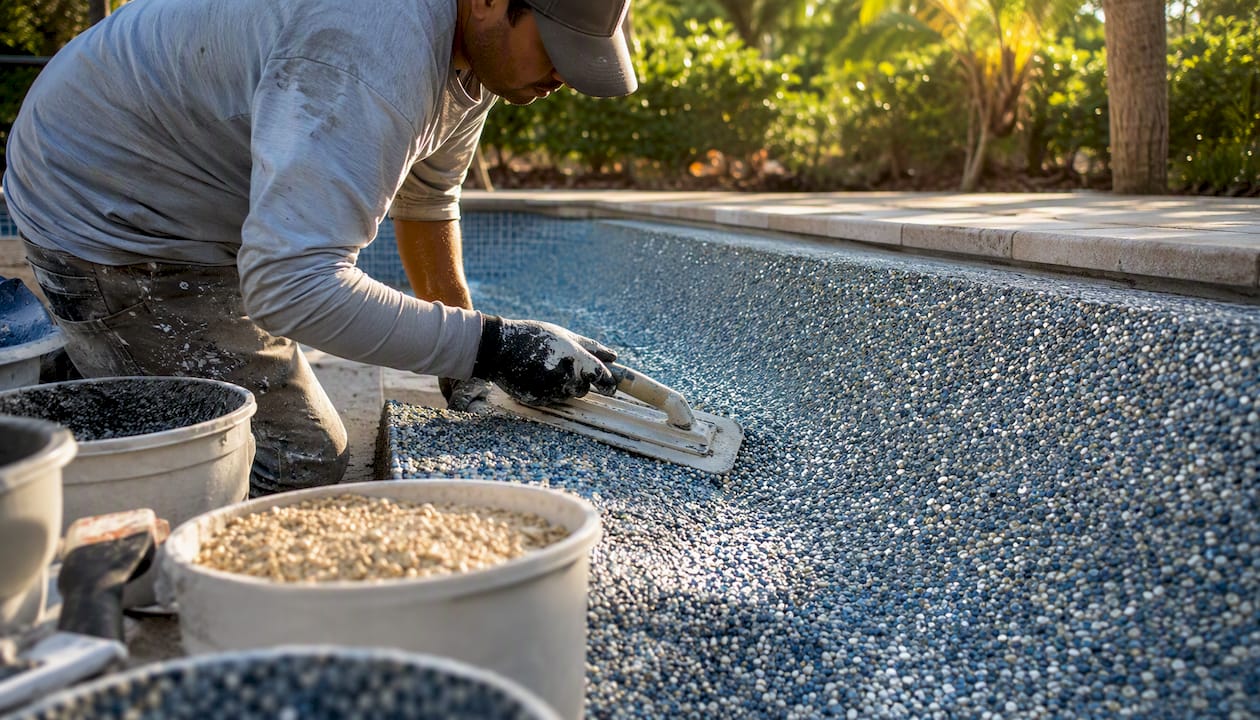
For a pool that sees daily swimmers, pets, and pool parties, an exposed-aggregate pebble finish is the strongest choice on the market today. It combines a rough, gripping texture with a surface hardness that resists chipping, staining, and etching far longer than plaster. Classic Marcite has installed and repaired thousands of these systems across Central Florida since 1988, and the pattern holds: pebble surfaces outlast softer alternatives by years, not months.
The National Plasterers Council has long stressed that proper surface prep and startup chemistry matter as much as the material itself. Even the best finish fails early on a poorly prepped shell.
- Best overall: Exposed-aggregate pebble/aggregate finishes for durability and slip resistance
- Best budget-conscious option: Quartz-modified plaster, if resurfaced on a disciplined schedule
- Watch for: Plain marcite plaster typically needs resurfacing every 5 to 10 years in heavy-use pools
- Installer standard: Manufacturer-authorized, factory-trained applicators for pebble and quartz systems
Key Takeaways
Exposed-aggregate pebble finishes outlast plaster and quartz by a wide margin and deliver the best slip resistance for pools under heavy daily use.
| Point | Details |
|---|---|
| Top finish choice | Pebble/aggregate finishes offer 20+ year lifespans and the highest slip resistance for high-traffic pools. |
| Water chemistry drives lifespan | pH, alkalinity, and calcium hardness swings degrade any finish faster than usage alone. |
| Total cost matters more than bid price | Factor resurfacing frequency, chemical use, and downtime, not just the upfront quote. |
| Safety zones need texture | Steps, shallow areas, and decks benefit most from textured aggregate over smooth plaster. |
| Trusted installer | Classic Marcite has resurfaced 100,000+ pools since 1988 and is a certified authorized Pebble Tec® applicator in Central Florida. |
Table of Contents
- Comparing Plaster, Quartz, Pebble, and Polymer-Modified Finishes
- What Actually Wears Down a Pool Finish Faster?
- How Long Should a High-Traffic Pool Finish Actually Last?
- Which Pool Surfaces Are Safest for Heavy Foot Traffic?
- What to Require from Your Pool Finish Installer
- Decision Checklist for Choosing a High-Traffic Pool Finish
- How to Vet an Installer for Pebble or Quartz Systems
- Does Florida’s Climate Change Which Finish Performs Best?
- What Installers See on Every High-Traffic Job
- Get a Free Estimate on Your High-Traffic Pool Resurfacing Project
- Frequently Asked Questions
- Sources
Comparing Plaster, Quartz, Pebble, and Polymer-Modified Finishes
Every pool finish trades off durability, safety, upkeep, and price differently. Plain marcite plaster is the cheapest to install but the softest surface in the pool, meaning it scratches, stains, and etches fastest under constant foot traffic and chemical exposure. Quartz finishes, made from silica aggregate blended into polymer-modified cement, close that gap. CL Industries markets its Sunstone Select line specifically because quartz resists staining and etching better than standard plaster, a real advantage for pools that get heavy sunscreen, leaf litter, and constant chemical dosing.
Pebble and aggregate finishes sit at the top of the durability curve. PebbleTec’s own longevity data shows a well-maintained pebble surface can hold its look and function for more than two decades, roughly double what plain plaster delivers before it needs replacement. Polymer-modified aggregate systems like Diamond Brite, which blend selected quartz aggregates with white Portland cement, land in a similar performance tier and add natural texture without the deeper stone profile of full pebble.
| Finish type | Expected lifespan | Slip resistance | Maintenance sensitivity | Upfront cost |
|---|---|---|---|---|
| Plain plaster | 5 to 10 years | Low (smooth) | High, sensitive to pH swings | Lowest |
| Quartz-modified | generally lasts a moderate term | Moderate, light texture | Moderate | Mid-range |
| Polymer-modified aggregate | offers extended durability | High, natural texture | Lower | Mid to high |
| Pebble/aggregate | known for long-lasting durability | Highest | Lowest | Highest |
Texture and color options grow along with cost, too. Standard pebble finishes come in dozens of aggregate blends, while smoother PebbleFina and PebbleBreeze lines from PebbleTec offer a softer, more polished feel for owners who want the durability but not the coarse texture underfoot, according to PebbleTec’s specialty product line. Warranty terms also scale with material: commercial-grade PebbleQuartz systems, for example, require registration and installer certification to keep the manufacturer warranty active, something plain plaster jobs rarely require.
What Actually Wears Down a Pool Finish Faster?
Water chemistry, sun exposure, and raw usage volume determine how fast any finish degrades, often more than the product spec sheet does. A pebble surface installed with sloppy startup chemistry can etch and roughen years ahead of schedule, while a well-maintained quartz finish can outperform its own lifespan estimate.
Three water-chemistry variables do most of the damage:
- Low pH or low alkalinity dissolves cement binder, leaving aggregate exposed and surfaces rough to the touch.
- High calcium hardness deposits scale on plaster and quartz finishes, dulling color and creating a gritty texture swimmers notice immediately.
- Chlorine spikes from shock treatments accelerate fading and can pit softer plaster surfaces over a single season.
Florida adds its own stress test. Intense UV exposure fades pigment faster than in milder climates, heavy summer rain dilutes chemical balance overnight, and live oaks and palms drop tannin-rich debris that stains porous surfaces. Add near-year-round swim season and a residential pool here logs the kind of cumulative wear a Northern pool sees in half the calendar days.
Pro Tip: For plaster-based finishes, insist on a documented startup and pond-curing schedule from your installer. Rushed chemical balancing during the first 30 days is the single most common cause of premature etching and mottled color.
How Long Should a High-Traffic Pool Finish Actually Last?
Lifespan windows vary widely by material, and the gap compounds when you factor in the full cost of ownership, not just the installer’s initial bid. Plain plaster typically needs resurfacing every 5 to 10 years, quartz finishes run 7 to 15 years, and pebble finishes can last significantly longer with consistent care.
That spread matters more than it looks on paper. A pool resurfaced three times in 20 years racks up labor, chemical startup costs, and weeks of downtime each round, expenses a one-time pebble installation avoids entirely. Total cost of ownership should weigh:
- Resurfacing frequency and the labor cost of each cycle
- Chemical consumption during startup periods, which spike after every resurface
- Downtime for a commercial or rental property, where a closed pool means lost revenue
- Repair costs for cracks, delamination, or shell damage that surface during old-plaster removal
Premium finishes often cost less over a 20-year horizon than repeatedly patching a cheaper one, even though the initial invoice looks larger. Property managers budgeting for a commercial pool resurfacing project should ask installers to quote lifecycle cost, not just the sticker price for one job.
Which Pool Surfaces Are Safest for Heavy Foot Traffic?
Textured aggregate finishes provide meaningfully better slip resistance than smooth plaster, and that gap widens in wet, high-traffic zones where bare feet meet water constantly. Pebble and quartz surfaces create natural friction points that plaster’s smooth cement finish simply can’t replicate.
Texture matters most in specific zones:
- Pool steps and benches, where wet feet and changing water depth increase slip risk
- Shallow-end play areas, especially in family and resort pools with young swimmers
- Pool decks and coping, where constant foot traffic and standing water create year-round hazard
- Ramps and accessibility entries, required to meet safety expectations for public and multi-family properties
Safety Callout: For commercial, resort, or multi-family pools, textured pebble or quartz finishes in high-traffic zones reduce slip incidents compared with smooth plaster, a difference property insurers and liability-conscious managers increasingly factor into resurfacing decisions.
What to Require from Your Pool Finish Installer
Skipping installer vetting is where most premature finish failures start. Manufacturer-authorized applicator training matters for pebble and quartz systems specifically, since improper mixing or troweling technique shows up as uneven texture or early delamination.
Before signing a contract, confirm:
- The installer carries manufacturer certification for the specific product line being quoted (PebbleTec, quartz systems, etc.)
- Surface prep uses water-jetting or approved bond-coat methods rather than aggressive stripping, which can weaken the pool shell over repeated cycles
- The bid separates product warranty from workmanship warranty, since manufacturer coverage rarely extends to installation errors
- Warranty registration windows and common exclusions (like chemical damage from improper water balance) are spelled out in writing
Pro Tip: Ask any installer bidding on your project for their registration number with the finish manufacturer. If they can’t produce one for a pebble or quartz job, that warranty may not be valid when you need it.
Decision Checklist for Choosing a High-Traffic Pool Finish
Start with how the pool gets used. A backyard pool for a family of four has different priorities than a hotel pool cycling hundreds of swimmers weekly.
- Match the finish to intended use: family pools can prioritize aesthetics slightly more, while commercial and waterpark settings should weight safety and durability first
- Be honest about maintenance capacity; plaster demands tighter water-chemistry oversight than pebble or quartz
- Request documented portfolio examples from installers showing pools of similar age and traffic volume
- Get warranty terms and startup procedures in writing before signing, not verbally promised
A pool resurfacing overview covering local Florida project specifics can help frame realistic timelines and costs before you request quotes.
How to Vet an Installer for Pebble or Quartz Systems
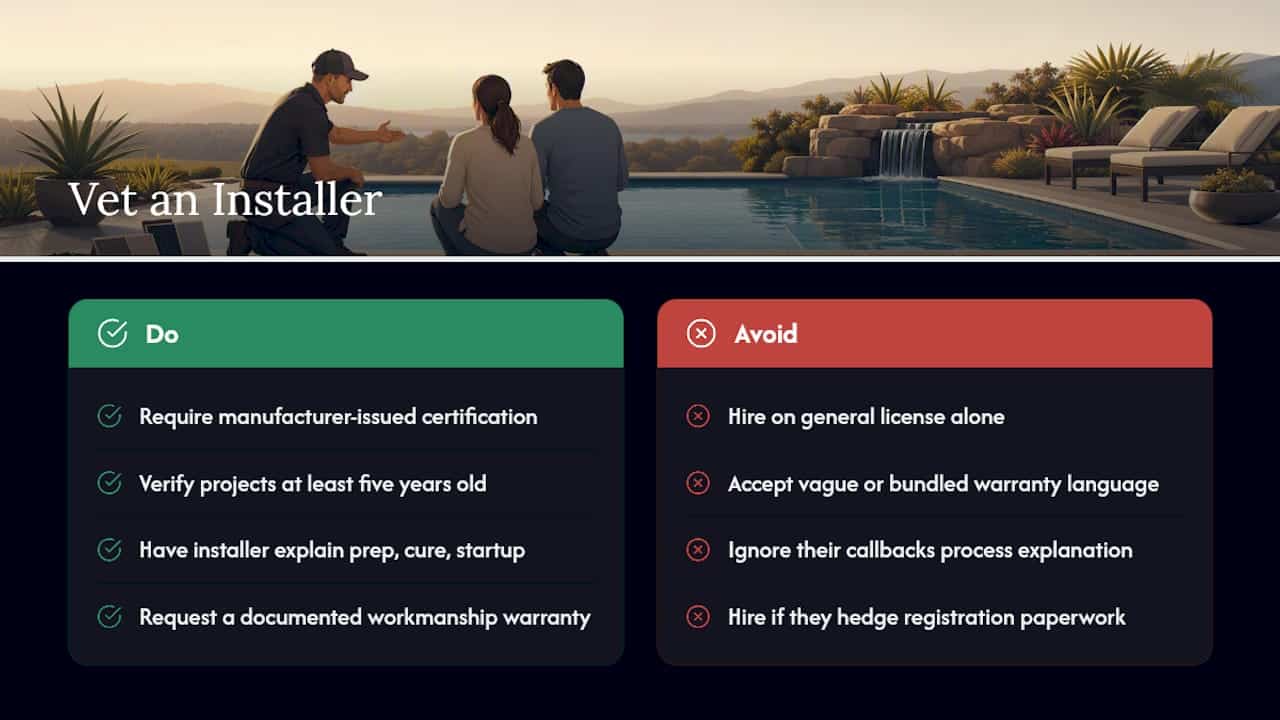
Not every pool contractor is qualified to install a pebble or quartz finish correctly, even if they’ve resurfaced plaster pools for decades. The mixing ratios, troweling technique, and exposure timing for aggregate finishes differ enough from plaster that manufacturer training is not optional for a job that’s supposed to last 20 years.
Look for applicators who carry current, manufacturer-issued certification, not just general contractor licensing. Ask to see completed projects that are at least five years old, since early-stage photos hide problems that only surface after a few seasons of chemical exposure and UV fade. A commercial pool finish specialist should be able to walk you through prep method, cure time, and startup chemistry without hesitation, because those three steps determine whether your warranty holds up.
Property managers overseeing multiple pools should also ask how an installer handles callbacks. A contractor confident in their prep work will typically offer a documented workmanship warranty separate from the manufacturer’s product warranty, and they’ll explain the difference clearly rather than bundling both into vague language. If an installer can’t answer specific questions about water-jetting versus stripping, or hedges on registration paperwork for a pebble system, that’s a signal to keep shopping before committing to a contract.
Does Florida’s Climate Change Which Finish Performs Best?
Climate and usage patterns shift which finish makes the most sense, even among materials with similar lab-tested durability. A shaded, low-traffic residential pool in a mild climate can get away with plain plaster for its full 8 to 10 year run. A sun-exposed, high-traffic Central Florida pool under near-constant use tells a different story.
Intense UV accelerates pigment fade on any finish, but pebble and quartz surfaces hide fading better because their aggregate color runs through the material rather than sitting on a thin plaster surface layer. Heavy rain events common in Florida’s wet season dilute pool chemistry overnight, which punishes plaster’s sensitivity to pH swings far more than it affects denser pebble surfaces. Commercial and resort pools with high bather loads accelerate this further. Constant chemical dosing to manage bather waste means more chemical cycling, and softer finishes simply can’t absorb that volume of chemical stress as gracefully as pebble or quartz.
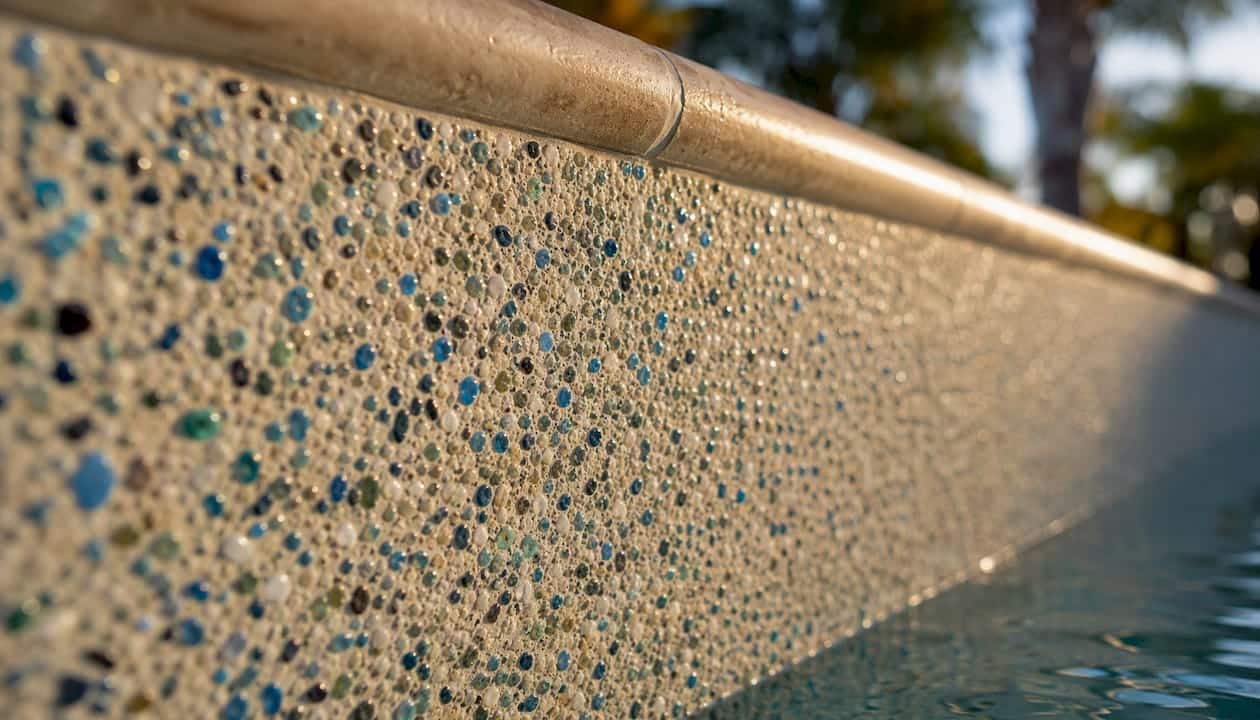
For residential pools with moderate, seasonal use, quartz finishes often strike a reasonable balance between cost and durability. For pools running near capacity year-round, whether a busy family backyard or a commercial property, the extra upfront cost of a pebble finish pays for itself in avoided resurfacing cycles.
What Installers See on Every High-Traffic Job
Most finish failures we encounter trace back to two things: rushed startup chemistry or skipped surface prep. A pool that gets professional installation and consistent water balance from day one rarely needs early intervention. Since 1988, Classic Marcite has resurfaced more than 100,000 pools across Florida, and that pattern repeats project after project.
Get a Free Estimate on Your High-Traffic Pool Resurfacing Project
Classic Marcite is the installer Florida homeowners and property managers turn to when a pool finish has to survive daily swimmers, not just look good in photos. As the largest Pebble Tec® applicator in Central Florida, the company handles resurfacing, authorized pebble and quartz installations, tile and deck repair, and warranty registration in-house, so you’re not juggling separate vendors for material, labor, and manufacturer paperwork.
If your current finish is rough to the touch, showing discoloration, or approaching the 8 to 10 year mark on plaster, a pool resurfacing quote for Orlando is the fastest way to find out whether resurfacing or a full pebble upgrade makes more sense for your budget and usage. Request a free estimate and portfolio review before your next swim season starts.
Frequently Asked Questions
What is the best high-traffic pool finish for a busy family pool?
An exposed-aggregate pebble finish gives the best combination of slip resistance and wear resistance for pools used daily by kids and adults alike.
How often do commercial pools need resurfacing?
It depends on the finish: plain plaster every 5 to 10 years, quartz every 7 to 15 years, and pebble finishes can run past 20 years with proper maintenance.
Is pebble finish worth the extra upfront cost?
Over a 20-year period, pebble finishes often cost less than repeatedly resurfacing plaster, once you factor in labor, downtime, and chemical startup costs for each cycle.
Does water chemistry really affect how long a finish lasts?
Yes. Low pH and alkalinity erode cement binder, while high calcium hardness causes scaling, and both accelerate wear regardless of which finish you choose.
What should I ask a pool finish installer before signing a contract?
Ask for manufacturer certification, documented surface prep methods, separate product and workmanship warranty terms, and completed project examples at least five years old.
Sources
- How Long Does a Pebble Pool Finish Last? – Pebble Technology International
- Sunstone Select – CL Industries
- Commercial Pool Replaster Considerations | Alan Smith Pools