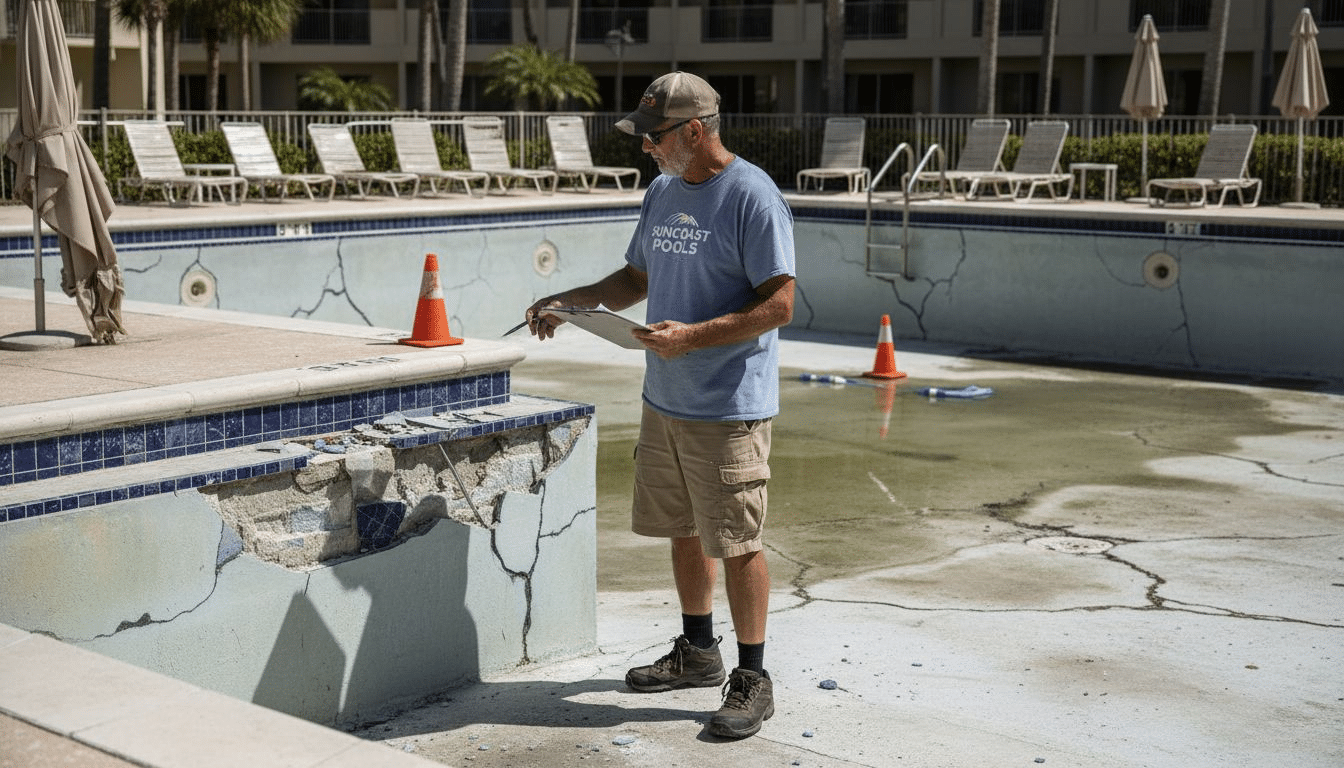
Over 80% of commercial pools develop significant surface damage within their first five years of operation, yet many property managers delay essential upgrades, mistakenly viewing resurfacing as purely cosmetic. For hotels and resorts in Orlando and Jacksonville, this deterioration directly threatens guest safety, regulatory compliance, and property value. Strategic pool upgrades deliver measurable returns through reduced liability exposure, lower operating costs, and enhanced guest satisfaction that translates to positive reviews and repeat bookings.
Table of Contents
- Why Commercial Pools Need Upgrades: Structural, Safety, And Operational Drivers
- Material Options And Their Impact On Durability And Aesthetics
- Common Misconceptions About Commercial Pool Upgrades
- The Renovation Process: What To Expect
- Economic And Operational Benefits Of Timely Commercial Pool Upgrades
- Transform Your Commercial Pool Into A Competitive Asset
- Frequently Asked Questions
Key Takeaways
| Point | Details |
|---|---|
| Safety Priority | Surface damage creates slip hazards and exposes guests to injury liability risks |
| Regulatory Compliance | ADA standards and Florida Health Department codes mandate specific pool features and conditions |
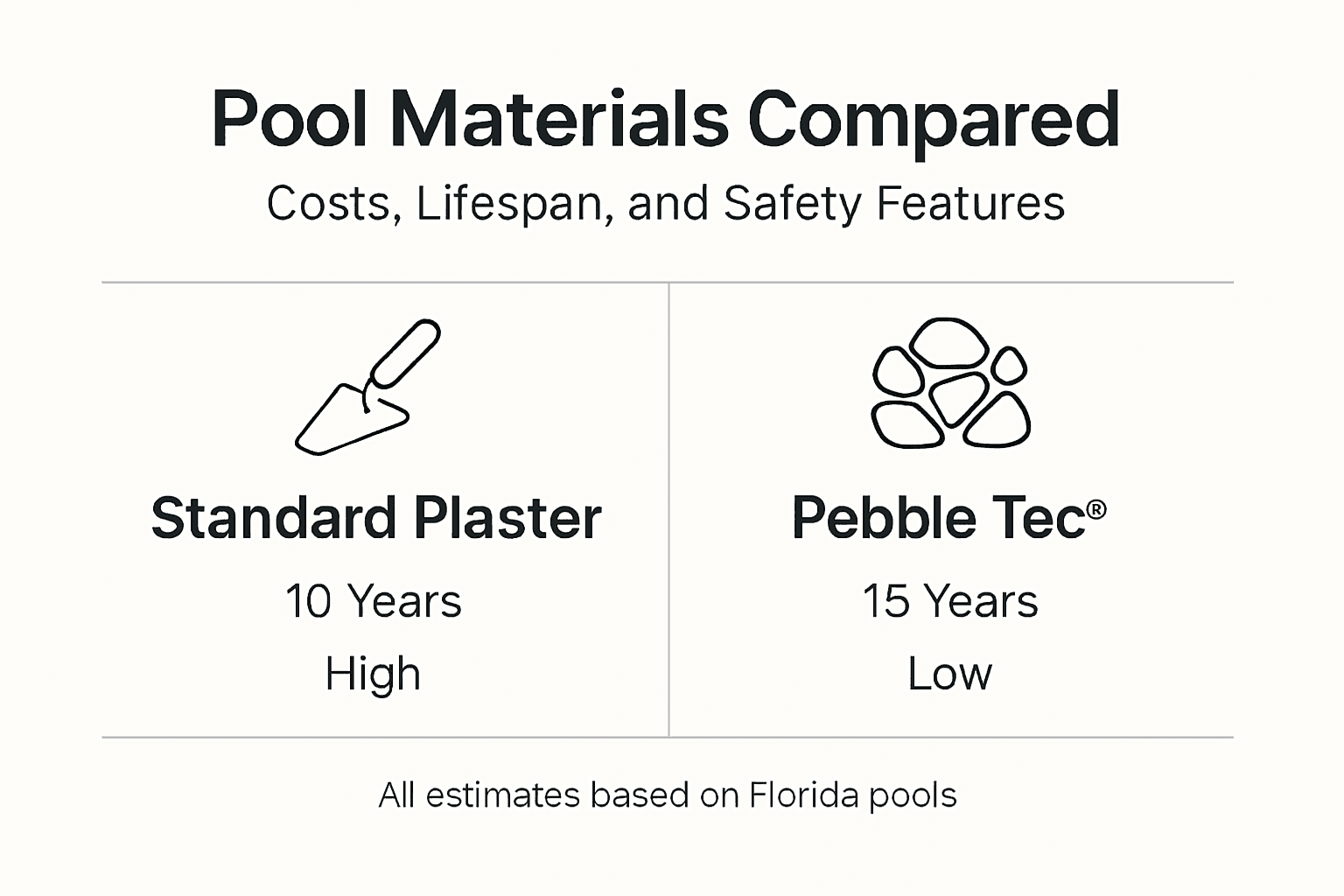
| Material Impact | Premium finishes like Pebble Tec® last 15-20 years versus 7-10 years for standard plaster |
| Economic Return | Quality upgrades reduce lifecycle maintenance costs by up to 50% while increasing property value |
| Guest Experience | Modern pool aesthetics directly correlate with higher satisfaction scores and booking rates |
Why Commercial Pools Need Upgrades: Structural, Safety, and Operational Drivers
The 80% surface damage statistic reflects Florida’s unique environmental challenges. Intense UV exposure, temperature fluctuations, and chemical treatments accelerate material breakdown. High guest usage compounds this wear, creating rough patches, cracks, and discoloration that compromise both safety and appearance.
Regulatory requirements create another urgent upgrade driver. The Americans with Disabilities Act mandates specific pool entry systems, while Florida pool safety requirements address barriers, depth markers, and surface conditions. Properties failing inspections face closure orders and substantial fines. The Florida Department of Health conducts routine inspections, and outdated pools frequently trigger violation notices.
Operational costs escalate dramatically with aging equipment. Pools built before 2010 typically use energy systems 40% less efficient than current standards. Outdated filtration requires more chemicals, frequent backwashing wastes water, and inefficient heaters drive utility bills higher. Commercial pool resurfacing benefits extend beyond aesthetics to encompass measurable operational savings.
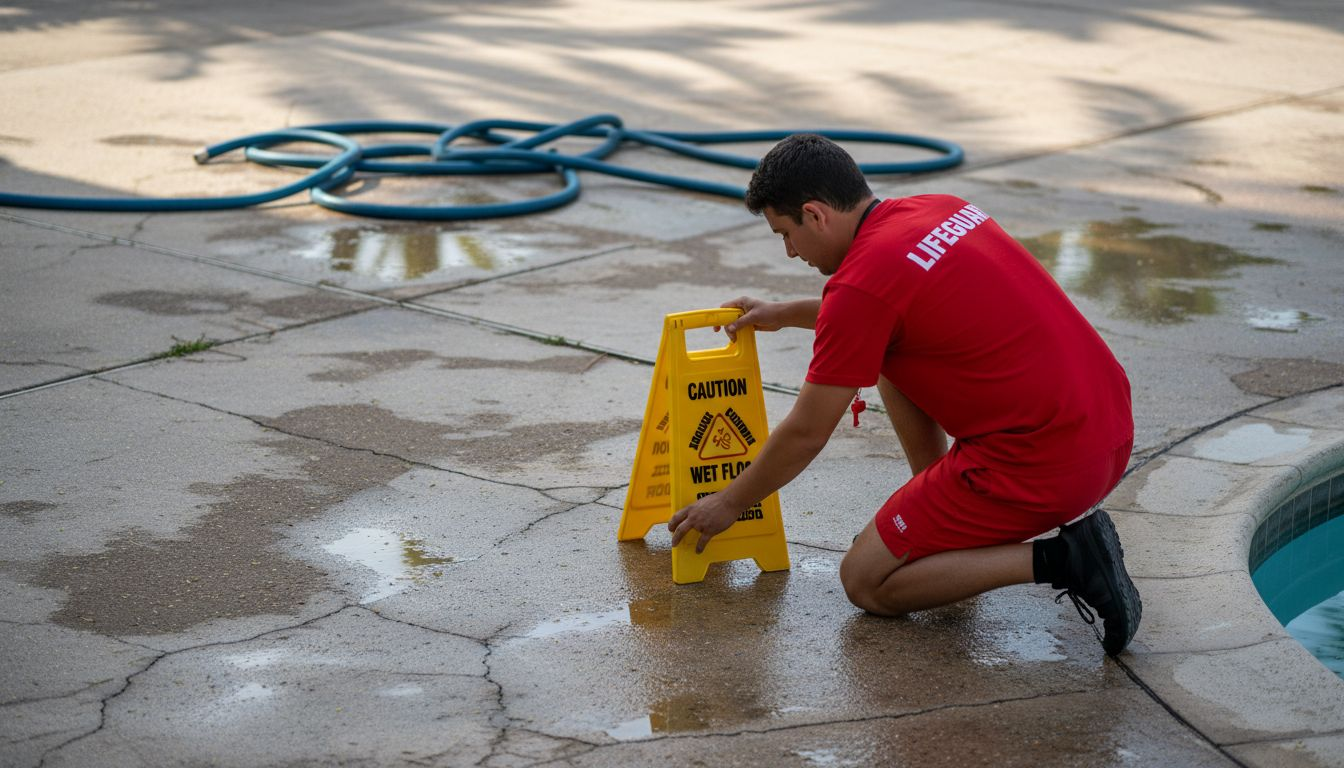
Guest safety represents the most critical upgrade driver. Deteriorated surfaces increase slip and fall incidents, rough patches cause skin abrasions, and structural cracks harbor bacteria despite chemical treatment. A single injury lawsuit costs hotels an average of $89,000 according to industry data, far exceeding upgrade investments. Property managers carry responsibility for maintaining safe recreational facilities, and documentation of deferred maintenance weakens legal defenses.
Material Options and Their Impact on Durability and Aesthetics
Material selection fundamentally determines long term performance and maintenance requirements. Understanding the trade-offs between finishes helps property managers make informed decisions aligned with operational goals and budget constraints.
Performance Comparison
| Material | Expected Lifespan | Maintenance Frequency | Slip Resistance | Initial Cost |
|---|---|---|---|---|
| Standard Plaster | 7-10 years | Annual acid washing | Moderate when new | Lowest |
| Pebble Tec® | 15-20 years | Minimal routine care | Superior texture | Moderate |
| Glass Tile | 20+ years | Regular cleaning | Variable by finish | Highest |
| Quartz Aggregate | 12-15 years | Periodic rebalancing | Good consistency | Moderate-High |
Pebble Tec® dominates commercial applications for sound reasons. The exposed aggregate surface provides natural slip resistance that improves safety in wet conditions. Its textured finish hides minor wear better than smooth plaster, maintaining appearance between major interventions. Color stability resists UV fading that plagues standard finishes. Classic Marcite applies Pebble Tec® advantages across resort and hotel projects throughout Central Florida.
Tile offers unmatched customization for luxury properties. You can create logos, patterns, and color schemes that reinforce brand identity. However, grout lines require more intensive cleaning, and individual tiles may crack or pop loose under ground movement. Repair costs accumulate over time as matching replacement tiles becomes challenging with discontinued product lines.
Pro Tip: Specify slip resistance ratings during material selection. Commercial pools should target a minimum DCOF (Dynamic Coefficient of Friction) of 0.42 for wet surfaces to meet safety standards and reduce liability exposure.
Standard plaster remains the budget option but creates false economy. Its shorter lifespan means more frequent renovations that disrupt operations. Rough texture develops within 3-5 years as the surface erodes, and staining becomes progressively harder to remove. For commercial applications prioritizing durability, best pool resurfacing materials lean toward aggregate finishes.
Common Misconceptions About Commercial Pool Upgrades
Several persistent myths delay necessary renovations and lead property managers toward costly mistakes. Clearing these misunderstandings helps you make timely, informed decisions.
Resurfacing Is Merely Cosmetic
This represents the most damaging misconception. While improved appearance benefits guest perception, structural integrity matters more. Cracks allow water infiltration behind the shell, causing soil erosion and potential structural failure. Deteriorated surfaces trap contaminants that chemical treatment cannot eliminate, creating health code violations. Understanding pool renovation misconceptions prevents expensive emergency repairs.
Delaying Upgrades Saves Money
Postponing renovations creates exponential cost increases. Minor surface issues progress to structural problems requiring complete shell replacement. Equipment inefficiency wastes thousands in monthly utility costs. Guest complaints and negative reviews damage reputation and booking rates. One hotel chain found that properties with outdated pools averaged 12% lower occupancy than similar properties with renovated facilities according to hospitality research.
Premium Materials Cost Too Much
Initial price comparisons mislead when lifecycle costs receive proper analysis. A Pebble Tec® installation costs approximately 30% more than standard plaster upfront. However, its 15-20 year lifespan versus 7-10 years for plaster means fewer total renovations. Reduced maintenance and chemical costs further improve return on investment. Premium materials also reduce closure frequency, preserving revenue streams.
Pro Tip: Request lifecycle cost analysis from contractors, not just installation quotes. Total cost of ownership over 20 years reveals true value differences between material options and helps justify capital expenditures to ownership groups.
The Renovation Process: What to Expect
Understanding renovation workflow helps you plan around operational needs and minimize guest impact. Most commercial pool renovation process projects follow these steps:
- Assessment and Planning (1-2 days): Contractors drain the pool, inspect the shell structure, identify necessary repairs, and confirm material specifications. This phase determines project scope and timeline.
- Surface Preparation (2-3 days): Teams remove existing finish through chipping or sandblasting, expose the underlying shell, and evaluate structural integrity. Any cracks or hollow spots require repair before new finish application.
- Structural Repairs (1-2 days): Workers address identified shell issues, reinforce weak areas, and ensure proper bonding surface. This step prevents future problems and extends renovation longevity.
- New Finish Application (1 day): Skilled applicators install the selected material according to manufacturer specifications. Proper technique during this phase determines final appearance and performance.
- Curing and Filling (3-4 days): The new surface requires controlled curing before water introduction. Teams carefully monitor conditions and follow precise filling procedures to prevent damage.
- Startup and Balancing (1 day): Chemical balance, equipment checks, and final inspections prepare the pool for guest use. Proper startup protects the new finish and ensures safety compliance.
Typical commercial projects span 7-10 days from drain to reopening. Larger resort pools may require 12-14 days. Following commercial pool renovation workflow efficient results practices minimizes timeline extensions.
Scheduling renovations during low occupancy periods reduces revenue impact. Many Florida hotels target September through November when tourism dips between summer and holiday peaks. Communicate closure dates prominently through booking channels, on property signage, and during check in to manage guest expectations. Offering alternative amenities like beach access passes or spa discounts maintains satisfaction during renovation periods.
Economic and Operational Benefits of Timely Commercial Pool Upgrades
Investing in quality pool renovations delivers measurable returns across multiple operational dimensions. Quantifying these benefits helps justify capital expenditures and prioritize maintenance budgets.
Cost Reduction Opportunities
- Energy Savings: Modern variable speed pumps reduce electricity consumption by 50-70% compared to single speed motors, translating to $3,000-$8,000 annual savings for typical commercial installations according to DOE estimates.
- Chemical Efficiency: Premium finishes with smoother surfaces require fewer chemicals to maintain proper balance, cutting annual chemical costs by 20-30%.
- Maintenance Labor: Durable materials need less frequent attention, allowing staff to focus on guest service rather than constant pool maintenance tasks.
- Extended Equipment Life: Proper water chemistry enabled by quality finishes reduces wear on pumps, heaters, and filters, extending replacement cycles by 3-5 years.
The lifecycle cost advantage becomes clear through detailed analysis:
| Cost Category | Standard Plaster (10 years) | Pebble Tec® (15 years) |
|---|---|---|
| Installation | $25,000 | $32,500 |
| Annual Maintenance | $4,200 | $2,800 |
| Renovations Needed | 2 cycles = $50,000 | 1 cycle = $32,500 |
| Total 20-Year Cost | $134,000 | $97,500 |
Guest satisfaction improvements drive revenue growth. Online reviews mentioning “beautiful pool” or “well maintained facilities” correlate with 8-12% higher booking conversion rates according to Cornell hospitality research. Properties can justify premium room rates when pool amenities match guest expectations.
Regulatory compliance avoids costly penalties and operational disruptions. Florida health department closure orders cost hotels an average of $15,000 per day in lost revenue, plus remediation expenses and reputation damage. Proactive upgrades ensure continuous operation and maintain required certifications.
“We delayed our pool renovation for two years to save budget. The resulting emergency closure during spring break cost us $180,000 in lost revenue and cancellations. The upgrade investment would have been $45,000. We learned an expensive lesson about false economy.” – Operations Director, Orlando Resort
Property value appreciation provides another benefit. Commercial real estate appraisers factor facility condition into valuations. Updated pools can increase property values by 3-5% according to appraisal institute data, a significant return on renovation investment. Understanding pool renovation costs and ROI helps property managers build compelling business cases for ownership approval.
Transform Your Commercial Pool into a Competitive Asset
Your pool represents more than a recreational amenity. It shapes guest perceptions, influences review scores, and impacts your property’s market positioning. Outdated or deteriorating pools send signals about overall property maintenance that extend far beyond the pool deck.

Classic Marcite has resurfaced over 100,000 pools since 1988, including major resort and hotel properties throughout Orlando and Jacksonville. Our expertise with high traffic commercial installations ensures minimal disruption and maximum durability. We understand the operational pressures you face and design renovation schedules around your occupancy patterns.
As Central Florida’s largest Pebble Tec® applicator, we deliver material quality and installation precision that extends surface life and reduces your long term costs. Our commercial team coordinates with your facilities staff to maintain guest satisfaction throughout the renovation process. Free estimates provide detailed timelines and lifecycle cost analysis that support informed decision making. Contact us today to discuss how strategic pool upgrades protect your guests, your budget, and your reputation.
Frequently Asked Questions
How often should commercial pools be resurfaced?
Most commercial pools require resurfacing every 7-15 years depending on material quality, usage intensity, and maintenance practices. Premium finishes like Pebble Tec® extend this interval compared to standard plaster.
What causes commercial pool surfaces to deteriorate faster than residential pools?
Higher bather loads, extended operating hours, aggressive chemical treatment, and Florida’s intense UV exposure accelerate surface breakdown. Commercial pools experience 5-10 times more wear than typical residential installations.
Can pool renovations happen during operating season?
Yes, though off season scheduling minimizes guest impact. Projects typically require 7-10 days of complete closure. Many hotels successfully renovate during shoulder seasons with proper advance communication to guests.
How do material choices affect long term maintenance budgets?
Premium aggregate finishes reduce annual maintenance costs by 30-50% through better chemical resistance, easier cleaning, and extended renovation cycles. Initial cost premiums typically pay back within 5-7 years through operational savings.
What safety features should commercial pool upgrades include?
ADA compliant entry systems, compliant depth markings, slip resistant surfaces with minimum 0.42 DCOF ratings, proper drainage, and updated barrier requirements per Florida building codes are essential for regulatory compliance and liability protection.