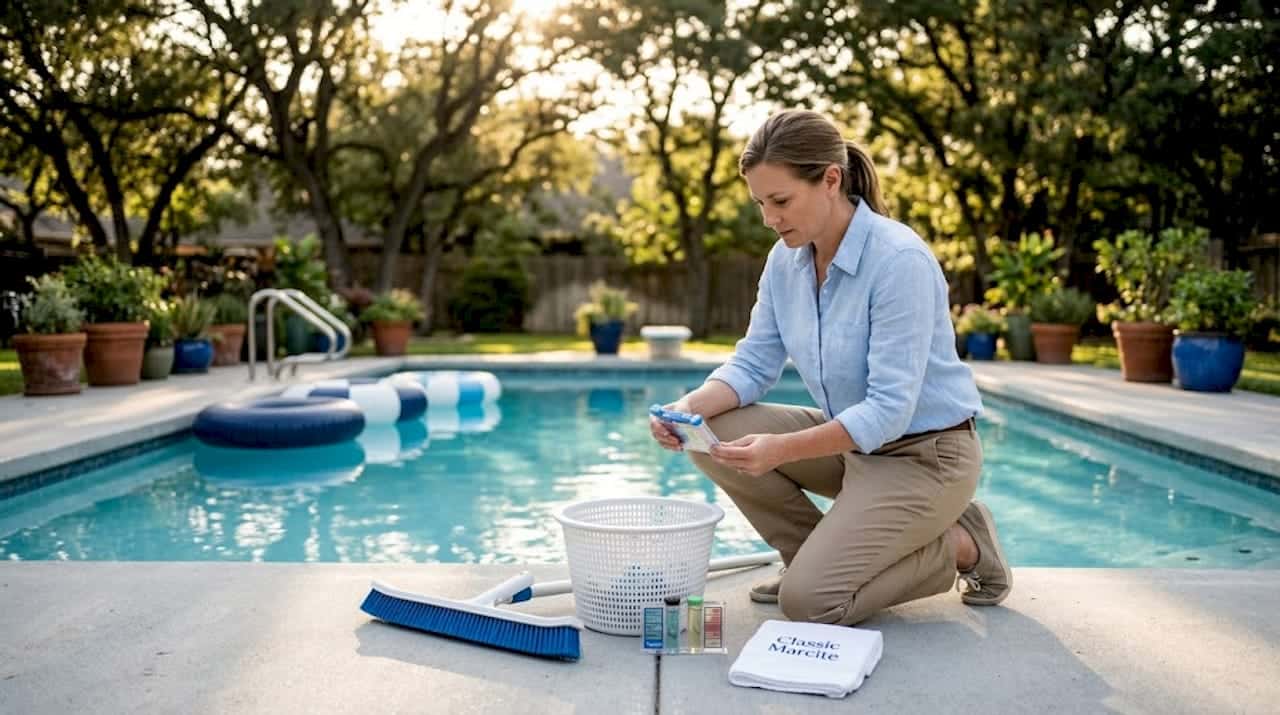
TL;DR:
- Regular pool maintenance involves timely testing, brushing, skimming, vacuuming, and adjusting water chemistry to prevent costly repairs and water issues.
- Maintaining all four interconnected systems—circulation, filtration, sanitization, and cleaning—ensures water clarity and equipment longevity throughout the year.
- Consistent, proactive monitoring and routine care are key to keeping pools safe, clean, and enjoyable while avoiding reactive, expensive fixes.
Skipping pool care for a week or two feels harmless until you’re staring at green water and facing a repair bill that could have bought a weekend vacation. A solid pool maintenance checklist is the difference between a pool you enjoy and one you dread. This guide covers everything from weekly pool tasks and water chemistry to seasonal equipment checks, giving you a repeatable system that protects your investment and keeps the water safe for your family all year long.
Table of Contents
- Key takeaways
- 1. Understanding the four systems behind every pool maintenance checklist
- 2. Weekly pool tasks: the core of your maintenance routine
- 3. Monthly and seasonal pool maintenance tasks
- 4. Common pool maintenance mistakes and how to fix them
- 5. Building a consistent pool care habit that actually sticks
- When your pool surface needs more than maintenance
- FAQ
Key takeaways
| Point | Details |
|---|---|
| Test water multiple times weekly | Check pH, chlorine, and alkalinity 2 to 3 times per week during peak season to catch problems early. |
| Brush before you vacuum | Brushing walls and dead zones first loosens debris and algae film so vacuuming and sanitizers work effectively. |
| Match filter cleaning to pressure | Clean or backwash your filter when pressure rises 8 to 10 psi above its normal baseline reading. |
| Shock after heavy use or storms | Shock treatments restore clarity and kill bacteria after parties, heavy rain, or intense heat. |
| Consistent routine beats reactive fixes | A short weekly session prevents the expensive emergency cleanups that come from skipping maintenance. |
1. Understanding the four systems behind every pool maintenance checklist
Before you build any schedule, you need to know what you are actually managing. Every pool runs on four interconnected systems: circulation, filtration, sanitization, and cleaning. When one system underperforms, the others compensate until they cannot, and that is when you get cloudy water, algae, or equipment failure.
Circulation moves water through the system so chemicals distribute evenly and debris reaches the skimmers. Filtration removes particles from that moving water. Sanitization kills bacteria and algae using chlorine, salt systems, or other treatments. Cleaning handles what the other three systems miss, including brushing, skimming, and vacuuming.
A strong pool care guide accounts for all four systems in every session, not just the ones that look visibly dirty. Consistent weekly maintenance prevents the cycle of water problems and costly repairs that catches so many homeowners off guard.
- Circulation: Run your pump long enough to turn over the full water volume at least once per day
- Filtration: Keep pressure gauges at baseline and address rises before flow drops
- Sanitization: Maintain proper chlorine and pH levels so chemicals actually work
- Cleaning: Brush, skim, and vacuum on a fixed schedule rather than when it looks dirty
Pro Tip: Variable-speed pumps reduce energy use by up to 65% compared to single-speed models, saving around $450 per year. Running them in shorter, staged cycles throughout the day improves debris capture and water clarity.
2. Weekly pool tasks: the core of your maintenance routine
This is where your pool stays healthy or falls apart. Weekly pool tasks are non-negotiable. Think of them less as chores and more as a 30 to 45 minute investment that prevents hours of emergency work later.
Here are the six weekly pool cleaning steps every homeowner should follow:
- Test water chemistry. Test 2 to 3 times per week during swim season. Always adjust alkalinity first (target 80 to 120 ppm), then pH (7.4 to 7.6), then sanitizer levels. Adding chemicals out of order causes reactions that cloud the water or irritate skin. Take your test sample from elbow depth, away from return jets.
- Skim the surface. Dead leaves and debris sink fast and feed algae growth. Skim daily if trees surround your pool, or at minimum every other day. Empty skimmer baskets at the same time so flow stays unrestricted.
- Brush walls, steps, and corners. Brushing weekly breaks up biofilm and algae before it takes hold, especially in low-flow areas like behind ladders, in corners, and along steps. Use a nylon brush for plaster or vinyl and a stainless steel brush only on bare concrete.
- Vacuum the pool floor. Vacuuming removes settled debris that skimming and brushing push to the bottom. Manual vacuuming gives you the most control. Suction-side cleaners work well for moderate debris loads. Robotic cleaners handle heavy debris independently and do not tax your filter.
- Run the pump. Most residential pools need 8 to 12 hours of pump runtime daily in summer. With a variable-speed pump, you can split that into multiple cycles for better distribution without driving up your electricity bill.
- Check and adjust water level. Water should sit at the midpoint of your skimmer opening. Too low and the pump pulls air, risking damage. Too high and skimmer efficiency drops significantly.
Pro Tip: Do your chemical testing in the morning before swimmers get in and before the sun burns off chlorine. You will get a true reading of where your water actually stands overnight.
3. Monthly and seasonal pool maintenance tasks
Weekly tasks keep the water clean. Monthly and seasonal tasks keep your equipment alive. Skipping these is how a $300 pump seal replacement turns into a $2,000 pump replacement.
Filter maintenance
Your filter type determines your cleaning method:
- Sand filters: Backwash when pressure rises 8 to 10 psi above baseline. Backwash until the sight glass runs clear, typically 2 to 3 minutes.
- Cartridge filters: Remove and rinse with a garden hose every 4 to 6 weeks. Soak in filter cleaner solution quarterly to remove oils and scale.
- DE filters: Backwash similarly to sand filters, then recharge with fresh diatomaceous earth. Full teardown and grid cleaning is needed once or twice per season.
Monthly chemistry checks
Beyond your weekly tests, check these monthly:
| Parameter | Target Range | Why It Matters |
|---|---|---|
| Calcium hardness | 200 to 400 ppm | Low calcium etches plaster; high calcium causes scaling |
| Cyanuric acid (stabilizer) | 30 to 50 ppm | Protects chlorine from UV breakdown in outdoor pools |
| Total dissolved solids | Below 2,000 ppm | High TDS makes chemicals less effective |
| Phosphates | Below 200 ppb | High phosphates fuel algae growth |
Shock treatments
Shock after heavy use, storms, or at least monthly during peak swim season. Use a non-chlorine shock for regular maintenance and a calcium hypochlorite shock for heavy algae or contamination events. Always shock at dusk so UV light does not degrade the chlorine before it can work.
Equipment inspections and seasonal tasks
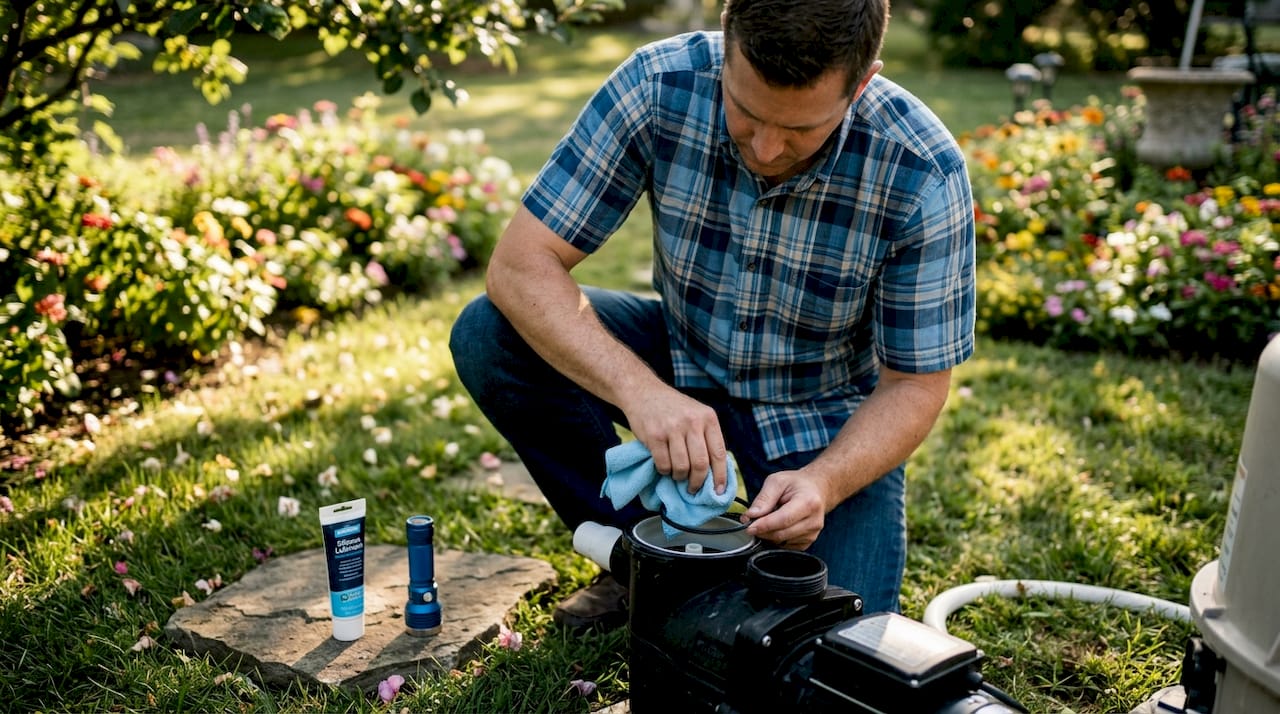
Check pump seals, hoses, O-rings, and unions monthly for cracks or weeping. Lubricate O-rings with a silicone-based lubricant. For seasonal opening, prime the pump, check all fittings, and balance chemistry before the first swim. When closing, lower the water level, blow out the lines, and add a winter algaecide.
A pool cover reduces debris accumulation, retains heat, cuts chemical consumption, and adds a safety layer. Solar, safety, and automatic covers each serve different needs and price points.
4. Common pool maintenance mistakes and how to fix them
Homeowners consistently underestimate mechanical cleaning compared to chemical treatment. Most people test and add chemicals religiously but skip brushing entirely. Chemicals cannot kill algae attached to a surface unless physical brushing breaks it loose first.
Here are the mistakes that send pool owners into emergency mode:
- Ignoring filter pressure. Running a clogged filter starves the pool of circulation and makes every chemical you add less effective. Check pressure weekly and act on any 8 to 10 psi rise.
- Adding chemicals in the wrong order. Always adjust alkalinity before pH and never add two chemicals at the same time. Mixing chlorine and algaecide directly causes a reaction that reduces the effectiveness of both.
- Vacuuming without brushing first. Brushing stirs up settled debris and algae; vacuuming then removes it. Do it in reverse and you miss half the material.
- Reactive cleaning instead of routine care. Inconsistent maintenance attempts lead to expensive emergencies. Waiting until the water looks bad means you are already behind.
- Running the pump at the wrong times. Running it midday costs more and does less. Night or early morning cycles run cooler and handle chemical distribution more efficiently.
For troubleshooting tips on equipment replacement and knowing when a component has run its course, a homeowner equipment guide walks you through the decision clearly.
“The most expensive pool service call I get isn’t for something that broke suddenly. It’s for something the homeowner watched get worse over three weeks.”
For Florida pool owners specifically, the year-round swim season means there is no true off-period. Staying on top of routine pool repairs year-round prevents the accumulation of small problems into major structural or equipment failures.
5. Building a consistent pool care habit that actually sticks
I have talked with hundreds of homeowners over the years, and the ones who struggle most with pool care are not lazy. They are reactive. They wait until something looks wrong, then throw time, chemicals, and money at it. That cycle is exhausting and expensive, and it is completely avoidable.
In my experience, the single biggest shift happens when people stop thinking of pool care as cleaning and start thinking of it as monitoring. Your weekly session is not about fixing problems. It is about catching the small signals before they become problems. A pressure reading that is 4 psi higher than last week tells you to watch your filter. A pH drift of 0.3 tells you your bather load is up. These are easy, cheap adjustments. What they prevent is a green pool, a dead pump, or a skin-irritating chemistry disaster.
I have also seen homeowners skip brushing for months because “the robot handles it.” Robotic cleaners are excellent for debris, but they do not scrub the corners, the steps, or the grout lines where algae actually starts. Fifteen minutes of brushing per week saves you from a full algae treatment that costs time, money, and sanity. For anyone managing a pool after recent resurfacing work, following post-resurfacing care steps during the first several months is non-negotiable.
My advice: set a recurring calendar reminder, keep your test kit and chemicals within reach of the equipment pad, and treat the checklist like a quick walkthrough, not a major project. The pools that stay beautiful year after year are maintained by people who do a little consistently, not a lot occasionally.
— Classicmarcite
When your pool surface needs more than maintenance

Even the most disciplined essential pool upkeep routine cannot compensate for a surface that has aged past its prime. Rough, stained, or cracked plaster traps algae, damages equipment, and makes chemical balance harder to maintain no matter how diligently you follow your checklist.
Classic Marcite has resurfaced more than 100,000 pools across Florida since 1988, using premium materials like Pebble Tec® that hold up against harsh sun, heavy use, and year-round chemistry demands. Whether you need pool resurfacing in Windermere, resurfacing in Winter Park, The Villages, or Maitland, the team at Classicmarcite delivers finishes built for Florida pools. Request a free estimate and find out what a resurfaced pool can do for your water quality and maintenance routine.
FAQ
How often should I follow a pool maintenance checklist?
Follow your core pool maintenance checklist weekly for tasks like testing water chemistry, skimming, brushing, and vacuuming. Add monthly equipment and chemistry checks on top of that routine.
What order should I add pool chemicals in?
Always adjust alkalinity first, then pH, then sanitizer. Adding chemicals out of order or simultaneously causes reactions that cloud the water or reduce effectiveness.
How do I know when to backwash my pool filter?
Backwash your sand or DE filter when the pressure gauge reads 8 to 10 psi above its normal baseline. Waiting longer restricts flow and forces your pump to work harder.
Why does my pool keep turning green after I add chlorine?
Green water despite added chlorine usually means algae is attached to surfaces where sanitizer cannot penetrate. Brush the walls and floor thoroughly, then shock the pool at dusk to allow full chemical contact.
Do I need a separate summer pool maintenance routine?
Yes. During peak season in Florida, test water 2 to 3 times per week instead of once, increase pump runtime, and plan monthly shock treatments after periods of heavy use or storms.