TL;DR:
- Florida pools mainly lose water through leaks and splash-out, not evaporation.
- Simple tests like the bucket and dye test help homeowners identify leaks early.
- Regular maintenance and using pool covers can prevent costly repairs and water loss.
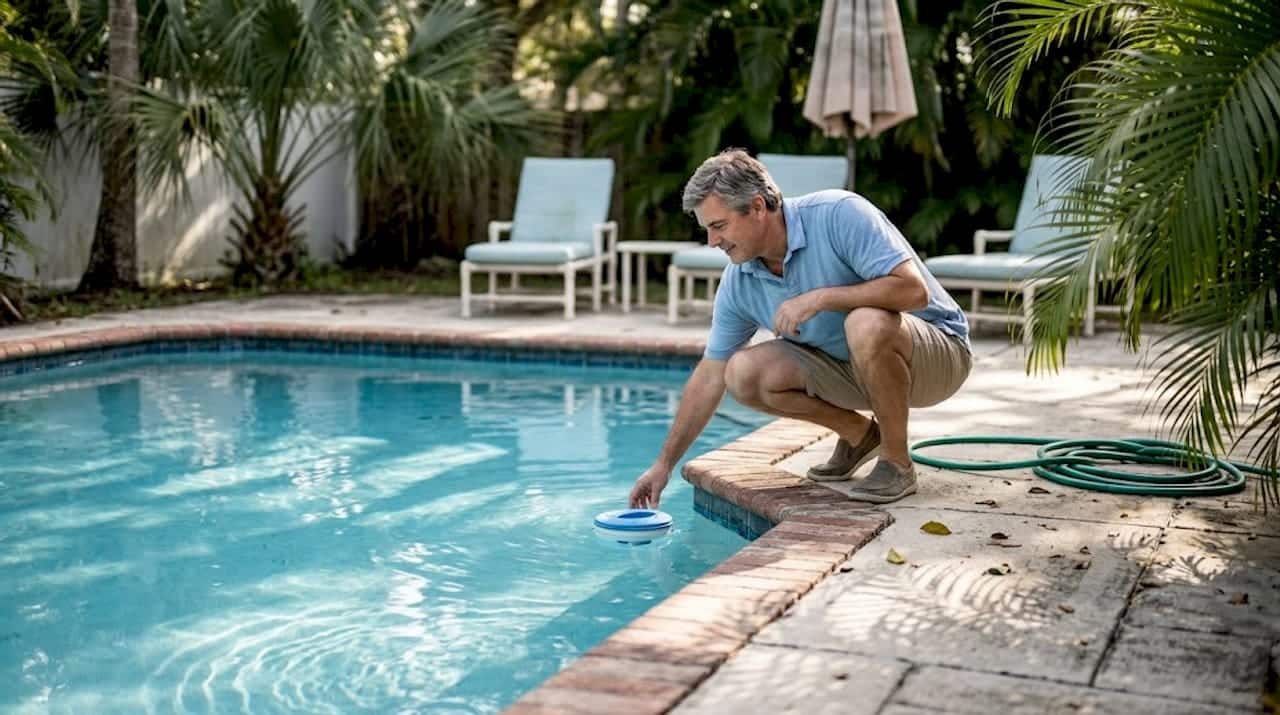
Watching your pool water level drop week after week is frustrating, especially when you can’t figure out why. Most Orlando and Jacksonville homeowners assume evaporation is the main problem, but Florida’s humid subtropical climate actually slows evaporation compared to drier states. That means if your pool is losing more than a quarter inch of water per day, something else is going on. Understanding the real causes, knowing how to test for them, and acting quickly can save you hundreds or even thousands of dollars in repairs and wasted water.
Table of Contents
- Common reasons pools lose water in Florida
- How to diagnose the source: Tests every homeowner can do
- Fixes and prevention: Solutions for Florida pool owners
- When to call a pro: Saving time, money, and your pool
- A homeowner’s truth: Maintenance, not miracles, prevents water loss
- Expert pool repair and resurfacing for Florida homes
- Frequently asked questions
Key Takeaways
| Point | Details |
|---|---|
| Florida climate matters | High humidity slows some water loss, but sun and wind still cause major evaporation. |
| Leaks are common | Unexplained water loss is often from structural or plumbing leaks, not just evaporation. |
| Test before you dig | Simple tests like the bucket and dye test help catch leaks early and avoid costly repairs. |
| Prevention is key | Regular surface checks, covers, and smart maintenance reduce water loss and repairs. |
| Professional help pays off | Calling pros for persistent loss or hidden leaks prevents unnecessary pool damage and big bills. |
Common reasons pools lose water in Florida
Evaporation is real, but it is not the villain most people think it is in Florida. Because Central Florida air holds significant moisture year-round, pool covers reduce evaporation by up to 95 percent compared to uncovered pools, which tells you something important: even in a high-humidity environment, an uncovered pool still loses meaningful water. Wind, direct sun exposure, and running water features all accelerate evaporation, even here.
That said, evaporation alone rarely explains dramatic water loss. The real culprits behind unexplained drops in Orlando and Jacksonville pools tend to fall into several categories.
Primary causes of pool water loss in Florida:
- Structural leaks in the shell, floor, or walls, often caused by ground movement, aging materials, or improper installation
- Plumbing leaks in underground pipes, return lines, or suction lines
- Equipment leaks at pump seals, filter housings, valves, or heater connections
- Skimmer or fitting failures where gaskets degrade over time from Florida’s UV exposure and chemical contact
- Splash-out from heavy use, pool toys, or water features
- Backwash and waste cycles on sand and DE filters, which discharge water every cleaning cycle
Here is a practical comparison to help you estimate expected daily water loss:
| Cause | Typical daily loss | Controllable? |
|---|---|---|
| Evaporation (uncovered) | 1/8 to 1/4 inch | Yes, with cover |
| Splash-out (active use) | 1/8 to 1/4 inch | Partially |
| Backwash (sand/DE filter) | Variable, per cycle | Yes, switch filter type |
| Minor plumbing leak | 1/4 to 1/2 inch or more | Yes, with repair |
| Structural crack | 1/2 inch or more | Yes, with repair |
“Pools in Florida’s humid subtropical climate lose less to evaporation than pools in dry regions, but wind and sun exposure can still drive significant loss. Using a solar cover dramatically reduces this.”
Analyzing patterns is key. If your pool loses the same amount whether it’s in use or not, splash-out is off the table. If the loss slows or stops when you turn off the pump, you likely have a leak in the pressurized return lines. If the loss stops at a specific water level, the leak is probably at or near that point on the pool wall or skimmer.
For Orlando and Jacksonville homeowners dealing with pool problems and solutions on a regular basis, recognizing these patterns early is what separates a $200 repair from a $5,000 structural fix. Browse residential pools to see how proper materials and finishes hold up long-term when pools are maintained correctly.
How to diagnose the source: Tests every homeowner can do
Understanding the causes is essential, but pinpointing where your water loss is happening is the next step. The good news is that two simple tests give you a clear starting point before you spend money on a professional diagnosis.
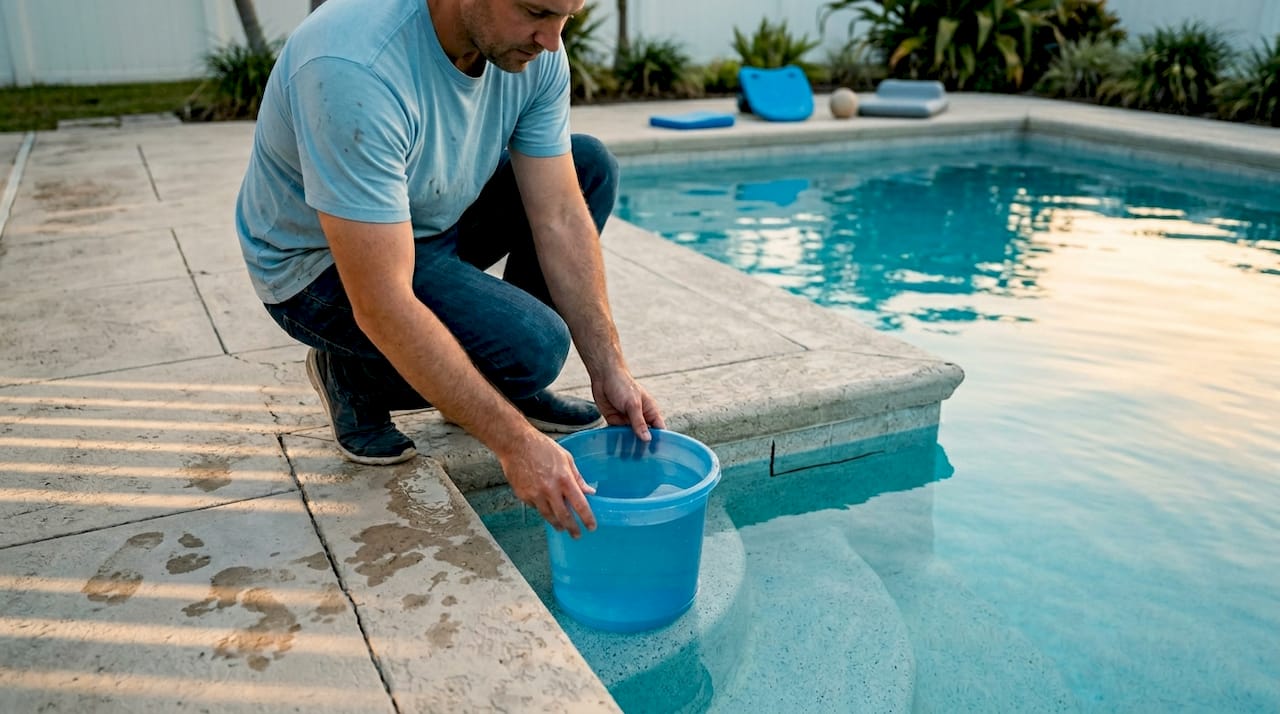
Step-by-step bucket test:
- Fill a bucket with pool water to about one inch below the rim.
- Place the bucket on a pool step, submerged two to three inches in the pool water to match temperature.
- Mark the water level inside the bucket with a piece of tape or a marker.
- Mark the pool water level on the outside of the bucket or on the pool wall.
- Run the pump as normal for 24 hours.
- Compare both levels after 24 hours. If the pool dropped more than the bucket, you likely have a leak.
The bucket test is the single most reliable first step for homeowners because it separates actual evaporation from suspected leaks. Repeat the test with the pump off for another 24 hours. If the pool loses more water with the pump running, the leak is in the plumbing or equipment. If the loss is the same either way, it is likely in the shell itself.
Dye testing for cracks and fittings:
Once you confirm a leak, the dye test helps locate it. A dye test locates leaks by injecting a small stream of colored dye near suspected areas including cracks, return fittings, skimmers, and lights while the pump is off. If the dye gets drawn toward or into a gap, that is your leak point.
Turn off all pump equipment first so the water is still. Squeeze a small amount of pool dye or food coloring near any visible cracks, fittings, or around the skimmer face plate. Watch closely. Still water shows you exactly where the suction is pulling the dye.
Pro Tip: Always dye test in the early morning before wind picks up. Even slight water movement in the pool can carry the dye away from the actual leak point and give you a false reading.
Common mistakes in DIY diagnosis:
- Testing on a windy day, which skews bucket test results
- Forgetting to account for heavy rain refilling the pool slightly between readings
- Checking only visible cracks and skipping fittings and returns
- Running the dye test with the pump on, which obscures results
Some leaks are simply beyond what homeowners can locate on their own. Underground plumbing, internal shell delamination, and pressurized line failures need acoustic or pressure tests that only licensed professional leak detection companies can perform accurately. Trying to dig up deck or plumbing to find a leak without this data often results in expensive, unnecessary excavation. If your bucket test confirms a leak but the dye test turns up nothing visible, stop there and call a pro.
You can also fix pool leaks with guidance from our detailed step-by-step resource for homeowners ready to tackle minor repairs themselves.
Fixes and prevention: Solutions for Florida pool owners
Once you’ve identified your source of water loss, the next step is tackling repairs and prevention. Here’s how.
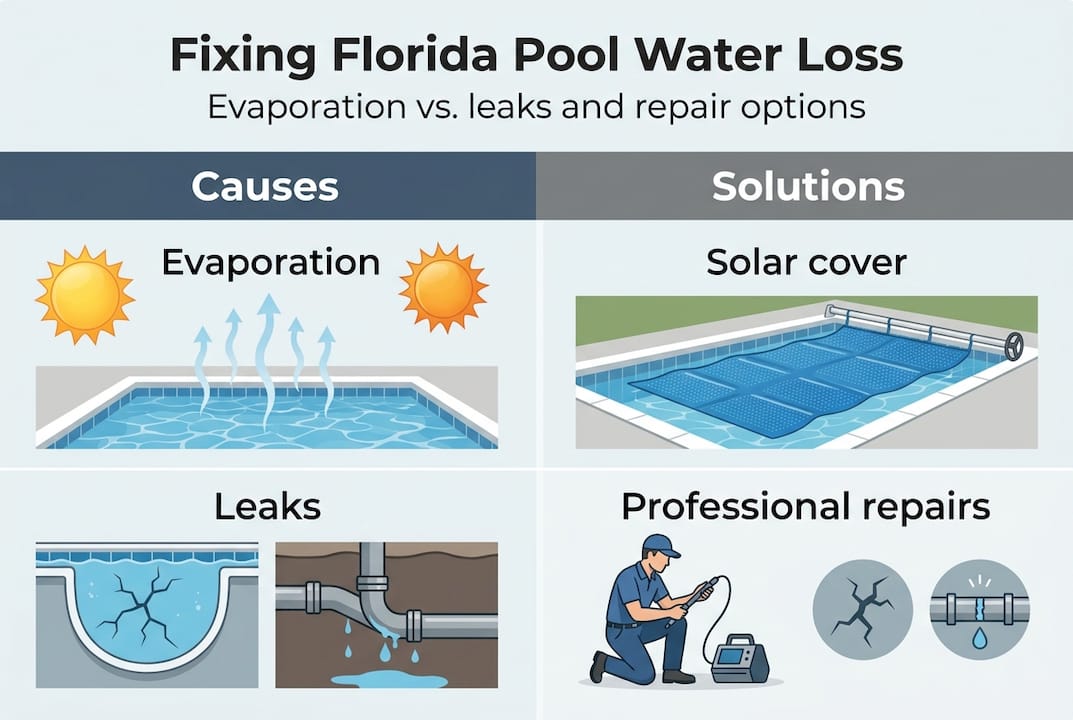
The most cost-effective first move for any Florida pool owner is adding a solar cover. A quality solar cover delivers the biggest return of almost any pool product you can buy. Coupled with minor adjustments to your equipment and habits, you can reduce ongoing water loss dramatically without major renovation.
Evaporation control options compared:
| Solution | Evaporation reduction | Upfront cost | Ongoing cost |
|---|---|---|---|
| Solar cover | Up to 95% | Low to moderate | Minimal |
| Liquid pool cover | 30 to 50% | Low | Monthly replacement |
| Landscaping windbreak | 20 to 40% | Moderate to high | Low |
| Pool enclosure/screen | 50 to 70% | High | Low |
On top of evaporation control, the type of filter your pool uses makes a real difference in water consumption. Cartridge filters eliminate the need for backwashing entirely, which means you are not discharging hundreds of gallons each week that a sand or DE filter requires. If you have an older sand filter and you are trying to conserve water, switching to a cartridge system pays for itself quickly.
Other practical fixes for Florida pool owners:
- Repair visible cracks in the shell or tile as soon as you spot them. Small cracks in older marcite or plaster surfaces grow quickly in Florida’s heat and humidity cycle.
- Replace skimmer gaskets and return fittings every few years, especially in pools more than 10 years old.
- Add eyeball return fittings that direct water circulation away from the surface to reduce agitation and splash-out.
- Reduce waterfall and fountain run time. Moving water evaporates much faster than still water, even in humid air.
- Schedule regular professional inspections, not just when something seems wrong.
Pro Tip: If you are losing water primarily overnight when the pool is calm and no one is swimming, evaporation is almost never the cause. Nighttime is when the bucket test is most reliable, and a faster pool drop overnight strongly points to a structural or plumbing leak.
Learning how to maintain pool surface integrity goes a long way toward preventing the small surface failures that turn into bigger leaks. For broader guidance, our pool maintenance tips page covers what Florida’s climate demands from pool owners through every season.
When to call a pro: Saving time, money, and your pool
While DIY fixes help, some issues require licensed pros. Here’s how to know when outside help is warranted.
There is a clear point where trying to handle a pool leak yourself stops saving money and starts costing more. Recognizing that point is one of the most valuable skills a pool owner can develop.
Signs you need professional help immediately:
- Your pool is losing more than half an inch of water per day consistently
- You see visible cracks running along the floor or walls of the shell
- The ground around your equipment pad is consistently wet or soft
- You can hear water running in the plumbing when everything is shut off
- Your water bill has spiked noticeably without explanation
- The pool deck is shifting, lifting, or showing sinkholes near the pool edge
“Once the bucket test confirms a leak, do not guess. A professional using acoustic listening equipment or pressure testing on each line can pinpoint a plumbing leak without a single shovel of unnecessary digging.”
Acoustic leak detection works by placing sensitive microphones against pipe surfaces or along the deck. Running water creates vibrations that the equipment picks up, letting technicians identify exactly where the break is located underground. Pressure testing isolates each plumbing line by sealing it and pumping air or water into the system. A drop in pressure tells the tech which line is compromised.
Both methods protect you from the most expensive mistake in pool repair: digging in the wrong spot. Exploratory excavation without confirmed data can cost thousands just in labor and deck restoration before a single pipe is fixed. Professional leak detection services and plumbing leak repair specialists prevent that waste entirely.
Early detection also means smaller repairs. A crack or fitting failure caught in year one typically requires a straightforward patch or seal. Left alone for two or three seasons in Florida’s aggressive sun and chemical exposure, that same crack can expand into a full shell failure that requires complete resurfacing or structural work.
The math is simple. A professional leak inspection costs a fraction of what a missed leak costs in wasted water, chemical treatment to compensate for dilution, and eventual structural repair. Calling early is not an extra expense. It is the cheaper option.
A homeowner’s truth: Maintenance, not miracles, prevents water loss
Here is something we see repeatedly after working on over 100,000 pools across Florida since 1988. Homeowners often call us in a panic looking for the high-tech answer. They want the premium leak detection gadget, the advanced sealant product, or the emergency resurfacing job to fix years of accumulated problems overnight.
The uncomfortable reality is that almost every major pool repair we perform could have been prevented with consistent, basic maintenance. The pools that stay structurally sound decade after decade are not the ones with the fanciest equipment. They are the ones where owners showed up regularly with a brush, a water test kit, and a calendar of scheduled inspections.
Routine skimming removes debris before it sinks, stains, and degrades the surface finish. Regular brushing prevents algae from establishing in porous plaster surfaces, which slows the chemical erosion that leads to surface cracks. Keeping water chemistry balanced means the water is not eating away at the shell, fittings, or grout lines. These are not glamorous tasks. But skipping them is what fills our repair schedule.
The biggest savings in pool ownership come from regular pool maintenance performed on a fixed schedule, not from reacting to problems after they have already grown expensive. Most emergency repairs trace back to a warning sign that was visible weeks or months earlier and went unaddressed.
Our perspective is simple. Do the small things consistently. Check your water level weekly. Run the bucket test if something seems off. Replace worn gaskets and fittings before they fail. Inspect your shell surface every season. These habits cost you almost nothing and protect an investment that typically runs $40,000 to $100,000 or more for a Florida residential pool.
Expert pool repair and resurfacing for Florida homes
If your bucket test confirmed a leak, your surface is showing cracks, or your pool has been losing water for longer than you can explain, it’s time to bring in a team that knows Florida pools from the inside out.

Classic Marcite has been resurfacing and repairing pools across Orlando and Jacksonville since 1988, with more than 100,000 pools completed. Whether you need targeted pool repair services to fix a specific leak or crack, or you are ready to explore the full benefits of modern resurfacing materials through our guide on pool resurfacing Florida basics, we are ready to help you stop the water loss for good. Contact us today for a free estimate and let our licensed team put a permanent solution in place before a small problem becomes a costly one.
Frequently asked questions
How much water loss per day is normal in a Florida pool?
Losing up to 1/4 inch per day from evaporation is typical in Florida, but losses beyond that level consistently suggest a leak rather than normal environmental loss.
How do I tell if my pool is leaking or just evaporating?
Run the bucket test for 24 hours: place a water-filled bucket on a pool step and mark both water levels. If the pool drops more than the bucket, a leak is likely.
Do solar covers really stop evaporation?
Yes, a solar cover can reduce evaporation by up to 95 percent in Florida pools, making it one of the most cost-effective tools for water conservation available to homeowners.
What’s the next step if a surface dye test shows a leak?
If dye is drawn into a crack or fitting, contact a licensed pool professional right away to perform acoustic or pressure testing and complete the repair before structural damage worsens.