Travertine works best for homeowners who want cooler footing, natural slip resistance, and a resort-style deck, and who are willing to pay a premium price and keep up with sealing. It stays cooler underfoot than dark concrete, resists slipping because of its naturally textured surface, and gives every deck a one-of-a-kind stone pattern. The trade-offs are real, though: material and installation costs run higher than concrete or pavers, the stone is porous enough to stain, and it reacts badly to pool acids if chemistry drifts.
Before you commit, here’s the short version:
- Pros: cooler surface temperature, strong wet traction, unique natural coloring, long lifespan when sealed correctly
- Cons: higher upfront cost, porosity invites staining, sensitive to muriatic acid and vinegar, needs resealing periodically every few years
- Next step: confirm your contractor’s base prep and drainage plan, and ask to see photos of finished decks before signing anything
Key Takeaways
Travertine pool decks reward homeowners with cooler footing and strong wet traction, but only deliver long-term value when installed on a properly sloped base and resealed every one to three years.
| Point | Details |
|---|---|
| Comfort and safety win | Travertine stays cooler than dark concrete and grips better wet, thanks to its natural pore structure. |
| Cost runs higher upfront | Material and installed pricing exceed standard concrete pavers, driven mostly by base prep and cuts. |
| Porosity demands upkeep | Stains from oils, tannins, and rust require prompt rinsing; reseal periodically every few years. |
| Avoid acid-based cleaners | Muriatic acid and vinegar etch travertine on contact, so pool chemistry balance matters. |
| Installation quality decides longevity | Classicmarcite’s experience across 100,000-plus pools shows base and drainage matter more than the stone itself. |
Table of Contents
- Travertine Pool Deck Benefits Homeowners Notice First
- The Real Downsides of a Travertine Pool Deck
- Travertine Pool Deck Costs and a Realistic Maintenance Plan
- Travertine vs. Concrete and Porcelain Pool Decking
- What Field Experience Teaches About Travertine Installs
- Get a Professional Estimate Before You Commit
- Is Travertine Worth It for Your Pool Deck?
- Sources
Travertine Pool Deck Benefits Homeowners Notice First
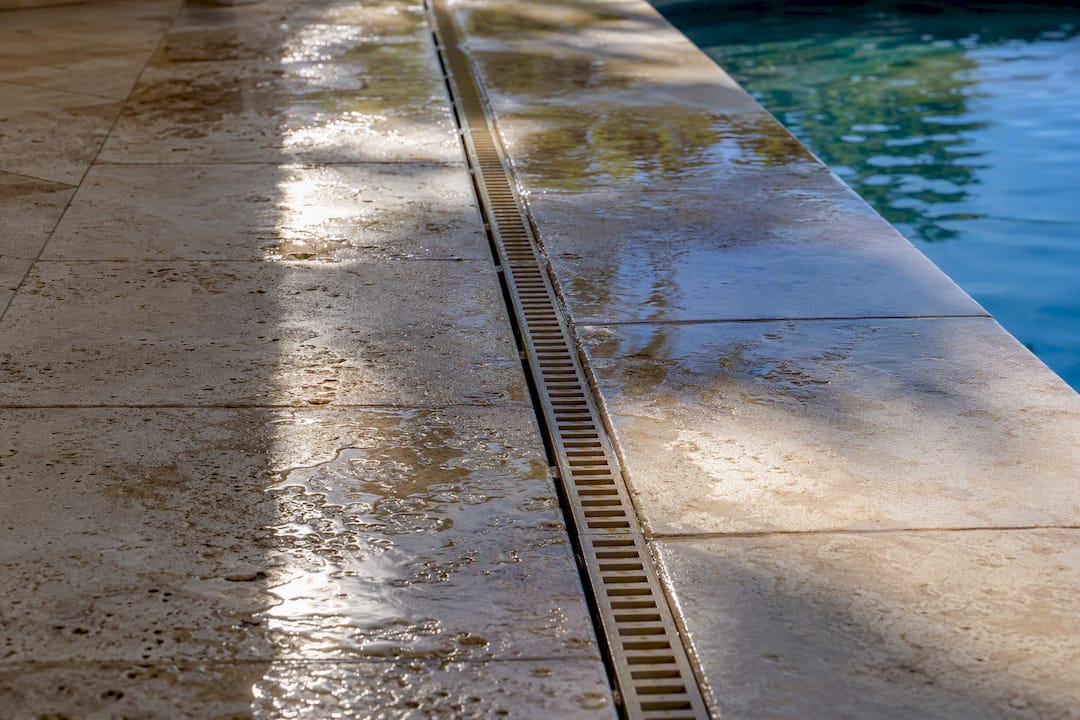
The biggest surprise for most first-time travertine owners is how the deck feels in July. Because travertine has a naturally textured, porous surface, it reflects heat rather than absorbing it the way dense concrete does, and that difference shows up the moment bare feet hit the deck at 2 p.m. Homeowners in hot-sun climates consistently report cooler feet on travertine compared to darker pavers, which sounds minor until you’re the one chasing a toddler across the deck in August.
That same pore structure is what gives travertine its grip. Water drains into thousands of tiny surface pits instead of sitting on top, so the stone stays traction-friendly even when wet. Finish choice matters here more than almost anything else:
- Tumbled or brushed finishes keep the roughest texture and the best grip, and they hide scuffs and water spots better than smoother options
- Filled and honed finishes look sleeker but sacrifice a little traction, so they suit shallow lounge areas better than pool edges
- Polished finishes should be avoided near water entirely, since they turn slick when wet
Beyond comfort and safety, travertine earns its price tag through looks. No two slabs read exactly alike, so a deck built from it has the kind of tonal variation that machine-cut pavers and poured concrete simply can’t replicate. That variation is also why real estate agents in warm markets tend to flag natural stone decks as a resale plus.
Durability holds up too, provided the installation was done right and the stone gets sealed on schedule. Travertine handles UV exposure and daily pool traffic well over decades. The one place it struggles is repeated hard freeze/thaw cycling without proper sealing and drainage, which can force water into the pores and crack the surface from the inside out. In most of the pool markets Classicmarcite serves, that’s a non-issue.
The Real Downsides of a Travertine Pool Deck
Cost is where most homeowners hit the brakes first. Travertine typically costs more than standard concrete pavers, and the installed price swings widely depending on site prep, coping details, and how many cuts the crew has to make around curves, steps, and equipment pads. A simple rectangular deck costs far less per square foot than one wrapping a freeform pool with a raised spa.
The second downside is the flip side of that appealing texture: porosity. The same pores that give travertine its grip also soak up whatever lands on the surface. Suntan oil, wine, leaf tannins, and rust from patio furniture can all leave marks if they sit too long, and the fix is prompt rinsing, not scrubbing.
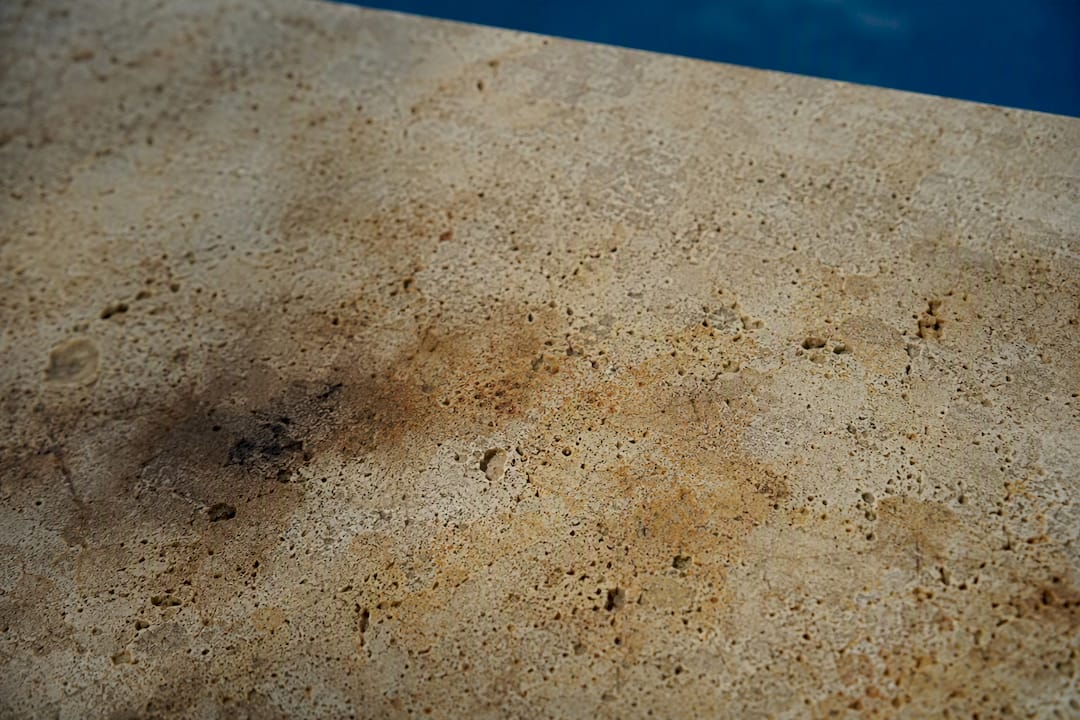
Chemistry matters just as much as spills. Travertine is calcium-based stone, which means it’s vulnerable to acids like muriatic acid and even household vinegar. A splash of either etches and dulls the surface almost on contact.
Pro Tip: Keep your pool’s pH balanced and never use acid-based cleaners on travertine. If you need to strip hard-water scale, ask your pool company for a stone-safe cleaner instead of the acid wash a plaster or tile job might tolerate.
A few other mistakes trip up otherwise happy owners:
- Choosing a glossy “wet look” sealer, which looks great in photos and turns dangerously slick underfoot
- Skipping resealing until stains have already set into the stone
- Assuming any sealer works on any finish, when tumbled and honed stone often call for different products
Travertine also isn’t the natural fit for every project. A high-traffic public or commercial pool with a tight maintenance budget usually does better with concrete or porcelain, where the sealing schedule and stain risk are lower.
Travertine Pool Deck Costs and a Realistic Maintenance Plan
Budget for travertine to land above standard concrete pavers on a per-square-foot basis, with the final number driven less by the stone itself and more by what happens underneath it. Demolition of an old deck, soil compaction, drainage slope, and the coping detail around the pool edge typically move the price more than the travertine tile does.
Installation checklist that determines whether it lasts:
- A properly compacted base, so the deck doesn’t settle unevenly within a few years
- Correct slope away from the pool for drainage, not just around it
- The right joint and edge-restraint material to keep pavers locked in place
- Coping cut and set to shed water instead of pooling it against the pool wall (our pool coping guide breaks down materials and pricing)
Once it’s installed, travertine asks for a light but consistent maintenance rhythm:
- Rinse off pool salt, sunscreen, and leaf debris weekly during heavy-use months
- Reseal roughly every one to three years, depending on sun exposure and how much foot traffic the deck sees
- Watch for water no longer beading on the surface, which usually means the sealer has worn through
- Skip acid cleaners entirely; a proper cleaning routine uses pH-neutral products made for natural stone
Basic rinsing and spot-cleaning are fine DIY jobs. Resealing an entire deck evenly, though, is worth handing to a professional, and our sealing guide walks through what a proper job looks like before you hire anyone.
Travertine vs. Concrete and Porcelain Pool Decking
Choosing between travertine, concrete, and porcelain comes down to how much you value comfort and looks against cost and upkeep. Here’s how they stack up on the factors that actually affect daily life:
- Heat: Travertine and light porcelain both stay cooler than standard or dark-tinted concrete, which can get uncomfortably hot by midafternoon
- Traction: Textured travertine and matte porcelain both perform well wet; polished finishes in either material do not
- Repairs: Cracked concrete usually means a costly resurface, while a single damaged travertine or porcelain paver can be swapped out individually
- Cost: Concrete wins on upfront price; travertine and porcelain cost more but demand less frequent structural repair over the years
- Drainage: Every material fails the same way without proper slope and base prep, so this isn’t really a material decision at all
Our broader pool material comparison guide covers how these trade-offs play out for specific pool shapes and budgets. If your project also touches patio furniture or shade structures, outdoor living design resources can help you plan the space around the deck itself.
What Field Experience Teaches About Travertine Installs
Classicmarcite has resurfaced more than 100,000 pools since 1988 and holds the position of the largest Pebble Tec® applicator in Central Florida, and that volume surfaces the same handful of deck failures again and again. Poor base compaction, inadequate slope, and the wrong sealer account for most early problems homeowners report, and every one of them is preventable at the interview stage.
Ask any deck contractor these questions before signing:
- What base method and compaction do you use, and can you show a finished project with similar soil conditions?
- What’s the drainage slope, and where does water go?
- Can I see photos of a deck you finished at least two years ago?
- What sealer do you specify, and what’s the warranty on both material and labor?
Installation quality determines whether travertine lasts twenty years or five. The stone itself rarely fails first, the base underneath it does.
Resurfacing rather than a full deck tear-out often makes sense when the existing base and drainage are sound and only the surface material has aged out. Browse our residential project gallery for examples of that kind of transformation.
Get a Professional Estimate Before You Commit
Choosing the right pool deck material is only half the equation. How it’s installed determines whether it lasts five years or twenty, and that’s where Classicmarcite’s field experience makes the real difference for Orlando and Jacksonville homeowners weighing travertine against concrete or porcelain.
With decades resurfacing pools across Central Florida, Classicmarcite’s crews know exactly how local soil, drainage patterns, and pool chemistry affect a deck’s long-term performance, whether you’re pouring a new surface or upgrading an aging one. Rather than guessing at base prep or sealer specs from a blog post, you get a team that has already solved these problems on tens of thousands of Florida pools. If your deck or pool surface needs an honest assessment, request an on-site estimate for your Orlando pool project and get a specific recommendation for your yard, not a generic one.
Is Travertine Worth It for Your Pool Deck?
Travertine earns its price tag when comfort, safety, and curb appeal matter more than the lowest possible bid, and when you’re prepared to reseal on schedule. If budget is tight or the pool sees heavy commercial-style traffic, concrete or porcelain often make more practical sense. Whichever direction you go, the installer matters more than the material. Ask hard questions about base prep, drainage, and sealer choice, and don’t let a beautiful sample override a shaky installation plan.
— Results
Sources
- Travertine
- Choosing the Right Stone for Your Pool Deck
- Travertine vs Concrete Pavers, Tampa Pool Deck Guide 2026