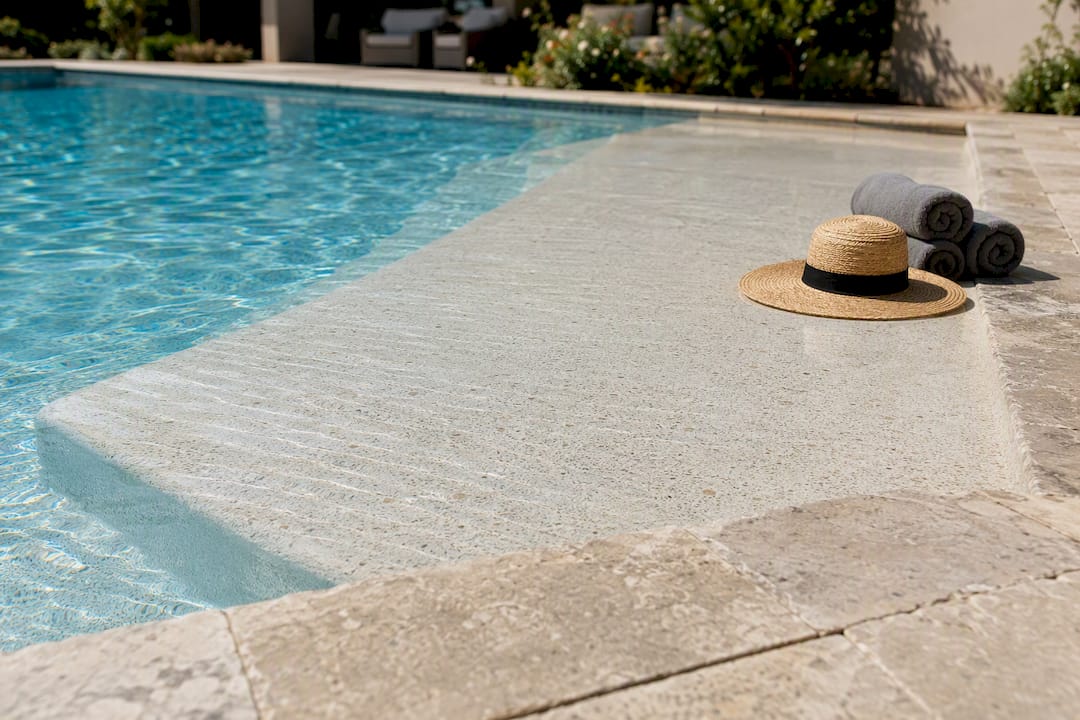
A tanning ledge (also called a Baja shelf or sun shelf) is a shallow platform, usually 6 to 12 inches deep, built into a pool for lounging, wading, or standing in the sun. The sweet spot for most families runs 9 to 12 inches for in-water loungers and 6 to 9 inches for kids’ play. Adding one to an existing pool is possible, but feasibility and cost swing hard depending on whether you have gunite, fiberglass, or a vinyl liner.
- Depth: 6 to 9 inches for play; 9 to 12 inches for loungers
- Width: 6 to 10+ feet, depending on furniture count
- Retrofit: Doable on concrete/gunite; harder on fiberglass and vinyl
Key Takeaways
A functional tanning ledge starts with matching depth and width to real furniture, and retrofitting one depends heavily on whether your pool shell is gunite, fiberglass, or vinyl.
| Point | Details |
|---|---|
| Match depth to use | Build 6 to 9 inches deep for play and 9 to 12 inches for in-water loungers. |
| Size width to furniture | Plan 14 to 16 feet of width for two loungers plus a walking lane. |
| Gunite retrofits cost more | Cutting into an existing concrete shell can run $10,000 to $30,000 depending on scope. |
| Add safety markers | Use a contrasting tile band or coping change so bathers can see the drop-off. |
| Bundle with resurfacing | Classic Marcite recommends pairing ledge construction with a full resurfacing project to cut cost and downtime. |
Table of Contents
- Tanning Ledge Design Ideas That Match How You’ll Use It
- Tanning Ledge Ideas for Every Backyard Style
- Choosing Finishes That Handle Sun and Wet Feet
- Can You Add a Tanning Ledge to an Existing Pool?
- Safety Features Every Tanning Ledge Needs
- Bubblers, Umbrella Sleeves, and Other Add-Ons Worth Planning For
- How to Plan a Tanning Ledge Project Without Guesswork
- Sources
Tanning Ledge Design Ideas That Match How You’ll Use It
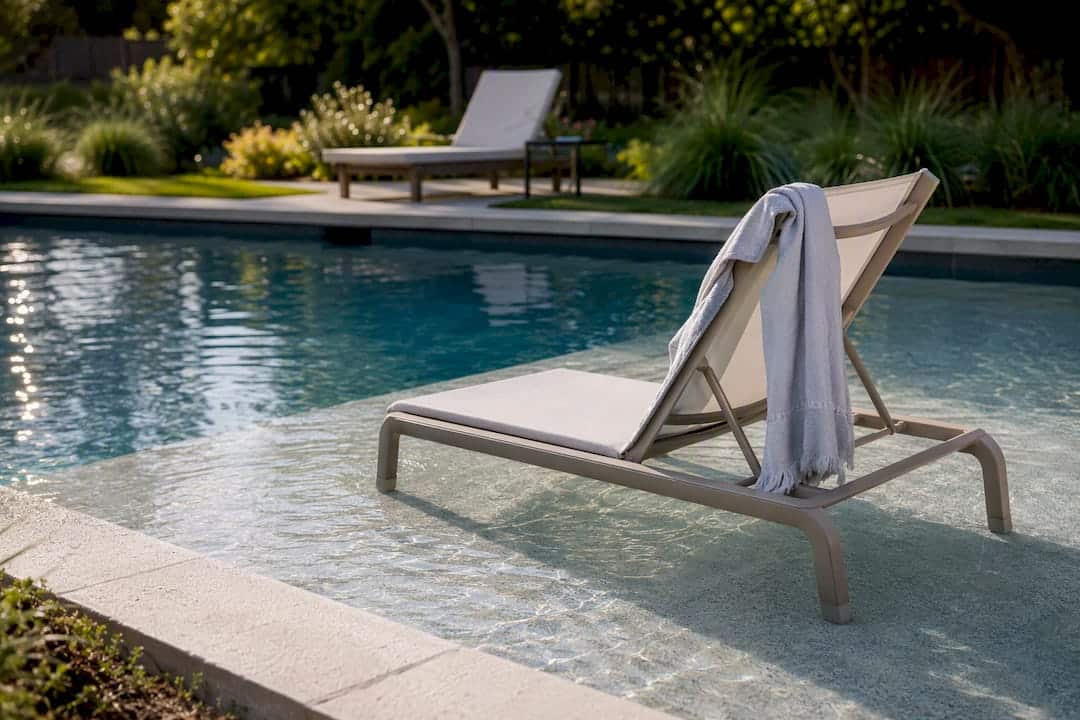
Depth decides function more than any other measurement on a tanning ledge. A shelf built at 6 inches is perfect for kids splashing or adults cooling their feet, but it’s too shallow for a floating lounger, which needs enough water to sit level without scraping the shelf floor. Bump the depth to 9 to 12 inches and standard in-pool chaise lounges sit right, with enough water coverage that swimmers don’t feel like they’re standing in a puddle.
- Cooling and toddler zones: 6 inches deep, minimal furniture, focus on open space for movement.
- Lounger-ready shelves: 9 to 12 inches deep, sized for one or two chaise loungers plus a walking lane.
- Bench-style social ledges: 12+ inches, built for standing conversation groups rather than lying flat.
- Width for two loungers: plan on 14 to 16 feet of width so both pieces of furniture fit with room to walk between them.
- Furniture-first rule: buy or choose your in-water loungers before finalizing ledge dimensions, since off-brand furniture sizes vary enough to throw off a “standard” layout.
Skipping that last step is the single most common reason homeowners end up unhappy with a finished shelf. A ledge sized for a furniture catalog photo, not the actual loungers you own, often leaves you with pieces that rock, tip, or block the walk-in point entirely.
Tanning Ledge Ideas for Every Backyard Style
The shelf itself is a blank canvas, and the features you add around it decide whether it reads as a resort feature or a forgotten step. Here’s how to think through the most requested layouts.
- Resort-style lounger shelf: Size it for two chaise loungers side by side (14 to 16 feet wide, 9 to 12 inches deep), with an umbrella sleeve cast into the shelf on the shaded side of the seating arrangement.
- Kid-friendly play shelf: Keep it to 6 to 9 inches deep and position it where a parent lounging poolside has a direct, unobstructed sightline, not tucked behind a water feature or planting bed.
- Social platform with pass-through: Add a built-in bench along one edge and leave a 3-foot clear lane so swimmers can walk from the shelf to the main pool without climbing over anyone’s feet.
- Full resort treatment: Layer in bubblers for texture and sound, a spillway or sheet-fall for ambient noise, and one or two in-water chaise lounges positioned away from the bubbler jets so they don’t drift.
- Small-yard alternatives: If you don’t have room for a full-width shelf, a freestanding or drop-in modular ledge built outside the main pool shell can deliver the same lounging effect without reshaping the entire pool.
Pro Tip: Check your yard’s sun path before finalizing shelf placement. A beautifully designed ledge that sits in afternoon shade from a tree or the house itself gets used a lot less than one angled toward your peak lounging hours.
Choosing Finishes That Handle Sun and Wet Feet
Finish choice on a tanning ledge does double duty: it has to survive constant sun exposure and stay safe underfoot when wet. Plaster is the most budget-friendly option but shows wear faster in a high-traffic shelf area. Pebble and aggregate finishes cost more upfront but hold up to foot traffic and add real texture for grip. Tile looks sharp but needs a slip-resistant specification for wet, sloped surfaces, not a polished finish meant for walls.
- Lighter-colored plaster or pebble finishes reflect more heat, so the shelf floor stays cooler on bare feet during peak sun.
- Textured aggregate finishes provide better traction than smooth plaster, especially near the transition edge.
- LED strip lighting for evening use has an installation price range that varies with fixture and length.
- Finish choice also affects your resurfacing timeline: pebble finishes generally outlast plaster before a full refinish is needed.
If you’re weighing pebble against plaster for the whole pool, not just the ledge, our breakdown of why homeowners choose pebble finishes covers durability and cost side by side.
Can You Add a Tanning Ledge to an Existing Pool?
Feasibility depends almost entirely on your pool’s shell material, and the honest answer is that some pools take to this far better than others.
- Gunite or concrete pools are the most flexible for retrofits. The process involves draining the pool, cutting into the shell, reinforcing with rebar and shotcrete, then replastering the interior. Expect significant downtime due to the complexity of the retrofit.
- Fiberglass pools are the toughest candidates. The one-piece shell isn’t built for structural cutting, so freestanding or exterior shelves that match your existing finish are usually the more reliable path.
- Vinyl liner pools run into similar issues, since the frame and liner aren’t designed for mid-wall modification. A new liner and possible wall panel changes are often part of the solution.
- Freestanding or modular drop-in shelves sidestep structural work entirely and cost less than a full cut-in retrofit, though they come in fixed sizes.
- Cost ranges vary widely. In-pool retrofits on a concrete shell can run roughly $10,000 to $30,000, while some estimates put the broader range at $3,000 to $15,000-plus depending on scope, finish, and whether it’s bundled with other remodel work.
Safety Features Every Tanning Ledge Needs
A ledge that blends invisibly into the pool is a tripping hazard waiting to happen, since water surface reflection makes depth almost impossible to judge from above.
- Use a contrasting tile band or a coping profile change at the edge so the transition from shelf to deep water is visually obvious, not just felt underfoot.
- Keep a clear walkway of at least a few feet between furniture and the drop-off point so swimmers aren’t stepping around loungers to find the edge.
- Choose textured, non-slip finishes on the shelf itself, and favor lighter colors that both reduce surface heat and improve visibility.
- Position the shelf where a parent or supervising adult has a clean sightline from typical deck seating, especially if young kids use the space.
Bubblers, Umbrella Sleeves, and Other Add-Ons Worth Planning For
The features layered onto a tanning ledge are usually what turn “nice shelf” into “the reason everyone hangs out by the pool.” Bubblers add movement and sound but need dedicated plumbing runs, typically adding $1,000 to $2,500 per feature. Spillways and sheet-falls have similar plumbing implications and work best when planned alongside the main filtration layout, not bolted on afterward.
- In-water chaise lounges need a depth check against the actual furniture, not a general rule, since brands vary in height by an inch or two.
- Umbrella sleeves are nearly impossible to retrofit cleanly. If shade over water matters to you, get them cast in during construction rather than trying to add one later.
- LED and fiber-optic lighting should be angled to avoid glare across the water at eye level, especially for evening swimmers.
- Tile ledges benefit from routine sealing and cleaning; a tile maintenance routine keeps grout lines from staining faster than the rest of the pool.
How to Plan a Tanning Ledge Project Without Guesswork
Start with measurements, not inspiration photos. Walk your yard at the time of day you’ll actually use the pool, measure your intended furniture, and confirm the sun path before anyone sketches a shape.
- Measure the space, pick your loungers, and check sun exposure before finalizing any design.
- Ask contractors directly about your shell type, what structural ties or rebar work is involved, and realistic curing timelines.
- Confirm whether your project triggers a permit or engineer review. Larger structural cuts on gunite pools often do.
- Watch for red flags: vague timelines, no written plan, or contractors who skip permit questions entirely.
- If your pool needs resurfacing anyway, bundle the ledge work into that remodel to avoid draining and refinishing the pool twice.
Why Experience Matters for Structural Ledge Work
Classic Marcite has resurfaced more than 100,000 pools since 1988 and holds the position of the largest Pebble Tec® applicator in Central Florida.
- Structural cuts, rebar work, and shotcrete on a gunite shell aren’t a DIY-adjacent job. Get someone who has done this hundreds of times.
- Pairing a new tanning ledge with a full resurfacing project avoids draining your pool twice and matches the new shelf’s finish to the rest of the shell seamlessly.
What Homeowners Regret Most About Their Ledge
The two regrets we hear most often: a shelf too shallow or too deep for the furniture actually purchased, and a layout that blocks the walkway into the pool. Bundling ledge work with a full resurfacing project fixes both at once. Request a site assessment before you commit to a shape.
Get a Tanning Ledge Built Right the First Time
Classic Marcite is the practical alternative to guessing your way through a ledge retrofit. Instead of hiring one crew to cut the shell and another to resurface it later, our team handles the structural work, the finish, and the resurfacing in one coordinated project, which is exactly the kind of bundling that saves homeowners a second drain-and-refinish cycle down the road.
We’ve built and remodeled ledges into gunite and concrete pools across Central Florida for decades, so we know which shell types support a clean cut and which ones call for a freestanding alternative instead. If your pool is due for resurfacing anyway, that’s the ideal moment to add the shelf, match the new Pebble Tec® finish, and skip the cost of doing it twice. Request a free estimate on pool resurfacing in Orlando or browse our remodeling services to see what a bundled ledge-and-resurfacing project looks like for your pool.
Sources
- Add a tanning ledge to your pool (MyPoolCalc)
- How Deep Should a Tanning Ledge Be?
- Add a Baja Shelf to an Existing Swimming Pool During a Remodel