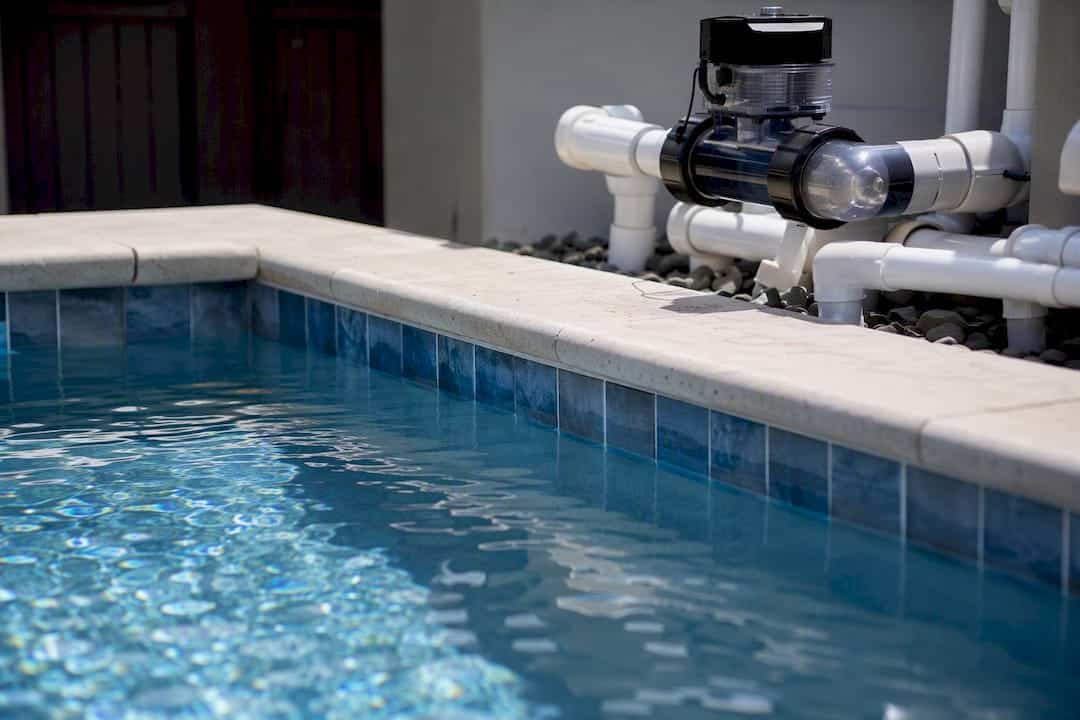
There’s no universal winner between saltwater and chlorine pools. The real trade-off is upfront cost versus ongoing convenience: saltwater systems cost more to install but usually mean less weekly handling and softer-feeling water, while traditional chlorine pools cost less to start but demand more frequent chemical purchases and dosing.
- Best for saltwater: homeowners who want fewer trips to the pool store and gentler water on skin and eyes.
- Best for chlorine: owners on a tight budget, renters, or anyone with salt-sensitive stone, metal fixtures, or an older heater.
- Red flag to check first: salt can corrode certain natural stone, untreated metal fixtures, and some heaters, so verify your pool’s materials before converting.
Before deciding, test what you’re actually working with. Check your pool’s finish and equipment compatibility, then add up what you currently spend on chemicals each year.
Table of Contents
- Saltwater vs Chlorine Pools: How Each System Actually Sanitizes Water
- What Does Converting to a Salt Pool Really Cost?
- How Often Do You Need to Test and Maintain Each System?
- Does Saltwater Really Feel Different, and Is It Safer?
- Will Salt Damage Your Pool’s Finish or Equipment?
- How Do You Convert to a Salt Pool Without Costly Mistakes?
- Which Pool System Should You Choose? A Decision Checklist
- What Most Advice Gets Wrong About This Choice
- Frequently Asked Questions
- Sources
Saltwater vs Chlorine Pools: How Each System Actually Sanitizes Water
Both systems use chlorine. That surprises a lot of homeowners who assume “saltwater pool” means chlorine-free, but a saltwater pool is just a chlorine pool with an onsite chlorine factory.
A salt chlorine generator pushes pool water containing dissolved salt through a cell, where electrolysis converts the salt into chlorine. Residential systems typically hold salinity around 2,700 to 3,400 parts per million, a level mild enough that most swimmers don’t taste it. The cell keeps producing chlorine continuously whenever the pump runs, which is why salt pools tend to hold steadier sanitizer levels than pools dosed by hand.
Traditional chlorine pools rely on you adding sanitizer directly, through liquid chlorine, granular shock, or trichlor tablets in a floating feeder. Trichlor is popular because it’s convenient, but it also adds cyanuric acid (CYA) every time you use it. CYA stabilizes chlorine against sunlight breakdown, but too much of it can blunt chlorine’s sanitizing power, a problem often called chlorine lock.
Both systems can produce chloramines, the byproduct responsible for that sharp “pool smell” and the eye and throat irritation swimmers blame on chlorine. Chloramines form when chlorine reacts with nitrogen from sweat, urine, and sunscreen, not from chlorine itself.
- Salt systems produce chlorine continuously at low concentration, which tends to limit chloramine spikes.
- Manual dosing creates chlorine peaks and valleys, especially if you shock infrequently.
- Neither system eliminates the need for regular water chemistry testing.
What Does Converting to a Salt Pool Really Cost?
The upfront gap is real, but the long-term gap is smaller than most marketing suggests. A salt chlorine generator with professional installation typically runs $800 to $2,500, depending on unit size and how much electrical or plumbing work your pad needs. Setting up a traditional chlorine routine costs closer to $50 to $200 for a feeder, test kit, and starter chemicals.
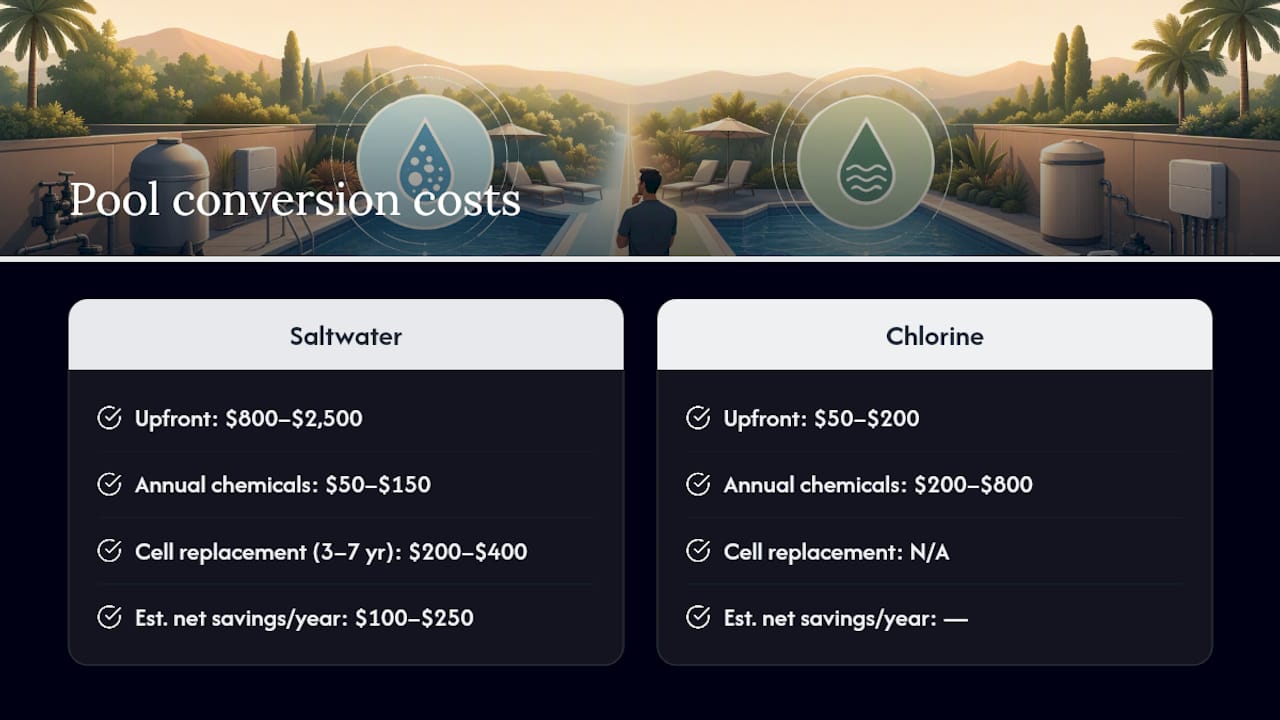
Annual costs tell a different story. Saltwater pools often run $50 to $150 a year in chemicals, mostly acid for pH control, while conventional chlorine upkeep commonly lands between $200 and $800 depending on pool size and how diligent you are about testing. That gap looks dramatic until you factor in the salt cell itself.
Cells typically need replacement every 3 to 7 years, and a new cell often costs $200 to $400. Spread that over its lifespan alongside the electricity the cell draws, and the real annual savings for switching to salt often land closer to $100 to $250 a year rather than the bigger numbers some sellers advertise. Over ten years, that’s meaningful savings, but not the pool-pays-for-itself story you’ll sometimes hear.
Pro Tip: Add up what you spent on chlorine and shock last summer before you call an installer. If you’re already under $200 a year, salt conversion may not pay for itself before the cell needs replacing.
How Often Do You Need to Test and Maintain Each System?
Weekly testing looks almost identical between the two systems. Check free chlorine, pH, and total alkalinity at least once a week, more often during peak swim season or after heavy rain. Saltwater doesn’t excuse you from this. It just changes what tends to drift.
- Weekly: Test free chlorine, pH, and alkalinity; adjust as needed.
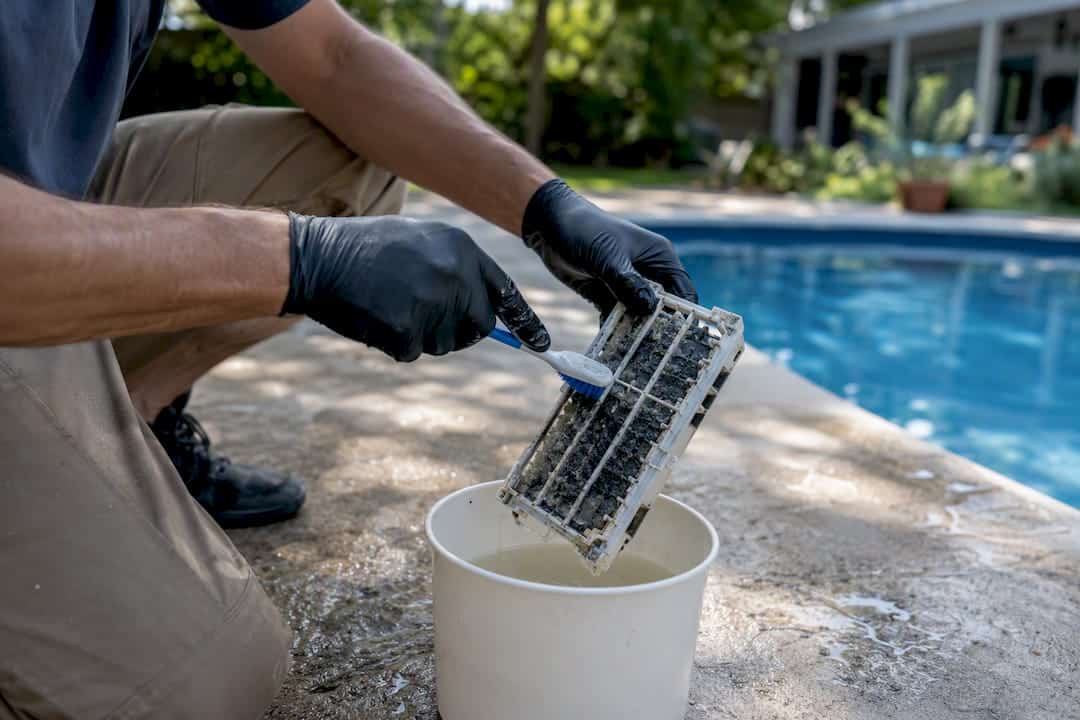
- Monthly: Check salt level with test strips or a digital reader (saltwater pools only), and inspect for early scale buildup on the cell.
- Quarterly: Clean or acid-wash the salt cell if scaling appears, and track CYA levels in both pool types.
- Seasonally: Shock the pool, rebalance after heavy rain or high bather load, and reassess CYA before it builds past 100 ppm in stabilized chlorine pools.
Salt pools tend to drift alkaline over time, meaning you’ll add muriatic acid more often than chlorine pool owners expect. That predictable acid demand is one of the more underestimated costs of switching, since most people budget for chlorine but forget the pH correction that comes with it.
Traditional pools face a different failure mode: CYA overbuild from repeated trichlor use, which eventually requires a partial drain and refill to reset. Salt pools face scale-up on the cell plate, especially in areas with hard water, which reduces chlorine output until you clean it.
Algae outbreaks happen in both systems when sanitizer levels drop, usually from a failed pump, a dead cell, or skipped testing during vacation. The fix is the same either way: shock hard, brush thoroughly, and retest daily until chlorine holds steady.
Does Saltwater Really Feel Different, and Is It Safer?
Saltwater feels softer to most swimmers, and less chloramine buildup is the likely reason. Because salt cells produce chlorine steadily rather than in shock-dosed bursts, chloramine spikes tend to be smaller, which means less of that sharp smell and less eye and throat irritation, particularly compared to a poorly maintained traditional pool.
Both pool types are chlorinated pools. Saltwater systems can reduce chloramine-related irritation compared to poorly maintained chlorine pools, but they still produce disinfection byproducts, and the research comparing long-term health effects between the two remains limited.
That distinction matters if you’re choosing salt purely for health reasons. It’s a reasonable comfort upgrade, not a guaranteed medical improvement.
Two safety notes worth checking before you commit. First, some pacemaker manufacturers advise caution around electrical fields, and while salt cells are designed to keep stray current out of pool water, anyone with a pacemaker should confirm compatibility with their cardiologist first. Second, salt generators lose efficiency in cold water, so pools in cooler climates or used seasonally may need supplemental chlorine during shoulder-season swimming.
Will Salt Damage Your Pool’s Finish or Equipment?
This is where a lot of salt conversions go wrong, and it’s the question Classicmarcite gets most often from homeowners who already have a finished pool.
Salt is corrosive to certain materials over time. Natural stone coping, untreated metal ladders and rails, and older heaters without salt-rated heat exchangers are the most common casualties. Fiberglass shells and many vinyl liner setups tolerate salt well, which is part of why salt systems became standard equipment on new fiberglass builds.
- Vulnerable: natural stone (especially untreated limestone or travertine), older heat exchangers, unprotected metal fixtures.
- Salt-tolerant: fiberglass, most vinyl liners, pebble-aggregate finishes when properly sealed.
- Mitigations: salt-rated equipment, sacrificial anodes near metal fixtures, routine rinsing of deck furniture, and sealed grout lines around stone coping.
If your plaster or marcite finish is already showing etching, staining, or rough texture, that’s a sign resurfacing should happen before conversion, not after. Salt exposed to a compromised surface accelerates the damage rather than causing it fresh.
How Do You Convert to a Salt Pool Without Costly Mistakes?
Converting is straightforward when you follow the sequence in order. Skipping steps is how homeowners end up with a corroded heater or an undersized cell six months in.
- Audit your pool first. Confirm your surface finish, heater rating, and any metal fixtures can handle salt exposure, and test your current CYA level and pool volume in gallons.
- Size the salt chlorine generator correctly. Match the cell’s rated capacity to your actual pool volume, not a rounded estimate.
- Add salt gradually and test as you go. Calculate the exact pounds needed to reach 2,700 to 3,400 ppm, and retest before adding more.
- Rebalance pH and CYA. Salt systems drift alkaline, so plan on more frequent acid dosing from day one.
- Ramp the generator slowly and monitor daily for the first two weeks, then weekly for the rest of the season.
Pro Tip: Oversalting is the most common conversion mistake. Add salt in stages and retest rather than dumping the full calculated amount in at once, since local water already carries some dissolved salt that estimates often miss.
Watch for hidden corrosion around light niches and skimmer fittings during the first 90 days. Those spots often show problems before the rest of the pool does.
Which Pool System Should You Choose? A Decision Checklist
Run through these questions before you sign a contract with any installer.
- What’s your budget horizon? If you’re selling within 2 to 3 years, chlorine’s lower upfront cost usually wins.
- What’s your pool’s finish and equipment made of? Stone coping, an aging heater, or untreated metal fixtures should be resolved first.
- How sensitive are you or your family to chlorine smell and irritation? That’s the strongest reason to lean saltwater.
- How often will you actually test and maintain it? Salt systems reward consistency; neglect leads to scale and drift.
Ask any installer three things before hiring: what warranty covers the salt cell, whether they’re installing salt-rated fixtures throughout, and what cell life they realistically expect given your water hardness. Field experience shows cell life near the 3-year mark for owners who skip scheduled cleanings, versus 6 to 8 years for those who stay on top of maintenance.
Key Takeaways
| Point | Details |
|---|---|
| No universal winner | Choose based on your budget horizon, finish materials, and tolerance for weekly maintenance. |
| Both systems use chlorine | Salt cells generate chlorine through electrolysis; neither pool type is chemical-free. |
| Cost gap narrows over time | Salt systems cost more upfront but often save $100 to $250 a year once cell replacement is factored in. |
| Check your finish first | Natural stone, untreated metal, and older heaters may need repair or salt-rated upgrades before conversion. |
Finish Compatibility: When to Call a Resurfacer
Since 1988, Classicmarcite has resurfaced more than 100,000 pools across residential, commercial, and international projects, including work as the largest Pebble Tec® applicator in Central Florida. That volume means seeing firsthand how different finishes hold up once salt enters the water.
Surface material changes the salt conversion equation more than most homeowners expect. A plaster or marcite finish already showing wear will etch faster under salt exposure, while pebble-aggregate finishes tend to resist staining and etching better over time when properly sealed.
- Cracked or pitted plaster should be resurfaced before, not after, salt conversion.
- Coping and grout lines around natural stone need sealing inspected ahead of adding salt.
- Older tile lines sometimes need regrouting to prevent salt intrusion behind the tile.
A quick inspection before conversion often costs far less than repairing salt damage to a compromised surface two years later.
If your pool’s finish is aging, worth checking before you commit to a salt system: a pool resurfacing evaluation can confirm whether your current surface is salt-ready or needs attention first. Classicmarcite serves homeowners and property managers across Orlando and Jacksonville, and a Pebble Tec® finish is one of the more salt-tolerant options available if you’re resurfacing anyway as part of a conversion.
What Most Advice Gets Wrong About This Choice
Most articles frame this as a feel test: does saltwater feel nicer on your skin? That’s true, but it skips the part that actually determines whether the decision works out. The condition of your pool’s finish and fixtures matters more than which sanitizing method sounds more appealing.
The conventional wisdom oversells the cost savings and undersells the compatibility risk. Salt systems don’t pay for themselves as fast as installer brochures suggest once you amortize cell replacement, and salt exposure on a finish that’s already showing wear accelerates damage that would otherwise take years to show up.
What should come first, before any generator gets ordered, is an honest inspection of what you already have. Aging plaster, unsealed stone coping, or an older heater without a salt-rated exchanger aren’t disqualifiers, but they change the timeline and the true cost. Fix those first, or budget for fixing them as part of the conversion, and the decision gets much simpler. Skip that step, and the “savings” from switching to salt often get spent on repairs nobody budgeted for.
Frequently Asked Questions
Is a saltwater pool actually chlorine-free?
No. Saltwater pools generate their own chlorine through electrolysis, meaning they’re still chlorinated pools, just without the manual dosing.
How much does it cost to convert a chlorine pool to salt?
Expect $800 to $2,500 for the generator and installation, plus the cost of enough salt to reach the target salinity range.
Do saltwater pools require less maintenance than chlorine pools?
Weekly testing frequency is similar, but salt pools shift the workload toward pH correction and periodic cell cleaning rather than frequent chemical purchases.
Can salt damage my pool if I have natural stone coping?
Yes, untreated natural stone is one of the more vulnerable materials. Sealing the stone and grout lines, or resurfacing worn sections first, reduces the risk significantly.
Is saltwater safer for people with skin sensitivities?
Many swimmers report softer-feeling water and less irritation with salt systems, largely due to lower chloramine buildup, though both pool types still use chlorine and produce disinfection byproducts.
Sources
- Salt water chlorination — Wikipedia
- Salt Pool vs Chlorine Pool: What It Actually Costs to Switch – CareFree Pool Club
- Saltwater Pools vs. Chlorine Pools — Lowe’s buying guide
- Saltwater vs Chlorine Pools: Cost, Maintenance & Chemistry — PoolChemTracker
- Saltwater Pool vs. Chlorine Pool — Healthline