TL;DR:
- Most Florida homeowners should avoid full pool drains unless repairing or resurfacing due to groundwater pressure risks.
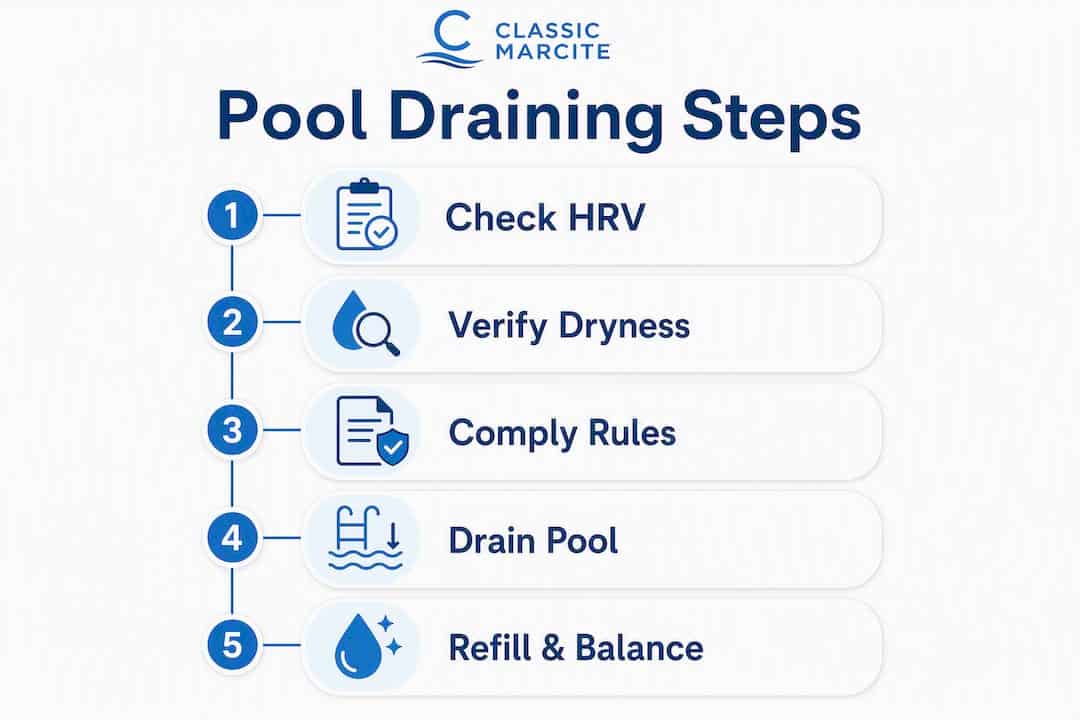
- Professionals confirm safe drainage procedures, including checking the hydrostatic relief valve and securing discharge permits.
For most Florida homeowners, a full pool drain is not recommended unless resurfacing, a major structural repair, or an extreme chemical imbalance makes it unavoidable. Before you touch a pump, run through these four checkpoints:
- Recent rainfall or wet soil? Stop. Pool pop can occur within 24–48 hours when groundwater is elevated.
- Hydrostatic relief valve (HRV) status confirmed? If you cannot verify that it opens freely, do not proceed.
- Municipal discharge permission secured? Many Florida jurisdictions prohibit draining to storm drains without prior approval.
- Does the work actually require exposing the shell? If not, a partial drain of 25–50% often resolves chemical issues without the structural risk.
TL;DR: Call a licensed pool contractor for any full drain. If the work is resurfacing or major repair, schedule during Florida’s dry season (November through April) and have a professional manage hydrostatic control. For chemical issues alone, a partial drain is almost always the safer path.
Pro Tip: Before any drain begins, physically confirm the HRV in the main drain sump opens and closes freely. A seized or blocked valve turns a manageable drain into a structural emergency.
Table of Contents
- What does the step-by-step pool draining process actually look like?
- What are the real risks when you drain a pool in Florida?
- What Florida discharge rules do you need to check before draining?
- How do you refill and rebalance your pool after draining?
- When should you call a professional instead of draining yourself?
- Why professional resurfacing beats a DIY full drain in Florida
- Key Takeaways
- A Florida resurfacing specialist’s perspective
- Classicmarcite handles professional draining, resurfacing, and renovation across Florida
- Further reading and authoritative sources to consult before you drain
What does the step-by-step pool draining process actually look like?
Full drains are high-risk structural interventions reserved for resurfacing, major repairs, or severe chemical failure. Follow this workflow only when a licensed contractor has confirmed the conditions are safe.
Pre-drain checklist
- Confirm a dry-season weather window (November through April in Florida).
- Call your local utility and county environmental department to verify approved discharge points and any required permits.
- Inspect and test the HRV; replace it if seized before draining starts.
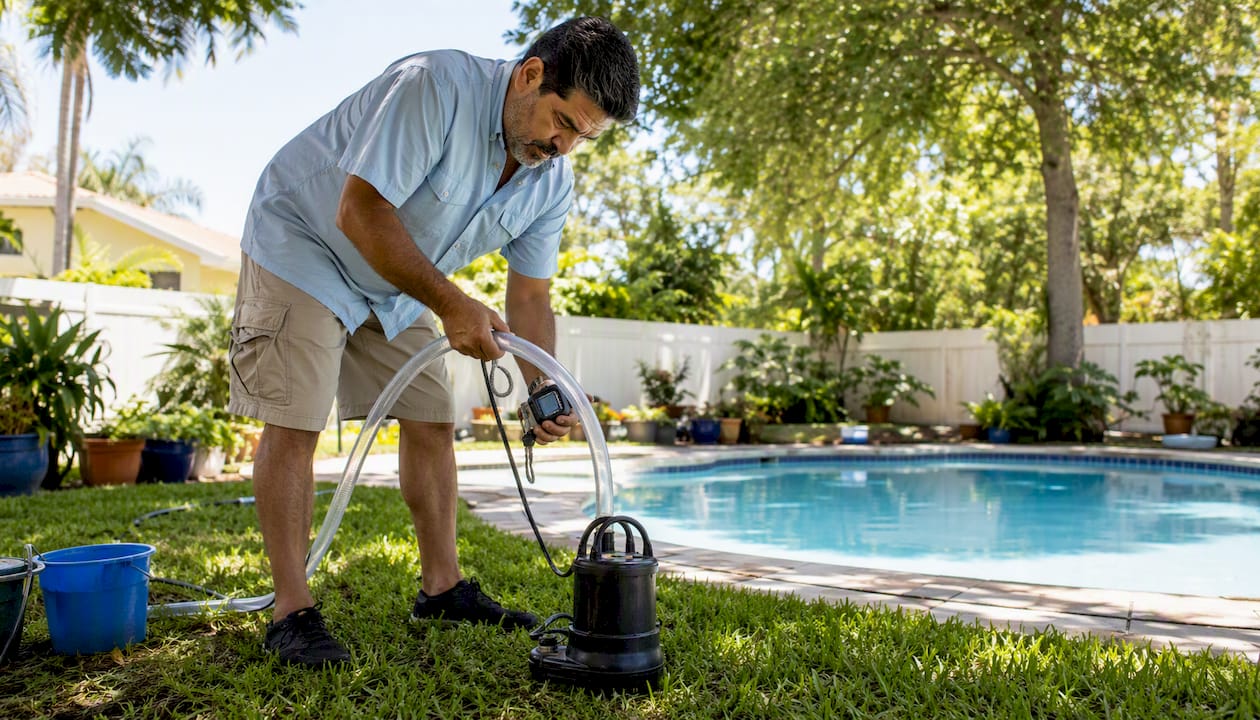
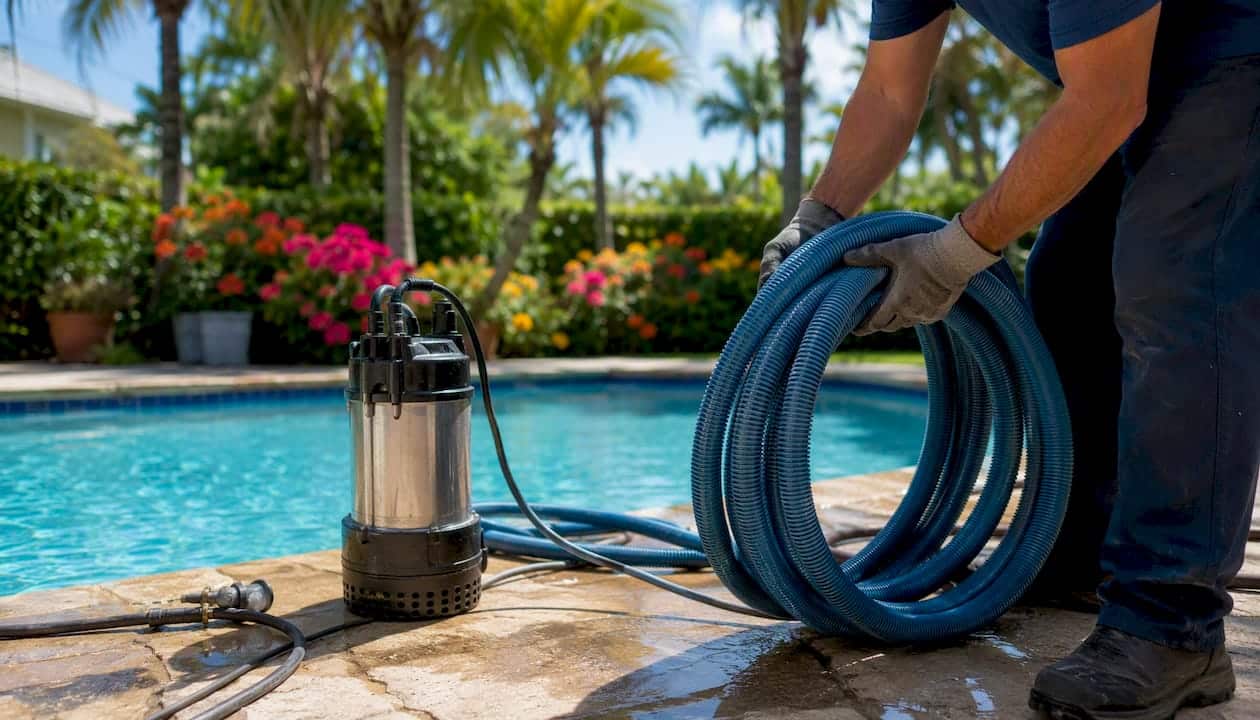
- Gather equipment: submersible pump, GFCI-protected extension cord, discharge hose long enough to reach the approved outlet, and a wet vacuum for the final inches.
- Review the pool prep steps your contractor expects before resurfacing begins.
Step-by-step execution
- Power off all equipment. Shut down the filter pump, heater, and any automation systems. Never use the pool’s filter pump for a full drain — it will run dry and burn out.
- Position the submersible pump at the pool’s deepest point. Connect it to a GFCI outlet; electrical safety near water is non-negotiable.
- Route the discharge hose to your pre-approved outlet, typically a sanitary sewer cleanout. Keep the hose end visible so you can monitor flow.
- Begin pumping and monitor continuously. Check every 30–60 minutes for tile movement, sand plumes, unusual noises, or visible shell cracking. Stop immediately if any appear.
- Stop when a few inches remain. This residual water provides a buffer against hydrostatic pressure while you complete the next step.
- Open the HRV carefully. With a few inches still in the pool, open the valve to equalize groundwater pressure. Confirm soil conditions are stable before proceeding.
- Remove the last inch with a wet vacuum. This avoids prolonged pump operation at the bottom and reduces motor stress.
- Minimize empty time. Coordinate contractor tasks so the shell is never exposed longer than necessary.
Typical drain duration depends on pool volume and pump capacity; for most residential pools, professionals report a full drain by submersible pump can take between 8 and 24 hours.
Pro Tip: Schedule your contractor’s arrival to coincide with drain completion. Every hour the shell sits empty in Florida’s climate adds structural and drying risk to the plaster or Pebble Tec® surface.
What are the real risks when you drain a pool in Florida?
The biggest structural threat is groundwater pressure forcing an empty shell upward, a failure commonly called “pool pop.” In Florida’s high water table environment, this can happen fast.
- Pool pop: Groundwater pressure can lift a fiberglass or vinyl liner shell within 24–48 hours of draining, especially after rain or during wet season.
- Plaster cracking and shrinkage: Exposed marcite or Pebble Tec® surfaces dry and crack quickly in Florida’s heat, shortening the life of any new finish.
- HRV failure: A seized valve cannot equalize pressure, removing the primary safety mechanism against shell uplift.
- Equipment damage: Lights, heaters, and automation sensors exposed during a drain can be damaged by drying, debris, or accidental contact.
- Vinyl liner misfit: Vinyl liners shrink when dry and may not reseat correctly after a full drain.
Watch for these warning signs while pumping: tiles shifting or popping, sudden sand or silt plumes rising from the main drain, unusual cracking sounds from the shell, or visible movement of the pool structure. Stop pumping and call a professional immediately if any of these appear.
Draining removes the water that counterbalances soil pressure. In Florida, that counterweight disappears faster than most homeowners expect — and the cost of a floated or cracked shell far exceeds the cost of professional management from the start. Consulting an experienced pool contractor before any drain is the single most effective way to avoid a costly structural failure.
For a broader look at what can go wrong during renovation projects, the top pool renovation mistakes guide covers the errors that cost Florida homeowners the most.
What Florida discharge rules do you need to check before draining?
Most Florida municipalities prohibit discharging chlorinated pool water into storm drains. Discharge typically routes to the sanitary sewer system via a cleanout, and failure to comply can produce fines and environmental liability. Confirm your local rules before a single gallon leaves the pool.
Who to call, in priority order:
- Local municipal utility or water authority — ask about approved discharge points and flow rate limits.
- County environmental department — confirm whether a permit or advance notification is required.
- Municipal public works — verify any seasonal restrictions or service call ticket requirements.
Dechlorination: Stop chlorination several days before draining, or add sodium thiosulfate to neutralize residual chlorine. Dumping chlorinated water into storm drains is prohibited in most Florida jurisdictions and can harm local waterways.
Municipal checklist to verify before draining:
- Approved discharge point (sanitary sewer cleanout vs. lawn discharge)
- Maximum allowable flow rate, if your utility imposes one
- Required permit or advance notification
- Seasonal restrictions (some utilities limit discharge during wet season)
Florida municipalities served by Orange County Utilities, Hillsborough County, and the City of Orlando all require that pool water not be discharged directly to storm drains. Discharge routes to the sanitary sewer system, subject to the utility provider’s pretreatment standards.
How do you refill and rebalance your pool after draining?
Refill promptly as soon as resurfacing or repairs allow. Every extra hour the shell sits empty risks drying, cracking, and additional repair costs.
Refill steps:
- Place the fill hose at the deep end to avoid surface stress on new finishes.
- Use a cloth pre-filter over the hose end if your supply water carries sediment or high metals.
- Fill slowly for the first few inches to let new plaster or Pebble Tec® cure evenly under water.
Chemical balancing checklist after refill:
- pH: Target 7.4–7.6
- Total alkalinity: Target 80–120 ppm
- Calcium hardness: Target 200–400 ppm
- Cyanuric acid (CYA): Target 30–50 ppm
- Metals/sequestrants: Test for iron and copper before shocking; add a sequestering agent if elevated
Equipment restart checklist:
- Remove debris and vacuum before starting filtration.
- Prime the pump carefully — dry-running even briefly can damage the seal and impeller.
- Restart the heater per manufacturer guidance only after the pump is fully primed.
- Monitor filter pressure and check for leaks during the first 24–72 hours.
Refilling without deep cleaning and systemic chemical treatment commonly results in recurring algae, because biofilm and algae roots persist in plumbing and on rough surfaces even after a full drain. Treat the system, not just the water.
When should you call a professional instead of draining yourself?
Call a licensed contractor for any full drain in Florida unless you have professional hydrostatic expertise and confirmed dry conditions. The triggers are clear:
- High water table or recent rainfall in the past two weeks
- Resurfacing, acid washing, or major structural repair required
- HRV is stuck, missing, or of unknown condition
- Pool is fiberglass or vinyl liner (higher uplift risk)
- You cannot confirm an approved discharge point
Vendor checklist for hiring a resurfacing and drainage contractor:
- Valid Florida DBPR license (Certified Pool/Spa Contractor or Registered Pool/Spa Contractor)
- Liability insurance with proof on request
- Documented experience with Florida groundwater conditions
- Portfolio showing Pebble Tec® or marcite finishes
- Written hydrostatic control and discharge plan
- Clear timeline with a contingency plan for unexpected rain
Questions to ask on the first call:
- How do you manage the HRV during and after the drain?
- Where exactly will the water be discharged, and do you handle the permit?
- How long will the pool be empty, and what happens if it rains?
- What bracing or dewatering equipment do you use if groundwater rises?
Request portfolio photos, proof of liability insurance, and a written warranty for any resurfacing work before signing a contract. If you are also coordinating other contractors for enclosure work, screen repair timing matters too — schedule it after the pool is refilled to avoid debris contamination.
Why professional resurfacing beats a DIY full drain in Florida
Professional resurfacing with expert hydrostatic management typically protects structural integrity and avoids the repeat maintenance costs that follow a poorly executed DIY drain. The value is concrete:
- Expert HRV management and dewatering: Professionals assess groundwater before the first gallon is pumped and install backup systems when conditions warrant.
- Correct surface prep and finishing: Pebble Tec® and marcite applications require precise timing, surface preparation, and curing conditions that DIY work cannot replicate.
- Systemic algae and staining treatment: Professional cleaning reaches plumbing and filter biofilm, not just the visible surface, preventing the recurrence that follows a drain-only approach.
- Warranty protection: A written warranty on resurfacing work gives you recourse if the finish fails prematurely.
The most expensive homeowner mistake is assuming a drain cures persistent maintenance issues. Resurfacing combined with professional cleaning and chemical balancing delivers longer-term value than a DIY drain that leaves the underlying surface and plumbing untreated.
Classicmarcite has resurfaced over 100,000 pools since 1988 and holds the distinction of being the largest Pebble Tec® applicator in Central Florida. For pools requiring pool resurfacing in Florida, that depth of experience translates directly into safer drains and finishes that last.
Key Takeaways
Safe pool draining in Florida requires confirming dry conditions, a functional HRV, and municipal discharge compliance before any water is removed.
| Point | Details |
|---|---|
| Full drains are last resort | Only drain completely for resurfacing, major repair, or severe chemical failure — not routine maintenance. |
| Pool pop risk is real | Groundwater can lift an empty shell within 24–48 hours in Florida, especially after rain. |
| Discharge rules vary by city | Most Florida municipalities require sanitary sewer discharge and may require a permit or advance notice. |
| Minimize empty time | Coordinate contractor arrival with drain completion; every extra hour increases structural and surface risk. |
| Classicmarcite is the vetted option | With 100,000+ pools resurfaced since 1988, Classicmarcite manages HRV checks, discharge planning, and Pebble Tec® finishing for drain-driven renovations across Central Florida. |
A Florida resurfacing specialist’s perspective
Full drains are the procedure Florida pool owners most often underestimate. The scenario plays out predictably: a homeowner decides to drain over a weekend to fix a persistent algae problem, skips the HRV check, and starts pumping after two days of afternoon thunderstorms. By the time the pool is empty, the water table has risen enough to stress the shell. What started as a maintenance project becomes a structural repair. Professional planning prevents exactly this. Confirming soil saturation, testing the HRV, securing a discharge permit, and timing the drain to a dry-season window are not bureaucratic steps — they are the difference between a successful resurfacing project and a cracked shell. At Classicmarcite, every drain-driven renovation starts with an on-site assessment that covers all of these variables before a pump is ever positioned. If your pool needs resurfacing or a repair that requires exposing the shell, contact us for an assessment before you make any decisions about draining.
Classicmarcite handles professional draining, resurfacing, and renovation across Florida
Draining a pool safely in Florida takes more than a submersible pump and a discharge hose. It takes a licensed contractor who knows the local water table, has a written discharge plan, and can move directly from drain to resurfacing without leaving your shell exposed any longer than necessary.

Classic Marcite has been doing exactly that since 1988, with over 100,000 pools resurfaced across Orlando, Jacksonville, Dr. Phillips, Winter Park, and The Villages. As Central Florida’s largest Pebble Tec® applicator, the team handles HRV inspection, discharge permitting, surface prep, and finish application as a single coordinated project. Every assessment includes a hydrostatic control plan, a clear timeline, and a written warranty on resurfacing work.
If your pool needs resurfacing, a major repair, or a professionally managed drain, request a free estimate for Orlando-area pools, or explore pool remodeling options if your project goes beyond the surface.
Further reading and authoritative sources to consult before you drain
Verify the claims in this guide and dig deeper with these authoritative sources. Use at least several before making any drain decision.
| Source | What it covers | Why it matters |
|---|---|---|
| Dewatering in Swimming Pools — American Shotcrete Association | Sump pumps, HRVs, well point systems, French drains, and best practices for groundwater management | Primary technical reference for dewatering methods and structural risk |
| Florida Pool Drain and Refill Service Considerations | Florida Building Code discharge rules, full vs. partial drain decision matrix, licensing requirements | Florida-specific regulatory and structural guidance |
| Pool Drain and Refill Services in Florida | Drain phases, structural risk during full drain, refill and chemistry reset | Practical service-level overview with Florida context |
| How a Hydrostatic Relief Valve Works | HRV function, inspection, and replacement procedure | Critical safety reference before any drain |
| Pool Draining and Refilling — Palm Beach Pool Authority | Dry season timing, pool pop risk, algae recurrence after drain | Florida-specific timing and risk guidance |
Who to contact locally before draining:
- Local municipal utility or water authority — discharge point approval and flow rate limits
- County environmental department — permit requirements and seasonal restrictions
- A licensed Florida pool contractor (CPC or RPC) — on-site HRV assessment and hydrostatic evaluation