TL;DR:
- Verify that pool resurfacing contractors in Florida hold a valid CPC license and insurance before hiring.
- Reviews with high ratings and specific positive feedback indicate trustworthy local contractors.
- Using quality materials and proper preparation is essential for long-lasting resurfacing that minimizes future costs.
Hiring the wrong pool resurfacing contractor in Florida can cost you far more than the original job. In a state where humidity, UV exposure, and year-round pool use accelerate surface wear, a bad resurfacing job can fail within two years, leaving you with cracked plaster, staining, and another round of contractor fees. The stakes are real. This guide walks you through exactly how to verify credentials, read reviews, compare materials, and lock in a solid contract so you can move forward with confidence and protect your investment.
Table of Contents
- Understand licensing and insurance requirements
- Compare reputation and reviews in your area
- Evaluate materials and methods
- Assess proposals and contracts carefully
- Why shortcuts in pool resurfacing end up costing more
- Connect with trusted pool resurfacing professionals
- Frequently asked questions
Key Takeaways
| Point | Details |
|---|---|
| Always verify licensing | Florida requires all pool resurfacing contractors to hold an active Certified Pool Contractor license for your protection. |
| Prioritize strong reputations | Choose contractors with high review scores and proven experience in your local community. |
| Don’t skimp on materials | High-quality finishes cost more up front but dramatically reduce repairs and expenses long term. |
| Insist on clear contracts | Written agreements should cover materials, processes, and warranty to prevent disputes later. |
Understand licensing and insurance requirements
Once you know why picking the right contractor matters, your first step is confirming their legal credentials. In Florida, this is not optional. Every contractor who resurfaces pools must hold an active Certified Pool Contractor (CPC) license issued by the state. Hiring someone without this license exposes you to serious financial and legal risk if something goes wrong on your property.
You can verify a contractor’s CPC license directly through the Florida Department of Business and Professional Regulation (DBPR) online portal. It takes less than two minutes and tells you whether a license is current, expired, or has any disciplinary history. Do not skip this step, even if a contractor comes highly recommended.
Beyond the license, ask every contractor for proof of two types of insurance before they set foot on your property:
- General liability insurance: Covers damage to your property during the job.
- Workers’ compensation insurance: Protects you if a worker is injured on your property. Without it, you could be held liable.
Contractors who hesitate to share insurance certificates are a red flag. Any reputable company will have these documents ready.
Membership in professional organizations like the Pool and Hot Tub Alliance (PHTA) is another quality signal worth noting. PHTA members agree to a code of ethics and often have access to ongoing training. It does not guarantee perfection, but it shows a contractor takes the industry seriously.
“A licensed, insured contractor is the baseline. Everything else you evaluate builds on top of that foundation.”
When selecting a contractor, treat credentials as your filter. If a contractor cannot pass the license and insurance check, nothing else about their pitch matters. Professional resurfacing done by verified contractors also comes with accountability that unlicensed providers simply cannot offer.
Compare reputation and reviews in your area
After verifying credentials, it is crucial to evaluate each contractor’s reputation in your community. Online reviews give you a window into real customer experiences, and patterns matter more than any single five-star rating.
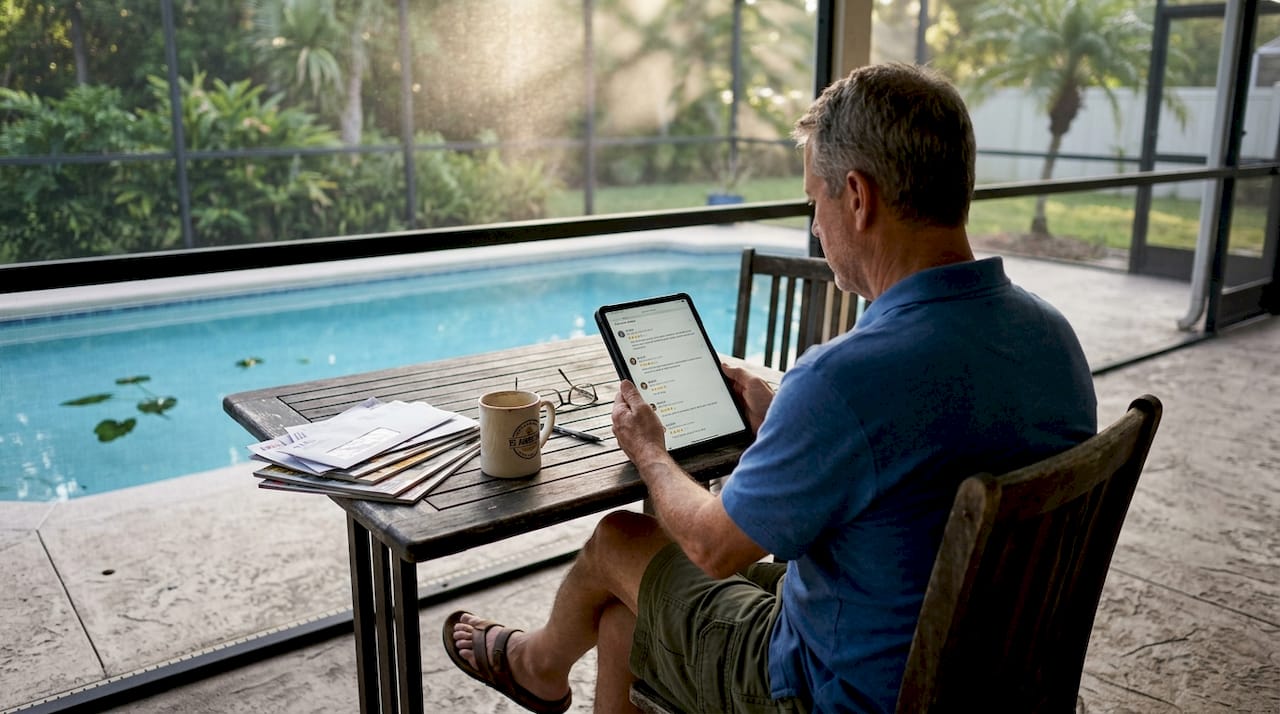
For Orlando pool resurfacing services and Jacksonville pool resurfacing professionals, look for contractors with at least a 4.8-star average and a minimum of 50 reviews. Fewer reviews mean less reliable data. Check local Orlando contractor ratings across Google, Yelp, and the Better Business Bureau to get a full picture.
Here is what to look for when reading reviews:
| Review signal | What it tells you |
|---|---|
| Consistent praise for workmanship | Strong technical skill and attention to detail |
| Positive comments on communication | You will be kept informed throughout the job |
| On-time completion mentions | They respect your schedule |
| Complaints about delays | Possible scheduling or staffing problems |
| Mentions of material issues | Risk of subpar product use |
Beyond star ratings, watch for these red flags in reviews:
- Repeated complaints about missed deadlines
- Mentions of surfaces chipping or discoloring within the first year
- Responses from the company that are defensive or dismissive
- A sudden spike in five-star reviews with no detail
Direct referrals from neighbors or friends who have had pool work done recently are often the most reliable source. If possible, ask a contractor if you can visit a recently completed job site in your area. Seeing the finished surface in person tells you more than any photo on a website.
Pro Tip: Search the contractor’s business name alongside words like “complaint” or “problem” to surface issues that might not appear in standard review searches.
Evaluate materials and methods
A contractor’s choice of materials and installation method impacts your future maintenance needs and expenses. This is where many homeowners make costly mistakes, often without realizing it until years later.
Pool resurfacing materials fall into three main categories, each with a different cost and lifespan:
- Basic plaster: Least expensive upfront, but typically lasts 7 to 10 years under normal conditions.
- Quartz blend: Mid-range cost with better durability and stain resistance, lasting 10 to 15 years.
- Pebble finish (such as Pebble Tec®): Highest upfront cost, but pebble’s higher upfront cost yields 50% lower lifecycle expense in Florida over two decades.
Painted or surface-only fixes are a different category entirely. They may cost less initially, but they typically last just 2 to 5 years in Florida’s humidity before peeling or fading. Full resurfacing, by contrast, can last 10 to 20 years when done correctly with quality materials.
Understanding the difference between replastering vs resurfacing helps you ask smarter questions. Replastering replaces only the plaster layer, while full resurfacing may address the underlying shell and structure. Knowing what you actually need prevents you from paying for more than necessary or accepting less than your pool requires.
When reviewing bids, watch for these warning signs:
- Vague material descriptions like “standard finish” with no brand or spec
- No mention of surface preparation steps like acid washing or crack repair
- Unusually low pricing that does not align with material costs
Beware of bids that seem too low. Cheapest bids often use inferior plaster leading to twice the resurfacing frequency, which erases any short-term savings fast. Ask every contractor to specify the exact product name, mix ratio, and prep process in writing. Understanding pool plaster basics and the benefits of replastering gives you the vocabulary to have that conversation confidently.
Assess proposals and contracts carefully
Once you identify top candidates, the next step is scrutinizing their proposals and contracts. A well-written proposal tells you a lot about how a contractor operates before a single tool hits your pool deck.
Get at least three written proposals before making a decision. Comparing them side by side reveals inconsistencies and helps you spot which contractors are being thorough versus which are cutting corners on paper. Pay attention to the resurfacing timeline each contractor outlines, since vague timelines often lead to project delays.
Here is what every proposal and contract should clearly include:
- Exact materials: Brand names, product lines, and color options.
- Preparation steps: Surface cleaning, crack repair, and bonding coat details.
- Scope of work: What is included and what is explicitly excluded.
- Payment schedule: A reasonable deposit (typically 10 to 30%) with the balance tied to milestones.
- Warranty terms: What is covered, for how long, and who handles claims.
- Project timeline: Start date, estimated completion, and what happens if there are delays.
Be cautious of contracts that use vague language like “standard materials” or “as needed repairs.” These phrases give contractors room to substitute cheaper products or add costs later. Aggressive demands for more than 50% upfront are also a warning sign.
Pro Tip: Never sign a contract with blank spaces. Fill in or cross out any empty fields before signing, and keep a signed copy for your records.
Painting or refacing a pool surface may look appealing at $2 to $4 per square foot short-term, but it fails fast in Florida’s humidity compared to full resurfacing that lasts 10 to 20 years. Make sure your contract reflects the full resurfacing scope you actually agreed to, not a cheaper alternative.
Why shortcuts in pool resurfacing end up costing more
After covering technical and contractual steps, consider these field-tested lessons. Conventional wisdom says any licensed contractor will do the job well enough. That is not always true.
Many homeowners accept the lowest bid thinking they are being financially smart. In Florida’s climate, that decision often means weaker materials, skipped prep steps, and a surface that starts showing problems within 18 months. What looked like savings on day one becomes a second resurfacing bill within a few years.
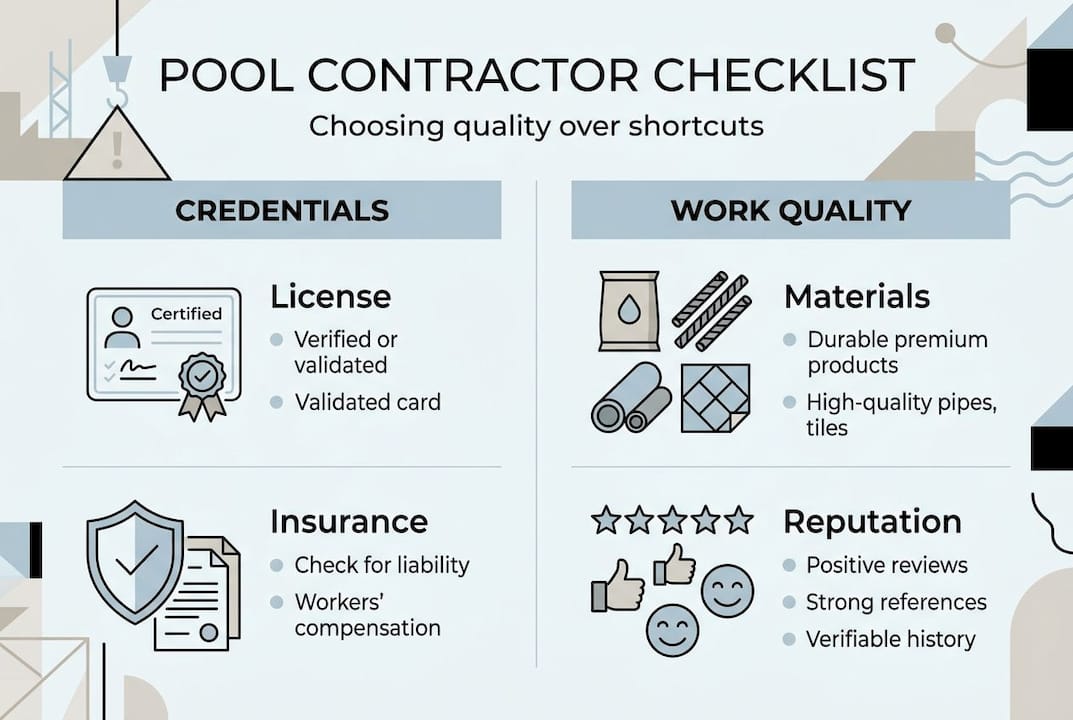
True savings come from quality work the first time. A contractor who uses premium materials, follows proper prep protocols, and stands behind their warranty will cost more upfront. Over 10 to 20 years, that investment pays for itself in fewer repairs, less chemical use, and no premature resurfacing. When selecting your contractor, look for someone who welcomes your questions about process and materials. If a contractor gets defensive or vague when you ask how they prepare the surface, that tells you something important. The best contractors explain their work clearly because they are proud of how they do it.
Connect with trusted pool resurfacing professionals
If you are ready to take action, here is where to connect with proven experts. Classic Marcite has resurfaced over 100,000 pools across Florida since 1988, and we bring that experience to every residential project in Orlando and Jacksonville.

Before you call anyone, it helps to understand your options. Reading up on pool resurfacing basics gives you a solid foundation, and the pool remodeling guide walks you through what a full renovation looks like from start to finish. Homeowners in the Jacksonville area can also explore Jacksonville pool renovation options specific to that market. When you are ready, reach out for a free estimate and let us show you what quality resurfacing looks like.
Frequently asked questions
How can I check if a pool resurfacing contractor is licensed in Florida?
You can verify a contractor’s Florida CPC license using the state’s online DBPR license portal in just a few minutes.
Is it better to choose the cheapest contractor for resurfacing?
Cheapest bids often use inferior plaster that fails faster, leading to twice the resurfacing frequency and higher total costs over time in Florida’s climate.
What should be included in a pool resurfacing contract?
Your contract should clearly detail the exact materials, preparation steps, payment terms, warranty coverage, and a firm timeline for project completion.
Why are reviews important when selecting a contractor?
High ratings and 50 or more reviews reflect consistent quality and service reliability in your local Orlando or Jacksonville area.
