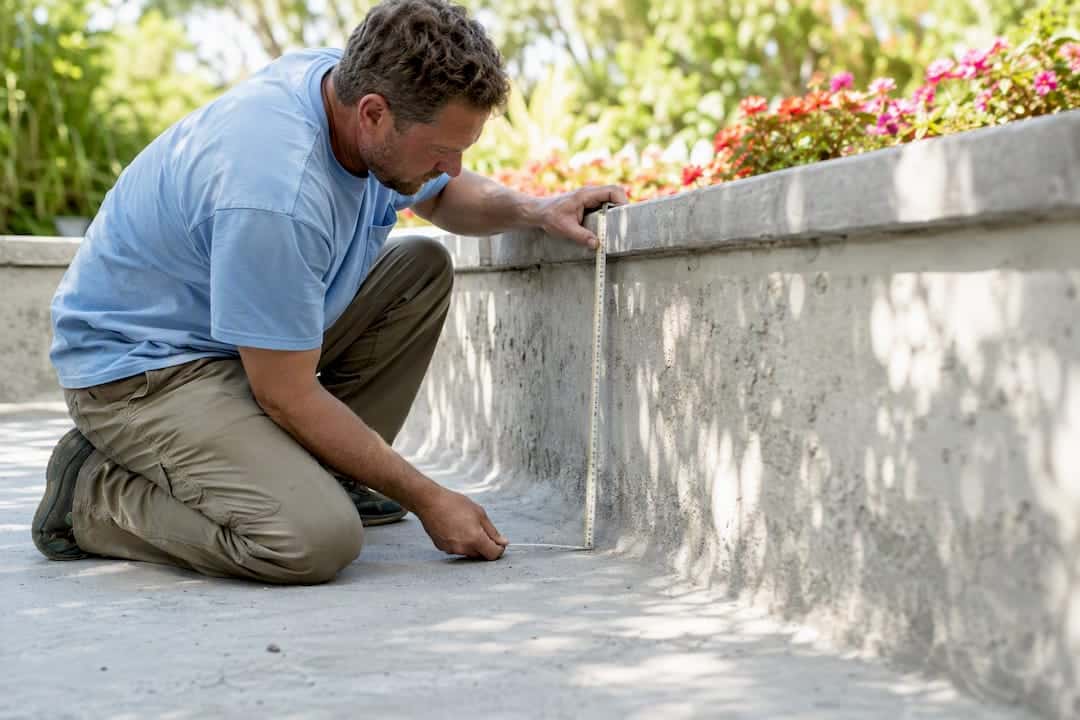
Yes, in most concrete or gunite pools you can change the depth. Fiberglass and vinyl shells are far more limited. Feasibility comes down to your shell material, the structural condition of the pool, where the plumbing runs, and what your local permit office requires before anyone breaks concrete.
TL;DR:
- Concrete and gunite pools can have their depth changed through reshaping and reinforcement, unlike fiberglass or vinyl shells which are much more limited.
- The key to successful depth modification is proper bonding of new material to the old shell using perimeter notches and rebar tie-ins, requiring structural assessments and engineer approval.
- Deepening a pool is significantly more expensive and time-consuming than shallowing, often involving excavation, new footings, and extra reinforcement, with durations of 6 to 12 weeks or more.
- Nearly all structural depth changes require permits, including updates to safety and diving classifications, and skipping permits can lead to legal and insurance issues.
- Contractors with proven experience in structural modifications and detailed plans are essential, as the success of the project depends heavily on proper bonding, rebar work, and adherence to safety standards.
Table of Contents
- Which Pool Types Can Have Their Depth Changed?
- How Do Contractors Actually Change Pool Depth?
- How Much Does Changing Pool Depth Cost?
- Do You Need a Permit to Change Pool Depth?
- How Do You Choose a Contractor for a Depth Change?
- What Happens After the Depth Change Is Complete?
- What Classic Marcite’s Track Record Means for Your Depth Change
- What Actually Matters Most in a Depth-Change Remodel
- Ready to Plan Your Pool Depth Change?
- Sources
Which Pool Types Can Have Their Depth Changed?
Shell material decides almost everything here. Gunite and poured concrete pools are the most forgiving. Contractors can add material to raise a floor or excavate to deepen one, because the shell is essentially a custom concrete structure that can be reshaped with new reinforcement. That flexibility is why most depth-change projects happen on concrete/gunite shells rather than other shell types.
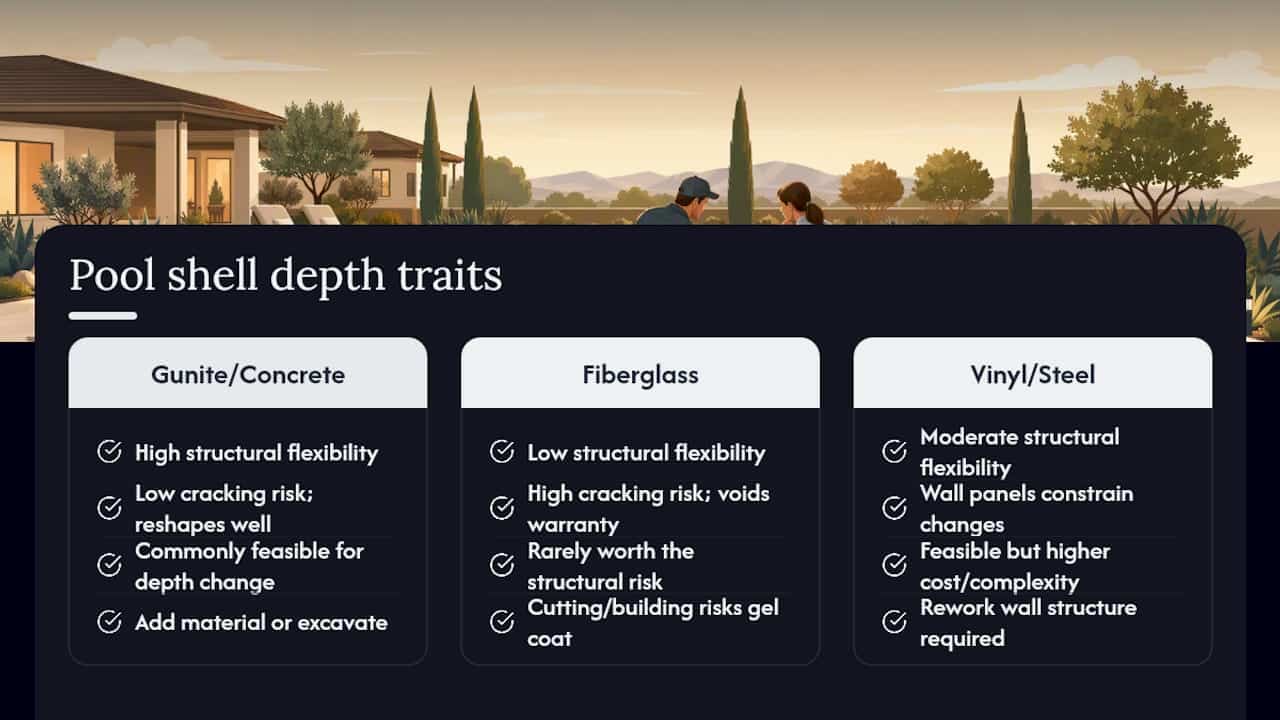
Fiberglass pools are the opposite case. The shell is manufactured off site in a fixed mold, and cutting into it or building up its floor risks cracking the gel coat and voiding the manufacturer’s warranty. Most reputable contractors will tell you a fiberglass depth change is possible in theory but rarely worth the structural risk.
Vinyl and steel-wall pools sit in the middle. The liner itself isn’t the constraint; the steel or polymer wall panels are. Altering depth usually means reworking the wall structure, not just swapping a liner, which pushes cost and complexity closer to a concrete remodel.
Site conditions matter just as much as shell type. A high water table complicates excavation for deepening. Decks poured tight against the coping limit how much room contractors have to work. And pools built before the 1990s often have less rebar than current standards call for, which affects how new material gets tied in.
How Do Contractors Actually Change Pool Depth?
Once you know your shell qualifies, the construction sequence is fairly standardized, even though the direction of the work differs.
To make a pool shallower, most projects follow this order:
- Drain the pool completely and remove the old interior finish down to bare shell.
- Build the infill structure, typically EPS foam blocks or poured concrete, shaped to the new floor profile.
- Chip a perimeter bonding notch and tie new rebar into the existing shell.
- Relocate or modify drains, returns, and skimmers to match the new floor elevation.
- Waterproof and resurface the new interior.
To make a pool deeper, the sequence reverses: drain the pool, break out and remove the existing floor, excavate to the new depth, install footings and reinforcing steel, then apply shotcrete or poured concrete for the new floor before relocating plumbing and resurfacing.
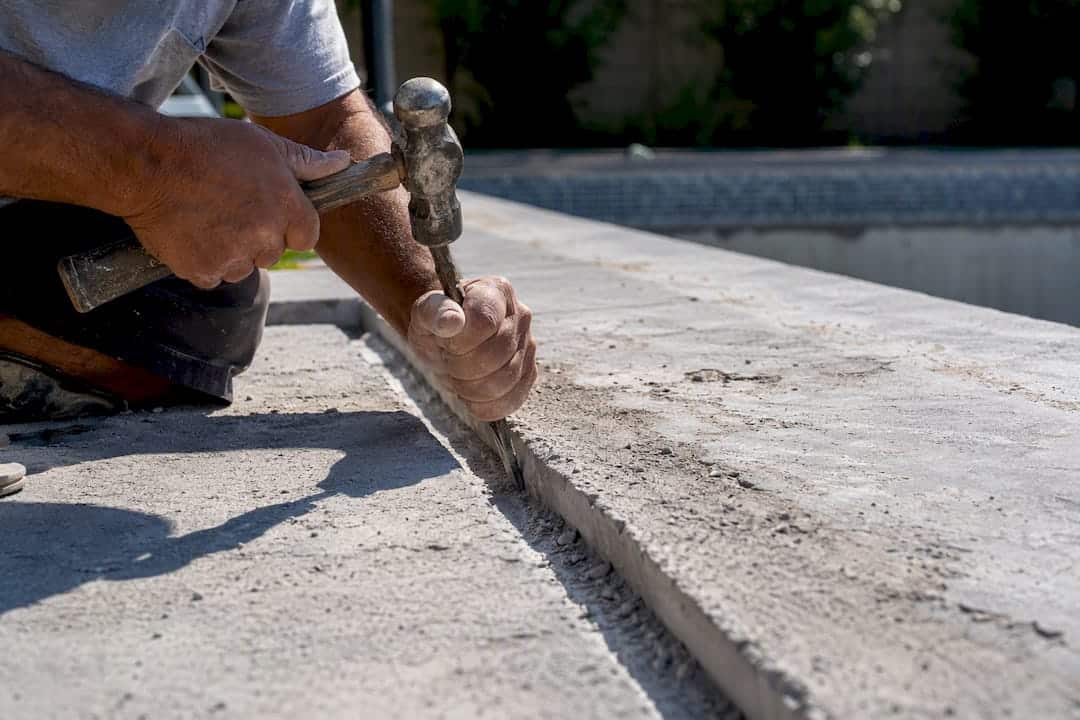
The most important detail in either direction is how the new material bonds to the old shell. Experienced crews chip a 2 to 3 inch notch around the full perimeter where old and new concrete meet, creating a physical pan that keeps the new floor from separating or cracking at the seam. This perimeter notch technique is one of the clearest signs a contractor knows what they’re doing.
Before any of that happens, expect a structural assessment: core sampling to check shell thickness, sometimes ground-penetrating radar to map existing rebar, and a licensed engineer’s sign-off on the plan. Projects follow a phased sequence of assessment, demolition and prep, structural work, plumbing relocation, resurfacing, and final inspection.
Pro Tip: Ask your contractor to show you the perimeter notch detail on paper before demolition starts. If they can’t explain how the new floor ties into the old shell, that’s a structural gap waiting to become a crack.
How Much Does Changing Pool Depth Cost?
Costs swing widely depending on direction and scope, and that’s the single biggest thing to understand before you start collecting bids.
- Shallowing a deep end tends to run cheaper since it’s largely an infill job with less excavation.
- Deepening a pool costs more because it requires excavation, new footings, and heavier reinforcement, and shallow-to-deep conversions can range widely depending on excavation and resurfacing needs depending on square footage and finish.
- Full structural rebuilds, where depth change is bundled with a complete shell overhaul, sit at the high end of any renovation budget.
Excavation volume, reinforcement needs, how far plumbing has to move, and finish choice all drive the final number. Timelines follow the same pattern: a modest shallow-end infill often wraps in 3 to 6 weeks, while extensive deepening projects can run 6 to 12 weeks or longer once inspections are factored in. When comparing bids, insist on itemized estimates that break out demolition, structural work, plumbing, and finish separately. A single lump-sum number makes it impossible to tell where one contractor is cutting corners.
Do You Need a Permit to Change Pool Depth?
Almost any structural depth change triggers a permit review, and skipping that step is the fastest way to end up with a remodel you can’t legally use or insure.
- Structural work on the shell typically requires a building permit, and plumbing relocations often need a separate plumbing permit.
- Moving drains or returns can shift the pool’s safety classification, which brings VGB and local drain-configuration rules into play.
- Diving classification depends on depth thresholds, so a deepened pool may need updated signage, fencing, or main-drain configurations to stay compliant.
- Consult the Pool & Hot Tub Alliance for current construction and safety standards your contractor should already be following.
- Notify your homeowner’s insurer before construction starts. Some safety upgrades, like updated covers, can help offset the liability bump that comes with a deeper pool. Retrofit safety covers from suppliers like Coverstar are worth discussing during permitting, not after.
How Do You Choose a Contractor for a Depth Change?
This is not a resurfacing job, and it shouldn’t be quoted like one. Vet contractors the way you’d vet anyone doing structural work on your house.
- Require a structural assessment and stamped engineering plans before signing anything.
- Ask for documented experience with depth modifications specifically, including photos or case studies of completed projects, not just resurfacing work.
- Confirm how they’ll bond new material to the old shell. If they don’t mention a perimeter notch or rebar tie-in, ask why.
- Verify permits, liability insurance, workmanship warranties, and a written change-order process before demolition.
- Get a clear payment schedule tied to project milestones, not a large upfront deposit.
Walk away from anyone who wants to start without an engineer involved, gives you a vague one-page scope, or pressures you to sign the same day you meet.
Pro Tip: A contractor who’s remodeling older pools regularly, not just resurfacing them, will usually know how to read an aging shell’s rebar density before quoting a price. That experience is worth more than a low bid.
What Happens After the Depth Change Is Complete?
Once the structural work passes inspection, the finishing phase determines how the pool actually looks and performs for the next 15 to 25 years.
- Resurfacing is mandatory since the old interior finish is removed during demolition; choices like plaster, quartz, or Pebble Tec® affect both appearance and how long the new surface lasts.
- Raising or rebuilding the floor is a natural point to reroute plumbing and lighting beneath the new structure instead of trenching the deck, since new lines can run under the reinforced floor while it’s already open.
- Pumps, filters, and skimmers often need rebalancing for the new water volume and depth profile, and salt or chlorine systems may need recalibration.
- Follow the manufacturer’s cure time before refilling, then ramp water chemistry gradually rather than shocking a freshly finished surface.
- Depth changes are also a smart moment to plan ahead for a heater, safety cover, or deck resurfacing while the site is already under construction.
What Classic Marcite’s Track Record Means for Your Depth Change
Since 1988, Classic Marcite has resurfaced more than 100,000 pools and stands as the largest Pebble Tec® applicator in Central Florida. That volume of surfacing tie-in work, on shells of every age and condition, shapes how the company advises homeowners on finish selection and structural precautions before a single tile is removed.
What Actually Matters Most in a Depth-Change Remodel
Most articles on this topic treat depth change as a design decision. It isn’t. It’s a structural decision that happens to have a design outcome, and homeowners who skip that distinction are the ones who end up with cracked floors or a failed inspection.
The conventional advice tends to focus on style, finish color, and “before and after” photos. Those matter, but they matter last. What actually determines whether your project succeeds is whether the contractor treats the perimeter bond, the rebar tie-in, and the plumbing relocation as the real work, with resurfacing as the final step rather than the whole job.
If you take one thing from this guide, prioritize the engineering conversation before the aesthetic one. Ask about the structural assessment first. Ask about permits second. Only then talk finishes and color. A pool that’s shallowed or deepened correctly will outlast several finish cycles. One that’s rushed through the structural phase will show cracks before the first resurfacing is even due.
— Results
Ready to Plan Your Pool Depth Change?
Classic Marcite handles the parts of a depth-change remodel that make or break the result: structural tie-ins, plumbing rerouting, and the resurfacing that finishes the job, using materials like Pebble Tec® that hold up to Florida’s heat and heavy pool use. Unlike a general contractor bidding a one-off job, Classic Marcite has resurfaced over 100,000 pools and built its process around getting that perimeter bond and finish tie-in right the first time.

Before your consultation, gather a few things: current photos of your pool, rough dimensions, your existing finish type, and any prior engineering or inspection reports if you have them. That gives the estimator a real starting point instead of a guess. Start with a free estimate for pool resurfacing in Orlando or explore the full pool remodeling services if your project includes structural depth work alongside a new finish. If you’re still mapping out the scope of a larger renovation, the step-by-step pool remodeling guide is a useful next read before you request a quote.
Sources
- Off the Deep End — Watershapes
- Pool Depth Modification Services: Shallow End Conversions and Floor Changes
- How Do They Adjust The Depth Of A Pool? A Comprehensive Guide to Reshaping Swimming Pools – ThePoolAndLawn
- Can You Remodel an Inground Pool? What’s Possible and What’s Not – Schiller Pools
- Pool & Hot Tub Alliance (PHTA)