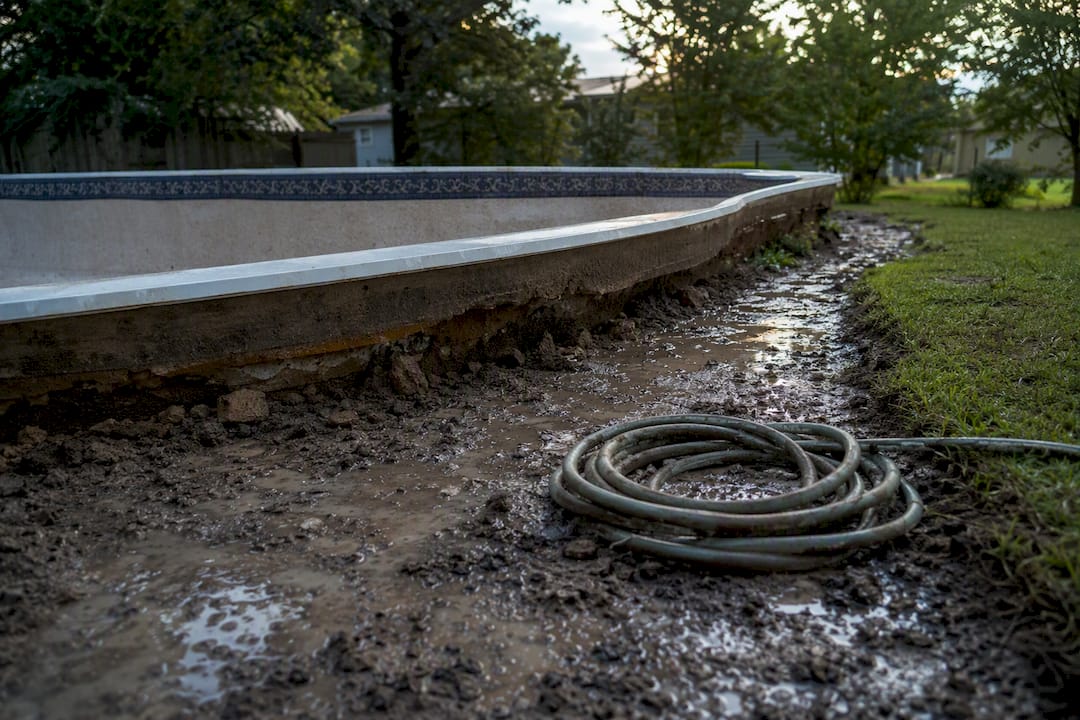
A pool that has “popped” has been pushed up by hydrostatic pressure from saturated soil beneath it. If this happens to you, do not refill the pool, don’t attempt to force it back down, and don’t wait to call for help. Document everything, call a licensed pool contractor and a structural engineer, and loop in your insurer before doing anything else.
TL;DR:
- A pool can pop out of the ground when surrounding groundwater exerts buoyant force, which can lift even heavy structures if drainage isn’t properly managed.
- Draining during or immediately after heavy rain significantly increases the risk, especially when the water table is high or soil drainage is poor.
- Installing gravel blankets, maintaining relief valves, and monitoring groundwater levels can prevent a pool from lifting, but these measures require ongoing inspection and timely implementation.
- Repair generally involves either pressure-grout lifting for intact shells or full excavation for cracked pools; partial patches are risky without addressing groundwater issues.
- Most insurance policies do not cover damage caused by gradual saturation and groundwater intrusion unless caused by a sudden, accidental event.
Table of Contents
- What Causes a Pool to Pop Out of the Ground
- What to Do Immediately After a Pool Pops Out of the Ground
- Preventing a Pool From Lifting Out of the Ground
- How Professionals Repair a Popped Pool
- Cost and Timeline Expectations for a Pool Repair
- Does Homeowners Insurance Cover a Popped Pool
- Why Classic Marcite’s Experience Matters Here
- What Homeowners Get Wrong About Popped Pools
- Sources
What Causes a Pool to Pop Out of the Ground
A pool doesn’t just decide to lift itself out of the earth. Groundwater does it, and the physics behind it is older than swimming pools themselves. When soil around and beneath a pool becomes saturated, usually after heavy rain or a rising water table, it exerts upward force on the empty or partially empty shell. This is Archimedes’ principle at work: any object surrounded by fluid experiences buoyant force equal to the weight of fluid it displaces. A pool basin acts like a boat hull sitting in wet ground. Empty it out, and there’s nothing left to hold it down.
The numbers get serious fast. A pool floor measuring roughly 32 square meters can face about 32 tonnes of uplift force if the water table rises just one meter above the floor level. That’s enough force to crack a shell, snap plumbing lines, and shove a multi-ton concrete structure several inches or feet out of its excavation.
Several conditions set the stage:
- Perched water tables that sit higher than expected, even in yards that look dry on the surface
- Poor soil drainage around clay-heavy or compacted lots that trap water near the pool shell
- Draining during or right after heavy rain, when the surrounding ground is already waterlogged
- Broken irrigation lines or water mains that silently saturate soil for weeks before anyone notices
- Fiberglass and vinyl-liner pools popping more easily than concrete or gunite because they weigh less and offer less resistance to uplift, though heavy pools aren’t immune
That last point trips up a lot of homeowners. Weight alone isn’t a guarantee. Even a heavy concrete shell can pop if groundwater pressure builds high enough, which is why engineers treat every drainage decision as a calculated risk rather than a formality.
What to Do Immediately After a Pool Pops Out of the Ground
Speed and order matter here. Follow these steps as soon as you notice a lift, cracking, or a shell that’s visibly out of position:
- Cut power to pool pumps, heaters, and lighting at the breaker, and keep people and pets away from the area.
- Do not refill the pool. Refilling before an inspection can push the shell further out of alignment or cause additional cracking.
- Photograph everything: the tilt angle, cracks, separated decking, and any standing water or mud around the perimeter.
- Log your timeline, including recent weather, the last time you drained or serviced the pool, and any equipment issues you’d noticed beforehand.
- Call a licensed pool contractor first, then a structural or forensic engineer if the damage looks significant, and notify your homeowners insurer the same day.
Pro Tip: Check the discharge point of your hydrostatic relief valve before you call anyone. Murky or cloudy water near that outlet is often a sign the valve recently activated, which tells your contractor exactly where to start looking.
Preventing a Pool From Lifting Out of the Ground
Most pool pop-outs are preventable, and the fix usually costs far less than the repair. Prevention comes down to timing, monitoring, and a few pieces of hardware that too many pools lack.
Never drain a pool during or right after heavy rain. Check the 7 to 10 day forecast before scheduling any drain, and reschedule if a storm system is moving through. When you do need to drain a pool for resurfacing or repair, leave some water in the basin as ballast, open the hydrostatic relief valve, and drain slowly while watching for signs of movement.
Longer term, a few site upgrades cut the risk substantially:
- Install or maintain a gravel blanket and subsoil drainage system beneath the pool shell
- Keep hydrostatic relief valves inspected annually, not just when something goes wrong
- Add sump pits or wellpoints in yards with a known high water table
- Check regional groundwater trends through USGS monitoring data before scheduling major drainage work
- Fix a poorly draining deck before it becomes a pool problem, not after, and consider professional stormwater drain inspections and maintenance to ensure proper drainage around your property
| Prevention Step | When to Do It | Why It Matters |
|---|---|---|
| Check 7-10 day forecast | Before any drain | Avoids draining into saturated soil |
| Leave 12-18 inches of water | During draining | Provides counterweight against uplift |
| Inspect relief valve | Annually | Confirms uplift protection still works |
| Review groundwater data | Before major drainage | Flags hidden high water tables |
If you’re unsure whether your yard sits over a perched water table or a seasonal high water zone, a pool drain and refill guide or a call to a licensed contractor beats guessing every time.
How Professionals Repair a Popped Pool
Repair scope depends entirely on how far the shell moved and whether the structure cracked. Three paths cover most cases.
Pressure-grout lifting works when the shell is intact but has separated from its base. Crews drill small holes through the floor, pump flowable grout underneath to fill the void left by the shifted soil, and relevel the structure. It’s a specialist technique that requires a project-specific design matching hole spacing and grout type to your soil and shell geometry. Get this wrong, and you risk new cracking instead of a fix.
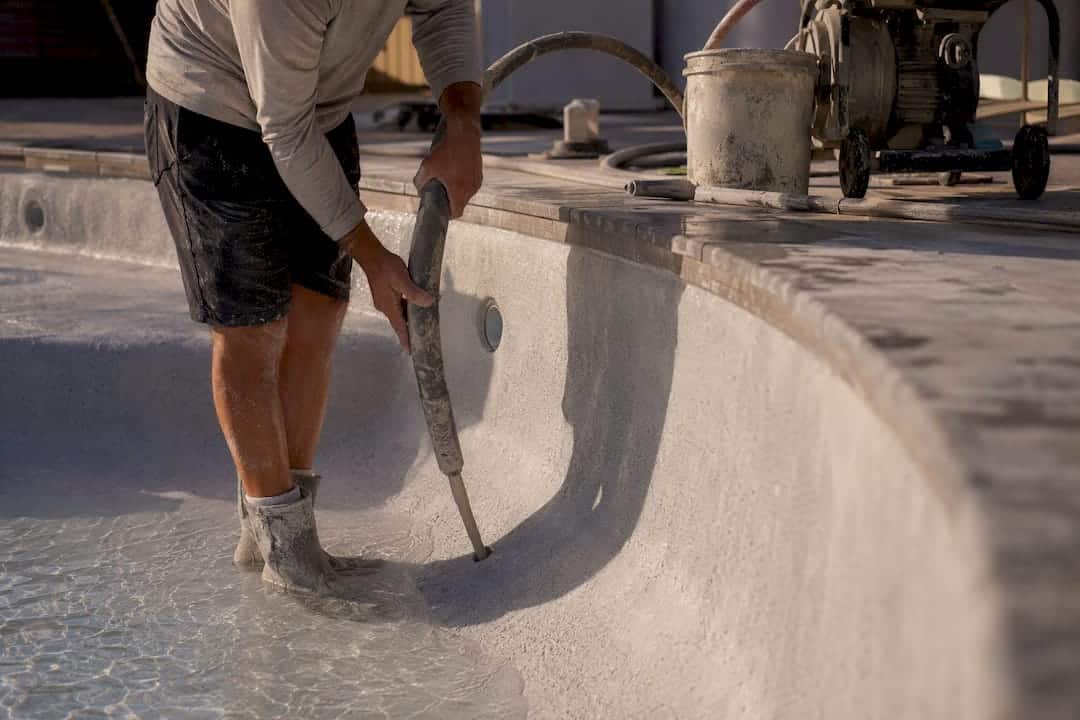
Full re-excavation becomes necessary when the shell has cracked, plumbing has sheared, or the pool moved too far to relevel in place. This means removing decking, resetting or replacing the shell, and reconnecting every plumbing and electrical line that broke in the process.
Partial repairs carry real risk. Patching a crack without addressing the groundwater problem underneath just delays the next pop-out.
- Pressure-grout lifting: feasible for intact shells with moderate displacement
- Full re-excavation: required for cracked shells or major plumbing damage
- Partial patch jobs: risky without confirming the underlying drainage issue is fixed
Pro Tip: Ask any contractor bidding on a lift-and-relevel job whether a structural engineer reviewed the grout design. If they can’t answer that clearly, get a second bid.
Cost and Timeline Expectations for a Pool Repair
Costs swing widely based on repair method, plumbing and electrical damage, deck and landscaping loss, and whatever permits your county requires. A straightforward pressure-grout lift runs far less than a full shell replacement with new decking and reconnected utilities.
Timelines follow a similar pattern: engineering assessment and permitting first, then the physical repair, then curing time before refilling, then final inspection.
- Get at least three itemized bids, not just a total price
- Confirm each contractor is licensed and insured before signing anything
- Ask for a written scope that separates grout work, plumbing repair, and deck restoration
- Factor in permit timelines, which can add weeks in some jurisdictions
Does Homeowners Insurance Cover a Popped Pool
Coverage is inconsistent and often disappointing. Most policies exclude gradual earth movement and groundwater intrusion, treating slow saturation as a maintenance issue rather than a covered peril. Sudden, accidental events have a better chance of coverage, but insurers scrutinize these claims closely.
- Photograph damage immediately and preserve weather records from the days before the incident
- Get a written structural engineer’s report describing the likely cause
- Keep your maintenance and draining history on hand, since insurers ask for it
- Consider a public adjuster if your claim gets denied and you believe the denial misreads the cause
Why Classic Marcite’s Experience Matters Here
Classic Marcite has resurfaced and repaired over 100,000 pools since 1988, working across Orlando and Jacksonville on everything from backyard pools to resort-scale renovations. That volume means the team has seen pop-outs caused by every trigger on this list, from broken irrigation lines to poorly timed drains before resurfacing.
A popped pool is rarely just a surface problem. The shell, the plumbing, and the soil underneath all need evaluation before anyone touches a trowel or a grout pump.
If you’re trying to tell the difference between routine plaster wear and something structural, the signs of pool surface damage guide walks through what to look for before it becomes an emergency. For minor surface cracks that aren’t related to uplift, the DIY pool crack repair guide covers what’s reasonable to handle yourself. A popped shell is not a DIY project. It needs a licensed structural engineer and an experienced pool contractor working from the same set of facts.
What Homeowners Get Wrong About Popped Pools
Most guidance on this topic treats prevention and repair as separate conversations. They aren’t. The homeowners who avoid a pop-out are the same ones who treat every drain as an engineering decision, not a maintenance chore. That’s the biggest gap between what typical advice says and what actually protects a pool.
The overrated fix is weight. People assume a heavy concrete shell is safe by default, but uplift force doesn’t care what your pool is made of once groundwater pressure gets high enough. The underrated fix is a simple forecast check and a functioning relief valve, both of which cost nothing compared to a re-excavation.
If you take one thing from this guide, prioritize the boring stuff: inspect your relief valve annually, never drain into saturated ground, and treat a dry-looking yard with suspicion if you’re near a high water table. Everything else, grout lifting, insurance claims, engineer reports, only becomes necessary when that first line of defense fails.
— Results
If your pool has already popped or shows early warning signs like separating decking or shell cracks, don’t wait for it to get worse. Classic Marcite’s team handles structural assessment, releveling coordination, and full resurfacing after repair, backed by decades of experience across Central Florida. Request a free estimate through the pool resurfacing service in Orlando page and get a professional opinion before you decide on next steps.
Sources
- Archimedes’ principle (OpenBooks, Michigan State University)
- Tech bulletin: Swimming pool failure (PEGroup Consulting Engineers)
- The basics of insuring a swimming pool (CA Pool Association)
- Is pool pop-out excluded? (IRMI expert commentary)