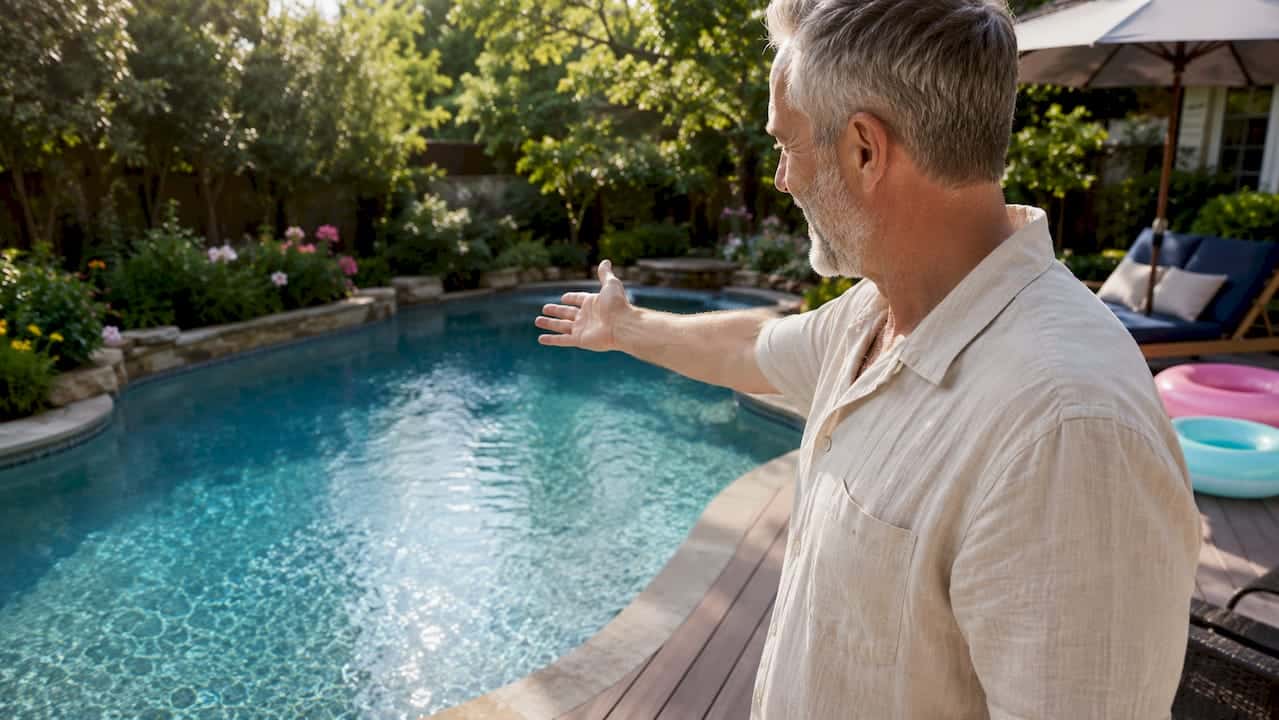
TL;DR:
- Pebble finishes are durable, long-lasting pool surfaces made from natural stone aggregates embedded in cement and acrylic. They last 15 to 25 years, outperforming plaster, which typically requires resurfacing every 7 to 10 years, and retain color in the stone itself. Proper installation timing and water chemistry startup are critical for maximizing their lifespan and maintaining their aesthetic and safety benefits.
Pebble finishes are premium pool interior surfaces made from natural stone aggregates embedded in a cement and acrylic binder matrix, and they consistently outperform traditional plaster on durability, color retention, and safety. The industry term for this category is “aggregate finish,” and pebble products like Pebble Tec® and PebbleSheen represent the top tier of that category. If you are weighing your options for a pool resurface, the case for pebble finishes comes down to three facts: they last two to three times longer than plaster, their color lives in the stone itself rather than a pigment coat, and their natural texture adds grip where you need it most. This article explains why choose pebble finishes is the right question, and gives you the specific answers to make a confident decision.
Why choose pebble finishes over other pool surfaces?
Pebble finishes are defined by their core material: real stone pebbles, typically river rock or quartz aggregate, bonded into a cement matrix that is applied directly to the pool shell. That structure is what separates them from white plaster, which is a smooth cement and marble dust blend, and from quartz finishes, which use crushed quartz crystals instead of rounded pebbles. The stone aggregate in a pebble finish is not painted or coated. Color is locked into the mineral itself, which means it does not fade the way pigmented plaster does.
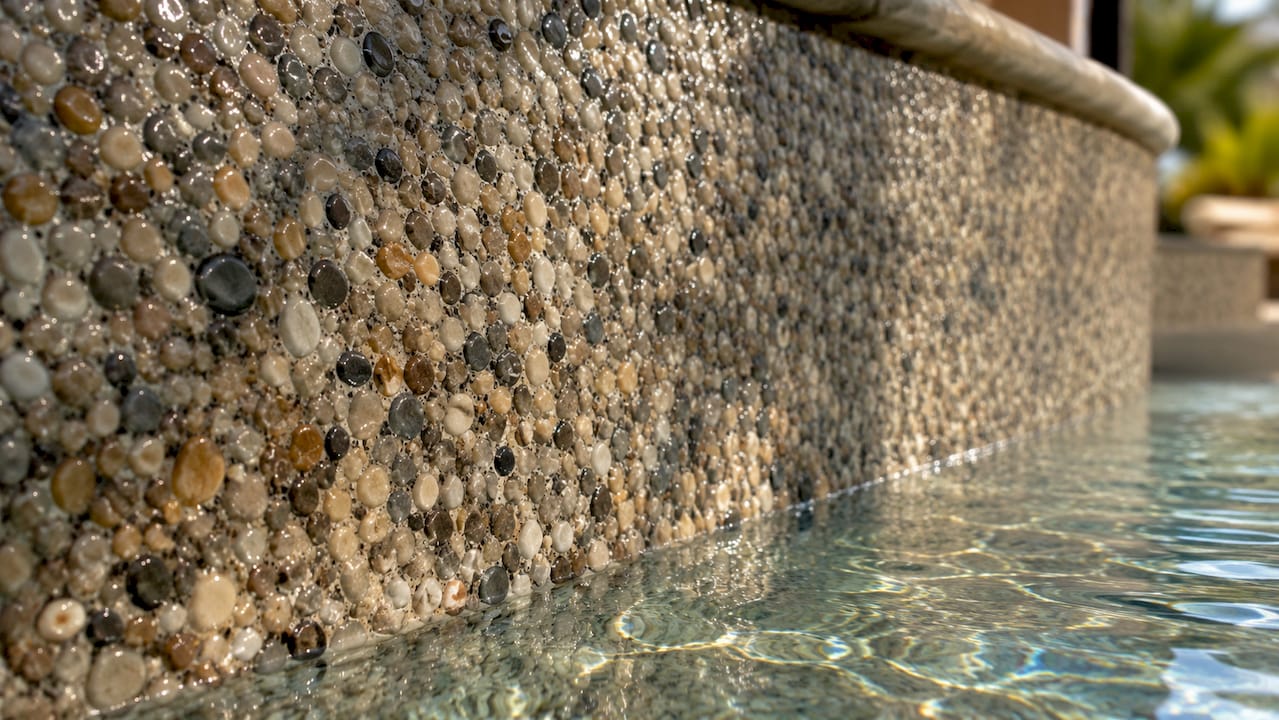
Plaster pigment typically fades within 3–5 years, while pebble finishes maintain their appearance for decades. That difference alone changes the math on long-term pool ownership. You are not just buying a surface. You are buying a color that stays, a texture that holds up, and a finish that does not require replacement every decade.
Pebble Tec® products, manufactured by Pacific Mutual Holding Company, combine natural stone with acrylic binders and color pigments to deliver superior bonding to the pool shell. That proprietary formulation is why Pebble Tec® has become the benchmark product in the aggregate finish category. Classicmarcite is the largest Pebble Tec® applicator in Central Florida, with over 100,000 pools resurfaced since 1988.
How long do pebble finishes last compared to plaster?
Pebble finishes last 15–25 years, while standard white plaster typically requires resurfacing every 7–10 years. That gap is the single most important number in this decision. It means a homeowner who chooses plaster will likely resurface twice in the same window that a pebble finish owner resurfaces once.
The durability comes from the stone itself. Natural pebbles resist chemical erosion better than the marble dust used in plaster. The cement matrix that holds the pebbles also benefits from the aggregate’s structural reinforcement, making the surface harder and less prone to cracking or etching under normal pool chemistry fluctuations. Pebble finishes handle chemical swings better than plaster, though they are not maintenance-free.
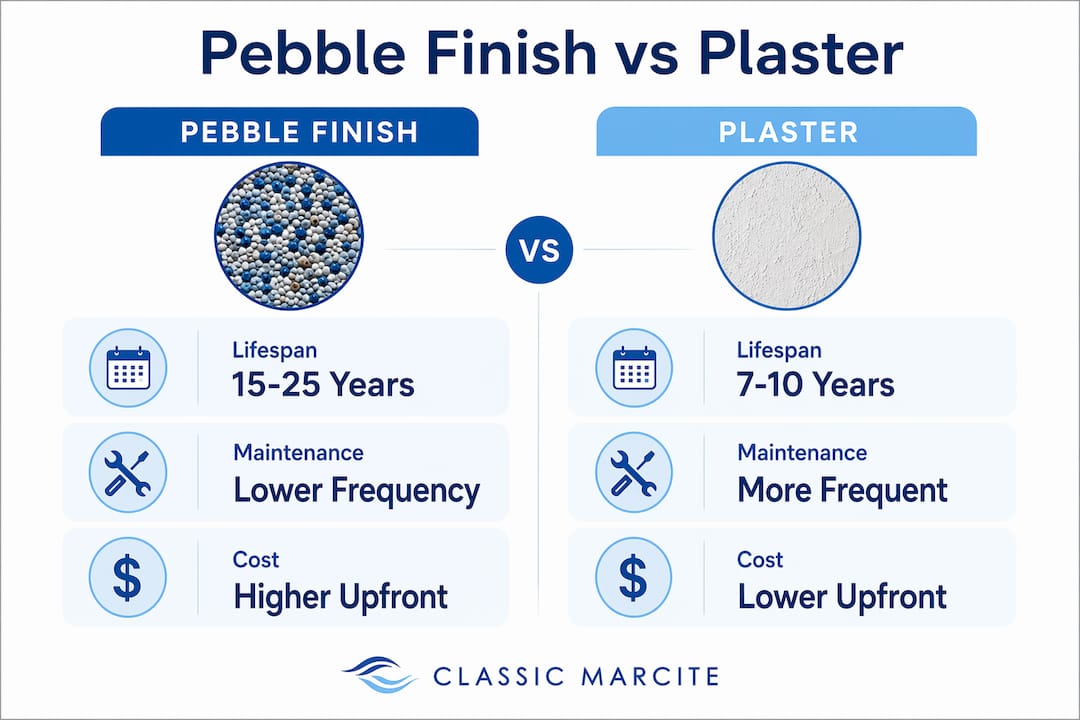
Installation cost for pebble finishes runs $8,000–$14,000 compared to significantly less for plaster. The upfront gap looks large, but the cost-per-year calculation often favors pebble. A pebble finish at $11,000 over 20 years costs $550 per year. Two plaster resurfaces in that same period, at $4,000 each, cost $400 per year before accounting for the disruption, downtime, and labor of a second project. The total cost of ownership drives most experienced pool owners toward pebble as a long-term property investment.
| Finish Type | Lifespan | Estimated Cost | Cost Per Year |
|---|---|---|---|
| White plaster | 7–10 years | $3,000–$5,000 | $350–$600 |
| Quartz aggregate | 10–15 years | $5,000–$9,000 | $400–$700 |
| Pebble finish | 15–25 years | $8,000–$14,000 | $400–$560 |
Pro Tip: When comparing quotes, ask each contractor for the expected lifespan of their recommended finish. A lower quote for plaster often means a second resurfacing bill within 10 years.
What aesthetic and safety benefits do pebble finishes provide?
The visual impact of a pebble finish comes from depth, not just color. When light hits a pebble surface, it scatters across hundreds of individual stone faces at different angles, creating a shimmering, three-dimensional appearance that flat plaster cannot replicate. That effect is why pebble pools photograph so well and why resort and hotel pools almost universally use aggregate finishes.
Color stability is the other major aesthetic advantage. Because natural stone color is locked in rather than applied as pigment, the finish does not bleach out under UV exposure or aggressive chlorination. A deep blue or charcoal pebble pool looks the same in year 15 as it did in year one, with proper maintenance.
On the safety side, pebble finishes provide real, measurable benefits:
- Slip resistance on steps and shelves. The natural texture of rounded pebbles creates friction underfoot, especially in shallow areas where bathers enter and exit. This matters most for children and older adults.
- Reduced glare. The textured surface diffuses reflected sunlight, making it easier to see the pool bottom and judge water depth.
- Concealment of minor imperfections. Aggregate surfaces mask minor stains and surface irregularities better than smooth plaster, hiding calcium scale and light algae spots that would be obvious on a white surface.
- Comfort options for sensitive users. Products like PebbleSheen use finer aggregate for a smoother feel, making the surface appropriate for families with young children.
Pro Tip: If you have young children or elderly family members using the pool regularly, ask specifically about PebbleSheen or PebbleFina. Both deliver the durability of aggregate finishes with a noticeably smoother surface underfoot.
How do pebble finishes compare to plaster and quartz?
Choosing between plaster, quartz, and pebble comes down to four factors: budget, lifespan, texture preference, and maintenance tolerance. Each finish has a distinct profile.
| Factor | White Plaster | Quartz Aggregate | Pebble Finish |
|---|---|---|---|
| Lifespan | 7–10 years | 10–15 years | 15–25 years |
| Surface texture | Smooth | Slightly rough | Textured to smooth (varies) |
| Color retention | Fades in 3–5 years | Good, longer than plaster | Excellent, color in stone |
| Stain resistance | Low | Moderate | High |
| Upfront cost | Lowest | Mid-range | Highest |
| Maintenance sensitivity | High | Moderate | Moderate |
White plaster is the entry-level option. It is the least expensive upfront and produces a clean, classic look. The tradeoff is that it stains easily, fades quickly, and requires careful water chemistry to avoid etching. Quartz aggregate sits in the middle. It lasts longer than plaster and resists staining better, but it does not match pebble on lifespan or color stability.
Pebble finishes lead on every long-term metric. The one area where plaster wins is initial cost and surface smoothness. Some swimmers find traditional pebble textures rough on feet, though modern products like PebbleFina and PebbleSheen have addressed roughness concerns by using smaller, more refined aggregate. For a deeper look at comparing finish types, the differences in maintenance profiles are worth reviewing before you commit.
What maintenance practices maximize pebble finish lifespan?
Proper maintenance starts before the pool is even filled. The National Plasterers Council (NPC) recommends a 28-day startup procedure that is critical for aggregate finishes. Follow it precisely and your finish cures correctly. Skip it and you risk staining, surface irregularities, and premature wear that cannot be undone.
Here is the core startup sequence:
- Fill the pool continuously without stopping until full. Stopping mid-fill creates a tide line that can permanently mark the finish.
- Avoid chlorine for the first 48–72 hours. The cement matrix needs time to begin curing before chemical exposure.
- Brush the entire surface twice daily for 14 days. This removes plaster dust and prevents it from bonding to the finish as a stain.
- Maintain pH between 7.2 and 7.6 and calcium hardness between 300–400 ppm during the first month, per the NPC 28-day startup guidelines.
- Test water chemistry weekly for the first three months, then at least twice monthly after that.
Beyond startup, the two chemistry parameters that matter most for long-term pebble finish health are calcium hardness and pH. Calcium hardness above 250 ppm is required to maintain the cement bond that holds pebbles in place. When calcium drops too low and pH turns acidic, the cement matrix begins to dissolve. The result is “pebble pop,” where individual stones loosen and detach from the surface. This is not a cosmetic issue. It is structural damage that requires professional repair.
Scaling is the opposite problem. When calcium is too high and pH rises above 7.8, calcium carbonate deposits form on the pebble surface as a white, chalky crust. Regular brushing with a nylon brush (not a steel brush, which scratches the finish) and consistent chemistry management prevent both conditions.
Pro Tip: Keep a pool chemistry log for the first year after resurfacing. Patterns in your water chemistry are far easier to correct early than after damage has set in. Your pool service professional should be testing calcium hardness at every visit.
How to select the right pebble finish for your pool and users
Pebble Tec® offers four main product lines, and the right choice depends on who uses your pool and what look you want to achieve.
- Pebble Tec® (original). The classic aggregate finish with larger, more visible pebbles. Delivers the most dramatic visual depth and the longest track record. Best for pools where aesthetics are the priority and foot traffic on the surface is limited.
- PebbleSheen®. Uses smaller pebbles for a refined, smoother texture. The most popular choice for families with children because it is noticeably more comfortable underfoot while retaining full durability.
- PebbleFina®. The finest aggregate in the Pebble Tec® line, producing a surface close to quartz in smoothness but with the color stability and longevity of pebble. Ideal for pools with heavy use by children or elderly swimmers.
- PebbleBrilliance®. Incorporates glass beads with the pebble aggregate for a reflective, jewel-like finish. Best for pools where visual impact is the primary goal.
Color selection affects more than aesthetics. Darker finishes like charcoal or deep blue absorb more heat, which can raise water temperature by several degrees in a Florida climate. Lighter finishes reflect more light and keep water cooler. For a full look at popular finish options across Florida homes, reviewing real installations helps you visualize the final result before committing.
Property managers overseeing multiple pools or commercial facilities should default to PebbleSheen or PebbleFina. The smoother surface reduces liability from abrasion complaints and holds up better under the higher bather loads typical of community or resort pools.
Key Takeaways
Pebble finishes are the most cost-effective pool surface over a 20-year horizon because their 15–25 year lifespan eliminates the second resurfacing that plaster requires.
| Point | Details |
|---|---|
| Lifespan advantage | Pebble finishes last 15–25 years vs. 7–10 years for plaster, reducing total resurface frequency. |
| Color stability | Stone aggregate locks in color permanently; plaster pigment fades within 3–5 years. |
| Safety and texture | Natural pebble texture improves slip resistance on steps and shallow areas for all users. |
| Startup is critical | The NPC 28-day brushing and chemistry protocol defines finish quality for the life of the pool. |
| Product matching matters | PebbleSheen and PebbleFina suit families and high-traffic pools; original Pebble Tec® maximizes visual depth. |
What I have learned after watching thousands of pebble finish installations
The single most underestimated factor in pebble finish performance is not the product. It is the wash-down timing during installation. Timing the wash-down phase correctly is what separates a finish that looks stunning for 25 years from one that looks tired in five. Too early and pebbles wash loose before the cement sets. Too late and the stones get buried under hardened cement, losing the texture and visual depth you paid for. No product specification sheet can substitute for an installer who has done this thousands of times and knows exactly when to move.
The second thing most homeowners underestimate is how much the startup period matters. I have seen beautiful installations degraded within the first year because the pool owner handed off water chemistry to a service company that did not follow the NPC protocol. The 28-day startup period is not a suggestion. It is the window in which your finish either cures correctly or begins accumulating problems that compound over time.
My honest advice: spend more time vetting your installer than comparing product brochures. Ask how many pebble finishes they have applied, whether they follow the NPC startup protocol, and what their process is for the wash-down phase. A skilled installer with a mid-tier product will outperform an inexperienced one with a premium product every time. The upfront investment in pebble finishes is real. Protecting it costs nothing beyond diligence.
— Results
Get a professional pebble finish from Classicmarcite
Classic Marcite has been applying Pebble Tec® finishes across Florida since 1988, with over 100,000 pools resurfaced for homeowners, property managers, resorts, and commercial facilities. As the largest Pebble Tec® applicator in Central Florida, the team brings the installation precision and startup expertise that determines how your finish performs over its full lifespan.

Whether your pool is in The Villages, Winter Park, or anywhere across the Orlando and Jacksonville regions, Classicmarcite offers free estimates and full guidance on finish selection, water chemistry startup, and long-term care. If you are ready to stop patching plaster and invest in a surface that lasts, contact Classicmarcite for a consultation. You can also explore what Pebble Tec® delivers for Florida pools before your first call.
FAQ
What is a pebble pool finish?
A pebble pool finish is an aggregate interior surface made from natural stone pebbles bonded in a cement and acrylic matrix, applied directly to the pool shell. It is the premium tier of pool finishes, known for durability, color stability, and textured grip.
How long does a pebble finish last?
Pebble finishes typically last 15–25 years, compared to 7–10 years for standard white plaster. Proper water chemistry and startup procedures are the primary factors that determine where in that range your finish lands.
Is Pebble Tec® worth the higher upfront cost?
Yes. The initial investment is 20–40% higher than plaster, but the extended lifespan eliminates the cost and disruption of a second resurface within 20 years, making the cost-per-year comparable or lower.
What is the smoothest pebble finish option?
PebbleFina® is the smoothest product in the Pebble Tec® line, using the finest aggregate available. PebbleSheen® is the next smoothest and is the most popular choice for families with children or elderly users.
How do I prevent pebble pop in my pool?
Maintain calcium hardness above 250 ppm and keep pH between 7.2 and 7.6 consistently. Low calcium combined with acidic water dissolves the cement matrix that holds pebbles in place, causing them to loosen and detach.