TL;DR:
- Pool scaling involves calcium carbonate deposits forming on surfaces when water chemistry exceeds saturation limits, especially with high calcium hardness, pH, and alkalinity combined with high temperatures. It begins microscopically, becomes visible within two weeks, and is best prevented by maintaining a balanced LSI between -0.3 and +0.3 through proper calcium, pH, and alkalinity management. Once scale forms, manual removal with a pumice stone or professional chemical treatments are necessary, and proper diagnosis of scale versus stain is crucial for effective cleanup.
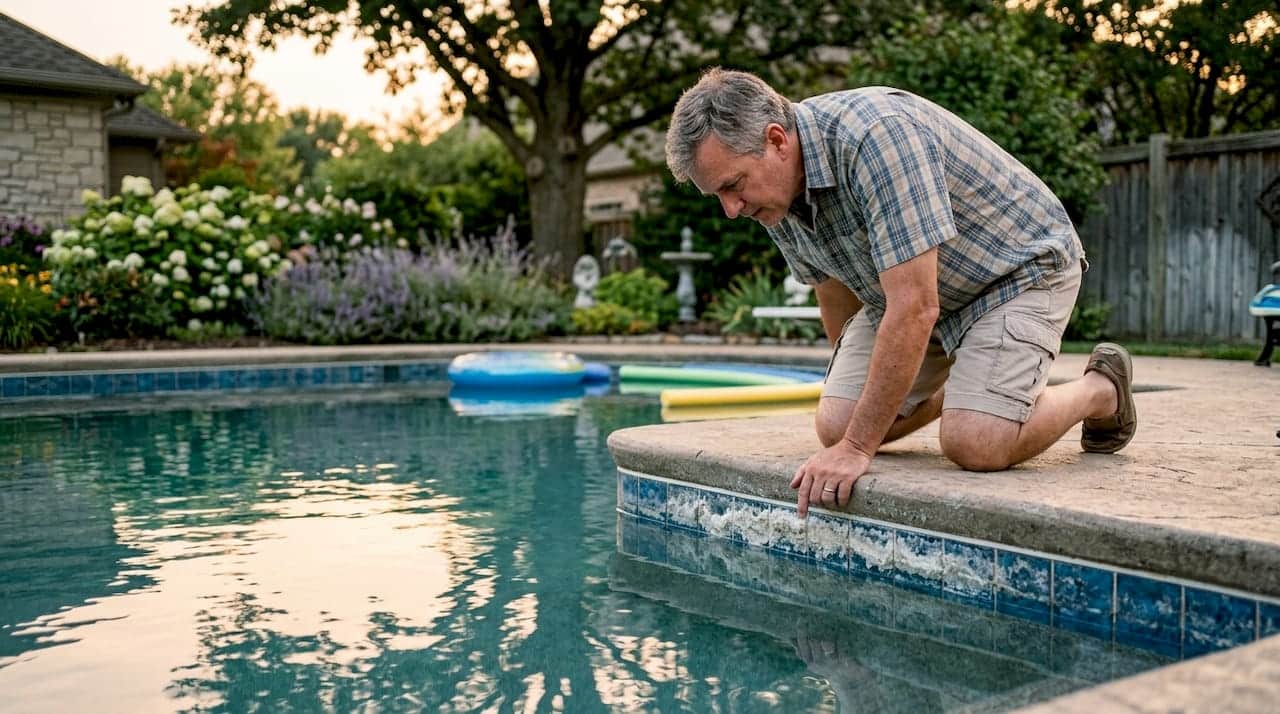
Pool scaling is defined as the buildup of hard calcium carbonate deposits on pool surfaces, equipment, and waterlines, triggered when water chemistry exceeds saturation limits. The Langelier Saturation Index (LSI) measures this saturation: any reading above +0.3 signals scale-forming conditions, and visible buildup can appear within 7–14 days at LSI +0.5. The primary chemical drivers are high calcium hardness, elevated pH, and excess total alkalinity, all made worse by rising water temperature. For homeowners and property managers, understanding what is pool scaling means understanding why your pool surface turns rough and white, and what it costs you if left untreated.
What is pool scaling and what causes it?
Pool scaling is not a random occurrence. It follows a predictable chemical pattern driven by three compounding factors: calcium hardness above 400 ppm, pH above 7.8, and high total alkalinity. When all three are elevated at the same time, calcium carbonate stops dissolving and starts precipitating onto surfaces. Pool professionals call this the “scaling trifecta.”
Temperature makes the problem worse. Unlike most dissolved minerals, calcium carbonate becomes less soluble as water gets hotter. That is why scale forms first on the hottest surfaces in your pool, such as heater elements, return jets, and spa walls. Water features like fountains and waterfalls also accelerate scale by increasing aeration, which raises pH and pushes water further into scale-forming territory.
Saltwater pools carry a specific risk. Salt cells fail prematurely within two years instead of the expected five when LSI is not controlled. The electrolysis process in salt chlorine generators naturally drives pH upward, which pushes an already calcium-rich pool past the saturation threshold faster than a traditional chlorine pool.
Knowing whether you have scale or a stain matters before you treat anything. Scale has a rough, gritty texture you can feel with your fingernail. Stains are smooth to the touch. That single test tells you whether you are dealing with a mineral deposit or an organic or metal stain, which require completely different treatments.
Key causes of pool scaling at a glance:
- Calcium hardness above 400 ppm
- pH above 7.8
- Total alkalinity above 120 ppm
- Water temperature above 84°F (common in Florida summers and heated spas)
- Saltwater pool pH drift from electrolysis
- High evaporation rates concentrating minerals in the water
How does the pool scaling process work?
The pool scaling process begins at the molecular level before you ever see a white crust. When LSI climbs above +0.3, water holds more dissolved calcium than it can stably maintain. The excess calcium bonds with carbonate ions and precipitates out of solution as solid calcium carbonate. That solid has to go somewhere, and it lands on whatever surface is nearby.
Scale does not form evenly across a pool. It concentrates on surfaces with rough textures, high heat, or high evaporation. Plaster and marcite finishes, with their naturally porous surfaces, trap early-stage scale crystals and give them a foothold. Tile grout lines, return fittings, and heater cores collect deposits faster than smooth surfaces.
The timeline follows a clear pattern:
- Day 1–3: Water chemistry crosses the LSI +0.3 threshold. No visible scale yet, but calcium carbonate is precipitating microscopically onto surfaces.
- Day 4–7: A faint white haze or film appears on tile lines and near return jets. The surface feels slightly rough.
- Day 7–14: At LSI +0.5, visible crusty deposits form on waterline tiles, steps, and heater surfaces. The texture is unmistakably gritty.
- Week 3 and beyond: Scale hardens and bonds more tightly to the surface. Removal becomes progressively more difficult and risks damaging the finish.
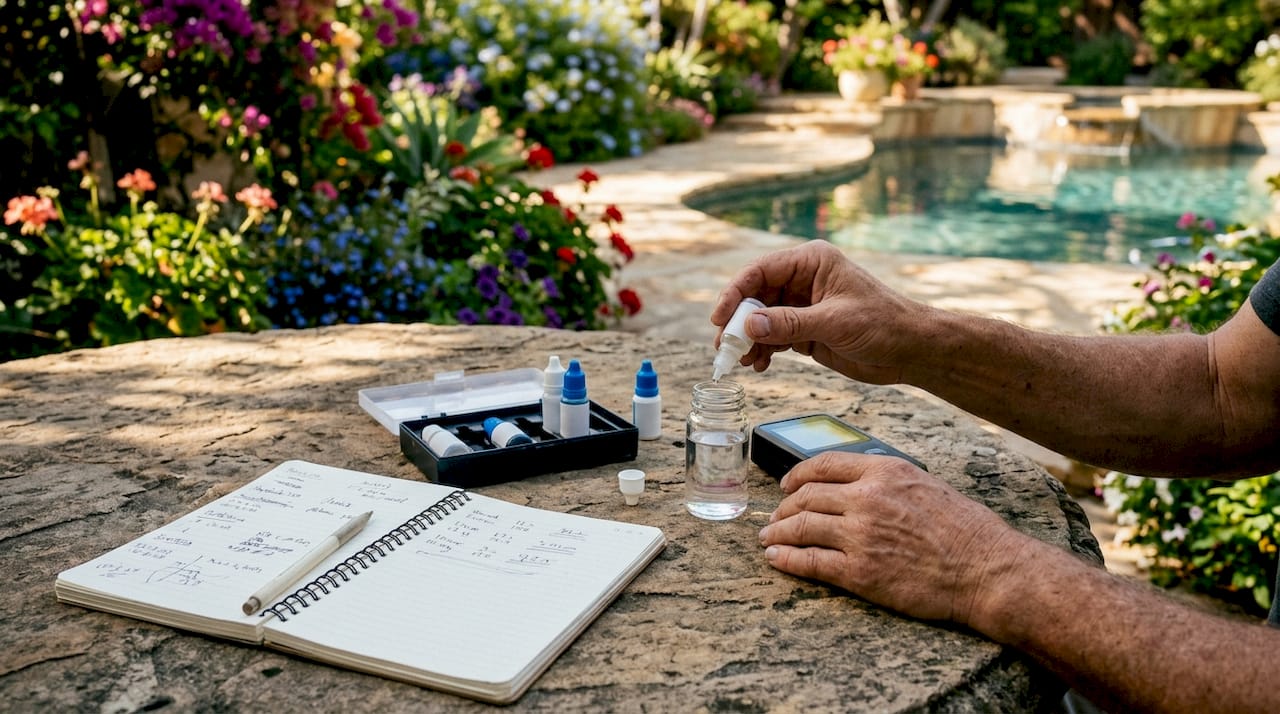
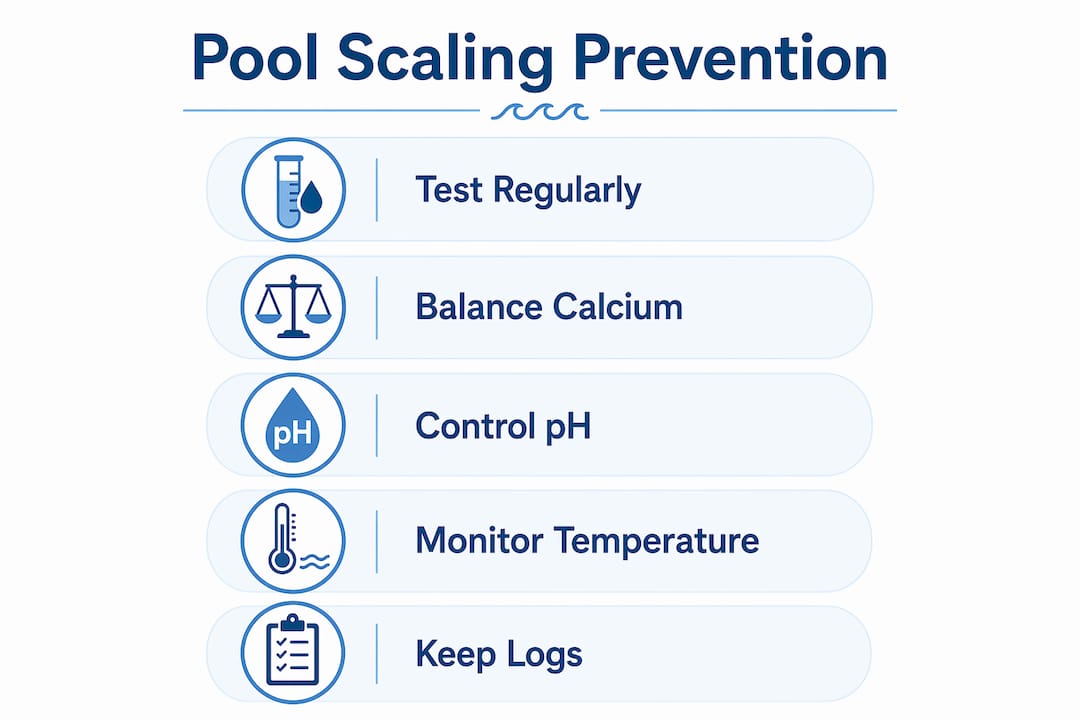
Regular water testing is the only way to catch this process early. Testing twice per week during summer in Florida is not excessive. Heat and evaporation concentrate minerals quickly, and a pool that tested balanced on Monday can cross into scale-forming territory by Thursday.
Pro Tip: Test your LSI directly, not just individual chemistry numbers. A pool can have pH at 7.6 and still be scale-forming if calcium hardness and alkalinity are both elevated. Free LSI calculators are available online and take less than two minutes to use.
How can pool scaling be prevented?
Prevention centers on LSI-based water management rather than chasing individual chemistry targets in isolation. LSI-based management balances calcium hardness, pH, alkalinity, temperature, and total dissolved solids together, treating them as a system rather than separate numbers. This approach is more reliable than the old method of simply keeping each parameter “in range.”
The target ranges for scale prevention are specific:
- Calcium hardness: 200–400 ppm
- pH: 7.2–7.6
- Total alkalinity: 60–80 ppm
- LSI: between -0.3 and +0.3
Set calcium hardness first. It is the most stable and predictable variable in the system. Once calcium hardness is established, adjust pH and alkalinity around it to bring LSI into balance. Trying to correct pH without knowing your calcium level is like adjusting a recipe without knowing how much of the main ingredient you already have.
Saltwater pool owners need to check pH more frequently, at least three times per week. The electrolysis process consistently pushes pH upward, so even a well-balanced pool can drift into scale-forming territory within days. Keeping pH at the lower end of the target range (7.2–7.4) gives you a buffer before the next reading.
Heated pools and spas require the same discipline. Every 10°F rise in water temperature shifts the LSI toward scale-forming conditions. If you heat your spa to 104°F, your water chemistry needs to compensate with lower calcium hardness or lower alkalinity to keep LSI in balance.
Pro Tip: Lower your pool’s alkalinity to the 60–80 ppm range rather than the commonly recommended 80–120 ppm. Lower alkalinity reduces pH bounce and makes LSI easier to control long-term. Learn more about managing pool alkalinity for a full breakdown of how alkalinity interacts with scale.
Protecting your pool surface long-term also means keeping records of your water chemistry readings. A simple log showing weekly LSI values tells you whether your pool trends toward scale-forming conditions seasonally, which lets you adjust proactively rather than reactively.
What to do if your pool already has scaling
Diagnosing scale correctly is the first step. Run your fingernail across the deposit. If it feels rough and gritty, it is scale. If it is smooth, it is likely a stain and needs a different approach. You can also calculate your current LSI. If it is above +0.3 and you have white deposits, scale is the confirmed cause.
For tile and waterline scale, a wet pumice stone is the safest manual removal tool. Always use it wet and on a wet surface. Using a pumice stone dry causes scratching that permanently damages tile glazing and plaster finishes. Work in small circular motions and rinse frequently.
For heavier deposits on plaster or pebble surfaces, liquid descaling agents circulated through the pool system for 24–48 hours can dissolve calcium carbonate without requiring physical scrubbing. Lower total alkalinity to 60–80 ppm and pH to 7.2–7.6 before running the descaler. This chemistry shift makes the water mildly aggressive toward calcium deposits while the descaler works.
Pro Tip: Never pour muriatic acid directly onto pool plaster or tile without diluting it first. Undiluted acid causes immediate etching and can permanently damage the finish. Always dilute in water and apply carefully with a brush for spot treatments.
For severe scaling on plaster surfaces, professional acid washing is the most effective solution. This process removes the top layer of plaster along with embedded scale. It is not a routine maintenance step. It is a corrective measure for pools where scale has bonded deeply into the surface.
Precautions to follow during scale removal:
- Never use dry pumice stone on any pool surface
- Always dilute muriatic acid before application
- Test LSI before and after treatment to confirm water balance
- Avoid acid washing more than once every few years to protect plaster depth
- Consult a professional before treating pebble or aggregate finishes
Common challenges and misconceptions about pool scaling
The most expensive misconception is that all white deposits are the same. Silicate scale does not respond to acid-based treatments. Standard pool acids dissolve calcium carbonate effectively, but silicate scale requires physical removal methods like bead blasting. Treating silicate scale with acid wastes time and money without producing results.
Household remedies do not work. Vinegar and lemon juice lack the acid concentration needed to break calcium carbonate bonds. They may slightly soften very minor deposits, but they will not remove established scale. Professional-grade chemicals are necessary for meaningful results.
Soft water is not the safe alternative. Water with low calcium hardness etches pool plaster and dissolves calcium from grout and marcite surfaces. This corrosion is just as damaging as scale, and the repairs are equally costly. The goal is balance near zero LSI, not simply avoiding high calcium.
Common misconceptions that lead to pool damage:
- “My pH is fine, so I don’t have a scaling problem.” pH alone does not determine LSI.
- “I can use vinegar to clean my tile.” Vinegar is ineffective against established calcium scale.
- “Soft water protects my pool.” Low calcium causes etching, not protection.
- “All white deposits are calcium carbonate.” Silicate scale looks similar but requires completely different treatment.
Key Takeaways
Preventing pool scaling requires LSI-based water management, not just keeping individual chemistry numbers within standard ranges.
| Point | Details |
|---|---|
| LSI is the core metric | An LSI above +0.3 triggers scale; keep it between -0.3 and +0.3 to prevent deposits. |
| Set calcium hardness first | Establish calcium hardness at 200–400 ppm before adjusting pH or alkalinity. |
| Heat accelerates scale | Heaters and spas push water into scale-forming conditions faster; adjust chemistry accordingly. |
| Diagnosis before treatment | Confirm scale with a texture test before applying any chemical or physical removal method. |
| Silicate scale needs physical removal | Standard pool acids do not dissolve silicate scale; bead blasting is required. |
The LSI number most pool owners ignore
Most homeowners I see managing their own pools focus on pH and chlorine and treat everything else as secondary. That approach works until it doesn’t. The LSI is the single number that tells you whether your water is attacking your pool or building up on it. Every other chemistry reading feeds into that one calculation.
The mistake I see most often is ignoring temperature. A pool owner in Florida tests their water in the morning when the water is 72°F, gets a balanced LSI reading, and assumes they are fine. By 3:00 PM, the water is 88°F and the LSI has shifted meaningfully toward scale-forming. That gap is where scale starts.
Calcium hardness is the variable most worth getting right from the start. Unlike pH or alkalinity, you cannot easily lower calcium hardness without partially draining and refilling the pool. Set it correctly at the beginning of the season and protect it. The calcium buildup process is far easier to prevent than to reverse once it takes hold on a plaster or pebble surface.
Professional removal methods exist for a reason. Acid washing and bead blasting are not DIY projects. Applying too much acid or using the wrong technique on a Pebble Tec® or aggregate finish can permanently alter the texture and appearance of the surface. Respect the finish you paid for.
— Classicmarcite
When scaling has already damaged your pool surface
Scale that goes untreated long enough does not just look bad. It bonds into plaster and pebble finishes, creates rough surfaces that harbor algae, and accelerates wear that shortens the life of your pool interior.

Classic Marcite has resurfaced more than 100,000 pools across Orlando, Jacksonville, and surrounding Florida communities since 1988. When scaling has etched, pitted, or roughened a pool surface beyond what chemistry and cleaning can fix, pool resurfacing is the most reliable path to a clean, durable finish. Classicmarcite applies Pebble Tec® and other high-quality interior finishes that resist scale adhesion better than standard plaster. If your pool surface has taken visible damage from years of scaling, contact Classicmarcite for a free estimate and find out what pool resurfacing in your area looks like in practice.
FAQ
What is pool scaling in simple terms?
Pool scaling is the buildup of hard calcium carbonate deposits on pool surfaces caused by water that holds more dissolved calcium than it can maintain in solution. It appears as white, rough, crusty patches on tile, plaster, and equipment.
What LSI level causes pool scaling?
An LSI reading above +0.3 creates scale-forming conditions. Visible deposits can appear within 7–14 days when LSI reaches +0.5.
How do I know if I have scale or a stain?
Run your fingernail across the deposit. Scale feels rough and gritty. Stains are smooth to the touch and require a different treatment approach entirely.
Can saltwater pools get pool scaling?
Yes. Saltwater pools face higher scaling risk because electrolysis drives pH upward continuously, pushing calcium-rich water past the saturation threshold. Salt cells can fail within two years instead of five without proper LSI control.
Does vinegar remove pool scale?
No. Vinegar and lemon juice lack the acid concentration needed to break calcium carbonate bonds. Professional-grade descaling chemicals or diluted muriatic acid are required for effective scale removal.