TL;DR:
- Maintaining balanced water chemistry, regular cleaning, and metal control prevent most pool stains. Sequestrants, proper testing, and routine maintenance help keep the pool surface clear and stain-free. If the surface is badly damaged or stained repeatedly, resurfacing offers a durable solution.
Pool stains are defined as discolorations on pool surfaces caused by mineral deposits, organic debris, or metal oxidation. Knowing how to prevent pool stains saves you money, protects your surface, and keeps your water looking clear year-round. The three main stain categories are organic (leaves, algae, oils), metal-based (iron, copper, manganese), and scale deposits from calcium buildup. Prevention is always cheaper and faster than removal. Proper water chemistry, consistent maintenance, and proactive metal control are the three pillars that stop stains before they start.
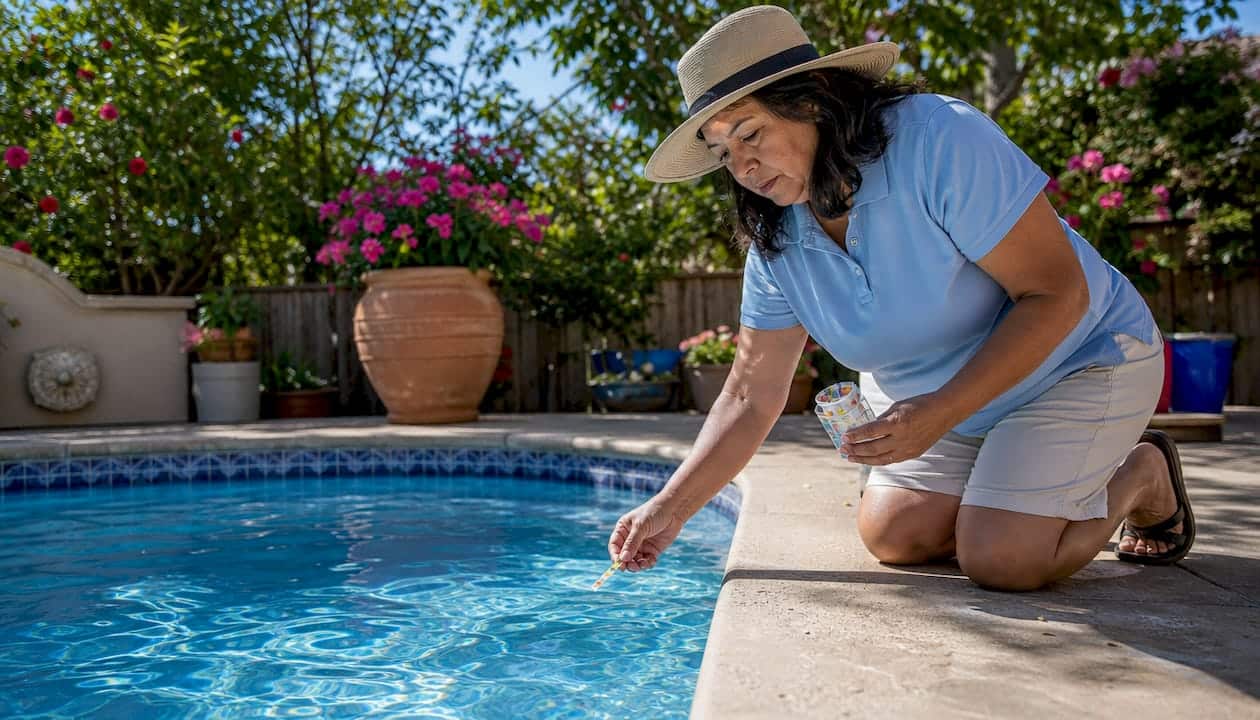
What water chemistry parameters prevent pool stains?
Balanced water chemistry is the single most effective defense against pool discoloration. Proper water balance prevents 89% of common pool staining issues by keeping minerals stable and reducing the conditions that allow deposits to form. That number reflects how much staining is a chemistry problem first and a cleaning problem second.
The three parameters you must control are pH, total alkalinity, and calcium hardness. Each one plays a specific role in stain prevention.
pH (7.2–7.6) is the most critical value to monitor. Low pH makes water corrosive, which leaches metals from pipes and equipment into the water. High pH causes calcium to precipitate out of solution and form white scale deposits on your pool walls.
Total alkalinity (80–120 ppm) acts as a buffer for pH. When alkalinity is too low, pH swings wildly and becomes hard to control. Stable alkalinity means stable pH, which means fewer conditions for staining.
Calcium hardness (200–400 ppm) controls whether water pulls calcium from your pool surface or deposits it. Water that is too soft will leach calcium from plaster or marcite finishes, creating rough, pitted surfaces that trap stains more easily.
| Parameter | Target Range | Effect if Low | Effect if High |
|---|---|---|---|
| pH | 7.2–7.6 | Corrosive water, metal leaching | Scale formation, cloudy water |
| Total alkalinity | 80–120 ppm | pH instability, surface etching | Scaling, reduced chlorine effectiveness |
| Calcium hardness | 200–400 ppm | Surface pitting, plaster erosion | White scale deposits on walls |
| Free chlorine | 1–3 ppm | Organic growth, algae stains | Bleaching, chemical imbalance |
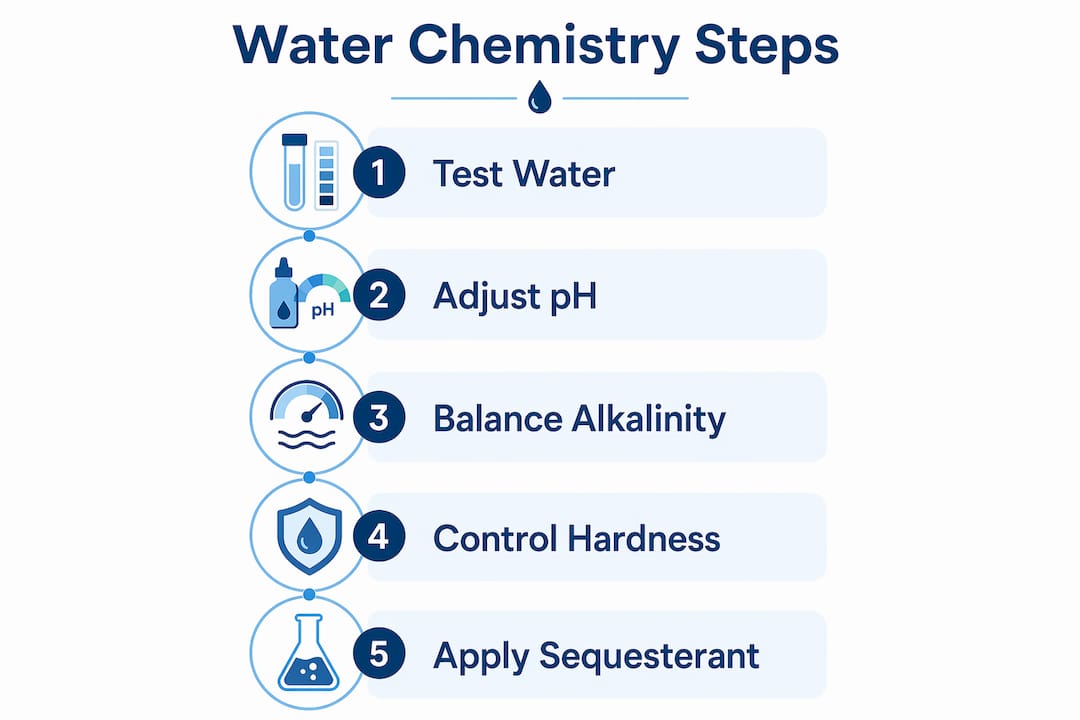
The Langelier Saturation Index (LSI) is the industry standard tool for predicting whether your water will scale or corrode. An LSI value between 0 and +0.3 indicates balanced water. A negative LSI means corrosive conditions; a positive LSI above +0.5 signals scaling risk. Pool professionals use the LSI to catch problems before they show up on the surface.
Pro Tip: Test your water at least twice per week during summer. Florida heat accelerates evaporation and chemical consumption, which shifts your chemistry faster than you expect.
How does regular pool maintenance prevent staining?
Consistent weekly maintenance removes the organic debris and chemical imbalances that cause stains before they bond to your pool surface. No single chemical treatment replaces a steady routine. Think of weekly maintenance as your first line of defense and chemistry as your second.
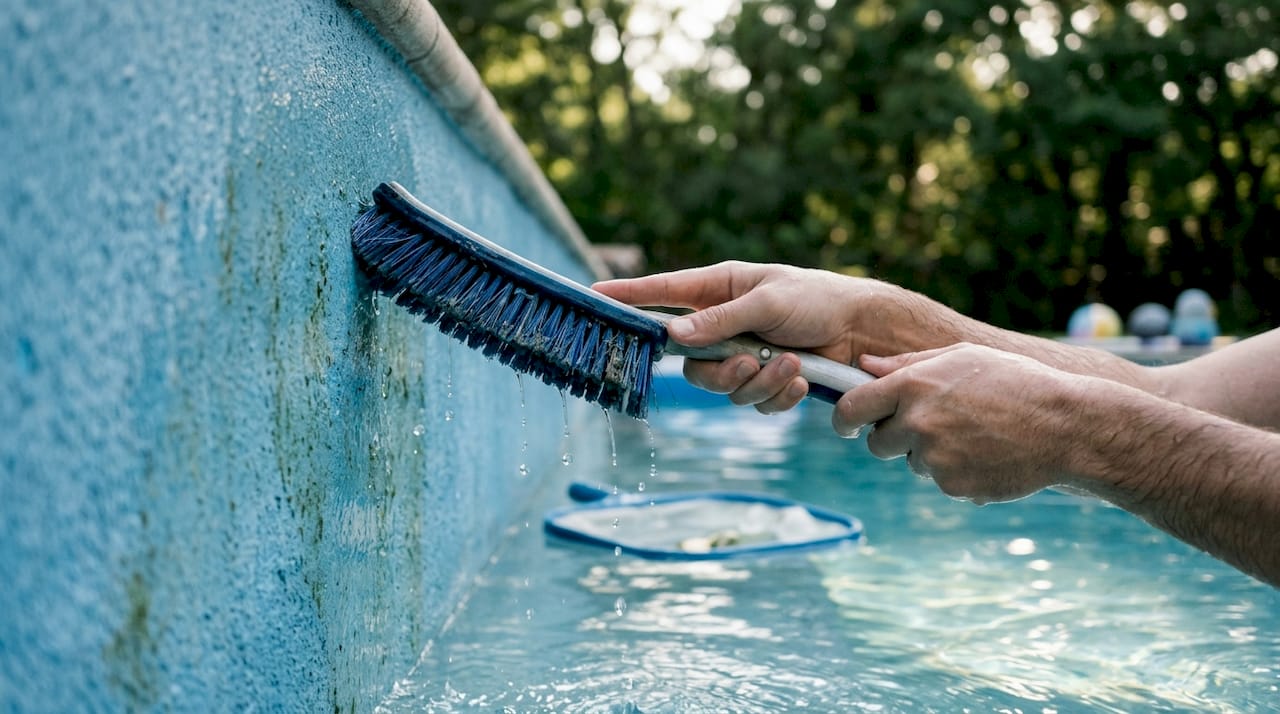
Brushing your pool walls and floor at least twice per week dislodges algae spores and mineral deposits before they set. Organic matter like leaves and oils left sitting on a surface will stain plaster within days, especially in warm water. Skimming the surface daily removes debris before it sinks and decomposes.
Shock treatment is a non-negotiable part of stain prevention. Raising chlorine to 10+ ppm through shock treatment destroys organic contaminants that cause green, brown, and black stains. Lower your pH to 7.2–7.4 before shocking to reduce the risk of oxidizing any dissolved metals in the water, which can darken metal stains if done incorrectly.
Enzyme treatments are underused by most pool owners. Enzymes break down non-living organic contaminants like sunscreen, body oils, and pollen that chlorine alone cannot fully eliminate. These substances accumulate at the waterline and create the familiar brown ring that stains tile and plaster. A monthly enzyme treatment keeps that buildup from bonding to your surface.
Your weekly pool maintenance checklist should include:
- Skim the surface daily to remove floating debris
- Brush walls, steps, and floor at least twice per week
- Test water chemistry twice per week and adjust as needed
- Run the pump and filter a minimum of 8 hours per day
- Shock the pool weekly during summer or after heavy use
- Apply an enzyme treatment monthly to break down organic buildup
- Clean the filter cartridge or backwash the sand filter every 2–4 weeks
Pro Tip: Brush toward the main drain so dislodged particles get pulled into the filtration system rather than resettling on the surface.
Good circulation is as important as chemistry. A pool with dead spots, where water barely moves, accumulates debris and allows algae to establish. Check that your return jets are angled to create a circular flow pattern across the entire pool. If you notice persistent cloudy patches or recurring stains in the same spot, poor circulation is usually the cause.
What role do metals play in pool stains and how to control them?
Metal stains are the most misdiagnosed stain type in residential pools. Pool owners often treat them as algae or organic stains, which makes the problem worse. The three metals responsible for the majority of pool staining are iron, copper, and manganese.
Iron produces rust-colored stains ranging from yellow to dark brown. Copper causes blue-green or teal discoloration. Manganese creates purple or black staining that is often mistaken for algae. Each metal enters the pool through a different source, so identifying the source is the first step in control.
Copper staining frequently originates from corroded heat exchanger coils, particularly when water temperatures exceed 140°F. Heaters operating at high temperatures accelerate copper corrosion, releasing dissolved copper into the water. Iron typically enters through well water or corroded iron pipes and fittings. Manganese is most common in well water and municipal supplies in certain regions.
| Metal | Stain Color | Common Source | Preventive Action |
|---|---|---|---|
| Iron | Yellow to dark brown | Well water, corroded pipes | Hose filter, sequestrant treatment |
| Copper | Blue-green, teal | Heater corrosion, copper algaecides | Monitor heater temp, avoid copper algaecides |
| Manganese | Purple to black | Well water, municipal supply | Pre-fill filtration, sequestrant dosing |
Testing for metals requires a dedicated metal test kit or a professional water analysis. Standard test strips do not measure dissolved metals. Send a water sample to a pool lab if you suspect metal contamination but cannot identify the source. Many pool supply retailers offer free or low-cost water analysis that includes metal screening.
Metal sequestrant treatment every 6–8 weeks is the standard protocol for pools with known metal issues. Maintain sequestrant levels at 30–40 ppm and test monthly to confirm effectiveness. Sequestrants work by binding dissolved metals in the water and keeping them in suspension so the filter can remove them, rather than letting them oxidize and bond to your pool surface. They do not remove metals permanently; they manage them. Consistent dosing is the only way to keep metal staining under control long-term.
Which tools and preventive measures help keep pool stains away?
The right tools make stain prevention far more consistent than manual testing and adjustment alone. Well water introduces metals above 0.3 ppm iron and 0.2 ppm copper that cause staining even before the pool is fully filled. A hose filter with metal removal media attached during filling stops those metals from entering the pool in the first place.
Avoiding copper-based algaecides is one of the most overlooked tips for avoiding pool stains. Many pool owners reach for copper algaecides because they are effective and inexpensive. The trade-off is a steady introduction of dissolved copper into the water, which accumulates over time and eventually stains the surface blue-green. Non-copper algaecides based on polyquaternary ammonium compounds are a better long-term choice.
Automated chemical dosing systems reduce human error by maintaining consistent water balance, preventing a significant share of staining incidents. These systems monitor pH and sanitizer levels continuously and dose chemicals automatically to keep values within target ranges. They are particularly valuable for commercial pools and vacation properties where manual testing is less frequent.
Recommended tools and techniques for preventing stains in pools:
- Hose filter with metal removal media for all fill water
- Digital or liquid test kits for pH, alkalinity, hardness, and metals
- Automatic pool cleaner to reduce debris contact time with the surface
- Sequestrant product dosed every 6–8 weeks for metal control
- Non-copper algaecide for routine algae prevention
- Automated dosing controller for consistent chemistry in high-use pools
- Pool water quality tips reviewed seasonally to adjust your program as conditions change
Regular water testing is the foundation that makes every other tool effective. Test twice per week during peak season and at least once per week in cooler months. Adjust one parameter at a time and retest before making additional changes. Chasing multiple chemistry problems simultaneously is the fastest way to overcorrect and create new issues.
Key Takeaways
Preventing pool stains requires balanced water chemistry, consistent weekly maintenance, and proactive metal control working together as a system.
| Point | Details |
|---|---|
| Water chemistry is the foundation | Maintain pH 7.2–7.6, alkalinity 80–120 ppm, and calcium hardness 200–400 ppm to stop most stains. |
| Weekly maintenance stops organic stains | Brush, skim, shock, and apply enzymes regularly to remove debris before it bonds to the surface. |
| Metal control requires sequestrants | Dose metal sequestrant every 6–8 weeks at 30–40 ppm and test monthly to prevent iron and copper staining. |
| Fill water is a hidden metal source | Use a hose filter during filling if your source water contains iron above 0.3 ppm or copper above 0.2 ppm. |
| Automation reduces human error | Automated dosing systems maintain consistent chemistry and significantly reduce staining incidents in high-use pools. |
What I’ve learned after years of watching pools stain
The most common mistake pool owners make is treating stain prevention as a reactive task. They wait until they see discoloration, then scramble to identify the cause and remove it. By that point, the stain has already bonded to the surface, and removal takes far more time and money than prevention would have.
The second mistake is underestimating metal sources. I’ve seen pools with perfect pH and alkalinity develop copper staining because the owner never checked the heater. Heat exchanger corrosion is a silent contributor that most pool owners never consider until the surface turns teal. Inspect your heater annually and replace corroded components before they release metals into the water.
Consistency beats intensity every time. A pool owner who tests twice per week and makes small adjustments will have a cleaner, stain-free surface than one who does a major chemical overhaul once a month. The surface maintenance guide from Classicmarcite reinforces this point well: routine care preserves the integrity of any pool finish far longer than periodic deep treatments.
If you manage a commercial pool or simply don’t have time for twice-weekly testing, a professional service plan is worth every dollar. The cost of a monthly service visit is a fraction of what you’ll spend on stain removal treatments or, worse, a full resurfacing job that could have been delayed by years with proper care.
— Results
When your pool surface needs more than maintenance

Prevention keeps most stains from forming, but a pool surface that is already pitted, etched, or deeply stained cannot be fully restored through chemistry alone. Classic Marcite has resurfaced over 100,000 pools across Florida since 1988, and the team sees the same pattern repeatedly: years of minor chemistry neglect compound into surface damage that no amount of brushing or sequestrant can fix.
A fresh surface using materials like Pebble Tec® resists staining far better than aged plaster because the finish is denser and less porous. If your pool surface has reached the point where stains return within weeks of treatment, professional pool resurfacing gives you a clean, durable starting point. Classicmarcite offers free estimates for homeowners and property managers across Central Florida and Jacksonville. Contact the team to find out whether your surface needs resurfacing or whether a targeted repair will solve the problem.
FAQ
What causes most pool stains?
Pool stains are caused by three main sources: organic debris like leaves and algae, dissolved metals such as iron and copper, and calcium scale from imbalanced water chemistry. Identifying the stain color helps determine the cause before treatment.
How often should I test pool water to prevent staining?
Test your pool water at least twice per week during summer and once per week in cooler months. Consistent testing lets you catch chemistry shifts before they create conditions that lead to staining.
Can I remove pool stains without draining the water?
Most organic and metal stains can be treated without draining. Ascorbic acid treatments address metal stains, and shock treatments handle organic discoloration. Severe scale deposits may require partial draining and acid washing.
Do copper algaecides cause pool stains?
Yes. Copper-based algaecides introduce dissolved copper into the water, which accumulates over time and causes blue-green staining on pool surfaces. Non-copper algaecides are a safer long-term choice for pools prone to metal staining.
When does a stained pool need resurfacing instead of treatment?
A pool needs resurfacing when the surface is pitted, etched, or repeatedly stains within weeks of treatment. Surface damage that traps stains cannot be corrected through chemistry alone, and a new finish is the most cost-effective long-term solution.