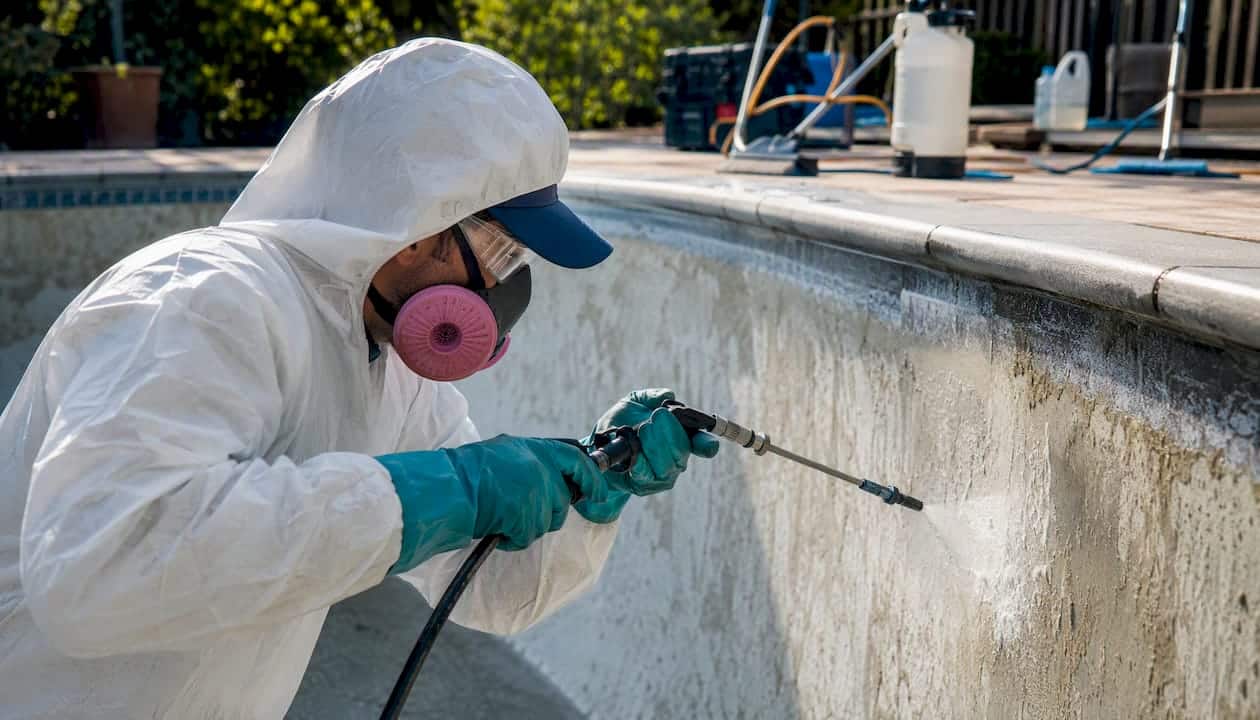
Acid washing is the controlled application of an acidic solution to strip, clean, or etch a surface, removing stains, mineral deposits, or surface layers. It applies across three distinct contexts: pool plaster and gunite interiors, concrete and stone surface preparation, and a textile finishing technique for denim and garments. Each context uses different chemistry, different hazards, and different standards for success. Before you proceed with any acid washing process, three regulatory signals matter immediately: OSHA’s PPE requirements for acid fume exposure, EPA and local wastewater rules for neutralized runoff disposal, and the practical reality that widespread pool staining often signals a resurfacing need rather than a cleaning problem.
- Pools: Muriatic (hydrochloric) acid removes embedded stains and a thin plaster layer. Last-resort use only, not routine maintenance.
- Concrete/stone: Acid etching opens surface pores for coating adhesion. Harmful or destructive on marble, limestone, and some natural stones.
- Fabrics: Oxidizer-based processes partially remove dye for a mottled visual effect. Chemically unrelated to muriatic acid treatments.
- Safety floor: Respirator, acid-resistant gloves, face protection, and a neutralizer on hand before you start anything.
Key Takeaways
Acid washing is a surface-stripping process with legitimate uses across pools, concrete, and fabrics, but it requires correct material identification, full PPE, and immediate neutralization to avoid permanent damage.
| Point | Details |
|---|---|
| Definition and contexts | Acid washing strips or etches surfaces using acid; applies to pool plaster, concrete prep, and textile finishing. |
| Pool use is last resort | Muriatic acid removes a thin plaster layer each time; use only for persistent staining that resists other treatments. |
| Stone damage is permanent | Marble, limestone, and calcium carbonate-based stones etch and pit irreversibly on acid contact. |
| Neutralize immediately | Soda ash or sodium bicarbonate stops ongoing etching; residual acid continues to damage surfaces until neutralized. |
| Classicmarcite recommendation | Widespread or recurring pool staining usually signals a resurfacing need, not a cleaning problem. |
Table of Contents
- What is acid washing, and where does it actually apply?
- How acid washing works on pool interiors
- What acid washing does to concrete and natural stone
- How the acid wash look is created in fabrics
- Why neutralization is the step you can’t skip
- Safety gear and disposal rules you need to know
- When a different method works better than acid washing
- Should you DIY or hire a professional?
- Classicmarcite’s perspective: acid washing vs. resurfacing for pools
- A note on safe, long-term pool care
- Classicmarcite’s pool resurfacing services in Florida
- Sources
What is acid washing, and where does it actually apply?
Acid washing covers very different chemical processes depending on the material, which is why the term can be confusing. A pool contractor and a denim manufacturer both use the phrase, but the chemistry, the risks, and the outcomes have almost nothing in common. The unifying principle is simple: an acid reacts with surface minerals or dyes, breaking them down or dissolving them so the surface changes. What changes, how much, and whether that change is reversible depends entirely on what you’re treating.
Acid washing removes impurities, salts, oils, and old coatings while altering surface texture, making it useful across concrete, pool plaster, ceramics, and textiles. The benefits of acid washing are real, but so are the risks of misapplication. Knowing which surface you have, and which acid process applies to it, is the first decision you need to make correctly.
How acid washing works on pool interiors
Pool acid washing uses muriatic (hydrochloric) acid to dissolve embedded stains, algae residue, and mineral deposits from plaster or gunite surfaces. The acid strips a thin layer of the plaster itself, which is why it’s a last-resort treatment for stubborn staining, not routine maintenance. Every acid wash removes some plaster, and plaster has a finite thickness. Use it too often, and you accelerate the need for full resurfacing.
Before you consider this route, try targeted stain removal treatments first. Acid washing is appropriate when widespread staining persists after brushing, shock treatments, and stain-specific chemicals have all failed.
High-level steps for pool acid washing:
- Drain the pool completely and let the surface dry slightly.
- Wet the interior walls with clean water before applying acid.
- Dilute muriatic acid, apply in small sections starting from the deep end, and scrub each section before moving on.
- Neutralize immediately with soda ash (sodium carbonate) mixed in water, applied to the treated section.
- Rinse thoroughly and collect all neutralized rinse water before refilling.
- Refill only after the entire surface has been neutralized and rinsed.
Pro Tip: Work from the deep end toward the shallow end and keep dwell times short, typically under a minute per section. Longer contact means more plaster removal and higher fume concentration.
One critical safety rule: acid washing is not safe for vinyl or fiberglass pool interiors. Muriatic acid will damage both materials. This process applies only to plaster and gunite pools.
What acid washing does to concrete and natural stone
On concrete, the acid washing process is more precisely called acid etching. Acid etching strips a thin layer from the surface and opens pores to create a profile for coatings, improving adhesion for paint, epoxy, or sealers. If you’re not applying a coating afterward, etching the surface may be the wrong choice entirely. The opened pores and roughened texture serve a purpose only when something bonds to them.
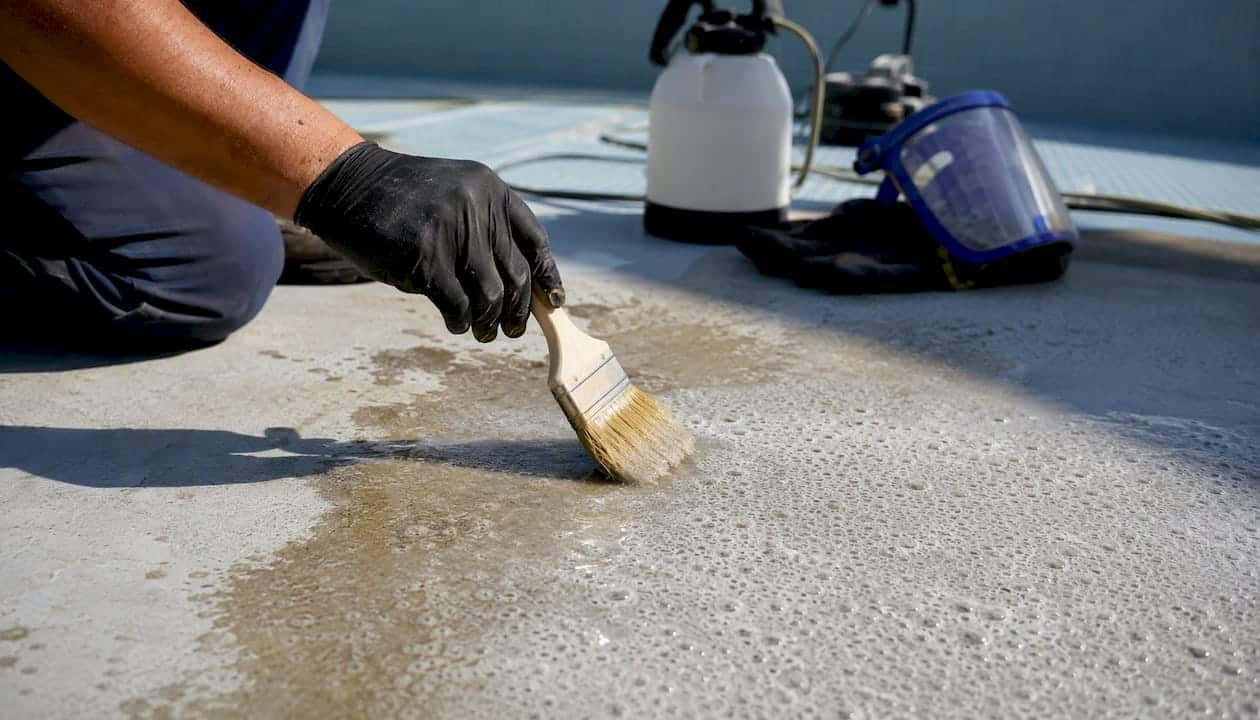
Two acids are commonly used on concrete: hydrochloric (muriatic) acid for aggressive etching and phosphoric acid for a milder, more controlled result. Mechanical grinding or shot-blasting is preferable when you need a precise, consistent profile depth or when acid would contact adjacent stone elements.
Where acid washing goes wrong on stone:
- Marble and limestone are calcium carbonate-based. Acid reacts with calcium carbonate immediately and causes irreversible etching, pitting, and permanent dulling. No sealer prevents this reaction.
- Bluestone and some other natural stones are similarly vulnerable.
- Polished stone surfaces lose their finish permanently on contact with acid, even brief contact.
- Grout lines near concrete can be damaged if acid migrates.
Pro Tip: If your concrete project is near marble thresholds, limestone pavers, or natural stone tile, use phosphoric acid at a low concentration or switch to mechanical prep entirely. The cost of restoration after accidental etching exceeds any savings from using acid.
How the acid wash look is created in fabrics
In textiles, “acid wash” refers to a finishing technique that partially removes dye from fabric to create a mottled, high-contrast appearance. Despite the name, the process typically uses oxidizing agents rather than the strong mineral acids used on pools and concrete. Potassium permanganate, bleach, or similar oxidizers are applied with pumice stones or through a controlled soak, producing lighter patches against a darker base.
- The mechanical abrasion from pumice distributes the chemical unevenly, which creates the characteristic contrast pattern.
- Different oxidizers produce different tonal results: bleach tends toward stark white patches, while permanganate creates more gradual fading.
- The process weakens fibers over time, reducing garment longevity if the treatment is aggressive or poorly neutralized.
- Industrial textile processes include a neutralization step to stop ongoing oxidation. Skipping it causes continued color loss and fiber degradation after the garment leaves the facility.
The chemistry here is genuinely different from muriatic acid used on pools or concrete. Treating these as interchangeable, in either direction, creates serious hazards. The term ‘acid wash’ spans different chemical families depending on the application, and the safety protocols for each are specific to that chemistry.
Why neutralization is the step you can’t skip
Acids react with surface minerals by dissolving them. The visible fizzing during an acid wash is carbon dioxide gas releasing as the acid breaks down calcium carbonate compounds. That reaction continues as long as acid remains in contact with the surface. It does not stop on its own when you walk away.
- Continuous etching: Residual acid keeps reacting until fully diluted or chemically neutralized. A surface left with acid present will continue to lose material.
- Common neutralizers: Soda ash (sodium carbonate) or baking soda (sodium bicarbonate) mixed with water raises the pH and stops the reaction. Apply immediately after rinsing each section.
- Disposal: Neutralized rinse water must be collected and disposed of according to local wastewater rules. Many municipalities prohibit acid runoff, even diluted, from entering storm drains.
- Fume control: Muriatic acid releases hydrogen chloride gas on contact with surfaces. Work in open, ventilated areas and keep application sections small to limit fume concentration.
Always add acid to water, never water to acid. Reversing the order causes a violent exothermic reaction that can splash concentrated acid.
Safety gear and disposal rules you need to know
Acid washing requires specific PPE before you open the container. This is not optional equipment.
- Respirator: Rated for acid fumes (organic vapor/acid gas cartridge, minimum). A dust mask provides no protection against hydrogen chloride gas.
- Eye and face protection: Chemical splash goggles plus a face shield. Safety glasses alone are insufficient.
- Gloves and clothing: Acid-resistant gloves (nitrile or neoprene), long sleeves, and acid-resistant boots or shoe covers.
- Eye-wash access: A clean water source for immediate eye flushing must be within reach before work begins.
Work-practice controls matter as much as PPE. Apply acid in small sections, neutralize immediately, and never allow treated runoff to flow toward storm drains, vegetation, or metal infrastructure. Acid corrodes metal drains and kills vegetation on contact.
Consult OSHA’s Hazard Communication Standard (29 CFR 1910.1200) for worker protection requirements and your local EPA-affiliated wastewater authority for disposal rules. Some municipalities require pH testing of rinse water before it can enter any drain system.
When a different method works better than acid washing
Acid washing is not always the right tool. Several alternatives produce better results with less risk, depending on the surface and the goal.
- Pressure washing: Effective for loose surface grime, mold, and algae on concrete or pool decks. No chemical hazard, no surface stripping. Use this first before considering acid.
- Hydroblasting: High-pressure water removes surface contaminants and some coatings without acid chemistry. Useful for pool interiors when staining is moderate.
- Mechanical grinding or shot-blasting: Produces a controlled, consistent surface profile on concrete. Preferred when precise coating adhesion depth matters or when acid would contact adjacent stone.
- Pool resurfacing: When plaster is pitted, rough, or repeatedly staining, resurfacing addresses the underlying surface condition rather than treating symptoms. Marcite plaster and Pebble Tec® finishes provide durable, long-lasting results.
- Fabric-safe bleaching or garment dyeing: For textile effects, controlled bleach dilutions or professional dyeing techniques achieve similar visual results with less fiber damage than aggressive oxidizer treatments.
Pro Tip: Surface grinding or resurfacing costs more upfront than acid washing, but produces predictable results and avoids chemical runoff. Acid washing applied to a surface that actually needs resurfacing often accelerates deterioration.
Should you DIY or hire a professional?
DIY acid washing is reasonable under a specific set of conditions: a small, well-understood surface area, confirmed material compatibility (plaster or gunite only for pools; plain concrete for surfaces), full PPE on hand, and local regulations that permit disposal of neutralized rinse water. If all four conditions are met, a careful homeowner can handle a small acid wash job.
Hire a professional when any of the following apply:
- Large surface area: Fume exposure accumulates over time. Large jobs require professional ventilation controls.
- Older or fragile finishes: Thin plaster, aged concrete, or unknown surface history increases the risk of over-etching.
- Material uncertainty: If you’re not certain whether a surface contains marble, limestone, or another acid-sensitive stone, stop. Irreversible etching on calcium carbonate stone requires professional restoration.
- Confined spaces: Pool interiors concentrate fumes. Professionals use forced-air ventilation equipment.
- Resurfacing may be the better answer: If signs of pool surface damage include deep pitting, rough texture, or recurring staining, acid washing is a temporary measure at best.
Red flags that mean call a pro immediately:
- Marble, limestone, or natural stone present anywhere near the work area
- Vinyl or fiberglass pool interior
- Visible deep pitting or structural cracking in the plaster
- Storm drains within the potential runoff path
Classicmarcite’s perspective: acid washing vs. resurfacing for pools
Classicmarcite has resurfaced over 100,000 pools since 1988, and the pattern is consistent: pools that come in for acid washing often need resurfacing instead.
The practical decision framework Classicmarcite applies:
- Acid washing is appropriate when staining is localized, the plaster is in otherwise sound condition, and the pool has not been acid washed recently.
- Resurfacing is the right choice when staining is widespread, plaster is rough or pitting, the pool has been acid washed multiple times, or when the homeowner wants a durable, long-term result.
Resurfacing with marcite plaster or Pebble Tec® finishes replaces the degraded surface entirely, producing a result that lasts years rather than months. For residential pools and commercial properties alike, that durability difference is significant. Repeated aggressive surface treatments accelerate the timeline to full replacement; a single resurfacing job resets it.
A note on safe, long-term pool care
Acid washing has a legitimate place in pool maintenance, but it’s an aggressive, short-term measure. When the surface condition is the underlying problem, treating it chemically buys time without solving anything. Classicmarcite’s approach is to assess the actual surface condition first, recommend acid washing only when it’s genuinely the right tool, and offer resurfacing when the plaster has reached the end of its useful life. That distinction, made early, saves pool owners from repeated treatments that cost more in aggregate than a single resurfacing job.
Classicmarcite’s pool resurfacing services in Florida

When acid washing reveals that your pool’s plaster is past its useful life, Classic Marcite provides professional resurfacing across Orlando and Jacksonville, Florida. With over 100,000 pools resurfaced since 1988, the team diagnoses surface conditions accurately and recommends the right finish for your pool’s age, use, and budget. Marcite plaster and Pebble Tec® options deliver durable, visually appealing results that outlast repeated chemical treatments by years. Property managers and homeowners across Central Florida rely on Classicmarcite for assessments that are honest about whether acid washing or resurfacing is actually the right call. Get a free estimate for pool resurfacing in Orlando or explore the full range of resurfacing materials and finishes to find the right fit for your pool.
Sources
- Why does marble etch? | Rose Restoration
- How to Acid Wash Concrete (Concrete etching) – Concrete Network
- Acid Wash – an overview | ScienceDirect Topics
- Acid Washing 101 | PoolPro Magazine
- How to Acid Wash a Pool: Steps and Safety | AIPer
- How to Acid Wash a Pool Surface Safely? | Sandals Luxury Pools
- What Does Acid Wash Do? A Deep Dive Into Its Uses, Benefits, and Precautions – ThePoolAndLawn