TL;DR:
- A pool scupper is a decorative water outlet that creates a controlled sheet or stream into a pool for aesthetic and circulation purposes. It functions with a dedicated pump and does not drain water, helping aerate, mask noise, and regulate temperature. Proper installation and maintenance are essential, and integrating scuppers during remodeling ensures optimal performance and visual appeal.
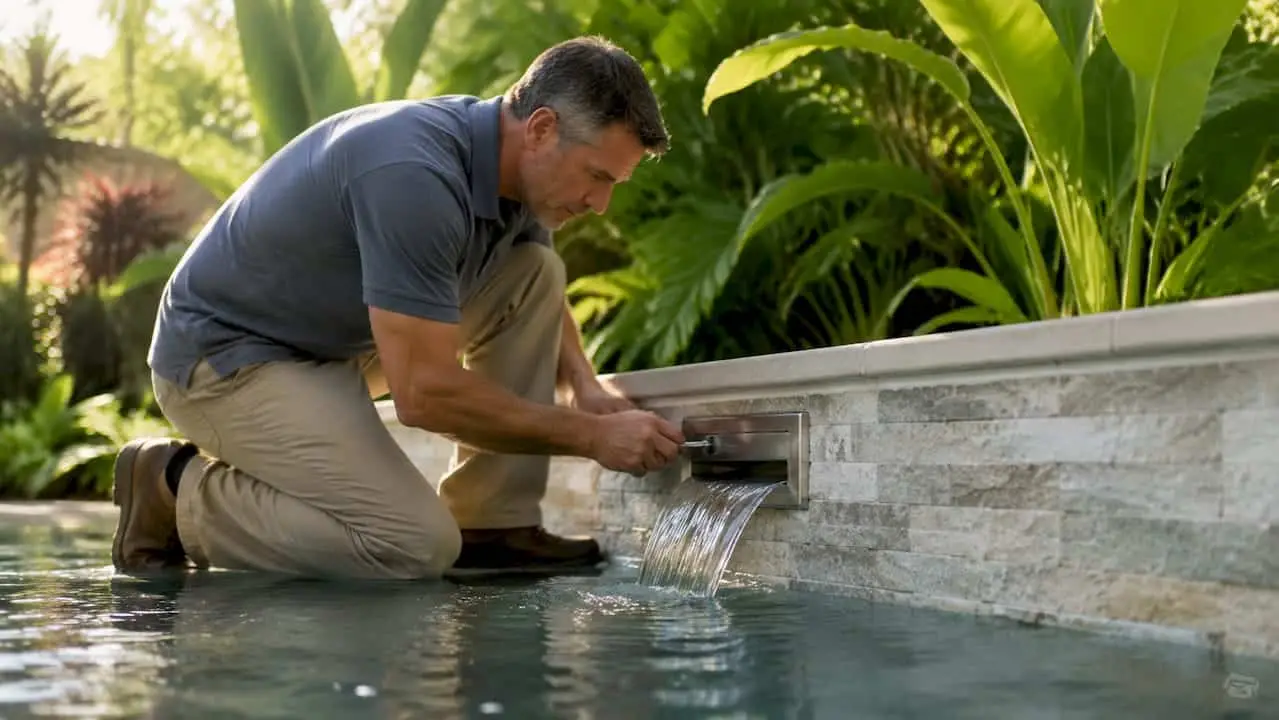
A pool scupper is a wall-mounted water feature that directs a controlled sheet or stream of water into a pool, powered by the pool’s plumbing system and designed primarily for aesthetics and water circulation. Homeowners often confuse scuppers with drainage devices, but they serve the opposite purpose. They recycle pool water through a dedicated circuit, creating a waterfall effect that adds visual appeal and functional aeration. If you have been wondering what is pool scupper and whether one belongs in your backyard, this guide covers everything from how they work to how to maintain them.
What is a pool scupper and how does it work?
A pool scupper is defined as a decorative outlet, typically mounted on a raised wall, spa edge, or retaining structure, that channels water in a smooth arc or sheet into the pool below. The pool scupper definition is rooted in architecture: the term originally described openings in ship hulls or building parapets that allowed water to escape. In pool design, the concept is reversed. Water flows out of the scupper and into the pool, not away from it.
Here is how the mechanism works:
- The pool’s plumbing system, or a dedicated pump, draws water from the pool and pushes it through supply lines to the scupper housing.
- Water exits the scupper opening under pressure, creating a sheet, arc, or spout effect depending on the nozzle design.
- The water falls back into the pool, completing a closed loop that continuously recycles the same water.
- Tuned valves control the flow rate, which determines whether you get a thin, elegant sheet or a heavier cascade.
- Scuppers do not drain excess water or affect the pool’s water level. They are circulation features, not drainage systems.
The distinction from actual pool drainage systems matters. Skimmers and main drains handle filtration and water removal. Scuppers handle aesthetics and aeration. Mixing up these roles leads to poor planning decisions and disappointing results.
Pro Tip: Never run scuppers off the main pool pump if you want a consistent, elegant water sheet. A dedicated pump gives you independent flow control and prevents the “dribble effect” that happens when the main pump cycles on and off.
What are the real benefits of pool scuppers?
Most homeowners add scuppers for looks. They stay for the functional advantages that show up in water quality, energy use, and daily comfort.
1. Aeration and water quality
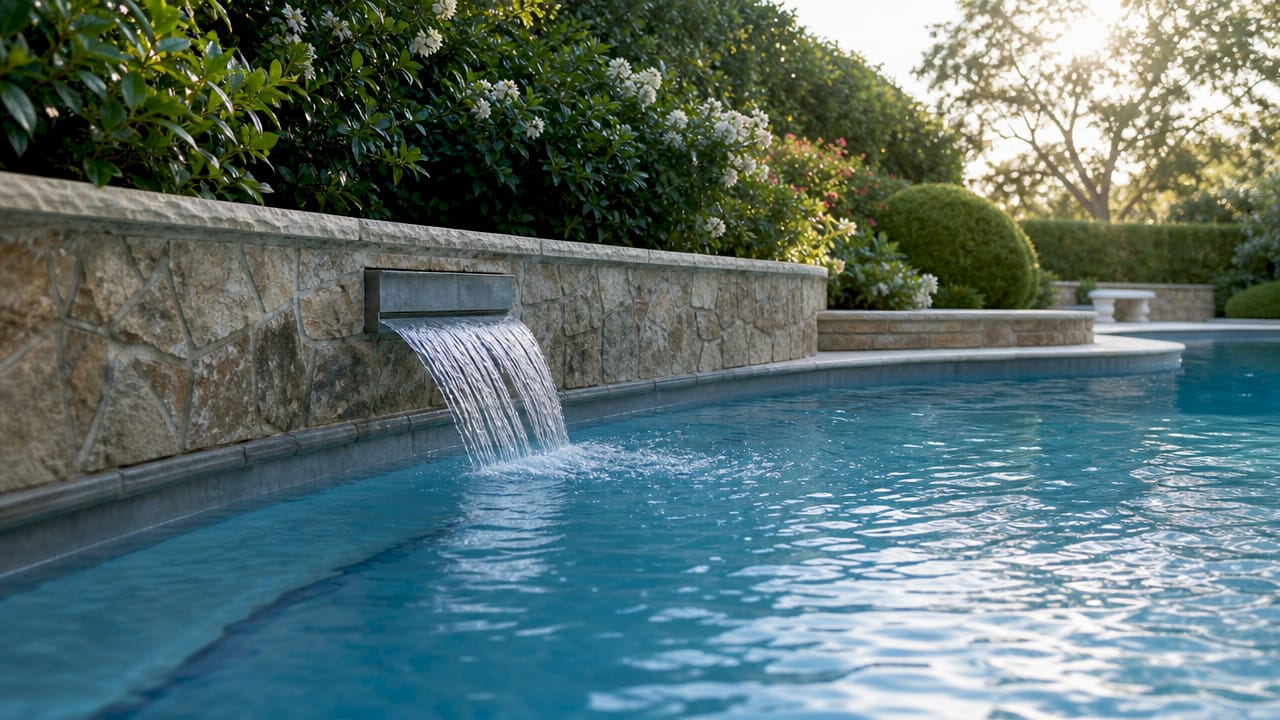
Scuppers aerate pool water by infusing oxygen as water breaks the surface on impact. Higher oxygen levels reduce stagnation and support healthier water chemistry. Properly installed scuppers can also improve chlorine efficiency by maintaining more consistent water circulation and temperature. That means your filtration system works less hard to keep the water clean, which extends equipment life.
2. Noise masking
The sound of cascading water is not just pleasant. It is functional. Homeowners report that scuppers effectively mask street noise, neighbor activity, and general suburban background noise. The result is a backyard that feels genuinely private, even in a dense neighborhood. This sensory benefit is one of the most underrated reasons to add a scupper during a pool remodel.
3. Temperature regulation
Moving water loses heat faster than still water. Scuppers help keep pool temperatures slightly cooler during hot Florida summers by increasing surface agitation and evaporation. For homeowners who find their pool uncomfortably warm in july and august, this is a real and measurable comfort improvement.
4. Resort-style ambiance
Scuppers create a multi-sensory experience that transforms a standard backyard pool into something that feels intentional and designed. The sight of a clean water arc and the sound of falling water together produce the kind of atmosphere you associate with high-end hotels and resort pools. That perception of quality adds genuine value to the property.
What types of pool scuppers are available?
Pool scuppers come in a wide range of styles and materials. The right choice depends on your pool’s architecture, your aesthetic preference, and your budget.
Sheer descent vs. spout-style scuppers
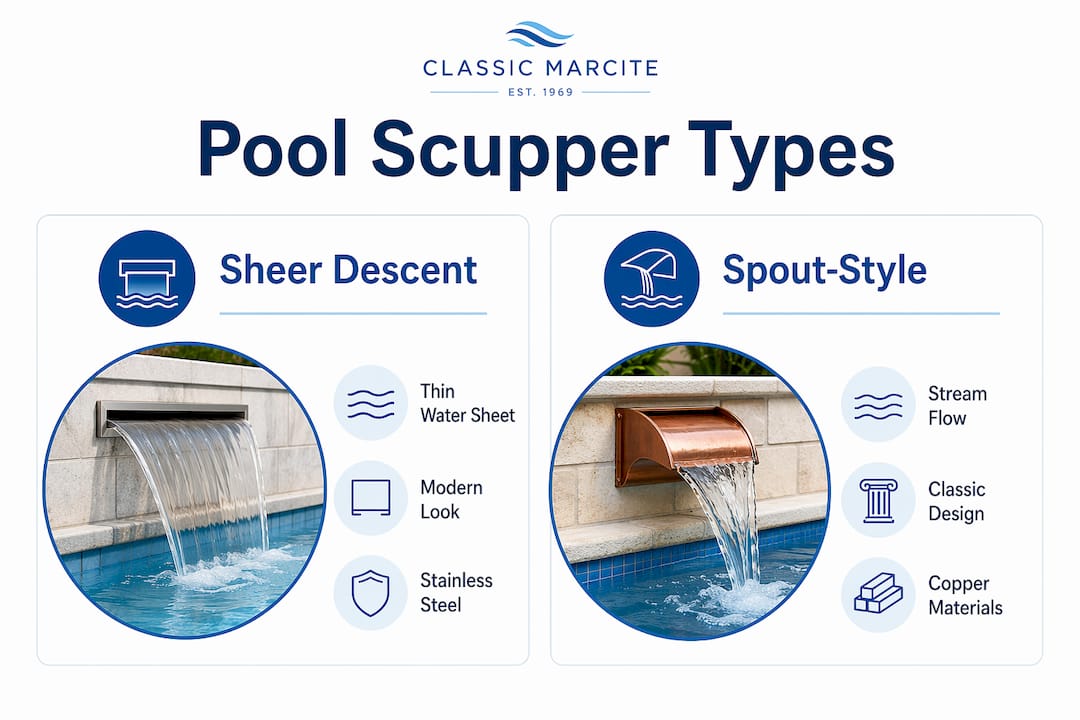
| Type | Water Effect | Best For | Common Materials |
|---|---|---|---|
| Sheer descent | Thin, flat sheet of water | Modern, minimalist pools | Stainless steel, copper |
| Spout style | Arcing stream or jet | Classic, Mediterranean designs | Stone, tile, bronze |
| Lion’s head or mask | Decorative stream from a sculpted face | Rustic, traditional aesthetics | Cast stone, ceramic |
| Trough scupper | Wide, even curtain of water | Contemporary, resort-style pools | Stainless steel, concrete |
Modern pool scuppers are available in copper, stainless steel, stone, and tile, giving designers and homeowners flexibility to match any visual style. Copper develops a natural patina over time, which suits rustic or tropical designs. Stainless steel stays clean and sharp, which suits contemporary architecture.
Placement options
- Raised spa walls: Scuppers mounted on a raised spa allow water to flow from the spa level down into the main pool. This is one of the most common and visually effective placements.
- Retaining walls: A long retaining wall with multiple evenly spaced scuppers creates a dramatic, symmetrical water curtain effect.
- Architectural features: Scuppers can be built into columns, pergola bases, or custom water walls to serve as standalone focal points.
Scuppers on raised spas also help manage water flow between different pool elevations, which adds both visual cohesion and practical function to multi-level aquatic setups. You can browse residential pool designs to see how different placements look in real Florida backyards.
How do you install and maintain pool scuppers?
Installation quality determines whether your scupper looks elegant or frustrating. Poor planning at the plumbing stage is the most common reason scuppers underperform.
Key installation considerations:
- Dedicated pump: Running scuppers off the main pool pump compromises flow consistency. A separate pump gives you independent control and prevents the main circulation system from being affected when the scupper runs.
- Valve tuning: Precise valve adjustment controls the flow rate. Too little pressure produces a dribble. Too much creates turbulence instead of a clean sheet.
- Pipe sizing: Undersized supply lines restrict flow and create noise inside the wall. Size pipes to the scupper manufacturer’s specifications.
- Wall waterproofing: The area behind and around the scupper housing must be properly waterproofed to prevent water intrusion into the wall structure.
- Scupper height: The drop distance from the scupper outlet to the pool surface affects the sound and visual impact. A longer drop creates more sound and splash. A shorter drop creates a quieter, more subtle effect.
Scuppers are best added during a pool remodeling project rather than as a standalone retrofit, because plumbing integration is far cleaner when walls and surfaces are already being reworked.
Maintenance is straightforward but non-negotiable. Routine cleaning of the scupper opening prevents mineral buildup, algae, and debris from clogging the outlet. A clogged scupper does not just look bad. It can back up water into the supply line and stress the pump.
- Brush the scupper opening weekly during heavy use seasons.
- Check the pump strainer basket monthly.
- Inspect the outlet for calcium deposits and treat with a diluted acid wash as needed.
- Confirm water flow is even across the full width of the opening after cleaning.
Pro Tip: If your scupper starts producing an uneven or split water sheet, the outlet is likely partially blocked. Clean it before assuming the pump has failed. Most “pump problems” with scuppers are actually clogging issues.
Key takeaways
A pool scupper is a circulation and aesthetic feature, not a drainage device, and its performance depends entirely on proper plumbing design and consistent maintenance.
| Point | Details |
|---|---|
| Scuppers are not drains | They recycle pool water through a closed loop and do not affect water level or skimmer function. |
| Dedicated pump is required | Running scuppers off the main pump causes inconsistent flow and the “dribble effect.” |
| Aeration improves water quality | Scuppers infuse oxygen, reduce stagnation, and can improve chlorine efficiency. |
| Material choice affects style | Copper, stainless steel, and stone each suit different pool aesthetics and maintenance levels. |
| Maintenance prevents failure | Weekly cleaning of the scupper outlet prevents clogging and protects pump performance. |
The part most homeowners get wrong about scuppers
Homeowners consistently underestimate how much the plumbing design matters. They see a beautiful scupper in a showroom or a neighbor’s pool and assume installation is simple. Then they get a dribble instead of a waterfall, or an uneven sheet that looks worse than no scupper at all.
The most common mistake is connecting the scupper to the main pool pump to save money on equipment. That decision almost always produces disappointing results. The main pump cycles based on filtration needs, not scupper aesthetics. When the pump slows down or redirects flow, the scupper suffers. A dedicated pump costs more upfront but pays for itself in consistent performance and fewer service calls.
The second mistake is treating scuppers as an afterthought. Homeowners who add scuppers during a full pool renovation get cleaner plumbing, better wall integration, and lower labor costs than those who retrofit them later. If you are already planning a resurface or remodel, that is the right time to add a scupper.
My honest advice: choose the scupper style you want first, then design the plumbing around it. Most people do it backward. They pick a pump, run whatever pipe fits, and then wonder why the water sheet looks thin and uneven. Start with the visual outcome you want and work backward to the engineering.
— Classicmarcite
Planning a pool upgrade? Scuppers fit naturally into a full remodel
Adding a scupper to an existing pool is possible, but the results are best when it is part of a broader renovation. Resurfacing the pool at the same time means the plumbing penetrations are sealed properly, the wall finish matches the scupper housing, and the entire project is completed in one mobilization.

Classic Marcite has resurfaced over 100,000 pools across Orlando and Jacksonville since 1988, and water feature integration is a standard part of the remodeling process. Whether you are considering a pool resurfacing in The Villages or a full pool remodel in Orlando, the team can plan scupper placement, plumbing, and finish materials together. That coordination is what separates a scupper that looks like a showroom feature from one that looks like an afterthought. Request a free estimate to see what is possible for your pool.
FAQ
What is the pool scupper definition in simple terms?
A pool scupper is a wall-mounted outlet that channels a stream or sheet of water into a pool for decorative and aerating purposes. It is powered by the pool’s plumbing system and does not drain water out of the pool.
Does a pool scupper affect the water level?
No. Scuppers recycle pool water through a closed loop and do not drain excess water or interfere with skimmers, so the pool’s water level stays stable.
How much does it cost to install a pool scupper?
Installation costs vary widely based on size, materials, and plumbing complexity, ranging from a few hundred dollars for basic units to several thousand dollars for custom stone or copper features integrated into a full remodel.
What is the best material for a pool scupper?
Stainless steel suits modern pools with its clean look and low maintenance. Copper works well for rustic or tropical designs and develops a natural patina. Stone and tile options blend into the pool’s existing finish for a more integrated appearance.
Can I add a scupper to an existing pool?
Yes, but retrofitting a scupper requires cutting into existing walls and running new plumbing lines, which increases labor costs. Adding a scupper during a pool resurfacing project is more cost-effective and produces cleaner results.
