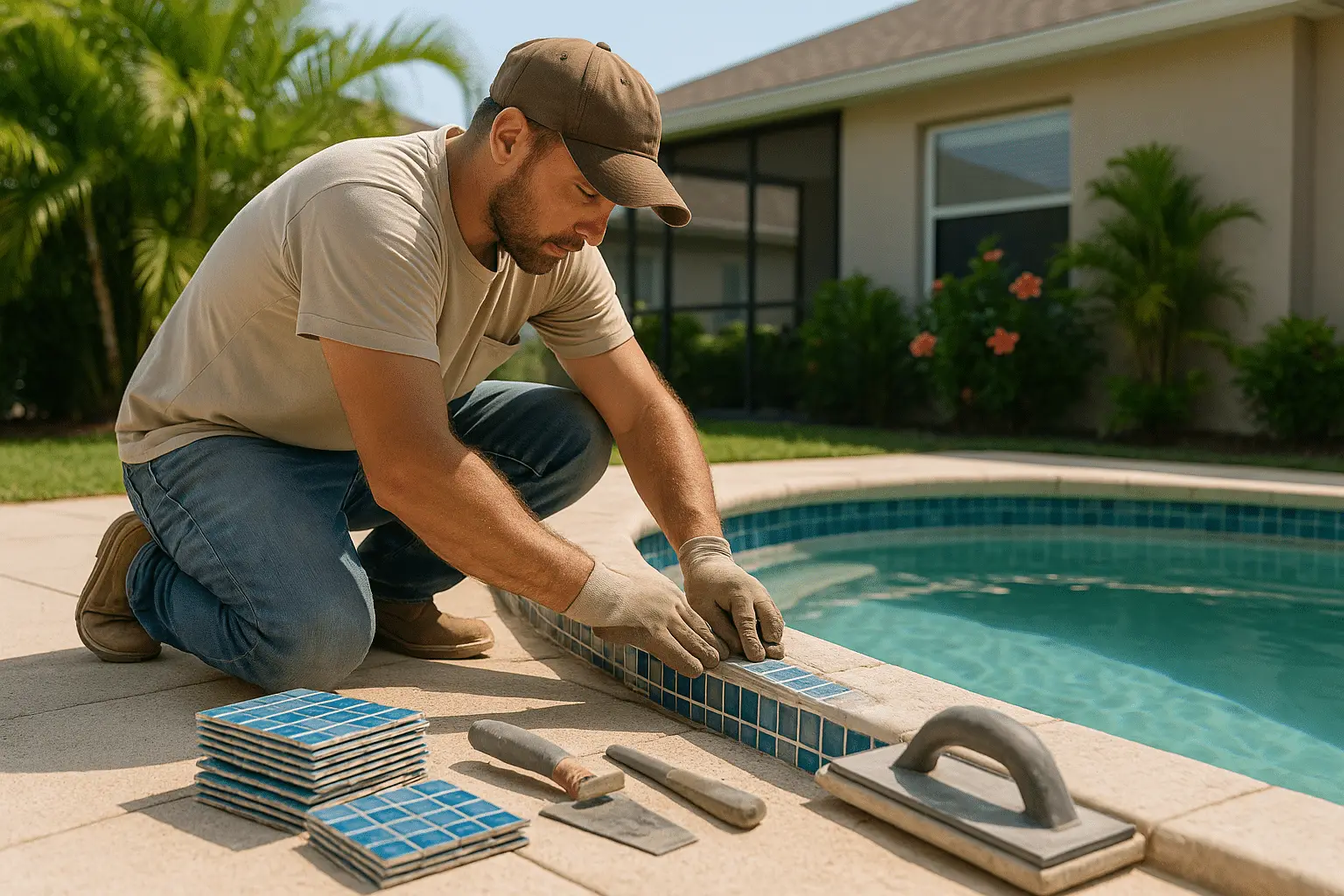
TL;DR: Pool tile and waterline replacement swaps out the cracked, loose, or scale-crusted band of tile that circles a pool at the water’s surface, along with its grout and bond coat. In Central Florida’s hard water, waterline tile takes a harder beating than almost any other pool surface, so knowing when to replace versus clean, and how to choose slip-resistant, code-compliant tile, protects both your pool and your budget.
The waterline tile band is the narrow strip of tile that runs around the top edge of a pool, right where the water surface sits. It looks decorative, but it does a real job: it protects the pool shell from the constant evaporation line, hides the transition between the interior finish and the deck, and gives the pool a finished edge. When that tile cracks, loosens, or turns permanently white with scale, replacement is usually the only lasting fix.
What Pool Tile and Waterline Replacement Actually Involves
Waterline tile replacement means removing the existing tile band (and often the grout and a thin layer of bond coat beneath it), then installing new tile, grout, and sealant along the same line. On a full renovation, this is usually paired with interior resurfacing, since draining the pool and prepping the shell is required for both jobs anyway.
A typical replacement sequence looks like this:
- Drain the pool and inspect the substrate behind the tile line
- Remove old tile, grout, and any degraded bond coat or plaster ledge
- Repair or re-form the substrate where tile popped off due to bond failure
- Set new tile with waterproof, pool-rated adhesive and grout
- Reseal and cure before refilling
Because a full or partial drain is already happening, most homeowners in Orlando, Winter Park, College Park, Pine Castle, and Meadow Woods choose to combine waterline tile work with interior pool resurfacing or a broader renovation rather than doing tile alone.
Why Central Florida’s Water Makes This a Bigger Deal Here
Waterline tile takes more abuse in Central Florida than in most parts of the country, for one simple reason: the water is hard. Orlando’s municipal water measures an average
of 129 ppm (mg/L), which converts to roughly seven grains per gallon (gpg)
. Much of Florida’s calcium load comes straight from the ground: the state sits on
a karst topography with a porous limestone Floridan Aquifer
that dissolves calcium into groundwater and municipal supplies alike.
That matters at the waterline because of simple evaporation chemistry.
Calcium deposits form when hard water minerals precipitate out of pool water and adhere to surfaces, and evaporation at the waterline concentrates minerals as water evaporates
. Every pool loses water to evaporation year-round in this climate, so that band of tile is essentially where the pool’s hardest mineral deposits collect, day after day.
Light scale can often be cleaned. But once grout has broken down or tile has debonded from years of that cycle, cleaning won’t fix it, and that’s when replacement becomes the right call. If you’re also seeing rough or flaking plaster near the tile line, it’s worth reading our guide on why pool plaster peels and how it’s fixed, since both issues often show up together on aging pools.
Signs You Need Waterline Tile Replacement (Not Just Cleaning)
- Cracked or chipped tiles that expose the substrate underneath
- Loose or missing tiles anywhere along the band
- Grout that’s crumbling, gapping, or missing between tiles
- Scale that won’t come off even after cleaning, meaning it’s likely etched into a damaged glaze or the grout underneath has failed
- Discoloration or dark staining that suggests water is getting behind the tile
Pool professionals generally agree the deciding factor is condition, not just appearance: scale can be removed if the tile and grout are otherwise sound, but tiles should be replaced once the grout underneath has failed, since cleaning a loose or crumbling tile line only delays a bigger repair.
How to Choose the Right Waterline Tile
1. Slip Resistance
Any tile near or in the pool that people might stand on while wet has a real safety standard behind it.
ANSI A137.1:2022, the Standard Specifications For Ceramic Tile, requires tile flooring products to have a DCOF of 0.42 or greater if recommended for use in a level interior space intended to be walked upon when wet
. For pool-specific applications, the bar is higher:
wet areas where light or no footwear is used, including pool decks, steam rooms and showers, should carry a DCOF of 0.60 or greater
. Florida’s own permitting checklists reflect this concern directly — for example, Indian River County’s swimming pool application requires that
tiles located inside the pool that provide footing for bathers be slip-resistant, with tile carrying a minimum DCOF of 0.43
. Ask your contractor for the DCOF rating of any tile you’re considering, especially for steps and benches.
2. Material
- Glazed ceramic or porcelain — the standard for most residential pools, durable and widely available in a huge range of colors and patterns
- Glass tile — higher-end look, reflects light well, but generally needs gentler cleaning methods since aggressive scale removal can haze the surface
- Natural stone accents — used sparingly on luxury renovations, but more porous and typically pricier to maintain
3. Color and Scale Visibility
Lighter grout and lighter tile show mineral scale faster and more visibly than darker options. If low-maintenance appearance matters to you, ask about grout color and tile tone specifically with Central Florida’s hard water in mind.
4. Coordinating With Your Pool Finish
Waterline tile replacement is a good moment to reconsider your whole interior finish. If you’re weighing plaster against Pebble Tec® or other aggregate finishes for durability and appearance, our quartz vs. plaster pool finish guide breaks down what lasts longer in Florida’s climate.
Pros and Cons of Waterline Tile Replacement
Pros
- Permanently resolves scale that cleaning can no longer remove
- Fixes the structural cause (failed grout or bond) rather than masking it
- Refreshes the entire look of the pool, often for a fraction of a full remodel’s cost
- Efficient to pair with resurfacing since the pool is already drained
Cons
- Requires draining the pool, so it’s not a same-day fix
- New tile can still develop the same scale ring over time if water chemistry isn’t maintained
- Matching discontinued tile styles on a partial repair can be difficult
Electrical and Code Considerations Around the Waterline
Pools in Florida are also subject to strict electrical bonding rules that a tile or renovation crew needs to respect during any work near the shell.
NEC Article 680.26, as adopted by Florida, requires a No. 8 AWG solid copper bonding conductor connecting all metallic pool components
, and
that conductor must trace a perimeter path that intersects with pool reinforcing steel at a minimum of four points evenly distributed around the pool shell
. This is one more reason waterline and tile work on an older pool should go through a licensed, insured crew familiar with Florida’s pool codes rather than a handyman patch job.
When It Matters Most
- Aging pools (15+ years): original tile and grout are past their expected service life
- Homes you just bought with an older pool: tile condition is a common surprise for new owners in established neighborhoods like College Park and Pine Castle
- Before selling: a scaled, cracked waterline is one of the first things buyers and inspectors notice
- HOA and community pools: commercial-grade wear plus liability around slip resistance make timely replacement a compliance issue, not just cosmetic
- Hotels and resorts: guest-facing pools need to look flawless and meet slip-resistance standards for liability protection
If you’re planning a broader project, our pool renovation services in Maitland page outlines how tile, resurfacing, and deck work often come together in one visit for Central Florida homeowners.
The Bottom Line
In a region with mineral-heavy water and pools that run nearly year-round, waterline tile is going to need attention eventually — the only real question is whether you catch it at the cleaning stage or the replacement stage. A quick inspection from a licensed pool company can tell you which one you’re dealing with before it becomes a bigger repair.
Recommended Reads
- Pool Resurfacing & Remodeling Company In Orlando, FL
- Pool Renovation In Maitland, FL | Classic Marcite
- Pool Resurfacing In Orlando, FL & Beyond | Classic Marcite
