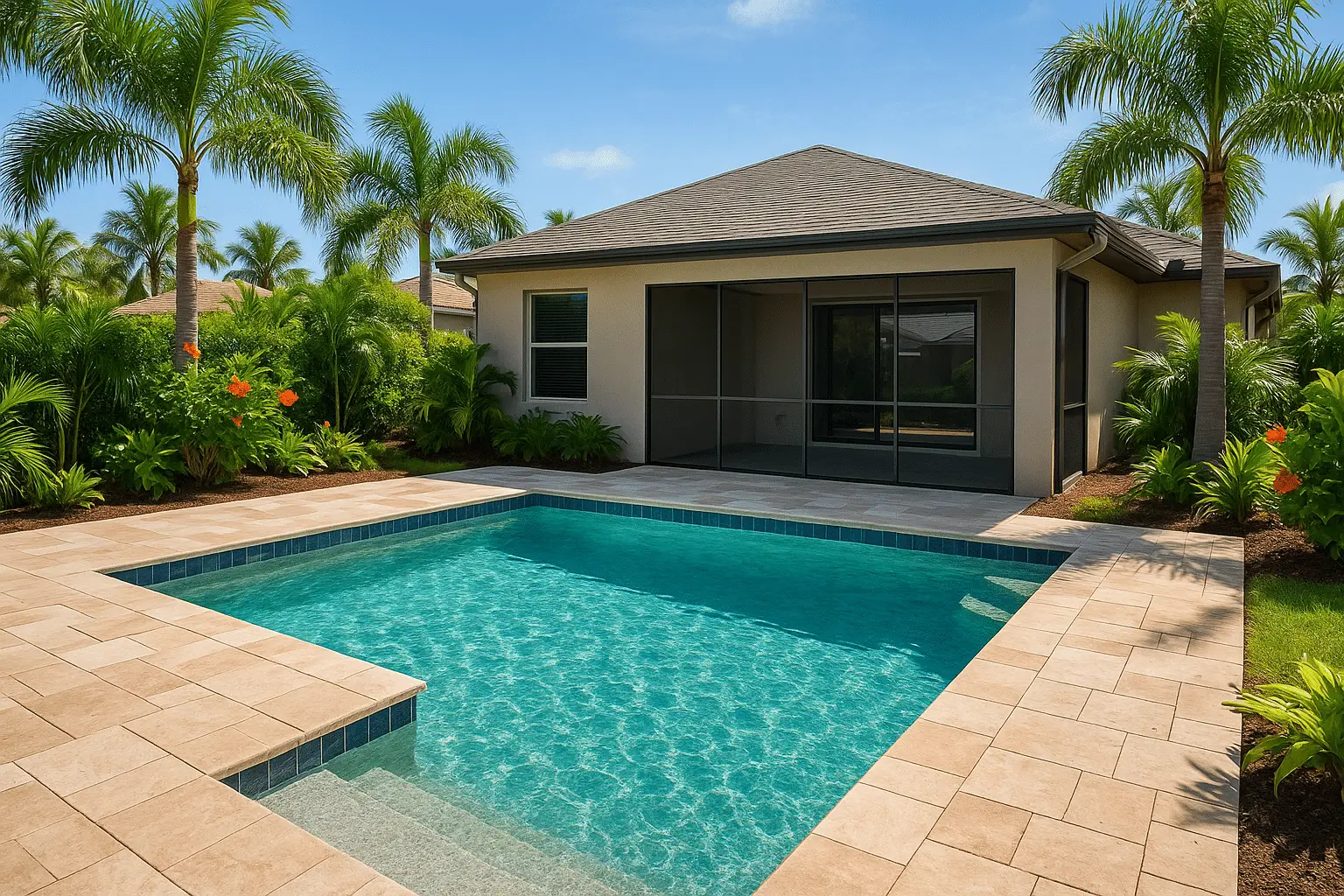
TL;DR: Pool remodeling in Florida ranges from simple finish and tile upgrades to full deck, lighting, and safety overhauls, and a well-planned renovation can meaningfully boost your home’s resale value. This guide breaks down 10 practical remodeling ideas Central Florida homeowners, HOAs, and property managers can use to plan a project that fits their budget and goals.
If your pool looks tired, stains easily, or just feels stuck in the decade it was built, you don’t have to start over. A targeted remodel can modernize the look, fix underlying problems, and make the space safer and more efficient without the cost of a full rebuild. Here are 10 ideas Florida homeowners, HOAs, and property managers are using to transform aging pools into backyard centerpieces.
1. Upgrade to a Pebble Finish for a Natural, Long-Lasting Look
Swapping plain white plaster for an exposed-aggregate pebble finish is one of the highest-impact remodeling moves you can make.
Pebble typically lasts 15–20+ years versus 7–12 for standard plaster, resists staining and etching better, and hides minor blemishes and mottling that would show on white plaster.
Unlike plaster or pool liners, Pebble finishes are resistant to natural discoloration and do not require chemicals to maintain color vibrancy.
If you’re weighing your finish options, this Pebble Tec vs. Marcite comparison breaks down the tradeoffs in plain terms.
2. Compare Pebble Sheen, Pebble Fina, and Pebble Tec Before You Commit
Not every pebble finish looks or feels the same. Pebble Tec has a more pronounced natural-stone texture, Pebble Sheen is smoother and finer, and Pebble Fina sits in between. Since each option affects cost, texture underfoot, and long-term maintenance differently, it’s worth reviewing a side-by-side Pebble Sheen vs. Pebble Fina vs. Pebble Tec comparison before finalizing your remodel plan.
3. Try Beadcrete for a Reflective, Modern Water Color
If you want something different from traditional pebble, Beadcrete uses recycled glass beads blended into the finish to create a shimmering, light-reflective surface with a distinctive water tone. It’s a newer option for homeowners who want their remodel to stand out. Learn more in this Beadcrete pool finish guide to see if it fits your design goals.
4. Replace Waterline Tile and Coping for an Instant Facelift
Old, cracked, or discolored waterline tile is one of the fastest ways a pool reveals its age. Replacing tile and coping refreshes the entire visual line of the pool and is commonly bundled with resurfacing to save on labor and drain-down costs. Bundling resurfacing, tile replacement, and coping into one project
combines resurfacing, tile replacement, and coping installation into a single project, the pool only needs to be drained and prepped once
, which
saves significantly on labor, setup, and water costs.
5. Resurface the Deck to Match Your New Finish
A brand-new pool interior can look mismatched next to a cracked, faded, or slippery deck. Resurfacing the deck with a cool-touch, textured, or stamped overlay ties the whole space together and addresses trip hazards at the same time. In Southwest Florida,
travertine or porcelain deck renovations typically run $18–$45 per square foot.
6. Upgrade to a Variable-Speed Pump
Older single-speed pumps are inefficient and often one of the biggest energy drains in a home. According to the EPA’s ENERGY STAR program,
certified pool pumps use 70 percent less energy and save thousands of dollars in energy costs
compared to standard models, and
variable speed pumps are quieter, require less maintenance and last longer.
The energy savings add up quickly, since
reducing pump speed by one-half allows the pump to use just one-eighth as much energy.
A pump swap is a smart add-on to bundle into a larger remodel.
7. Add LED and Fiber-Optic Lighting
Modern LED and fiber-optic lighting upgrades transform how a pool looks and functions after dark, and they’re relatively affordable compared to structural work. In the Naples/Estero market,
LED lighting and fiber optic accents typically run $3,200–$7,500.
Color-changing LEDs paired with smart controls are increasingly expected in higher-end remodels.
8. Add a Sun Shelf, Spa, or Water Feature
If your pool’s structure is sound, adding a tanning ledge, attached spa, or waterfall can make an older pool feel brand new without a full rebuild. In coastal Southwest Florida markets,
an attached spa or sun shelf addition runs $12,000–$28,000.
These additions work especially well for homeowners who want resort-style features without expanding the pool’s footprint.
9. Modernize Safety Features During the Remodel
A remodel is the right time to reassess pool safety, especially for families with young children or properties open to the public. The CDC recommends that
homes construct and use a four-sided fence that is at least four feet in height and fully encloses the pool, separating the pool from the house with self-closing and self-latching gates.
The Consumer Product Safety Commission also recommends layered protection:
a fence with self-closing, self-latching gates completely surrounding pools, plus door alarms or a power safety cover where the house forms part of the barrier.
This matters because
CPSC data shows an average of 379 reported pool-or-spa related fatal drownings involving children younger than 15 each year, with children younger than 5 accounting for about 75 percent of these drownings.
HOAs and hotel/resort operators in particular should confirm their barriers, covers, and alarms meet current guidelines during any renovation.
10. Fix Structural Issues Before You Focus on Looks
It’s tempting to jump straight to finishes and tile, but any remodel should start with an honest look at the shell, plumbing, and equipment. Cracks, popping, drain issues, or persistent leaks need to be resolved first, or new cosmetic work will fail early. If you’re not sure whether your pool needs cosmetic work or something more serious, this rundown of warning signs your pool needs resurfacing is a good starting point, and knowing how long pool resurfacing takes helps you plan around pool downtime.
What a Remodel Typically Costs
Budgets vary widely based on scope. Nationally,
pool remodeling costs $10,481 on average, with projects ranging from $1,600 to $30,000 based on scope.
More comprehensive projects that touch the surface, tile, coping, and deck typically
range from $15,000 to $50,000
, while in Central Florida specifically,
pool resurfacing runs $9,500–$22,000, with pebble finishes remaining the most requested option.
Does a Pool Remodel Pay Off?
Beyond enjoyment, a remodel can protect your home’s value at resale. In the Tampa market,
a modernized pool typically yields a return on investment between 40% and 50% upon resale,
and
buyers in Central Florida expect a pool to be move-in ready, not a project waiting to happen.
On the flip side,
an outdated or damaged pool can knock $10,000 to $20,000 off a home’s value during negotiations.
For sellers, real estate agents, and HOA boards managing shared amenities, that gap makes remodeling a financially sound move, not just a cosmetic one.
Planning Your Remodel
The best remodels start with a clear-eyed assessment of the shell, equipment, and finish age, then layer in the upgrades that matter most to how you use the pool. Whether that’s a new Pebble Tec surface, updated tile, a more efficient pump, or better safety barriers, bundling projects together saves money and minimizes how long your pool is out of commission.
Recommended Reads
- 7 Warning Signs Your Pool Needs Resurfacing
- How Long Does Pool Resurfacing Take? A Step-by-Step Timeline
- Pebble Tec vs. Marcite: Which Pool Finish Is Right for Your Florida Pool?
