TL;DR: Marcite is the classic, budget-friendly pool finish that lasts 7–12 years but struggles in Florida’s heat, UV, and rain. Pebble Tec costs more upfront but can last 20–25+ years with far less maintenance. Your choice comes down to budget horizon, how long you plan to stay in the home, and how much hands-on upkeep you want.
You’re standing at the edge of an aging, chalky pool trying to decide whether to go with the same white marcite your pool has always had — or finally upgrade to Pebble Tec. Both choices are valid. But in Florida’s climate, the decision carries more weight than it does almost anywhere else in the country.
This guide breaks down exactly what each finish is, how they compare on durability, cost, feel, and appearance, and which one fits different types of pool owners. No upselling — just the facts.
What Is Marcite?
Marcite is the traditional pool finish that has defined backyard pools for decades. Many of the pools we inspect for resurfacing still have their original marcite coat from the 1990s — sometimes older.
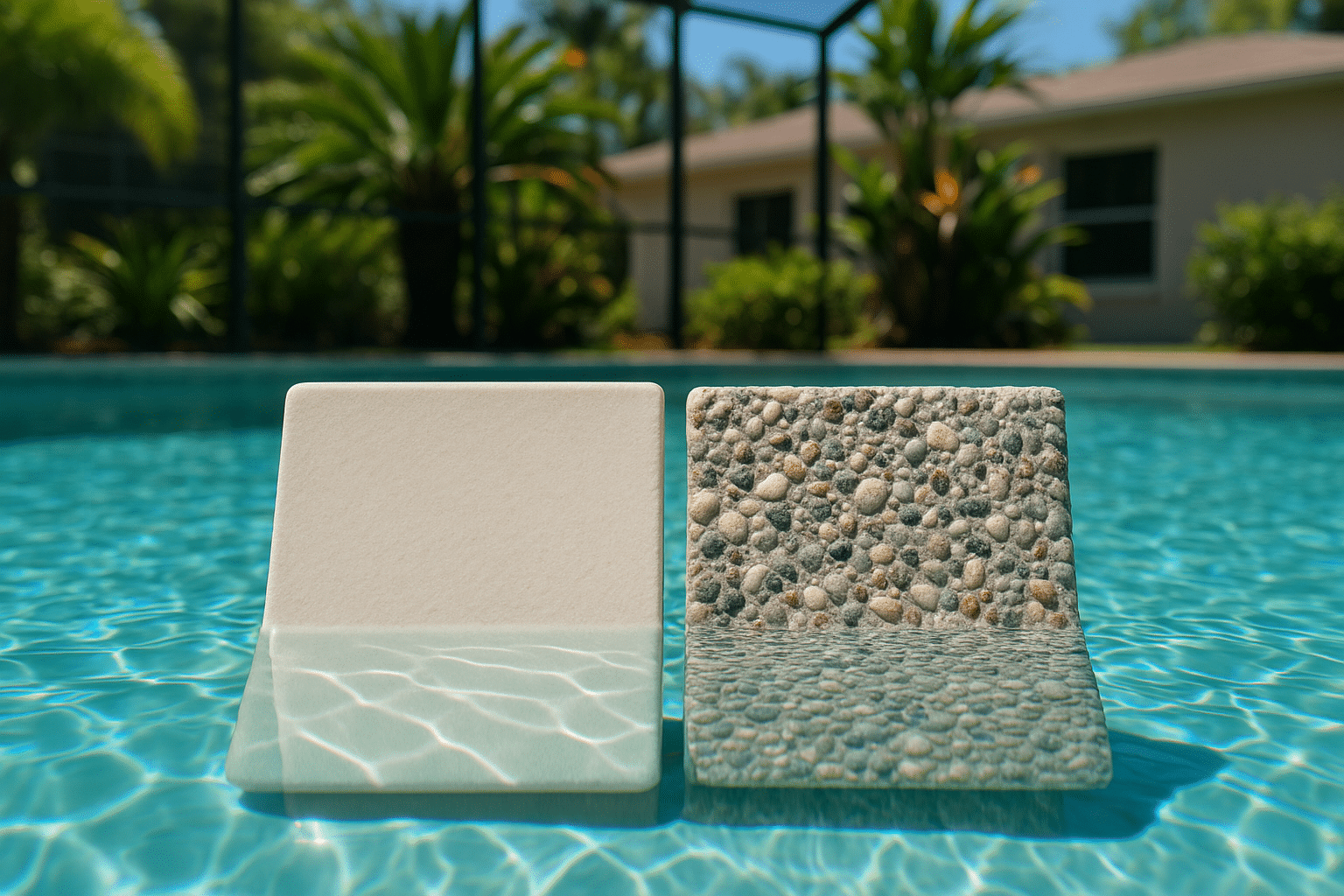
Chemically, marcite is a mixture of white Portland cement, marble dust, and water. When troweled onto the gunite shell, it cures into a smooth, bright-white surface that gives pool water that crisp, light-blue color most people picture when they think of a swimming pool.
The terms “marcite” and “plaster” are used interchangeably throughout the industry, and for good reason — they describe essentially the same product. What sets marcite apart from basic plaster is the marble dust (calcium carbonate), which gives it a finer, smoother finish.
How Marcite Is Applied
Plasterers mix the wet material and apply it over the dried gunite shell. The crew trowels it until the cement “cream” — a thin protective layer of calcium carbonate and cement — rises to the surface. That protective cream is roughly the thickness of two or three sheets of paper. Once applied, the pool is filled with water immediately, because marcite cures underwater.
The practical takeaway: that ultra-thin cream layer is marcite’s biggest structural weakness. Imbalanced water chemistry can dissolve it surprisingly fast.
What Is Pebble Tec?
Pebble Tec is a brand-name aggregate finish made by Pebble Technology International. It uses natural river pebbles mixed with hydraulic cement — no calcium carbonate, no marble dust. The entire coating, roughly 2½ inches thick, is the same material all the way through, not a layered system with a fragile cream on top.
After certified crews apply the mix pneumatically to the pool shell and hand-trowel it, they wash away the surface cement to expose the natural stone. The result is a textured surface that looks like the floor of a mountain stream — and structurally behaves like one, too.
Classic Marcite is the largest Pebble Tec® applicator in Central Florida and is also licensed to install Pebble Sheen®, Pebble Fina®, and Beadcrete® finishes — each a variation in stone size and texture:
- Pebble Tec® — the original; larger, more textured stone. Visible pebbles, natural earthy feel underfoot.
- Pebble Sheen® — smaller aggregate, smoother than classic Pebble Tec, still highly durable.
- Pebble Fina® — the finest aggregate of the line; closest to a plaster look with pebble-grade durability.
- Beadcrete® — glass bead aggregate that produces a shimmering, jewel-like water color.
Marcite vs. Pebble Tec: Side-by-Side Comparison
Lifespan
This is the starkest difference. In Florida’s climate, marcite typically lasts 7–12 years before it needs to be resurfaced. Hard water, acidic rain, and intense UV all accelerate its wear. Pebble Tec, by contrast, is widely rated at 20–25+ years with proper water chemistry — often outlasting two full marcite cycles.
The structural reason goes back to composition: Pebble Tec’s pure cement-and-stone matrix resists acid far better than marcite’s thin calcium carbonate cream layer, which dissolves quickly when pH dips out of range.
Florida’s Climate Is Hard on Both Finishes — But Especially on Marcite
Florida isn’t just warm — it’s a legitimately punishing environment for pool surfaces. UV index regularly reaches 9 to 11 during summer months — rated “very high” to “extreme” by EPA standards. That constant UV bombardment breaks down chemical bonds in pool finishes, causing color fading and surface weakening. Florida’s frequent acidic rain further accelerates erosion, particularly in cement-based finishes like marcite.
Humidity promotes algae growth on smoother surfaces, and marcite’s porous structure gives algae a place to establish. A pebble finish’s textured surface provides fewer flat zones where algae can take hold, which translates to lower chemical consumption and reduced brushing requirements over time.
Texture and Feel
Marcite feels smooth, almost like the inside of a bathtub. Many swimmers prefer it, especially families with young children or sensitive skin.
Classic Pebble Tec has a rougher, more natural feel — like walking barefoot on a streambed. Pebble Sheen and Pebble Fina narrow that gap considerably. Pebble Fina, in particular, is designed for people who love the look of traditional plaster but want aggregate-grade durability.
Texture also affects safety: aggregate finishes provide more traction on steps and ledges than smooth marcite, which can become slippery when wet.
Appearance and Color Options
Fresh marcite creates a clean, classic white that produces bright blue water. The color palette is limited — marcite can be dyed in a narrow range of blues and grays, but dyed plaster is more prone to streaking and uneven fading. Most experienced contractors hesitate to use deep dyed marcite because imperfections show dramatically.
Pebble Tec finishes come in dozens of blended color palettes. Because the color runs through the entire aggregate rather than sitting as a surface dye, it holds vibrancy far longer. The water color produced also tends to be richer — deeper blues, greens, and aquas depending on the blend chosen.
Maintenance Requirements
Marcite demands strict water chemistry. Because it constantly reacts with chemicals, minerals, and pH shifts, staining, etching, mottling, and erosion can appear quickly if chemistry lapses. Marcite pools need weekly brushing to prevent algae from embedding in the porous surface, and they’re particularly vulnerable to acidic water.
Pebble Tec is more forgiving of minor chemical fluctuations. It still requires proper maintenance, but it doesn’t punish small lapses as severely. This is a meaningful advantage in Florida, where heavy summer rain events can dilute pool chemistry significantly — sometimes within hours.
Cost
Upfront, marcite is the less expensive option. Plaster/marcite resurfacing typically runs $5–$8 per square foot, while Pebble Tec runs $10–$20 per square foot depending on finish type, pool size, and market conditions. For a typical Florida residential pool, that means a marcite job might cost several thousand dollars less at the time of service.
But the long-term math often flips the equation. Marcite may need resurfacing every 7–10 years; Pebble Tec can go 20–25 years. Factor in the cost of each resurfacing cycle plus the higher chemical spend with a plaster finish, and pebble frequently comes out ahead over a 20-year ownership window.
For current pricing specific to Central Florida pools, see our 2026 pool resurfacing cost guide.
Which Finish Is Right for Your Situation?
Choose Marcite If:
- You’re on a strict budget and need the most affordable resurfacing option right now.
- You’re preparing to sell the home and simply need a clean, bright finish that photographs well.
- The pool has structural issues that need to be addressed first, and you want a lower-cost interim finish.
- You or your swimmers strongly prefer a smooth, traditional pool feel.
Choose Pebble Tec (or a Pebble Finish) If:
- You’re planning to stay in the home for many years and want a finish that won’t need replacing for two decades.
- You want significantly more color and aesthetic choice — resort-style looks, rich water colors, shimmering finishes.
- You want lower long-term maintenance demands and more tolerance for chemistry fluctuations.
- You’re managing an HOA pool, hotel, or commercial property where durability and reduced service interruptions matter.
- You’re doing a full pool renovation and want everything done once, done right.
A Note for HOA Boards and Property Managers
For community pools, hotel pools, and resort pools, the calculus almost always favors pebble finishes. Commercial pools face heavier bather loads, tighter health code compliance windows, and less tolerance for closures. A marcite finish that requires resurfacing every 7–10 years means more frequent pool closures and disruption. The higher upfront investment in a pebble finish typically pays for itself in reduced maintenance cycles and fewer service interruptions.
Installation: Why the Applicator Matters
Pebble Tec is not a DIY product and is not available through general contractors. It can only be installed by certified applicators trained and authorized by Pebble Technology International. The application process — pneumatic spray, hand troweling, and pebble exposure — requires both equipment and technique that take years to develop.
At Classic Marcite, every crew member is a direct employee — not a subcontractor. That means the same trained hands are on every job, whether it’s a single-family home in Orlando or a resort-scale commercial renovation in Jacksonville. If you want to understand the full process from drain to swim-ready, our step-by-step resurfacing timeline walks through exactly what to expect.
The Bottom Line
Marcite is a proven, economical finish with a lower entry cost — but in Florida’s UV-intense, storm-heavy climate, it asks more of you and gives fewer years in return. Pebble Tec costs more upfront and delivers a fundamentally different ownership experience: longer life, better appearance over time, and less anxiety about every rain event upsetting your chemistry.
Neither finish lasts forever without care. But given Florida’s environment, most homeowners who do the math end up choosing pebble — and rarely look back.
Classic Marcite has been resurfacing pools across Central Florida and Northeast Florida since 1988, with more than 100,000 pools completed. We offer free estimates and transparent pricing. Contact us to schedule a free estimate and we’ll tell you exactly which finish makes sense for your pool, your budget, and your goals.
Recommended Reads
- 7 Warning Signs Your Pool Needs Resurfacing
- How Long Does Pool Resurfacing Take? A Step-by-Step Timeline
- How Much Does Pool Resurfacing Cost in Central Florida? (2026 Pricing Guide)