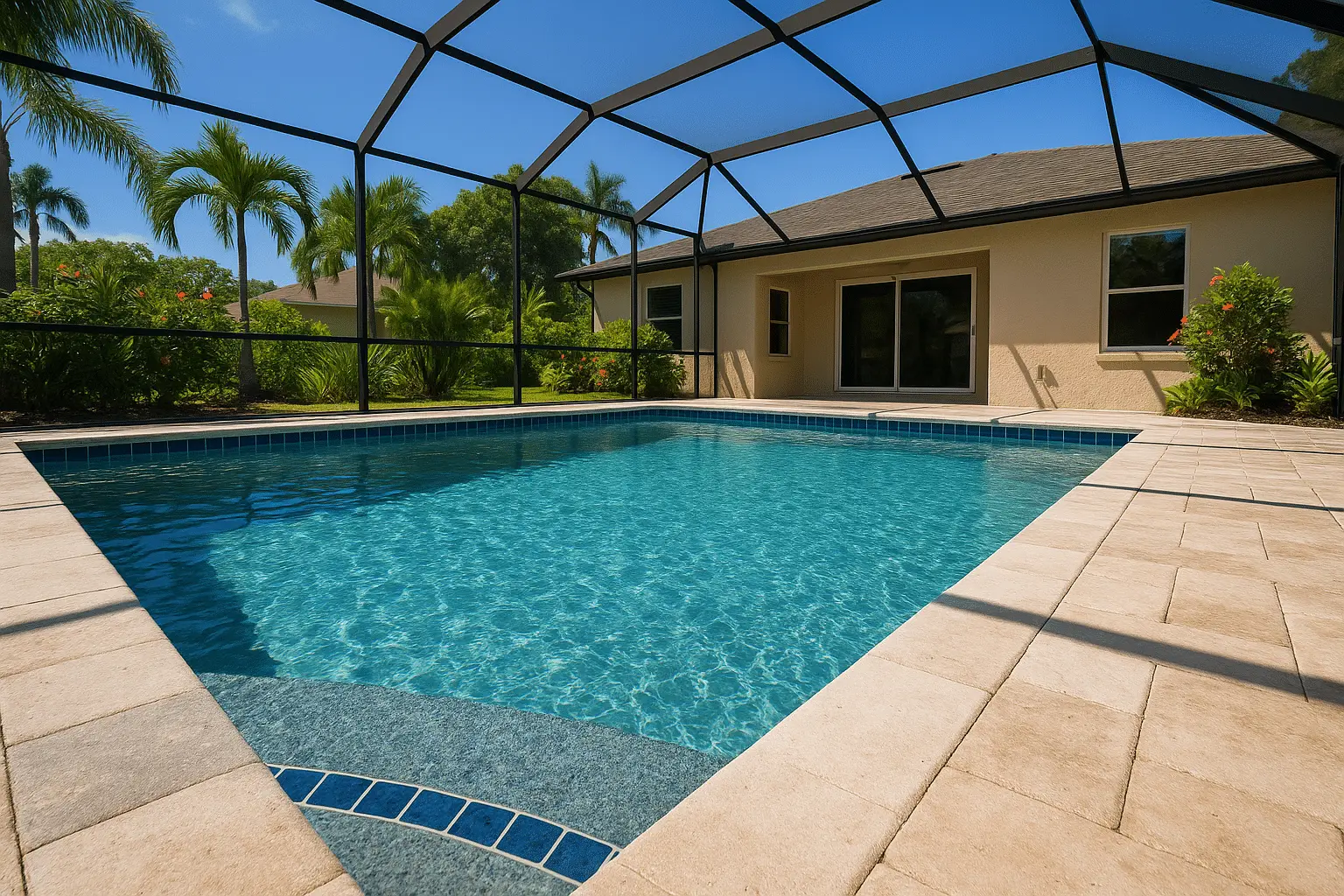
TL;DR: Pool resurfacing doesn’t add value the way a new pool does, but it protects and unlocks the value a pool already carries by removing the deal-killing red flags — rough surfaces, stains, and visible cracks — that make buyers and appraisers discount a home. In Central Florida, where pools are a near-standard amenity, a resurfaced pool helps your home compete rather than get passed over.
If you own a home in Orlando, Winter Park, College Park, Pine Castle, or Meadow Woods with an aging pool, you’ve probably asked some version of this question: is it worth spending thousands of dollars to resurface a pool before you sell, refinance, or just enjoy it for the next decade? The honest answer is more nuanced than a simple yes or no, and it depends on whether you’re measuring appraised value, sale price, buyer perception, or avoided losses.
This guide breaks down what resurfacing actually does for home value in a Florida market, what the national remodeling data says, and when the investment makes the most financial sense.
First, a Key Distinction: Adding a Pool vs. Resurfacing One
Most of the widely cited pool ROI statistics are about installing a brand-new pool, not resurfacing an existing one. According to the National Association of Realtors’ 2023 Remodeling Impact Report on outdoor features,
the typical cost of an in-ground pool addition is $90,000, and it earned the highest possible Joy Score of 10 among the 11 outdoor projects surveyed
. However,
high Joy Scores did not correspond with high cost recovery — the in-ground pool addition actually had the lowest cost recovery of any project studied, at 56%
.
That means even brand-new pool construction, in a national sample, typically returns about half its cost at resale. Resurfacing is a different animal. It’s not a new amenity, it’s maintenance on an amenity your home already has. You’re not creating pool value from scratch; you’re protecting value that already exists and removing the condition issues that make buyers and appraisers discount it.
How Pool Condition Affects Appraised and Sale Value
An appraiser doesn’t look at your pool as a stand-alone asset the way they would a bathroom remodel. Instead, a worn-out pool functions more like a liability sitting next to your biggest backyard feature. Visible plaster cracks, chalky or discolored surfaces, exposed rebar, and stained waterline tile all signal deferred maintenance, and buyers in Central Florida’s competitive resale market will use that condition to justify a lower offer or ask for a credit at closing.
This matters even more in a region where a pool is close to a standard expectation rather than a luxury extra. Homes throughout Orlando, Winter Park, and the surrounding suburbs routinely compete against other pool homes in the same price bracket, so a rough, dated, or visibly deteriorating pool doesn’t just fail to add value, it can actively work against you compared to a neighbor’s freshly resurfaced one.
The Local Climate Factor
Central Florida pools work harder than pools almost anywhere else in the country. Between near-constant UV exposure, heavy summer rain, and a swim season that runs most of the year, interior surfaces degrade faster here than in cooler climates. That’s part of why resurfacing isn’t a luxury upgrade in this market, it’s a maintenance cycle every pool owner eventually faces, whether they’re planning to sell or stay.
What the Resurfacing-Specific Data Shows
Because resurfacing is a smaller, more targeted project than a full pool build, it behaves differently in cost-recovery terms. Industry estimates commonly cited by pool-remodeling sources put the return on a standalone resurfacing project in a respectable mid-single-digit to high-single-digit percentage of home value, with full remodel packages (resurfacing plus tile, coping, and equipment upgrades) trending toward the higher end of that range in competitive, pool-friendly markets.
The more consistent theme across industry and real estate sources is this: a pool resurfaced within a reasonable window signals lower near-term repair risk to a buyer, while an aging, visibly worn surface reads as a looming expense — and buyers tend to subtract more than the actual resurfacing cost when they’re mentally budgeting for “the pool I’ll have to deal with later.”
Pros and Cons of Resurfacing Before a Sale or Refinance
Pros
- Removes a visible red flag. Cracked, stained, or rough plaster is one of the first things buyers and inspectors notice during a walkthrough.
- Protects your asking price. A clean, modern finish gives buyers one less bargaining chip to use against you.
- Extends usable life. Addressing surface failure before it becomes structural (through water intrusion or rebar exposure) avoids a much larger repair bill later.
- Upgrades perception, not just condition. Moving from old white marcite to a Pebble Tec®, Pebble Sheen®, or Beadcrete® finish can modernize the entire backyard’s look, not just fix a problem.
Cons / Limitations
- It won’t out-earn its cost dollar for dollar in most cases. Like most remodeling projects, resurfacing is unlikely to return more than it costs at resale; the benefit is avoided discounting, not pure profit.
- Timing matters. Resurfacing immediately before a quick sale with no other updates is a different calculation than resurfacing as part of a broader renovation you’ll also enjoy for years.
- Condition of everything else counts too. A beautifully resurfaced pool next to a crumbling deck or outdated equipment pad won’t carry the backyard on its own.
When Resurfacing Matters Most for Value
- You’re listing your home soon. If a home inspection or buyer walkthrough is on the horizon, an obviously deteriorating pool surface is exactly the kind of issue that triggers price negotiations.
- You’re in a pool-dense neighborhood. In parts of Winter Park, College Park, and Meadow Woods where comparable homes nearby also have pools, buyers will directly compare pool condition across listings.
- Your pool is 10-15+ years past its last resurfacing. Surface life varies by finish and maintenance, but once staining, roughness, or chalkiness sets in, the clock is working against your asking price, not for it.
- You manage an HOA, rental property, or hotel pool. For property managers and resort operators, pool condition is a visible brand and liability issue well beyond a single-home resale question, since guests and residents judge the whole property by the pool’s appearance.
If you’re specifically weighing this decision ahead of a sale, our guide on whether you should resurface your pool before selling your home in Florida walks through the seller-specific trade-offs in more depth.
Safety and Code Considerations That Can Affect Value
Beyond cosmetics, pool condition intersects with real regulatory requirements in Florida that can affect marketability.
Florida requires that swimming pools or spa pools with heaters operate at a maximum temperature of 104°F to prevent heat stroke
, per the Florida Department of Health’s public pool rules. While that specific rule applies to public pools, it reflects the broader regulatory environment buyers and inspectors expect Florida pool owners to understand. A renovation that also addresses code-relevant equipment, like heaters and pumps, can reduce friction during a sale’s inspection period.
Equipment efficiency standards matter too.
Florida’s energy code requires heat pump pool heaters to have a minimum COP of 4.0 when tested under standard rating conditions
, so a renovation that swaps in compliant, efficient equipment alongside a new surface can be a meaningful selling point for cost-conscious buyers, not just an aesthetic upgrade.
The Bottom Line
Resurfacing alone is unlikely to be the single line item that spikes your appraisal the way a full renovation might. But in a market where pools are expected, not optional, an old, failing surface is one of the fastest ways to invite a lower offer, a buyer credit request, or a longer time on market. Resurfacing protects the value your pool already represents and keeps your home competitive against other pool listings in Orlando, Winter Park, and the surrounding suburbs.
If you’re trying to figure out what a project like this actually costs in today’s market, see our 2026 pool resurfacing cost guide for Central Florida for current pricing ranges by finish type. And if you want to understand what the process looks like from start to finish, our step-by-step resurfacing timeline covers what to expect week by week.
Classic Marcite has resurfaced more than 100,000 pools across Central Florida since 1988, and every member of our crew is a direct employee, not a subcontractor, so quality stays consistent whether you’re a single homeowner or managing a portfolio of HOA and commercial pools. Learn more about our pool resurfacing services or request a free estimate to see what resurfacing would look like for your specific pool.
Recommended Reads
- How Long Does Pool Resurfacing Take? A Step-by-Step Timeline
- Should You Resurface Your Pool Before Selling Your Home in Florida?
- How Much Does Pool Resurfacing Cost in Central Florida? (2026 Pricing Guide)
