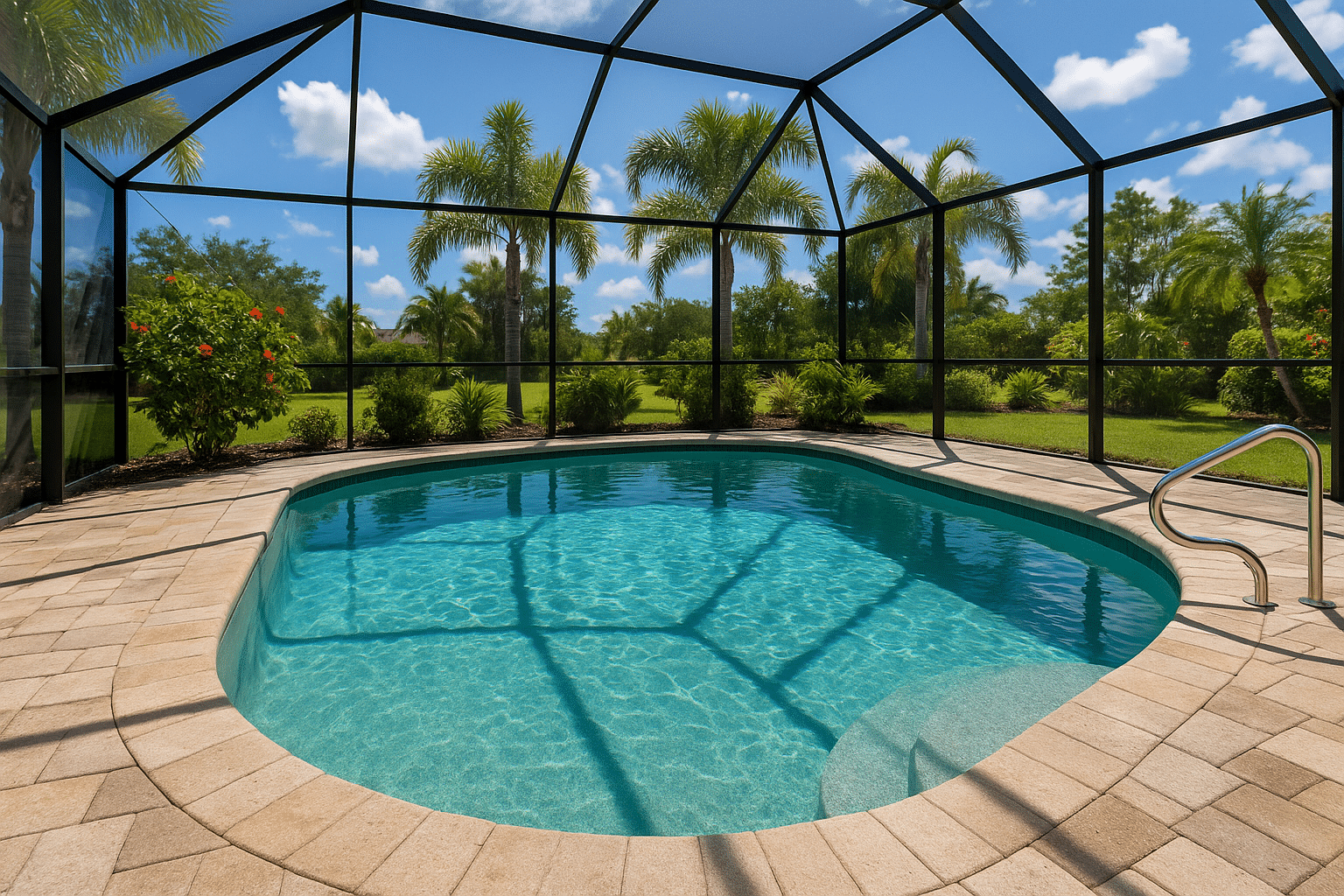
TL;DR: A worn or stained pool surface can scare off buyers, slow a sale, or trigger a price cut during Florida home inspections, so resurfacing before listing often pays for itself in smoother negotiations. Whether it’s worth doing depends on your pool’s current surface age, visible damage, and how close you are to closing, not just resale math.
If your Orlando-area home has an aging pool, you’re probably asking the same question a lot of sellers ask: fix the surface now, or let the buyer deal with it? The answer depends on how worn the pool actually is, how it will show during a home inspection, and how much room you have to negotiate.
Here’s what actually matters when you’re weighing pool resurfacing against a home sale in Central Florida.
Why Pool Condition Comes Up During a Florida Home Sale
Florida law puts real weight on pool condition disclosures. Under the Johnson v. Davis standard, a residential home seller must disclose any facts or conditions about the property that have a substantial impact on its value or desirability and that others cannot easily see for themselves. The standard FAR/BAR disclosure form sellers use specifically asks whether the structures including ceilings; walls; doors; windows; foundation; and pool, hot tub, and spa, if any, are structurally sound and free of leaks.
There’s no state law requiring a pool inspection before closing, but no Florida statute mandates a pool inspection as a condition of a residential property sale, however, buyers routinely commission inspections from licensed home inspectors or pool contractors. That means most buyers in Winter Park, College Park, and across Orange County will have their own inspector crawl through the pool before they finalize an offer.
What they’re looking for is predictable. Inspectors examine
the plaster, pebble, or tile interior surface for cracks, staining, delamination, and rough texture that indicates chemical erosion
, and surface failure is typically the costliest finding in the report:
surface failure is the single most expensive finding in a pool inspection, with replastering or resurfacing a standard residential pool in Central Florida typically running $8,000 to $20,000
. If your pool shows that kind of wear, buyers and their agents will see it, and they’ll factor it into their offer.
How Pool Surfaces Age in Central Florida
Florida’s climate is harder on pool finishes than almost anywhere else in the country. Pools here run essentially year-round, and intense UV exposure, heat, and mineral-heavy water all accelerate wear. In Central Florida specifically, local conditions compound the problem:
sandy soil and a high water table cause slight ground movement that stresses pool surfaces, year-round use increases surface wear compared to colder climates, and hurricane season brings debris and fluctuating water chemistry that degrades plaster faster
.
Typical lifespans by finish type:
- Standard white plaster:
lasts 7-10 years in Florida
before roughness, staining, or chalking becomes noticeable. - Quartz finishes:
last roughly 12-15 years
with proper maintenance. - Pebble finishes (like Pebble Tec):
can last 20-25 years
, making them the most durable common option.
If you don’t know when your pool was last resurfaced, check your closing documents or ask your pool resurfacing company for a visual assessment. A pool that’s approaching or past its finish’s expected lifespan is far more likely to raise red flags during a buyer’s inspection.
Does Resurfacing Actually Add Value at Resale?
The honest answer: it’s more about removing a negotiating point than adding new value. National data shows pools themselves have a mixed return. According to the National Association of Realtors’ 2023 Remodeling Impact Report,
an in-ground pool addition costing about $90,000 recovers roughly 56 percent of that cost at resale
, and notably,
the share of REALTORS® who recommended completing an in-ground pool addition prior to selling a home was just 1 percent
— but that statistic is about building a new pool, not fixing one you already have.
Resurfacing an existing, visibly worn pool is a different calculation. The real risk isn’t that your pool fails to impress buyers; it’s that a deteriorating surface becomes a bargaining chip. A pool that needs significant work, including resurfacing, new equipment, or structural repairs,
can become a negotiating point that brings offers down
. In practice, that often means buyers ask for a credit well above the actual repair cost, or walk away from an otherwise good offer because the pool makes the whole backyard look neglected.
Pros and Cons of Resurfacing Before You List
Pros
- Removes an inspection objection. A fresh, smooth surface won’t flag as “delamination” or “chemical erosion” on an inspector’s report.
- Protects your negotiating position. Buyers can’t use a worn pool as leverage to cut tens of thousands off your price.
- Improves first impressions. A clean, modern finish and updated waterline tile
signal that the property has been maintained properly
the moment buyers see listing photos. - You control the material and budget. Resurfacing before listing lets you choose a mid-range, durable finish rather than having a buyer demand a premium upgrade as a repair credit.
Cons
- Upfront cost without guaranteed full payback. Resurfacing is a repair, not a value-adding renovation in the same category as a kitchen remodel; you’re fixing a deficiency, not necessarily buying new equity.
- Timing can be tight. Full resurfacing projects take time for draining, prep, application, and curing, so last-minute listings may not have the runway.
- Not always necessary. If your pool’s surface is only a few years into its lifespan and shows no real wear, resurfacing now may be premature.
When Resurfacing Before Selling Makes the Most Sense
- Your plaster is past the 7-10 year mark and shows chalking, roughness, or staining.
- A recent inspection or your own pool contractor has flagged delamination, cracking, or rough texture.
- Your listing photos make the pool look dated compared to other homes in your Winter Park or College Park price range.
- You’re selling to a buyer pool that includes vacation-home investors or move-up families who expect a turnkey backyard.
- You want to set your own price and finish choice instead of negotiating a credit after a buyer’s inspection.
When You Might Skip It
- Your pool finish is less than halfway through its expected lifespan and shows no visible wear.
- You’re selling “as-is” at a price that already reflects deferred maintenance, and your disclosure is accurate and complete.
- You’re on a compressed timeline and a partial repair (tile reset, minor patching) will address the most visible issues instead.
What This Looks Like for Orlando-Area Sellers
In neighborhoods with a high concentration of pools built in the 1990s and early 2000s — common across Orlando, Winter Park, Pine Castle, and Meadow Woods — plaster surfaces are frequently well past their expected service life by the time a home changes hands. If you’re listing a home like this, a quick visual check or free estimate before you list can tell you whether resurfacing is worth doing now or whether a smaller repair will carry you to closing.
Classic Marcite has resurfaced pools across Central Florida since 1988, and we see this exact scenario constantly: a seller lists a home, the buyer’s inspector flags the pool surface, and the deal stalls while both sides argue over who pays for what. Getting ahead of that with a planned resurfacing, rather than a reactive one, almost always costs less and moves faster. You can browse examples of finished work in our project gallery to see what a resurfaced pool looks like before you decide.
If you’re outside the immediate metro, we also serve surrounding communities, including Leesburg and Pine Hills, from our Orlando office.
Bottom Line
Resurfacing before selling isn’t automatically worth it, but ignoring a visibly worn pool almost always costs you more in negotiations than the repair would have cost upfront. Get an honest read on your pool’s surface condition, compare that cost against the risk of a buyer-driven credit or a stalled closing, and decide from there.
Recommended Reads
- Pool Resurfacing & Remodeling Company In Orlando, FL
- Pool Resurfacing In Orlando, FL & Beyond | Classic Marcite
- Classic Marcite Gallery – Swimming Pool Resurfacing