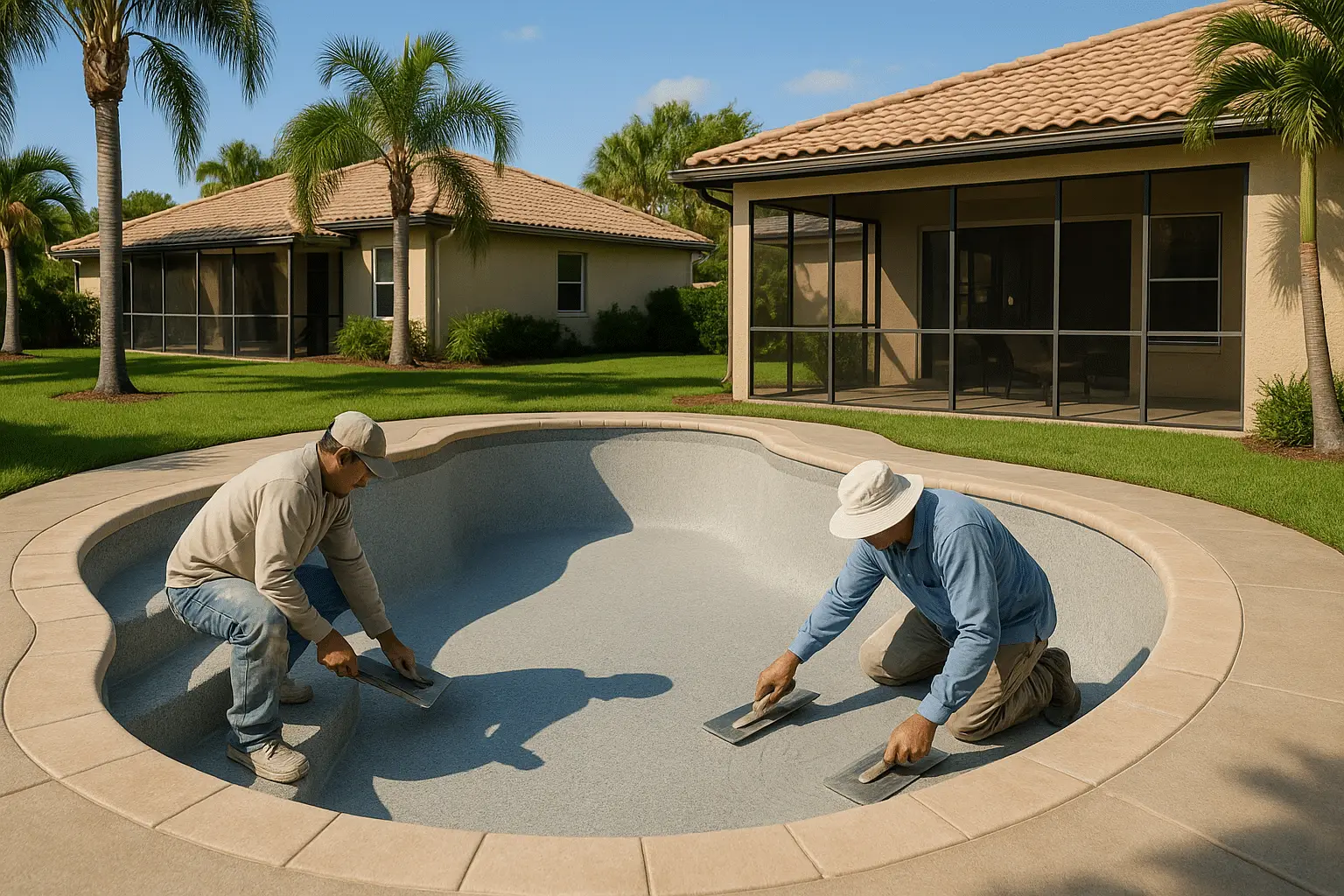
TL;DR: Fall and late winter through early spring (roughly October through April) are generally the best windows to resurface a pool in Central Florida, since mild, drier weather helps plaster and pebble finishes cure evenly. Summer’s heat, humidity, and daily thunderstorms don’t make resurfacing impossible, but they add scheduling risk, so timing depends on your finish type, your contractor’s crew capacity, and how much pool downtime you can tolerate.
If you’re staring at a dull, chalky, or stained pool surface in Orlando, Winter Park, College Park, Pine Castle, or Meadow Woods, the question isn’t just should you resurface, it’s when. Florida’s climate doesn’t follow the same rulebook as the rest of the country, and picking the right season can affect how well your new surface cures, how long your pool sits empty, and even how much you pay.
This guide breaks down how Central Florida’s weather patterns interact with pool resurfacing, which seasons tend to work best, and what trade-offs to weigh no matter when you schedule the job.
Why Timing Matters for Pool Resurfacing
Pool plaster, Pebble Tec, Pebble Sheen, Pebble Fina, and Beadcrete finishes are all cement-based products that cure through hydration, not simple drying. That means temperature, humidity, and rainfall during application and the following weeks directly affect how the surface hardens.
Industry guidance suggests replastering when the temperature is between 50 and 75 degrees Fahrenheit, since plaster won’t cure in colder temperatures and hotter temperatures can cause it to dry too quickly, leading to cracks
. Manufacturer specifications are a bit more flexible:
Pebble Tec’s technical guidelines state that placement in cold weather is acceptable as long as the daily average mean temperature is above 40°F and the substrate isn’t frozen, with special precautions available to protect the material from freezing
.
The bigger challenge in Florida usually isn’t cold, it’s heat and rain acting together.
Newly applied finishes are sensitive to water balance, and in the harsh Florida climate the margin for error is slim, since high pool temperatures and humidity mean filtration and water chemistry have to be on point from day one
.
Central Florida’s Climate, Month by Month
Orlando’s weather splits fairly cleanly into a wet season and a dry season, which matters a lot for scheduling outdoor cement work.
- Dry season (roughly October through May):
the average annual rainfall in Orlando is about 51.45 inches, with the majority falling from June through September, while October through May is Orlando’s dry season
. - Wet season (June through September):
June is typically the rainiest month, averaging around 5.7 inches of rain
, and
strong afternoon thunderstorms are common daily during the summer months, sometimes bringing heavy downpours, powerful winds, and even hail
. - Coolest months:
average highs dip to the low 70s in January and December
, still comfortably within workable curing range for most finishes. - Hottest months:
average highs climb to around 89-90°F from June through August
, which combined with direct sun exposure on a freshly poured surface can accelerate surface drying.
Layer hurricane season on top of that picture.
Florida’s Atlantic hurricane season officially runs from June 1 through November 30, with the most active window usually from mid-August through mid-October
, and
August and September account for over 70% of hurricane activity in Florida
. That six-month stretch overlaps almost entirely with the rainy season, adding scheduling risk on top of humidity and heat.
The Best Windows for Resurfacing in Central Florida
Fall (October–November)
This is often the sweet spot. Rain totals drop sharply,
November is typically Orlando’s driest month, averaging around 1.8 inches of rain
, hurricane risk is winding down, and temperatures are still mild enough for steady curing without extreme heat stress on the fresh finish.
Late Winter into Early Spring (January–April)
Temperatures stay within the ideal curing range most days, rainfall is low, and demand from homeowners hasn’t yet hit its summer peak. This window also lines up well if you want your pool fully cured and ready before the swim season ramps up in late spring.
Why Summer Isn’t Off the Table, But Comes With Trade-Offs
Resurfacing during June through September is common in Florida simply because pools get more use and more wear in the heat, prompting more homeowners to book renovations then. It’s workable, especially with experienced crews who monitor water chemistry closely during the first critical weeks, but afternoon storms can delay application days and complicate the fill schedule.
Spring is typically the busiest season for resurfacing work industry-wide
, which means booking early, whether for spring or fall, tends to get you better contractor availability.
What Happens After Application: The Curing Window
Regardless of season, the weeks right after your new surface goes in are the most delicate part of the process.
-
About 60 percent of the curing process happens in the first four weeks, and continues over the following 8 to 10 months
. -
Pool heaters should not be used until all plaster dust has been removed, which typically happens between day 4 and day 10
. -
Most start-up guidance recommends waiting at least 14 days before heating the water and monitoring chemical balance more closely once the heater is turned on
. - Different finishes cure on different timelines:
traditional plaster requires up to 28 days of daily brushing and calcium hardness checks, while quartz and glass bead finishes stabilize in 7 to 14 days, and pebble/aggregate finishes need 10 to 14 days of careful water balance
.
Because Florida’s humidity and warm nights slow moisture loss less predictably than drier climates, sticking to your contractor’s specific start-up schedule matters more here than in most parts of the country. If you want a fuller breakdown of what to expect week by week, see our guide on how long pool resurfacing takes from start to finish.
Pros and Cons by Season
Fall/Winter/Early Spring Pros
- Lower rainfall means fewer schedule delays
- Mild temperatures support even, gradual curing
- Outside of peak hurricane season, reducing storm-related disruptions
Fall/Winter/Early Spring Cons
- Pool sits unused during cooler months if you’re not heating it right away
- Contractors may still be finishing up spring backlog in early months
Summer Pros
- Pool is ready right when you want to use it most
- Warmer fill water can support faster initial hydration
Summer Cons
- Afternoon thunderstorms and hurricane season can delay application or fill
- Peak demand season means booking further in advance
- Intense sun on fresh, uncured surfaces requires closer monitoring
How to Decide for Your Property
For homeowners in Winter Park or College Park with a pool that’s simply aging out, timing is mostly about convenience and contractor availability. If you’re managing an HOA, apartment community, or hotel pool in the Orlando metro, the calculus shifts toward minimizing downtime during peak occupancy or amenity-use periods, which often makes the fall and winter shoulder seasons even more attractive for commercial properties.
Selling a home in Pine Castle or Meadow Woods with a tired pool surface? Fall and winter resurfacing gives the finish time to fully cure before spring showings, when buyers are touring pools most actively.
Whatever the season, the finish you choose matters as much as the calendar. If you’re still deciding between options, our comparisons of Pebble Tec vs. Marcite and Pebble Sheen, Pebble Fina, and Pebble Tec can help you match a finish to your budget, look, and durability needs before you lock in a start date.
The Bottom Line
There’s no single “wrong” month to resurface a pool in Central Florida, but October through April generally offers the most predictable conditions: lower rainfall, milder temperatures, and less hurricane risk. Summer resurfacing is common and workable, it just requires more flexibility around weather delays and a contractor experienced in Florida’s heat and humidity. Classic Marcite has resurfaced pools across every season in Orlando and Jacksonville since 1988, and we help homeowners, HOAs, and property managers pick a schedule that fits both the calendar and their pool’s condition. If it’s also time to think about the surrounding hardscape, take a look at our pool deck resurfacing options guide to plan the whole project together.
Recommended Reads
- How Often Should You Resurface a Pool in Florida?
- Pool Deck Resurfacing Options: Which Surface Is Best for a Florida Pool?
- How Long Does Pool Resurfacing Take? A Step-by-Step Timeline
