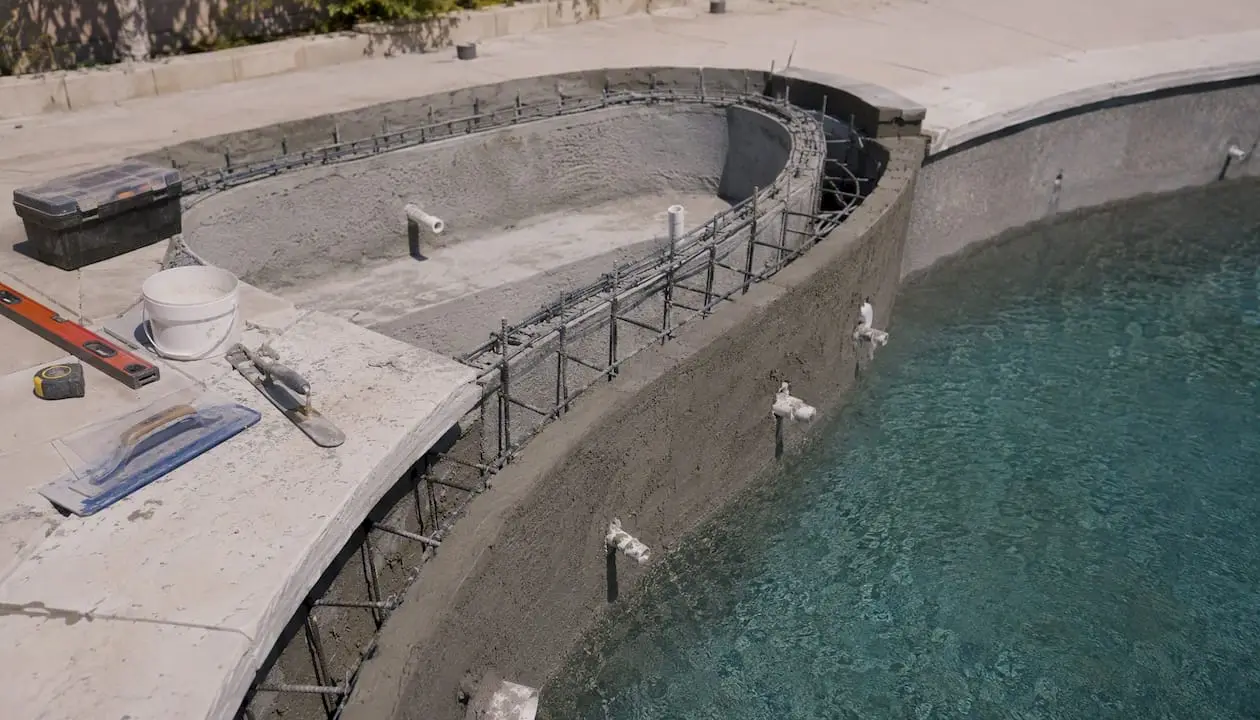
Yes, you can add a spa to an existing pool in most cases. The simplest path is a freestanding prefab unit placed adjacent to any pool type, or an attached spillover spa bonded directly to a gunite/concrete shell. Both approaches trigger permit requirements covering electrical work (GFCI, bonding per NEC Article 680) and, when suction lines are altered, anti-entrapment compliance under the Virginia Graeme Baker Pool & Spa Safety Act. Budget expectations vary widely: prefab units often start in the low thousands, while custom in-ground additions commonly reach the mid-five-figure range once excavation, equipment, and permits are included.
Before calling a contractor, run through these feasibility factors:
- Pool shell type: Gunite and concrete pools accept structural tie-ins most readily. Fiberglass and vinyl liner pools have fixed-form constraints that favor adjacent or standalone options.
- Equipment capacity: Your existing pump, heater, and filter may need upsizing or a dedicated spa circuit to handle the added load.
- Deck space: An attached spa requires clearance for excavation and new coping; a freestanding unit needs a level, reinforced pad.
- Electrical service: A dedicated sub-panel or breaker is almost always required, regardless of the spa type.
- Local permitting: Most Florida jurisdictions require structural, plumbing, and electrical permits for any bonded spa addition.
Key Takeaways
Adding a spa to an existing pool is feasible for most homeowners, but the right approach depends on pool shell type, available budget, and whether you want a structurally integrated result or a faster, lower-cost standalone option.
| Point | Details |
|---|---|
| Feasibility by pool type | Gunite pools accept attached spa tie-ins most readily; fiberglass and vinyl pools favor adjacent or standalone options. |
| Realistic cost band | Prefab units start around $2,000–$7,000; attached gunite spas typically run $25,000–$45,000+ before optional upgrades. |
| Must-ask contractor questions | Require a written hydraulic plan, heater sizing rationale, VGB compliance approach, and permit history before signing. |
| Typical timeline | Attached gunite spa projects run 6–10 weeks elapsed; prefab units can be operational within days of delivery. |
| Classicmarcite advantage | Handles resurfacing, spa integration, and permit coordination under one contract in Orlando and Jacksonville. |
Table of Contents
- What are the four main ways to add a spa to an existing pool?
- What actually happens during a spa installation, step by step?
- What do contractors repeatedly see go wrong?
- What does it realistically cost to add a spa to a pool?
- How long does a spa addition take, and what disrupts your yard?
- How do you pick the right contractor for a spa addition?
- What does owning a pool plus spa actually cost to maintain?
- When Classicmarcite is the right partner for a spa integration
- Classicmarcite handles spa integration and pool remodeling in Orlando and Jacksonville
- Sources
What are the four main ways to add a spa to an existing pool?
Gunite pools are generally the easiest candidates for an attached spa, but every pool type has a workable path. The four approaches differ significantly in cost, disruption, and visual result.
Attached spillover (raised bond beam) spa
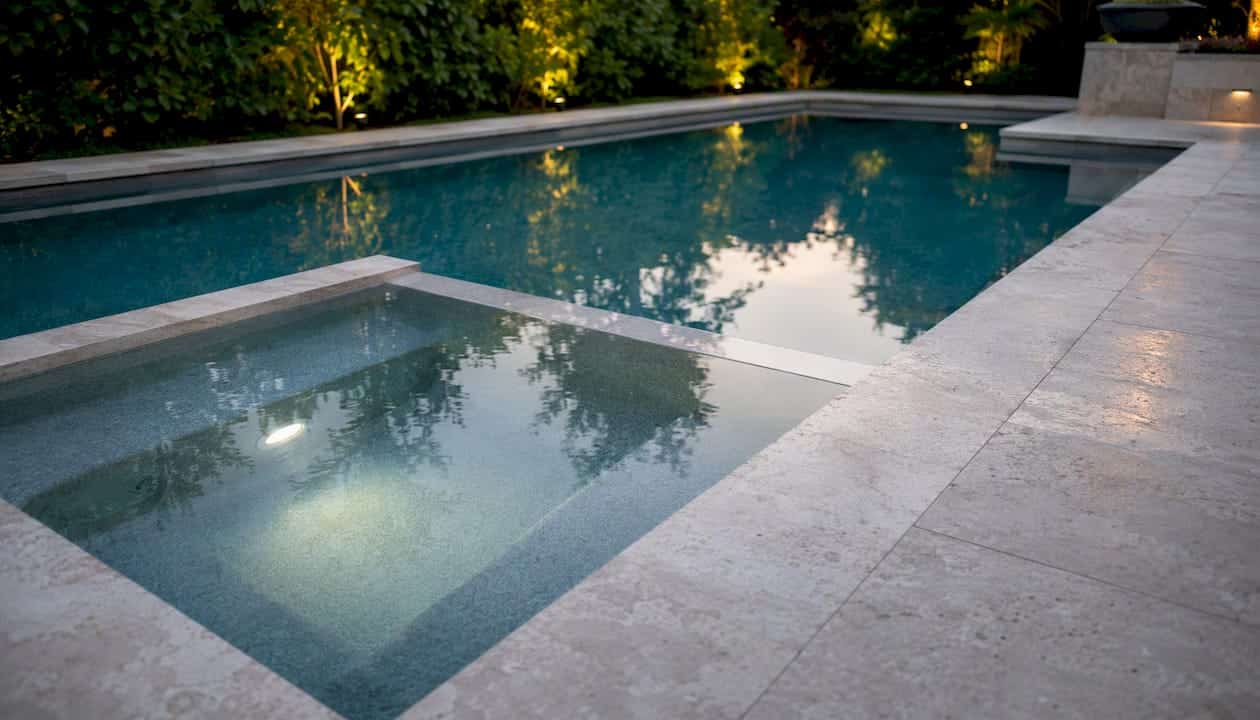
The spa sits elevated above the pool deck, and water cascades over a spillway blade into the pool. Structurally, it requires cutting into the existing deck, tying new rebar into the pool’s bond beam, and pouring shotcrete for the new vessel. This is the most visually integrated option and the most common choice for gunite pools undergoing a broader remodel.
Flush-level integrated spa
The spa shell sits at the same water level as the pool, separated by a shared wall with actuated valves controlling flow between the two. It reads as one continuous body of water from a distance. Hydraulic complexity is higher because the shared-water system needs precise valve sequencing and a dedicated heater to bring spa temperature up quickly without overcooling the pool.
Adjacent side-extension spa
Rather than tying into the pool’s bond beam, the spa is excavated and built as a separate in-ground vessel next to the pool, connected by plumbing only. This suits yards where the existing pool shell cannot be easily cut, and it gives the spa its own independent water chemistry. Fiberglass pools often land here.
Standalone above-ground prefab unit
A delivered prefab unit avoids excavation entirely and can be installed in days rather than weeks. It still needs a dedicated electrical connection and a level, reinforced pad, and sometimes crane delivery depending on yard access. The tradeoff is visual: it rarely integrates as cleanly with the pool’s aesthetic.
| Option | Typical cost range | Disruption level | Best pool type | Visual integration |
|---|---|---|---|---|
| Attached spillover spa | Mid-to-high five figures | High (excavation, concrete) | Gunite/concrete | Excellent |
| Flush-level integrated spa | High five figures | High | Gunite/concrete | Excellent |
| Adjacent in-ground spa | Mid five figures | Moderate-high | Any | Good |
| Standalone prefab unit | Low thousands to low five figures | Low | Any | Moderate |
Key decision factors:
- Gunite pools: all four options are viable; attached spillover is the most popular.
- Fiberglass and vinyl liner pools: adjacent or standalone options avoid structural risk to the existing shell.
- Budget under $15,000: a prefab unit is the realistic path.
- Prioritizing aesthetics and long-term value: an attached or integrated gunite spa is worth the added cost.
What actually happens during a spa installation, step by step?
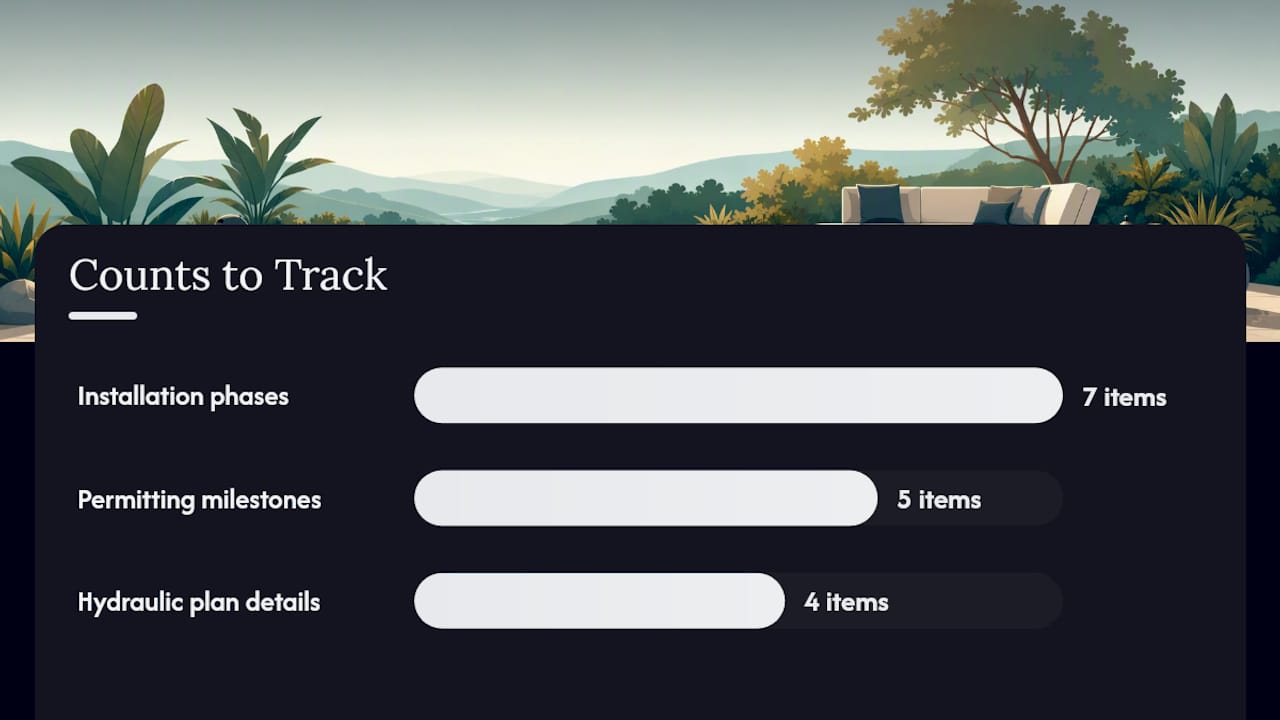
The standard sequence covers seven distinct phases, each with its own inspection trigger. Knowing the sequence helps you spot a bid that skips steps.
- Site assessment and structural evaluation. A licensed contractor inspects the existing bond beam, rebar layout, shell condition, and equipment pad. This determines whether the pool can accept a structural tie-in and what equipment upgrades are needed before any digging starts.
- Permit application and engineering. Structural, plumbing, and electrical permits are submitted with engineered drawings. The International Swimming Pool and Spa Code (ISPSC) and NEC Article 680 govern what inspectors will check. Permit approval typically takes one to three weeks in most Florida jurisdictions.
- Demolition and excavation. Deck sections are removed, and the new spa footprint is excavated. For an attached spa, the existing pool’s bond beam is cut and new rebar is tied in to create a continuous structural connection.
- Shotcrete or concrete shell work. The new vessel is sprayed or formed and left to cure. Curing takes a minimum of 28 days before finish work can begin, and this is the single longest fixed delay in the project.
- Plumbing and hydraulic rough-in. Dedicated jet lines, return lines, and drain connections are roughed in. If the spa shares water with the pool, actuated valves and a manifold are installed. A written hydraulic plan showing flow rates and valve sequencing should be part of every bid at this stage.
- Electrical work. A dedicated spa sub-panel, GFCI protection, and equipotential bonding are installed per NEC Article 680. This phase requires a rough-in inspection before the equipment pad is closed.
- Finishing, commissioning, and final inspection. Tile, coping, and interior finish (marcite, Pebble Tec®, or similar) are applied. The spillway blade is set if used. Automation wiring and controls are connected, water is balanced, and the final inspection is passed before the pool is returned to service.
Permitting milestones to track: permit issuance, structural rough-in, plumbing rough-in, electrical rough-in, and final inspection. A contractor who cannot name all five is likely not pulling full permits.
Pro Tip: Ask your contractor for the engineered hydraulic plan before signing. It should show flow rates, pipe sizes, valve locations, and whether the spa uses a dedicated pump or a shared manifold. If the bid has no hydraulic plan, the contractor is guessing at sizing.
What do contractors repeatedly see go wrong?
The biggest misconception contractors encounter is that a spa is a simple bolt-on. In practice, it is a separate vessel with its own heating and jet-pressure profile that must integrate hydraulically with the pool when desired. Three failure modes show up repeatedly on job sites.
Hydraulic imbalance
If the spa’s overflow rate exceeds the pool’s draw capacity, water spills onto the deck and the pool level drops. Hydraulic design for combined systems requires dynamic head calculations, friction-loss analysis, and valve sequencing. A simple tie-in without recalculation commonly yields poor jet pressure or excessive energy consumption. Contractors who skip the hydraulic plan are setting up the homeowner for a callback.
What a hydraulic failure looks like in practice: A homeowner in Central Florida had a spillover spa added by a general contractor who piggybacked the spa jets onto the existing pool pump. At full jet load, the pool’s skimmer lost prime, the pump cavitated, and the spa jets ran at roughly half their rated pressure. Correcting it required a dedicated spa pump, new plumbing runs, and a second visit from an electrician — costs that exceeded the original “savings” from the low bid.
Insufficient heater capacity
Spa temperatures run significantly hotter than pool set points, and a shared pool heater rarely recovers the spa volume fast enough for practical use. Most contractors recommend a dedicated spa heater or an upsized unit. Budget for this as a line item, not an afterthought.
VGB anti-entrapment triggers
Altering suction lines during a spa integration commonly triggers mandatory upgrades under the VGB Pool & Spa Safety Act. Updated drain covers and suction manifolds may be required across the entire system, not just the new spa. A contractor who does not mention VGB compliance when discussing suction changes is a red flag.
Pro Tip: Request proof that your contractor has pulled permits for at least three similar spa integrations in your county. Permit history is public record in Florida — you can verify it yourself through the county building department’s online portal.
What does it realistically cost to add a spa to a pool?
Cost ranges vary widely depending on whether the spa is prefab or custom, how much excavation is involved, and what equipment upgrades the existing system needs.
| Approach | Typical range | Common exclusions |
|---|---|---|
| Standalone prefab above-ground unit | low thousands (unit only) | Electrical, pad/foundation, delivery/crane |
| Adjacent in-ground gunite spa | mid-five-figure range | Landscaping, deck restoration, permits |
| Attached spillover spa (gunite) | $25,000–$45,000+ | Resurfacing match, automation upgrade |
| Flush-level integrated spa (gunite) | mid-five-figure range | Full hydraulic redesign, automation |
For homeowners in Orlando and Jacksonville, local permit fees, labor rates, and material costs all influence where a project lands within these bands. An add spa cost in Orlando or Jacksonville for an attached gunite spa tends to sit in the $25,000–$45,000 range before optional upgrades.
Cost drivers that move price:
- Heater type: gas heaters recover faster but cost more upfront; heat pumps cost less to run but are slower.
- Pump upgrades: a dedicated spa pump adds $800–$2,500 installed.
- Hydraulic manifold and automation: actuated valves and a controller add $1,500–$4,000.
- Deck demolition and restoration: cutting and replacing concrete or pavers around the new spa footprint.
- Permit fees: vary by county and project scope; budget $500–$2,000 for a typical Florida spa permit package.
- Delivery and crane: prefab units in tight yards may require crane placement, adding $500–$1,500.
Many remodelers recommend combining a spa addition with a scheduled pool resurfacing because the deck and coping work that accompanies a spa add can be matched more cleanly when surfacing is done at the same time. Bundling the work also reduces mobilization costs.
How long does a spa addition take, and what disrupts your yard?
A prefab unit placed on an existing pad can be operational within a few days of delivery. An attached or integrated gunite spa is a different story.
- Permit approval: 1–3 weeks in most Florida counties, sometimes longer for complex structural permits.
- Excavation and demolition: 2–5 days, depending on deck material and access.
- Shotcrete and concrete curing: minimum 28 days before finish work; this phase alone accounts for most of the total timeline.
- Plumbing and electrical rough-in: 3–7 days, with inspection waits between phases.
- Finishing and commissioning: 5–10 days for tile, coping, interior finish, and equipment startup.
Total elapsed time for an attached gunite spa typically runs 6–10 weeks from permit submission to final inspection, with active construction occupying roughly 2–4 of those weeks. Weather delays and inspector scheduling in Florida can extend that range.
The most disruptive phases are deck demolition (noise, debris, no pool access) and the concrete curing period (pool may remain usable but the work zone is fenced off). Plan for limited or no pool use during active construction.
How do you pick the right contractor for a spa addition?
A spa integration is a structural, plumbing, and electrical renovation. The contractor you hire needs credentials in all three areas, or a licensed subcontractor network that covers each.
Must-have credentials and documents:
- State contractor’s license (Florida requires a Certified Pool/Spa Contractor license for this scope).
- General liability insurance and workers’ compensation coverage — request certificates naming you as an additional insured.
- Local permit history: ask for the permit numbers of at least two similar projects in your county so you can verify they were pulled and passed final inspection.
- Portfolio of attached or integrated spa projects with before-and-after photos and at least two references you can call.
Questions to ask on-site:
- Will you provide a written hydraulic plan showing flow rates, pipe sizes, and valve locations?
- How will the spa heater be sized, and will it be dedicated or shared with the pool?
- How do you handle VGB anti-entrapment compliance if suction lines are altered?
- Will GFCI protection and equipotential bonding be installed per NEC Article 680?
- Who pulls the permits, and will you be present for all inspections?
- Does the bid include automation, or is that a separate allowance?
Red flags in estimates:
- Vague scope with no material specifications or brand/model allowances.
- No written hydraulic or electrical plan.
- “No permit required” for structural or electrical work.
- Bids significantly below others with no explanation of what was excluded.
- No timeline or milestone schedule in the written contract.
Contract checklist: scope of work, material specs and allowances, change-order rules, payment schedule tied to milestones, warranty terms (labor and materials separately), and who is responsible for scheduling and passing inspections.
Pro Tip: For licensed pool renovation professionals, the written estimate should include a line item for permit fees and a named inspection schedule. If it does not, ask for one before signing.
What does owning a pool plus spa actually cost to maintain?
The operational picture changes once a spa is running alongside your pool, and the differences compound over a season.
Shared-water vs. separate-water systems:
- Shared-water systems (flush-level or spillover spas) mean spa chemistry affects pool chemistry and vice versa. Chlorine demand increases when the spa runs hot because heat accelerates chemical consumption. pH and alkalinity need more frequent adjustment.
- Separate-water systems (adjacent or standalone spas) let you manage each body independently, which is simpler for chemistry but means two sets of maintenance tasks.
Energy and servicing:
- A dedicated spa heater running several times per week adds meaningfully to your monthly electric or gas bill, depending on heater type and local utility rates.
- Spa jets and blowers require periodic inspection for air leaks and impeller wear.
- Spa covers are not optional: an uncovered spa loses heat rapidly and increases chemical consumption.
Maintenance checklist for combined systems:
- Test and balance spa water separately from pool water at least twice per week during active use.
- Clean or replace spa filter cartridges monthly during heavy use periods.
- Inspect jet fittings and blower connections quarterly.
- Service the spa heater annually, including heat exchanger inspection.
- Winterize or maintain minimum temperature during cold snaps (relevant even in Florida during January freezes).
- Schedule an annual inspection of GFCI devices and bonding connections.
- Keep the spa cover in good repair; replace when insulation value degrades.
When Classicmarcite is the right partner for a spa integration
Classicmarcite has been resurfacing and remodeling pools in Central Florida since 1988, with more than 100,000 pools completed across residential, commercial, and resort properties. As the largest Pebble Tec® applicator in Central Florida, the company handles the finish work that most spa integrations require: matching new spa coping and tile to existing pool surfaces, applying Pebble Tec® or marcite interiors to both vessels in a single mobilization, and coordinating equipment upgrades under one contract.
Where Classicmarcite is particularly well-suited is when a homeowner needs a spa addition and a pool resurfacing handled together. Bundling both scopes avoids the mismatch that happens when a spa is added years after the pool was last resurfaced, leaving two visibly different interior finishes. The company’s experience with local permitting in Orlando and Jacksonville means the structural, plumbing, and electrical permit packages are handled as part of the project, not left to the homeowner to navigate.
For homeowners who want to see finished work before committing, the residential project gallery shows integrated spa and pool remodels with before-and-after documentation.
Classicmarcite handles spa integration and pool remodeling in Orlando and Jacksonville
Classic Marcite’s pool remodeling service covers the full scope of a spa addition: structural tie-in, hydraulic rough-in, dedicated heater and pump installation, tile and coping matched to your existing pool, Pebble Tec® or marcite interior finish for both vessels, and permit handling from application through final inspection. The company serves Orlando, Jacksonville, and surrounding Central Florida communities, with a track record of remodels that combine resurfacing and spa add-ons in a single contract.
For homeowners ready to move from research to a real number, the next step is a free on-site evaluation. A Classicmarcite estimator will assess your existing pool shell, equipment capacity, and deck space, then provide a written estimate with scope, materials, and a project timeline. Request your free estimate for Orlando pool resurfacing and remodeling or view completed Orlando pool remodeling projects to see the quality of finish work before you commit.
Sources
- How Much Does It Cost to Add a Hot Tub to a Pool? 2026 Data — Angi
- Pool spa addition services: Attached spas, spillways, and integration — Pool Renovation Authority
