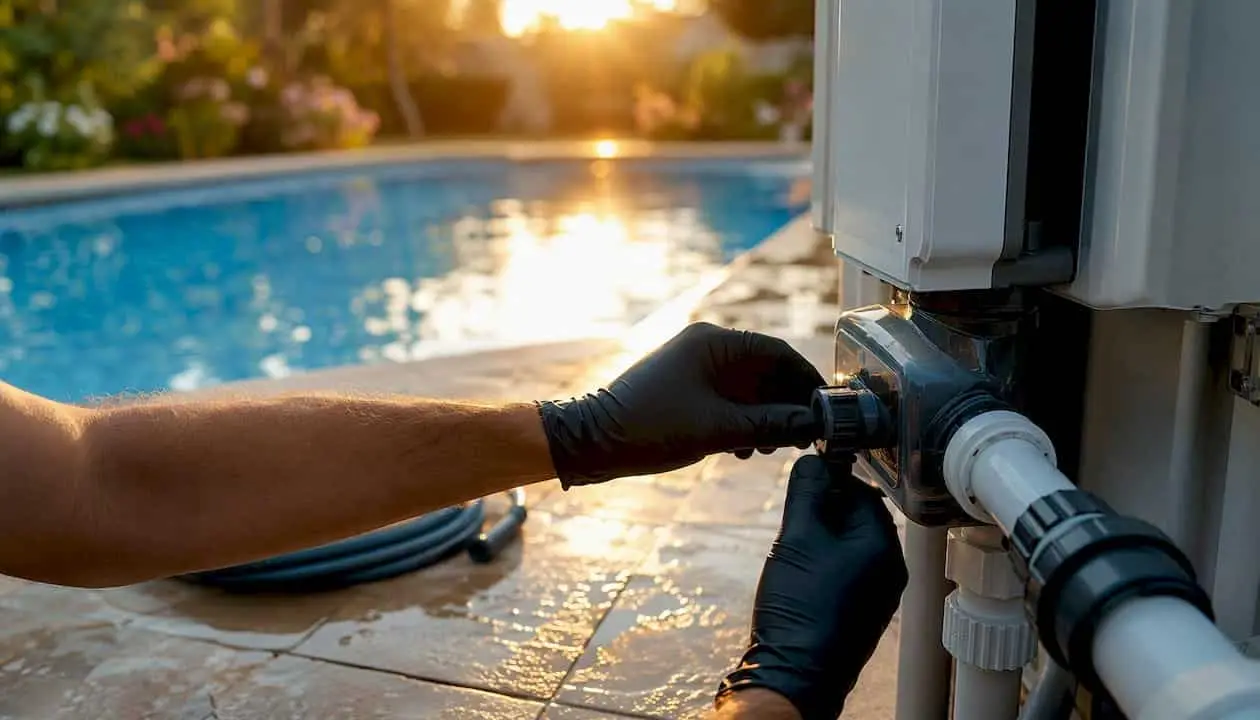
Yes, for most homeowners who swim regularly, converting to a saltwater system is worth it. Saltwater pool conversion benefits include noticeably softer water, fewer chloramines, less manual chemical handling, and lower ongoing chemical costs once the upfront investment is recovered. Two caveats apply: the initial cost runs $500–$2,500 depending on pool size and equipment needs, and corrosion risk to metal fixtures and older heaters is real if the pool isn’t properly prepared.
- Top benefits: gentler water on skin and eyes, automated sanitizer production, reduced chlorine odor, and potential annual chemical savings
- Top caveats: upfront generator cost, corrosion risk to metal components, cell replacement every 3–7 years, and the pool still uses chlorine
Pro Tip: Before calling a contractor, check two things: how often your household actually swims (high use = faster payback) and whether your heater, metal fittings, and bonding grid are in good condition. If both answers are favorable, conversion is worth a closer look.
Key Takeaways
Saltwater pool conversion benefits are real and measurable, but they depend on starting with a pool that’s structurally sound and equipment that’s compatible with salt chemistry.
| Point | Details |
|---|---|
| Conversion cost range | Total costs typically run $500–$2,500; the generator is the largest single expense. |
| Cell lifespan | Plan for cell replacement every 3–7 years as a predictable recurring cost. |
| Still uses chlorine | Saltwater pools generate chlorine continuously; they are not chemical-free. |
| Best candidates | High-use pools with sound equipment benefit most; fix leaks and heater issues first. |
| Classicmarcite’s role | Classicmarcite coordinates resurfacing and equipment upgrades in Orlando to prepare pools for salt conversion correctly. |
Table of Contents
- How does a salt-chlorine generator sanitize your pool?
- What are the concrete benefits of converting to a saltwater system?
- What are the main downsides you need to plan for?
- How much does saltwater pool conversion cost?
- How does routine maintenance change after conversion?
- Which pool owners benefit most from converting?
- What resurfacing and renovation pros check before recommending conversion
- Health considerations for saltwater versus traditional chlorine pools
- When Classicmarcite recommends conversion
- Classicmarcite can help you convert and resurface the right way
- Sources
How does a salt-chlorine generator sanitize your pool?
A salt-chlorine generator, also called an electrolytic chlorine generator (ECG), converts dissolved sodium chloride into the same hypochlorous acid your pool already relies on for sanitation. Nothing about the chemistry changes at the pool water level. What changes is how that chlorine gets there.
The generator cell sits in the equipment line after the filter and heater, so water must flow through it for the system to produce sanitizer. That flow dependency matters: if your pump isn’t running, the cell isn’t generating. Here’s the basic sequence:
- You add pool-grade salt to the water until it reaches the target salinity, commonly cited within a typical residential operating salinity range for residential systems
- Water passes through the cell, where a low-voltage electrical current splits the sodium chloride into sodium hypochlorite and hypochlorous acid
- That sanitizer circulates through the pool, then reverts back to salt and the cycle repeats
One point that surprises many homeowners: saltwater pools are not chlorine free. The system generates chlorine continuously and automatically, which is the advantage, but you still need to test water chemistry, manage pH, and descale the cell periodically.
Pro Tip: ECG systems require reliable water flow to function. If you’re running a variable-speed pump, program it to run the generator during peak hours and confirm the flow rate meets the manufacturer’s minimum threshold for your cell model.
What are the concrete benefits of converting to a saltwater system?
Converting to a saltwater system delivers four to six advantages that homeowners notice quickly, especially in high-use pools. The most frequently cited are softer-feeling water, reduced eye and skin irritation, steadier sanitizer levels, and less time spent handling chemicals.
- Softer water and less irritation: Saltwater pools commonly reduce chloramine formation, which is the compound responsible for the sharp chlorine smell and red eyes after swimming. Many owners describe the water as noticeably gentler within the first season.
- Automated sanitizer production: The generator runs continuously with your pump, eliminating the peaks and valleys that come with manual tablet or liquid dosing. In Florida’s heat, that consistency matters more than it does in cooler climates.
- Reduced chemical handling: You’re no longer buying, storing, and adding bulk chlorine products weekly. That’s a practical convenience and a minor safety benefit for households with children.
- Steadier water chemistry: Continuous low-level chlorine output keeps free chlorine in range more reliably than periodic manual additions, particularly during heavy swim weeks.
- Potential annual chemical savings: Conversion guides document chemical-cost savings potential once the generator is running, with many owners spending less on chlorine products year over year after the upfront cost is recovered.
- Reduced packaging and handling waste: Fewer chlorine deliveries and containers means a modest environmental benefit compared to traditional tablet or liquid systems.
The comfort improvement tends to be the deciding factor for families with children or swimmers who spend significant time in the water. The chemistry stability is what pool professionals point to as the system’s most practical advantage.
What are the main downsides you need to plan for?
The top trade-offs are upfront cost, corrosion risk to metal components, cell replacement expense, slightly higher electricity use, and the ongoing need to test water chemistry. None of these are dealbreakers for a well-maintained pool, but each requires a plan.
- Upfront generator cost: The generator itself is the biggest single expense. Budget for installation labor on top of the equipment price.
- Corrosion risk: Salt accelerates corrosion on metal fixtures, ladders, light rings, and heater components not rated for saline water. Use salt-rated hardware and consider sacrificial anodes on vulnerable metal parts.
- Cell replacement: Generator cells last roughly 3–7 years depending on maintenance habits, pH control, and scale buildup. This is a predictable recurring cost, not a surprise, but it needs to be in your budget.
- Electricity use: The generator draws additional power whenever the pump runs. The increase is modest for most residential pools but worth factoring into annual operating costs.
- pH drift: Electrolysis trends the water alkaline, so you’ll likely add muriatic acid more frequently than you did with tablet systems. This is manageable but requires consistent testing.
- Still requires testing: Saltwater systems are not maintenance-free. Free chlorine, pH, salt level, and calcium hardness all need regular monitoring.
- “Chlorine-free” is a myth: The system produces chlorine. Swimmers with true chlorine sensitivity won’t find relief by switching to salt.
Pro Tip: Before converting, inspect four things: your heater’s heat exchanger material (copper is vulnerable; titanium handles salt well), all metal fittings and ladder anchors, the age and condition of your pump and filter, and whether your bonding grid has been verified recently. Fixing these before conversion prevents expensive rework.
Increased electrical conductivity in saline water also elevates the consequences of poor equipotential bonding. The NFPA emphasizes verifying bonding grids and proper electrical work to reduce electric shock drowning risk in saline pools specifically.
How much does saltwater pool conversion cost?
Total conversion cost typically falls between $500 and $2,500, with the salt-chlorine generator being the largest single line item. Pools that need equipment upgrades, new plumbing fittings, or heater replacements will land at the higher end.
Estimated annual chemical savings offset the operating costs over time. Many owners report spending meaningfully less on chlorine products after the first year, though the exact figure depends on pool size, usage, and local chemical prices.
Conversion timeline:
- Pre-conversion prep (1–2 weeks): Balance water chemistry, address any existing leaks or circulation problems, inspect equipment compatibility, and order the generator
- Installation day: Plumb the generator cell into the equipment line after the filter and heater; connect electrical; verify bonding
- Salt addition and dissolving (24–48 hours): Add pool-grade salt, brush to dissolve, and allow circulation to reach target salinity before activating the cell
- First-season monitoring: Test free chlorine, pH, and salt level more frequently for the first 4–6 weeks to dial in generator output settings
Addressing any water-balance or equipment issues before installation is the single most important step for a clean conversion. Problems that exist before the generator goes in tend to get worse, not better, once salt is in the water.
How does routine maintenance change after conversion?
You’ll do less manual chlorine dosing, but you’ll test more parameters on a regular schedule and add acid more often. The overall workload is generally lower, but it doesn’t disappear.
Weekly tasks:
- Test free chlorine (target: 1–3 ppm)
- Test pH (target: 7.4–7.6; ECG systems trend high, so acid additions are common)
- Check salt level visually on the generator display
- Inspect generator for error codes or low-flow warnings
Monthly tasks:
- Test total alkalinity (target: 80–120 ppm)
- Test calcium hardness (target: 200–400 ppm)
- Verify salt level with a test kit or strips (target: your generator’s specified range, often 2,700–3,400 ppm)
- Inspect cell for scale buildup
Seasonal tasks:
- Clean the generator cell with a dilute acid solution when scale is visible (typically every 3–6 months in Florida’s hard water)
- Verify bonding connections at the start of each season
- Adjust generator output percentage as swim season intensity changes
- Winterization: lower generator output or shut it off when water temperature drops below 60°F, as most cells stop producing efficiently at that point
A full pool maintenance checklist covers these parameters in detail alongside the broader chemistry tasks that apply to any pool type.
Pro Tip: Pair your generator run time with a variable-speed pump schedule. Running the pump at lower RPM for longer periods costs less electricity and gives the cell more time to produce chlorine gradually, which keeps levels steadier than short high-speed bursts.
Which pool owners benefit most from converting?
The ideal candidate for saltwater conversion owns a structurally sound pool with reliable circulation, swims frequently, and wants to reduce the time and effort spent managing chemicals. Local pool professionals consistently note that conversion is most compelling when the pool is in good shape and the household uses it regularly.
Strong candidates for conversion:
- Households that swim three or more times per week during the season
- Families with children or swimmers who experience eye or skin irritation with traditional chlorine
- Owners with a reliable, modern equipment pad (pump, filter, and heater in good condition)
- Homeowners who want to reduce weekly chemical handling and storage
- Pools with existing plumbing that can accommodate the generator cell without major rework
Reasons to delay or reconsider:
- Older heater with a copper heat exchanger (salt accelerates copper corrosion; replacement or upgrade is needed first)
- Corroded metal fittings, ladders, or light rings not rated for saline water
- Unverified or inadequate bonding grid
- Active leaks or circulation problems that haven’t been repaired
- Pool used fewer than 20–30 times per season (payback period extends significantly)
Decision flow: Check your usage pattern first. If you swim frequently, inspect the equipment pad and metal components. Get a conversion cost estimate. Then consult a pool professional who can verify bonding and heater compatibility before you commit.
Pro Tip: If your pool is due for resurfacing anyway, that’s the best time to convert. You can upgrade metal fittings, verify bonding, and install a salt-rated heater as part of the same project, avoiding the cost of draining and accessing the pool twice.
What resurfacing and renovation pros check before recommending conversion
Conversion and resurfacing belong in the same planning conversation because the decisions affect each other. Installing a salt system on a surface that’s already failing accelerates deterioration. Resurfacing a pool without addressing heater or bonding compatibility means the new surface faces higher chemical stress from day one.
A professional inspection before conversion should cover:
- Heater heat exchanger material: Copper exchangers are vulnerable to salt corrosion; titanium or cupronickel units handle it far better
- Tile and coping condition: Cracked grout or unsealed coping allows salt water to penetrate and damage the substrate
- Metal fixture ratings: Ladders, handrails, light rings, and anchor bolts should be verified as salt-rated or replaced
- Bonding grid integrity: Saline water increases electrical conductivity, making a properly verified bonding grid a safety requirement, not a suggestion
- Surface type: Marcite plaster, Pebble Tec®, fiberglass, and vinyl each respond differently to salt chemistry; pH control becomes more critical with plaster surfaces, which are more sensitive to low pH than aggregate finishes
Pro Tip: If your marcite or plaster surface is more than 10–12 years old, get a surface assessment before converting. Salt chemistry at the wrong pH can accelerate surface erosion on aging plaster. A fresh Pebble Tec® or aggregate finish handles the chemistry more forgivingly.
Classicmarcite has resurfaced over 100,000 pools since 1988, including projects where conversion and resurfacing were coordinated in a single scope. That experience with residential pool finishes across Orlando and Jacksonville means the team can flag surface and equipment compatibility issues before they become post-conversion problems.
Health considerations for saltwater versus traditional chlorine pools
Saltwater pools don’t eliminate chlorine, but they do change the form it takes and how consistently it’s present. That distinction matters for swimmers with sensitivities.
Traditional chlorine pools, especially those dosed manually, tend to accumulate chloramines when free chlorine reacts with nitrogen compounds from swimmers. Chloramines are what cause the sharp smell, red eyes, and skin irritation most people associate with “too much chlorine.” Saltwater systems produce chlorine continuously at lower, steadier concentrations, which tends to reduce chloramine buildup compared to pools that experience dosing peaks and valleys.
For swimmers sensitive to chloramines specifically, the switch often produces a noticeable improvement. The water feels softer partly because the salt concentration at typical operating levels (2,700–3,400 ppm) is well below ocean salinity and below most human taste thresholds. It’s closer to the salinity of a teardrop than seawater, which is why the “ocean water” comparison is misleading.
For swimmers with a true chlorine allergy or sensitivity, saltwater conversion won’t help. The pool still produces and uses chlorine as its primary sanitizer. Anyone in that category needs a different sanitation approach entirely, such as UV or ozone systems, often paired with reduced chlorine supplementation.
Swimmers with contact lens sensitivity, eczema, or other skin conditions often report improvement after switching, though individual responses vary. The reduction in chloramines and the absence of stabilizer-heavy tablet chemistry are the likely contributors.
When Classicmarcite recommends conversion
From where we sit, the projects that produce the best outcomes are the ones where conversion is planned alongside a surface or equipment upgrade, not bolted onto a pool that’s already showing wear. A family in the Orlando area with a 10-year-old marcite surface, an aging heater, and a desire to reduce chemical handling is the clearest candidate: resurface with Pebble Tec® or a quality aggregate finish, upgrade to a titanium-exchanger heater, verify the bonding, and install the generator as part of the same project. The pool comes out of that process with a fresh surface rated for salt chemistry, equipment that won’t corrode prematurely, and a system that genuinely reduces the weekly maintenance burden.
We advise against conversion when the pool has unresolved structural or circulation issues. Salt doesn’t fix a leak, and it won’t compensate for a pump that’s undersized for the generator’s flow requirements. Fixing those problems first is always the right sequence.
The credential here is straightforward: over 100,000 pools resurfaced since 1988, with a significant portion of recent projects in the Orlando and Jacksonville markets involving equipment coordination alongside surface work. That volume of projects means we’ve seen what happens when conversion is done right and when it isn’t.
Classicmarcite can help you convert and resurface the right way
Converting to saltwater while your pool surface is in poor condition is a short path to an expensive repair. Classicmarcite offers the full scope of services that make conversion a sound investment: surface assessment, resurfacing in marcite plaster or Pebble Tec®, tile and metal fixture upgrades, and equipment coordination so your new system starts on a solid foundation.
Specific services relevant to pool owners planning conversion:
- Equipment and heater compatibility inspection
- Pool resurfacing in marcite, Pebble Tec®, and aggregate finishes rated for salt chemistry
- Tile replacement and coping sealing
- Metal fixture upgrades to salt-rated hardware
- Sacrificial anode installation where needed
- Bonding grid verification coordination
Classic Marcite serves homeowners across the Orlando area, including Dr. Phillips, Winter Park, and surrounding communities. If you’re planning a conversion and want to know whether your surface and equipment are ready, a free Pool Resurfacing estimate in Orlando is the right first step. For owners considering a broader pool remodeling project that bundles conversion with surface and equipment upgrades, that’s exactly the kind of scope we handle.
Sources
The sources below are the most authoritative references for homeowners researching saltwater conversion.
- Swim University
- Saltwater Pool Conversion in Suncoast Florida: Process and Considerations | Suncoast Pool Authority
- How Much Does a Saltwater Pool Conversion Cost? 2026 Data | Angi
- Top 8 pros and cons of saltwater pools | U.S. News & World Report
- Convert Your Chlorine Pool to Salt Water| Benefits & Costs | Discount Salt Pool
