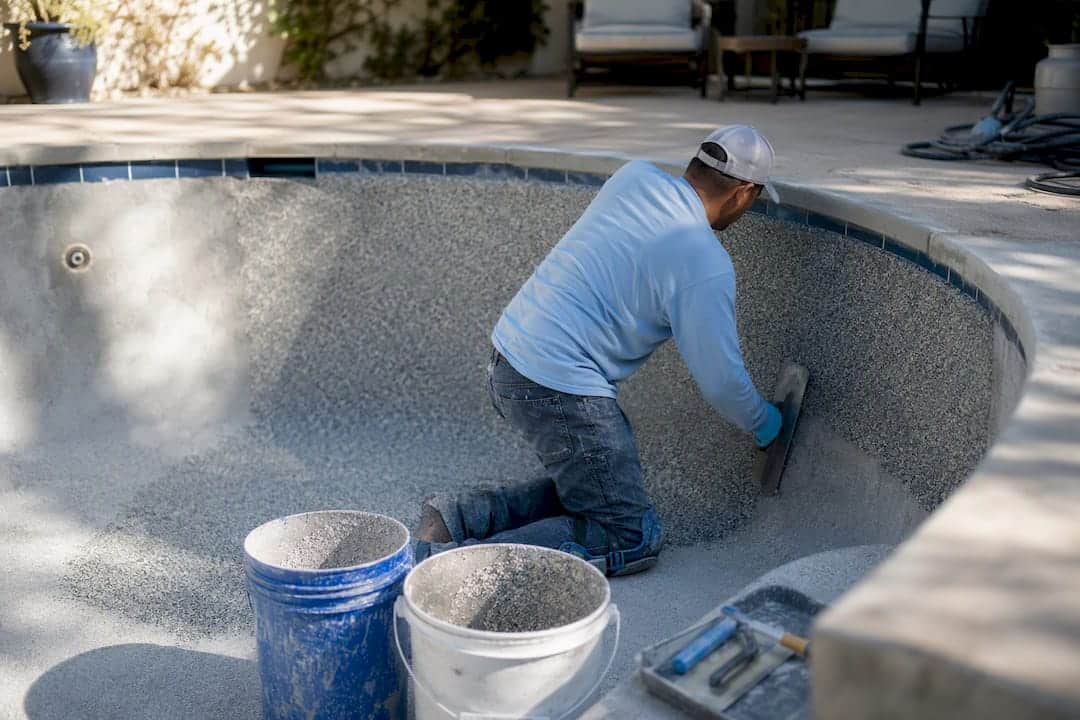
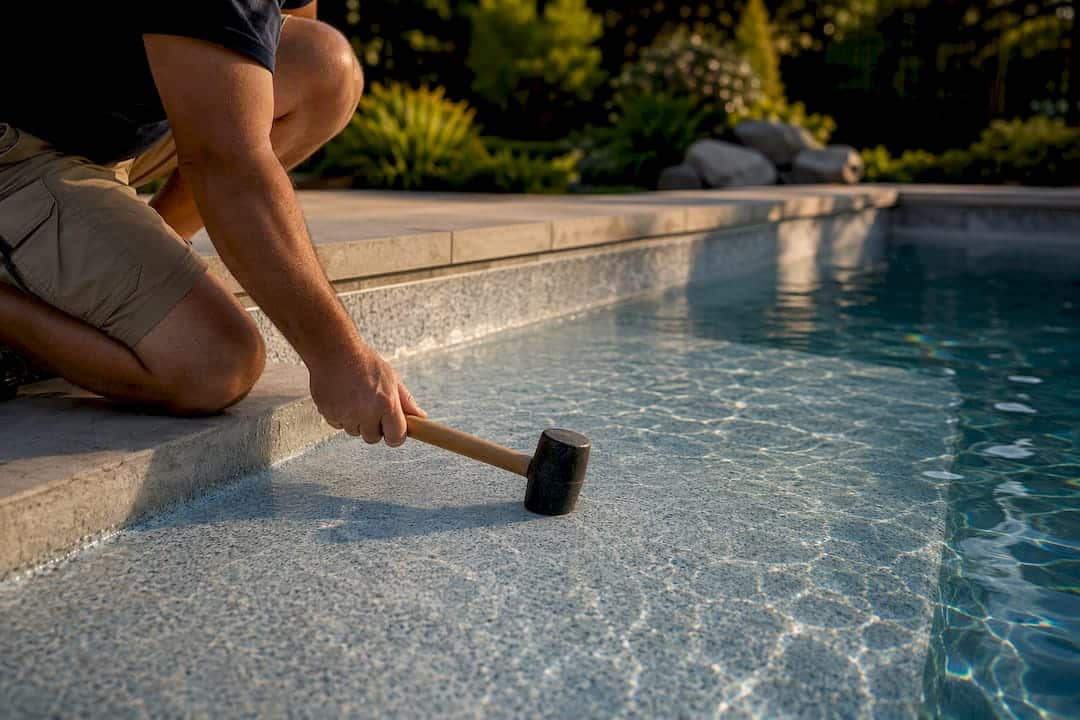
Yes, but only when the existing plaster is structurally sound, fully bonded to the shell, and properly prepared. If the surface passes a delamination check (a simple tap test that reveals hollow spots) and has no exposed rebar or major shell cracks, a contractor can apply a pebble aggregate finish directly over it after bonding and mechanical prep. If it fails that check, the old plaster gets chipped or hydroblasted off first.
Before you call a contractor, tap the pool floor and walls with a hammer handle and listen for a hollow sound, which signals delamination. Ask any bidder about their PebbleTec warranty terms and the typical 7 to 14 day cure window before refill. Those two data points tell you more about a bid’s quality than the price alone.
Key Takeaways
Pebble aggregate finishes typically outlast plaster by two to three times and often win the lifetime cost comparison despite a higher upfront price.
| Point | Details |
|---|---|
| Verdict on pebble over plaster | Yes, when the substrate passes a delamination check; failing plaster must be chipped or hydroblasted first. |
| Cost versus lifespan tradeoff | Plaster runs $4 to $7 per square foot and lasts 7 to 12 years; pebble runs $10 to $15 and lasts 15 to 25+ years. |
| Cure timeline to plan around | Expect 24 to 72 hours for acid wash exposure and 7 to 14 days of cure before refill. |
| Break-in period is normal | New pebble can feel rougher for 2 to 4 weeks; daily brushing speeds up the smoothing process. |
| Classicmarcite’s role | Inspects for delamination and structural issues before recommending bond over versus full removal, backed by decades of resurfacing experience in Central Florida. |
Table of Contents
- Pebble Vs Plaster: How Do They Compare?
- Can You Apply Pebble Over Existing Plaster?
- What Does The Installation Process Actually Look Like?
- How Much Will Resurfacing Cost, And How Long Will It Last?
- Is Pebble Too Rough On Your Feet?
- When Does Replastering Still Make Sense?
- How We Assess And Install Pebble Over Plaster
- Which Renovation Choice Actually Wins?
- Ready For A Pebble Finish Assessment?
- Frequently Asked Questions About Pebble Over Plaster
- Sources
Pebble Vs Plaster: How Do They Compare?
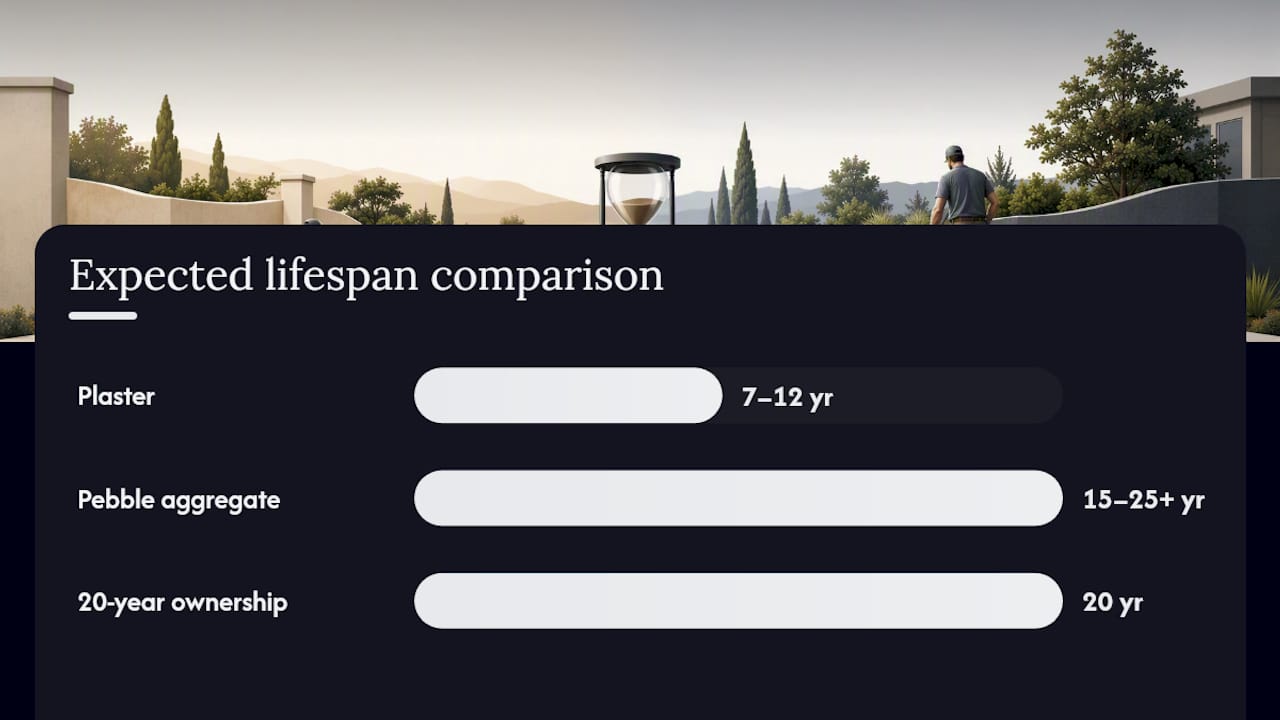
The gap between these two finishes shows up most clearly in longevity. Pebble aggregate finishes commonly run 15 to 25 years or more, while traditional plaster typically lasts 7 to 12 years before it needs another resurfacing. That difference alone reshapes the cost math over a 20 year ownership window.
Plaster costs less upfront and feels smooth underfoot from day one. Pebble costs more to install but resists staining and etching far better, because the exposed stone aggregate is chemically more inert than a cement matrix.
| Dimension | Plaster | Pebble aggregate |
|---|---|---|
| Upfront cost | Lower | Higher |
| Expected lifespan | 7 to 12 years | 15 to 25+ years |
| Maintenance needs | Frequent acid washing, more sensitive to chemistry swings | Lower, more chemistry tolerance |
| Surface texture | Smooth, uniform | Textured, varies by aggregate size |
| Stain and scale resistance | Prone to etching and mottling | Strong resistance |
| Installation downtime | Shorter | Similar, sometimes slightly longer |
| Hard water suitability | Fair, needs vigilant chemistry | Better tolerance |
- Plaster’s biggest win: lower purchase price and a glass-smooth feel, but it mottles and stains sooner in hard water.
- Pebble’s biggest win: longer service life and better stain resistance, at a higher cost per square foot.
Can You Apply Pebble Over Existing Plaster?
The rule contractors follow is straightforward: sound plaster gets prepped and bonded over, failing plaster gets removed. You cannot simply spread a pebble mix over plaster that is cracking, hollow, or chemically compromised, because the new finish will not bond and will fail early. Most resurfacing projects with visible delamination require the old plaster to be chipped or hydroblasted off before anything new goes on.
Run through this checklist before scheduling an inspection:
- Tap test the entire shell for hollow or “drummy” sounds that indicate delamination.
- Look for spiderweb cracking, especially around steps and return jets.
- Ask whether the pool has been patched or spot repaired before, since patched areas bond unevenly.
- Check for any rebar or gunite exposure, which always requires structural repair first.
Quick triage: no delamination and minimal cracking means prep and bond coat. Hollow spots, exposed rebar, or a history of patch repairs means chip and reapply from bare shell.
What Does The Installation Process Actually Look Like?
A resurfacing job runs through a predictable sequence, whether you keep the plaster substrate or start from bare gunite.
- Inspection — the applicator tests for delamination, checks plaster thickness, and photographs problem areas.
- Surface prep — sound plaster gets acid washed and mechanically profiled; unsound plaster gets chipped or hydroblasted to bare shell.
- Bonding — a bond coat or shotblast texture creates the mechanical key the aggregate mix needs to adhere.
- Aggregate application — crews trowel on the pebble and cement slurry mix in a single continuous pour to avoid cold joints.
- Water exposure — the surface is water blasted at a precise interval to expose the pebbles without washing out the cement matrix, since timing controls the final texture.
- Cure and startup — the pool fills and enters a startup brushing routine to stabilize the surface chemistry.
| Phase | Typical timebox |
|---|---|
| Removal (if required) | 1 to 2 days |
| Surface prep and bonding | 1 day |
| Aggregate application | 1 to 2 days |
| Acid wash / exposure window | 24 to 72 hours |
| Cure before refill | 7 to 14 days |
Before signing off, confirm the installer performed an adhesion test, achieved even pebble exposure across the entire surface (not just the shallow end), used a manufacturer specified mix ratio, and set you up with a daily brushing schedule for the startup window.
How Much Will Resurfacing Cost, And How Long Will It Last?
Budget matters here as much as durability. Installed costs typically run $4 to $7 per square foot for plaster versus $10 to $15 per square foot for pebble aggregate. On a standard 450 square foot residential pool, that translates to roughly $1,800 to $3,150 for plaster against $4,500 to $6,750 for pebble.
The lifespan gap explains why the math often favors pebble anyway. Because pebble’s stone content is largely chemically inert, degradation is limited mostly to the cement binder, which extends usable surface life well beyond plaster. Run the numbers over 20 years and pebble frequently comes out even or ahead, since plaster typically needs 2 to 3 resurfacings in that same span.
| Finish | Cost per sq ft | Expected lifespan |
|---|---|---|
| Plaster | $4 to $7 | 7 to 12 years |
| Pebble aggregate | $10 to $15 | 15 to 25+ years |
- Divide total install cost by expected lifespan years to get a rough cost-per-year figure. Pebble usually wins that comparison.
- Keep water balanced and brush regularly. Both finishes suffer in chronically poor water chemistry, and hard water accelerates plaster etching faster than pebble scaling.
Is Pebble Too Rough On Your Feet?
Roughness is the objection we hear most, and it deserves a real answer instead of a brush off. Modern tumbled pebble products are intentionally rounded, and the industry consensus is that this design choice provides grip without abrasiveness. Finer aggregate blends like polished or “sheen” style products cut perceived roughness further while keeping most of the durability advantage.
Stains and scale behave differently too. Pebble’s stone surface resists etching and holds color longer than plaster, which tends to mottle as the cement matrix wears. Warranty terms on aggregate finishes typically reflect that added durability with longer coverage windows than plaster warranties offer.
- Textured pebble grips well on steps, which actually improves traction versus worn, slick plaster.
- Polished pebble blends reduce roughness while retaining stain resistance.
- Expect a short adjustment period, not permanent roughness.
Pro Tip: Brush the new pebble surface daily for the first 2 to 4 weeks. This removes fine cement residue left from the exposure process and noticeably softens the feel underfoot.
When Does Replastering Still Make Sense?
Pebble is not automatically the right call for every pool owner. If you plan to sell within five years, a straight replaster often makes more financial sense than paying a premium for durability you will not personally use.
- Selling within 5 years: replaster and save the upfront cash.
- Tight renovation budget: plaster’s lower price point wins if cash flow is the priority.
- Want a glass-smooth barefoot feel: plaster still beats textured pebble here.
- Very small pool: the dollar gap between finishes shrinks, so plaster’s savings matter less.
Colored plaster looks appealing at installation but tends to show mottling sooner than pebble, since the pigment sits in the same cement matrix that etches over time.
How We Assess And Install Pebble Over Plaster
Every estimate starts with a hands on inspection, not a guess from photos. Our crews run delamination and thickness checks across the entire shell, confirm shotblast or hydroblast capability where bare substrate is needed, and flag any structural cracking before quoting a bond over approach.
We check for hollow spots, verify plaster thickness, and document every crack before we ever recommend applying pebble directly over an existing surface. If the substrate cannot support 15 plus years of new finish, we say so before you sign anything.
With decades resurfacing pools across Central Florida and a track record spanning well over 100,000 completed projects, Classicmarcite backs its installs with workmanship coverage tied to certified Pebble Tec® application standards.
- Have recent pool photos, the age of your last resurfacing, and any repair history ready for an accurate estimate.
- Ask about warranty terms and expected cure time before you compare bids.
Which Renovation Choice Actually Wins?
The conventional advice treats this as a taste decision between smooth and textured. That undersells what the data actually shows: pebble’s real advantage is lifetime cost, not looks. A pool owner who keeps their home past the ten year mark almost always comes out ahead financially with aggregate, even after the higher installation price.
Where most homeowners go wrong is skipping the delamination check before requesting quotes. A bid built on an unsound substrate is worthless regardless of the finish chosen, and it inflates the eventual repair bill when the surface fails early.
Prioritize the inspection first, the finish choice second. If your plaster is structurally sound, ask contractors to price both options side by side rather than assuming plaster is the “safe” default. The safer long-term bet, for anyone staying put more than a few years, tends to be the one with the longer service life.
Ready For A Pebble Finish Assessment?
If your pool’s plaster is aging and you’re weighing a straight replaster against upgrading to aggregate, the decision comes down to one inspection, not months of guessing. Classic Marcite has been resurfacing pools across Orlando and Jacksonville since 1988, and as the largest Pebble Tec® applicator in Central Florida, our crews can tell you within one site visit whether your existing plaster supports a direct pebble application or needs to come off first.
That single answer changes your entire renovation budget and timeline, which is why we start every project with a free, hands on inspection rather than a phone estimate. You will get a straight answer on prep requirements, realistic cost ranges for your specific pool size, and a projected cure and refill schedule before you commit to anything. If you’re ready to see what your pool’s shell can actually support, request a free pool resurfacing estimate in Orlando and get a plan built around your pool, not a generic quote.
Frequently Asked Questions About Pebble Over Plaster
Can you put a pebble finish directly over old plaster?
Only if the plaster is structurally sound, fully bonded, and free of hollow spots. Delaminated or cracked plaster needs to be chipped or hydroblasted off first.
How long does pebble last compared to plaster?
Pebble aggregate typically lasts 15 to 25 years or more, while plaster usually needs resurfacing every 7 to 12 years.
Is pebble more expensive than plaster?
Yes. Pebble runs roughly $10 to $15 per square foot installed versus $4 to $7 for plaster, though pebble often wins on cost per year over a 20 year span.
Does pebble feel rough on bare feet?
New pebble can feel textured for the first few weeks. Polished or finer aggregate blends reduce roughness while keeping most of the durability benefit.
How long before I can swim after a pebble resurfacing?
Plan for 24 to 72 hours of acid wash exposure work followed by 7 to 14 days of curing before the pool refills and swimmers can use it.
Sources
- Pebble Plaster for Swimming Pool Interior Finishes: Pros & Cons
- Pool Resurfacing Guide: Cost, Process, and How Often You Need It
- White Plaster vs Pebble Pool Finish
- Pebble Tec vs. Plaster Comparison | PHX Pools