TL;DR:
- Pool chlorination introduces chlorine to water, producing hypochlorous acid that kills microorganisms and oxidizes waste. Maintaining proper pH and regular testing of free and combined chlorine levels are essential for effective disinfection and swimmer comfort. Superchlorination is necessary to control chloramines, which cause irritation and reduce water quality, especially in high-use or outdoor pools.
Pool chlorination is defined as the process of adding chlorine compounds to pool water to create a disinfecting residual that kills bacteria, viruses, and algae. The active agent is hypochlorous acid (HOCl), which forms when chlorine dissolves in water and attacks pathogens at the cellular level. Without a maintained chlorine residual, pool water becomes a breeding ground for harmful microorganisms within hours. Understanding how the pool chlorination process works gives you direct control over water safety, chemical costs, and swimmer comfort.
What is pool chlorination and how does it work chemically?
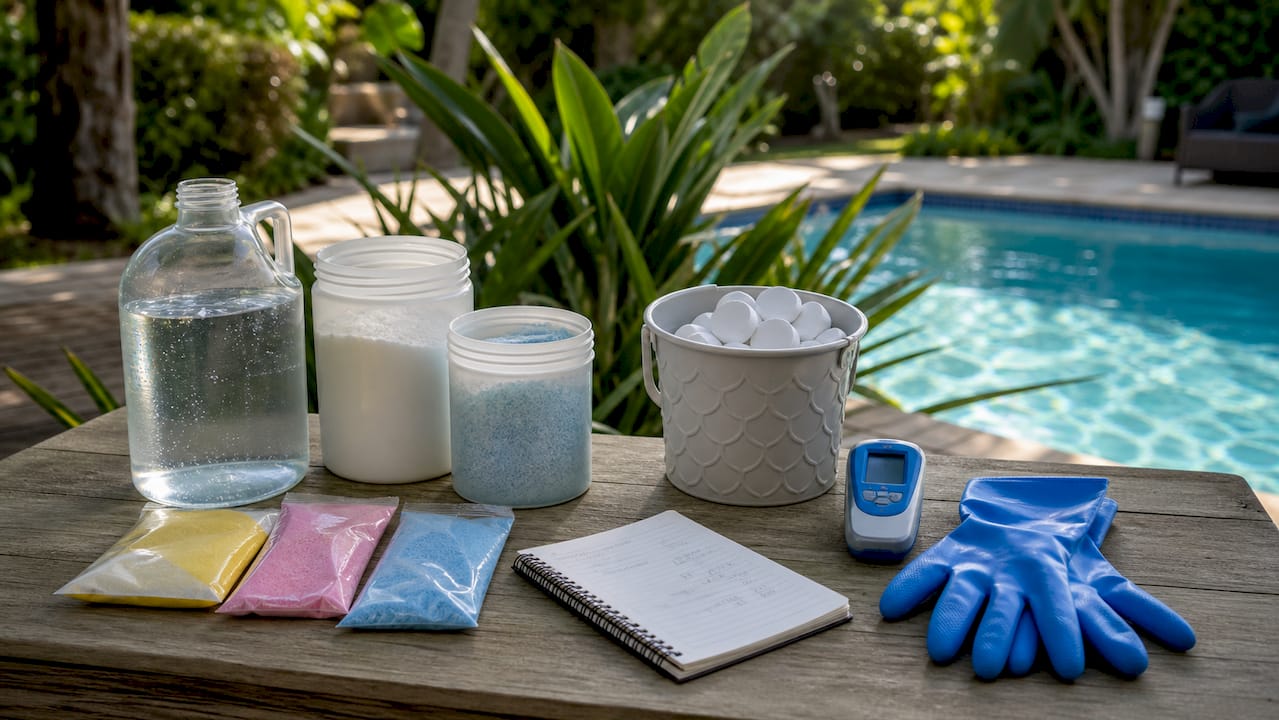
Pool chlorination works by introducing chlorine into water, where it splits into two compounds: hypochlorous acid (HOCl) and the hypochlorite ion (OCl-). HOCl is the active sanitizer. It penetrates microbial cell walls and destroys them. The hypochlorite ion carries the same chlorine atoms but is far less effective at killing germs because its negative charge slows penetration.
Chlorine performs two distinct jobs in your pool:
- Sanitization: HOCl kills bacteria, viruses, and algae by disrupting their cellular function.
- Oxidation: Chlorine oxidizes bather waste including body oils, sweat, sunscreen, and cosmetics. This oxidation process consumes chlorine, reducing the amount available for sanitization.
Understanding the difference between free chlorine (FC), total chlorine (TC), and combined chlorine (CC) is central to effective pool water maintenance. Free chlorine is the active, unused portion doing the sanitizing work. Combined chlorine is chlorine that has already reacted with contaminants and formed chloramines. Combined chlorine equals TC minus FC, and keeping that number low is one of the most important goals in pool management.
Pro Tip: Test your pool water for both free chlorine and total chlorine separately. If the gap between the two numbers exceeds 0.4 ppm, you have a chloramine problem that requires immediate attention.
pH is the other critical variable. At pH 7.2, roughly 66% of chlorine exists as HOCl. At pH 7.8, that drops to about 33%. That means the same chlorine dose at the wrong pH delivers half the sanitizing power. Adjust pH before adding chlorine, not after.
What are the different pool chlorine types?
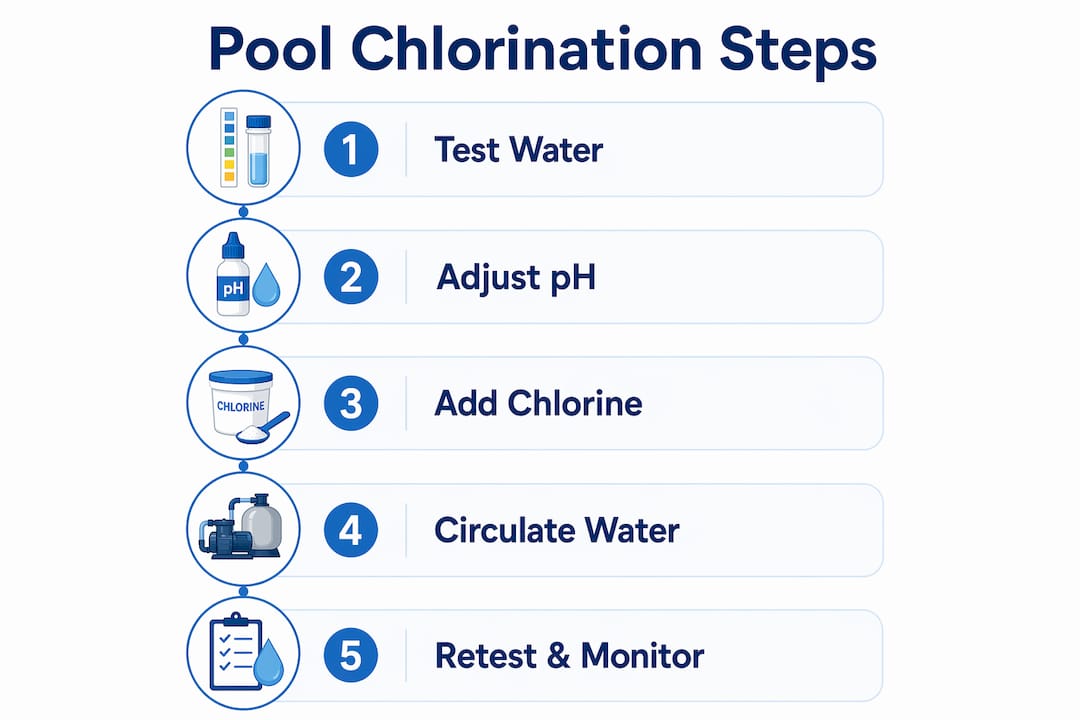
Three primary forms of chlorine are used in residential pools, and each behaves differently in water. Choosing the right type depends on your pool size, usage frequency, and existing water chemistry.
| Chlorine Type | Active Ingredient | Speed | Adds Cyanuric Acid | Effect on pH | Best Use |
|---|---|---|---|---|---|
| Liquid chlorine | Sodium hypochlorite | Fast | No | Raises pH | Quick dosing, high-use pools |
| Granular chlorine | Calcium hypochlorite | Fast | No | Raises pH | Shock treatments, weekly dosing |
| Chlorine tablets | Trichlor | Slow release | Yes | Lowers pH | Routine maintenance, floaters |
Liquid chlorine acts fast and adds no cyanuric acid, making it ideal when you need a rapid chlorine boost without affecting stabilizer levels. Granular chlorine (calcium hypochlorite) dissolves quickly and works well for shock treatments, but it raises calcium hardness over time. Tablets (trichlor) are convenient for steady, slow release through a floater or automatic feeder, but they continuously add cyanuric acid to the water. High cyanuric acid levels reduce chlorine effectiveness, which is a common problem in pools that rely exclusively on tablets year round.
How often should you chlorinate your pool?
Effective pool maintenance requires two distinct chlorination strategies: routine dosing and periodic superchlorination. Routine dosing maintains a free chlorine residual of 1–3 ppm for residential pools. Superchlorination, also called breakpoint chlorination, raises free chlorine to a level approximately 10 times the combined chlorine concentration to break down chloramines and reset water chemistry.
Follow this practical sequence for routine pool chlorination:
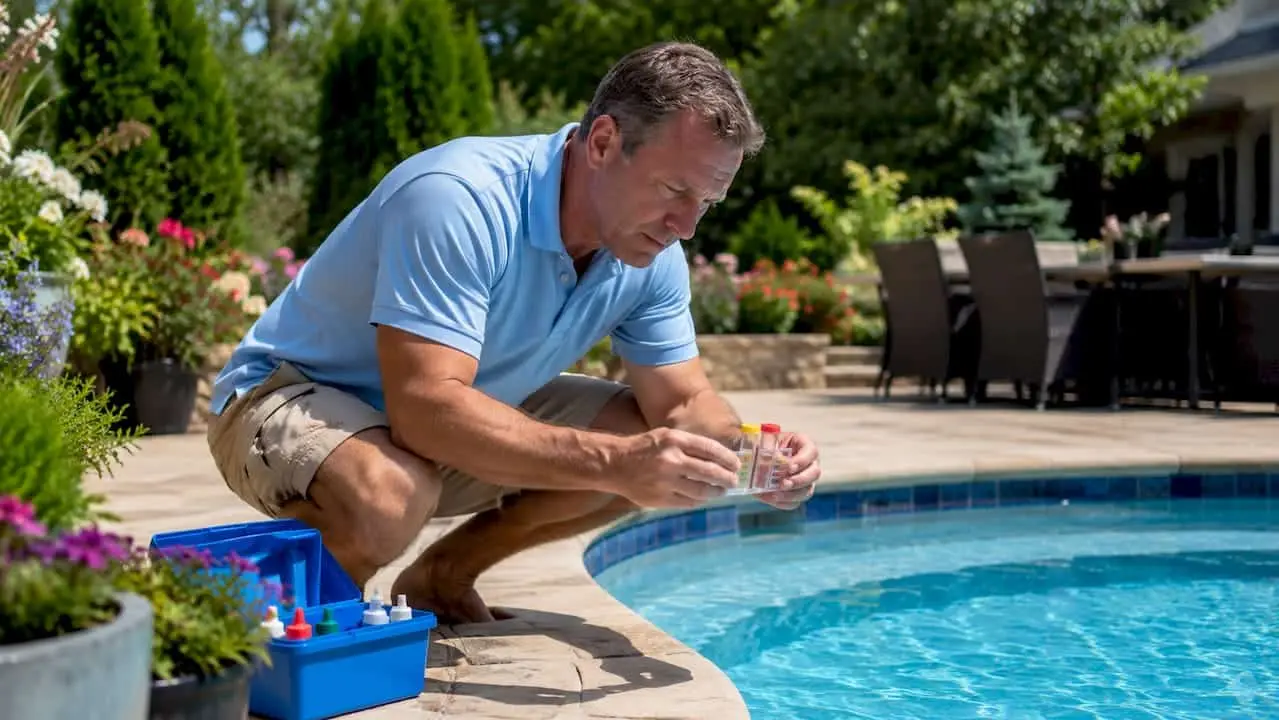
- Test the water first. Use a reliable test kit or test strips to measure free chlorine, total chlorine, and pH before adding any chemicals.
- Adjust pH to the 7.2–7.6 range. Adding chlorine to water outside this range wastes chemical and reduces effectiveness.
- Add chlorine based on your test results. For granular or liquid chlorine, calculate the dose based on pool volume. For tablets, check that your feeder or floater is dispensing at the correct rate.
- Retest after 4–6 hours. Confirm the free chlorine level has reached the target range before swimmers enter.
- Superchlorinate weekly or after heavy use. High pool usage, heat, and organic contaminants increase chlorine demand rapidly, often dropping free chlorine below safe levels despite regular dosing.
Signs your pool needs immediate chlorination include cloudy water, a strong chemical smell, eye irritation in swimmers, or visible algae growth. The strong smell is not a sign of too much chlorine. It is a sign of too little. That odor comes from chloramines, not free chlorine.
Pro Tip: Shock your pool in the evening rather than midday. Sunlight degrades free chlorine rapidly, so a daytime shock treatment loses much of its potency before it can do its job. Evening dosing gives chlorine the overnight hours to work without UV interference.
For Florida homeowners managing pools through intense summer heat, the pool maintenance strategies that reduce chlorine use by up to 2.5 times are worth reviewing before peak season.
What are chloramines and why do they matter?
Chloramines are the compounds that form when free chlorine reacts with nitrogen-containing waste from swimmers, including sweat, urine, and body oils. They are the real cause of most swimmer discomfort, not excess chlorine. Chloramines cause eye, skin, and respiratory irritation, and in indoor pools, they accumulate in the air above the water surface, creating breathing problems for regular swimmers.
The industry standard for combined chlorine (the measure of chloramines in water) is a maximum of 0.4 ppm. Above that level, swimmers will notice discomfort. The fix is superchlorination, not reducing chlorine. Raising free chlorine to the breakpoint level chemically destroys chloramine compounds and restores water clarity and comfort.
Key facts about chloramine control:
- The “chlorine smell” at a pool is caused by chloramines, not free chlorine. A strong smell means the pool needs more chlorine, not less.
- Indoor pools require controlled superchlorination and proper ventilation to safely off-gas chloramines from both water and air.
- Showering before swimming reduces the amount of nitrogen-containing waste entering the water, directly lowering chloramine formation.
- Enzyme-based pool products can help break down organic contaminants before chlorine reacts with them, reducing chloramine production at the source.
“The most effective way to reduce chloramine-related irritation is not to add less chlorine. It is to superchlorinate regularly and keep bather load waste out of the water in the first place.”
For additional guidance on keeping water clear and algae-free alongside chloramine control, the algae-free pool maintenance guide from Ocean Care Store covers complementary strategies worth reviewing.
How does water chemistry affect chlorination effectiveness?
Chlorine does not work in isolation. pH, cyanuric acid (CYA), calcium hardness, and total alkalinity all affect how well your chlorine sanitizes the water. Getting these variables right is what separates a pool that stays clean from one that constantly fights algae and cloudiness.
| Parameter | Ideal Range | Effect If Out of Range |
|---|---|---|
| pH | 7.2–7.6 | High pH cuts HOCl fraction in half; low pH corrodes surfaces |
| Free Chlorine | 1–3 ppm | Below 1 ppm allows pathogen growth; above 5 ppm irritates skin |
| Cyanuric Acid (CYA) | 30–50 ppm | Above 80 ppm significantly reduces chlorine effectiveness |
| Combined Chlorine | Below 0.4 ppm | Above 0.4 ppm indicates chloramine buildup requiring shock |
| Total Alkalinity | 80–120 ppm | Low alkalinity causes pH to swing wildly |
Cyanuric acid acts as a sunscreen for chlorine, slowing UV degradation in outdoor pools. That is useful up to a point. Focusing only on total chlorine is misleading when CYA levels are high, because stabilized chlorine is less available in the active HOCl form. If CYA climbs above 80 ppm, the only reliable fix is a partial water drain and refill. No amount of additional chlorine fully compensates for over-stabilization.
Adjusting pH to the ideal range before chlorination is the single most cost-effective step you can take. A pool at pH 7.8 needs roughly twice the chlorine dose to achieve the same sanitizing effect as a pool at pH 7.2. That translates directly to higher chemical costs and more chloramine formation. For a complete overview of pool water quality tips covering all these parameters, Classicmarcite’s guide walks through each variable with practical testing schedules.
Key takeaways
Effective pool chlorination depends on maintaining active HOCl through correct pH, regular testing, and periodic superchlorination to control chloramines.
| Point | Details |
|---|---|
| HOCl is the active sanitizer | Free chlorine in HOCl form does the actual germ-killing work, not total chlorine. |
| pH controls chlorine strength | At pH 7.8, chlorine is half as effective as at pH 7.2, so test pH before dosing. |
| Chloramines cause irritation | The “pool smell” signals chloramine buildup, which requires superchlorination to fix. |
| Chlorine type affects water chemistry | Tablets add cyanuric acid over time; liquid chlorine offers fast dosing without raising stabilizer levels. |
| Test combined chlorine regularly | Calculate combined chlorine as TC minus FC and act when it exceeds 0.4 ppm. |
What i’ve learned after seeing thousands of florida pools
After working with pools across Central Florida for decades, the most consistent mistake I see homeowners make is treating chlorination as a set-and-forget task. They drop tablets in a floater, check the water once a week, and assume everything is fine. It rarely is, especially in Florida’s heat.
The second most common mistake is chasing the wrong number. Homeowners see a total chlorine reading of 3 ppm and assume the pool is well-protected. But if free chlorine is only 1.5 ppm and combined chlorine is 1.5 ppm, that pool has a serious chloramine problem. The total number looks fine. The actual sanitizing capacity is not.
What actually works is a consistent testing routine that covers free chlorine, combined chlorine, and pH at minimum, combined with a weekly shock treatment during summer months. Florida’s heat and heavy bather loads create chlorine demand that routine tablet dosing simply cannot keep up with alone. Superchlorination is not an emergency measure. It is a regular maintenance step.
One more observation worth sharing: a degraded or rough pool surface makes chlorination harder. Porous or damaged plaster traps algae and bacteria in microscopic crevices where chlorine cannot reach them effectively. A well-maintained, smooth pool surface is not just about appearance. It directly affects how well your water chemistry performs. Protecting your pool finish for lasting durability is part of the same maintenance equation as proper chlorination.
— Classicmarcite
Keep your pool clean from the surface up
Proper chlorination protects your water. A quality pool surface protects everything underneath it. At Classic Marcite, we have resurfaced over 100,000 pools across Orlando, Jacksonville, and beyond since 1988. A smooth, durable interior finish makes your chlorination program more effective by eliminating the rough surfaces where algae and bacteria hide.

Whether you are dealing with a worn plaster surface that is undermining your water chemistry or simply planning a full pool renovation, Classicmarcite offers free estimates on pool resurfacing in The Villages and throughout Central Florida. Our pool remodeling services cover everything from interior finishes using Pebble Tec® to deck repairs and equipment upgrades. Contact us to schedule your free estimate and see what a properly resurfaced pool can do for your water quality and your backyard.
FAQ
What is pool chlorination in simple terms?
Pool chlorination is the process of adding chlorine chemicals to pool water to kill bacteria, viruses, and algae. The active compound, hypochlorous acid (HOCl), forms when chlorine dissolves and directly destroys pathogens.
What free chlorine level is safe for swimming?
A free chlorine level of 1–3 ppm is the standard safe range for residential pools. Levels below 1 ppm allow pathogen growth, while levels above 5 ppm can irritate skin and eyes.
Why does my pool smell like chlorine if i just added more?
That strong smell comes from chloramines, not free chlorine. Chloramines form when chlorine binds with swimmer waste, and their presence means the pool needs superchlorination, not less chlorine.
How often should i shock my pool?
Shock your pool at least once a week during summer or after heavy use. High temperatures and bather load increase chlorine demand rapidly, and regular superchlorination breaks down chloramines before they cause problems.
Is pool chlorination necessary if the water looks clear?
Clear water does not mean safe water. Pathogens and chloramines can exist at harmful levels in visually clear pools. Regular testing and maintained chlorine residuals are the only reliable way to confirm water safety.
