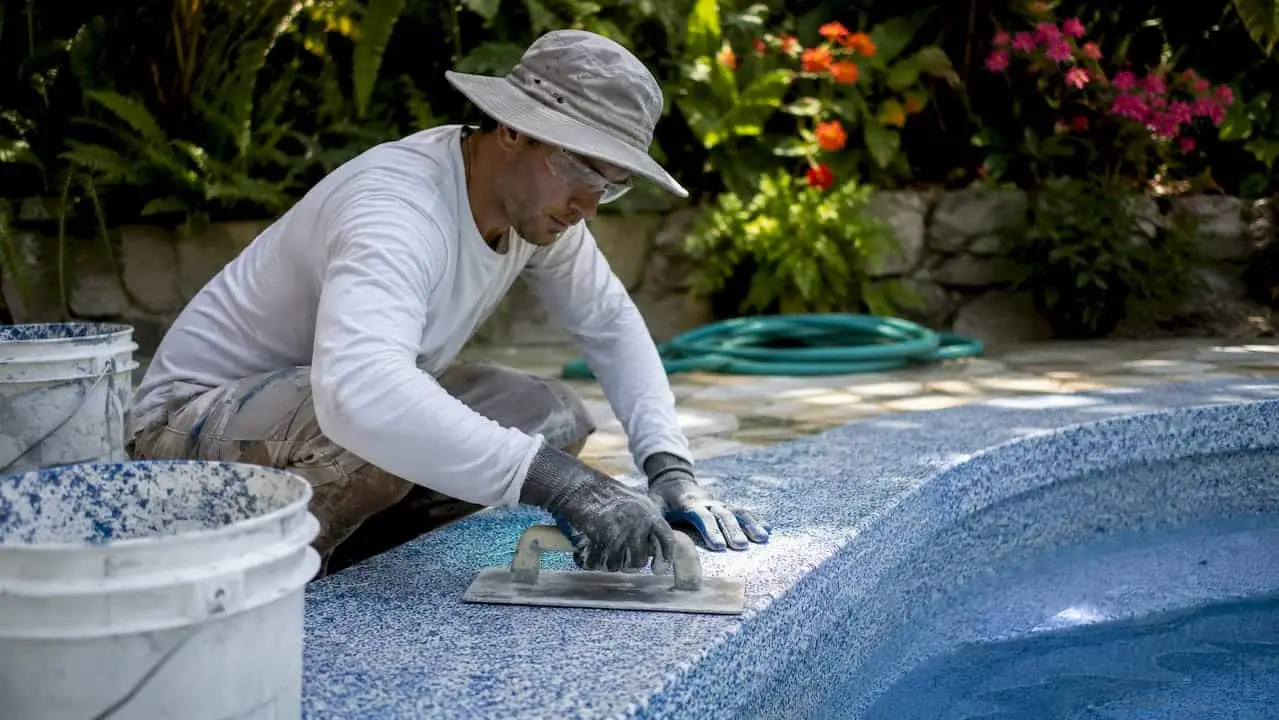
TL;DR:
- Quartz pool finish is a durable, stain-resistant surface made from Portland cement and crushed quartz, outperforming traditional plaster in longevity and appearance. Its higher hardness and denser structure resist staining, chemical wear, and saltwater exposure, making it ideal for Florida’s hard water conditions. Proper startup care and skilled application are essential to maximize its performance and lifespan, which typically ranges from 12 to 18 years.
A quartz pool finish is defined as a Portland cement plaster blend reinforced with crushed quartz aggregate, producing a surface that outperforms traditional plaster in durability, color retention, and stain resistance. If you are weighing your options for a pool resurfacing project, understanding why use quartz pool finish matters before you commit to any material. The quartz aggregate is not decorative filler. It physically hardens the surface, locks pigment inside the crystals, and creates a denser barrier against the chemical wear that shortens the life of standard white plaster. For Florida homeowners dealing with hard water, high UV exposure, and year-round pool use, those properties translate directly into fewer repairs and a better-looking pool for longer.
Why use quartz pool finish instead of traditional plaster?
Quartz pool finish is made from two primary components: white Portland cement as the binder and crushed quartz aggregate as the performance ingredient. The quartz aggregate adds hardness, texture, and color vibrancy that plain cement cannot replicate on its own. Diamond Brite, one of the most widely recognized quartz finish products, mixes Portland cement with colored quartz to produce a surface that is both structurally stronger and visually richer than standard plaster.
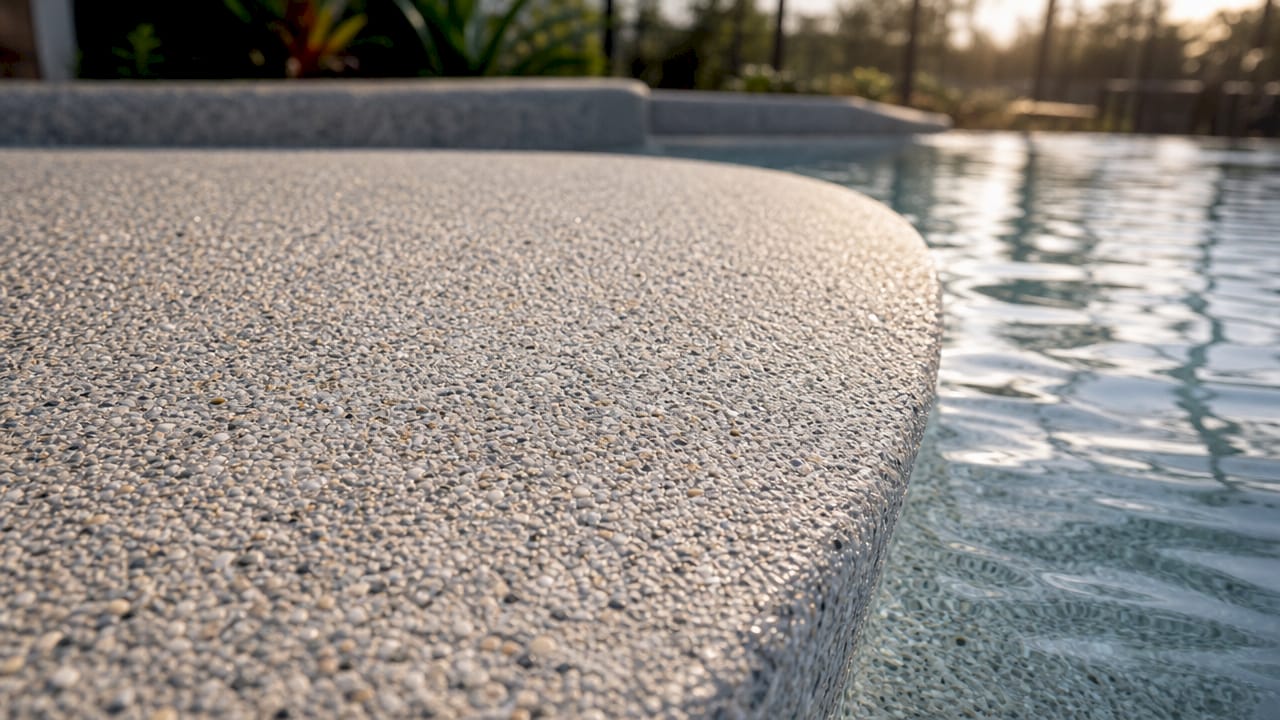
Traditional plaster is essentially white Portland cement mixed with marble dust or calcium carbonate. It is affordable and smooth, but it is also porous and relatively soft. Over time, pool chemicals, minerals, and algae exploit those pores. Quartz aggregate closes that gap by creating a denser matrix that resists penetration from the start.
The visual difference is equally significant. Quartz crystals reflect light and maintain pigment better than plaster, producing a sparkling, vivid appearance that holds up over years rather than fading within the first pool season. That sparkle effect is not a marketing claim. It results from the physical property of quartz refracting light at the surface rather than absorbing it.
- Composition: Portland cement binder plus crushed quartz aggregate in a range of colors
- Hardness: Quartz rates 7 on the Mohs scale, significantly harder than calcium carbonate in standard plaster
- Color: Pigment locked inside quartz crystals rather than mixed loosely into cement
- Texture: Slightly rougher than plaster, providing grip without the sharp feel of pebble finishes
- Brands: Diamond Brite and similar quartz aggregate systems are widely available through licensed applicators
Pro Tip: Ask your installer to show you physical color samples of the quartz aggregate in direct sunlight before you choose a color. The wet showroom sample and the cured, sunlit pool surface can look noticeably different.
How does quartz pool finish improve durability and stain resistance?
Quartz pool finishes resist staining and chemical wear better than plain plaster, particularly in hard water conditions that contain iron and copper. Quartz aggregate resists metal staining common in well water and reduces scale buildup caused by high calcium hardness. For homeowners in Central Florida who draw from well water or live in areas with high mineral content, this is one of the most practical reasons to choose quartz over standard plaster.
The density of a cured quartz surface is the key factor. Plaster is porous enough that iron and copper ions from the water column can penetrate the surface and oxidize, leaving brown or blue-green stains that are difficult to remove without acid washing. Quartz’s denser matrix gives those ions far less surface area to grip. The result is a finish that stays cleaner between service visits and requires less aggressive chemical intervention to maintain its appearance.
Quartz finishes are also well-suited for saltwater pools. Salt chlorine generators produce a consistently lower pH environment over time, which is harder on softer plaster surfaces. The hardness of quartz aggregate makes it more tolerant of the mild acidity that saltwater systems generate.
Quartz is more forgiving than plaster, but neglect can still lead to etching or staining over time. The material improves your margin for error. It does not eliminate the need for consistent water chemistry management.
The durability of quartz pool finish also shows in resistance to chipping and delamination. Plaster surfaces can develop spider cracks and rough patches within five to seven years under heavy use. A properly installed quartz finish in the same conditions typically holds its structural integrity well beyond that window.
What are the maintenance requirements for quartz pool finishes?
Proper startup care for a new quartz finish determines how well the surface performs over its entire lifespan. The first 30 days after installation are the most critical period. Diamond Brite startup protocols specify pH targets between 7.2 and 7.6 along with controlled chlorine levels during the initial curing phase. Deviating from those targets during startup can cause early staining or uneven color that becomes permanent once the cement fully cures.
Brushing is equally non-negotiable during startup. Cement dust rises to the surface as the finish cures, and that dust will stain the quartz aggregate if it is not removed daily. Most applicators recommend brushing the entire pool surface twice daily for the first two weeks, then once daily through the end of the first month.
- Fill the pool completely before adding any chemicals to avoid concentrated chemical contact with the fresh surface.
- Test and balance water chemistry within the first 24 hours, targeting pH 7.2 to 7.6 and total alkalinity between 80 and 120 ppm.
- Brush the entire pool surface twice daily for the first 14 days to remove cement dust from the quartz aggregate.
- Monitor calcium hardness and keep it between 200 and 400 ppm to prevent both scaling and etching.
- Reduce brushing to once daily from day 15 through day 30, then transition to a standard weekly maintenance schedule.
One phenomenon that surprises many homeowners is mottling. Mottling is a normal temporary effect during initial curing caused by uneven cement hydration rates across the surface. It typically resolves within two months with regular brushing and balanced water chemistry. If you see blotchy color variations in the first few weeks, do not panic and do not attempt to correct it with aggressive chemicals.
Pro Tip: Keep a written log of your water chemistry readings for the first 60 days. If mottling or staining develops, that log gives your installer or pool service technician the data needed to diagnose the cause accurately.
Long-term maintenance for quartz is straightforward. Dense quartz finish prevents biofilm from taking hold as easily as it does on plaster, which means algae blooms are less frequent. Weekly brushing, consistent chemical balance, and an annual professional inspection are the standard care requirements.
Quartz vs. plaster, pebble, and tile: how do they compare?
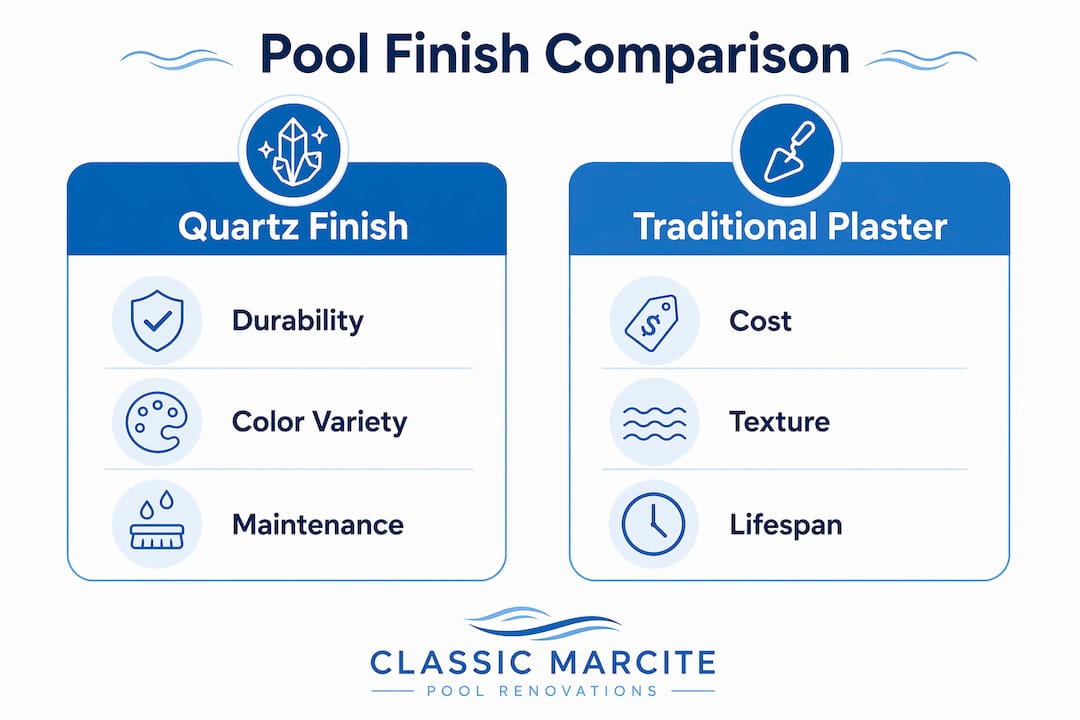
Quartz occupies the middle position in the pool finish spectrum, sitting above standard plaster in performance and below pebble aggregate finishes in cost. Quartz costs more than plaster but less than pebble, with a lifespan of 12 to 18 years and color options that plaster simply cannot match. That positioning makes it the practical choice for homeowners who want a meaningful upgrade without committing to the premium price of Pebble Tec or similar aggregate systems.
| Finish type | Typical lifespan | Relative cost | Surface texture | Color options |
|---|---|---|---|---|
| Standard plaster | 5 to 10 years | Lowest | Smooth | Limited (white, off-white) |
| Quartz aggregate | 12 to 18 years | Mid-range | Slightly textured | Wide range |
| Pebble aggregate | 20 to 25 years | Highest | Rough to medium | Extensive |
| Glass tile | 25 or more years | Premium | Smooth | Unlimited |
The surface texture of quartz is slightly rougher than plaster but noticeably smoother than pebble finishes, which makes it comfortable for families with children who spend a lot of time on pool steps and benches. Pebble finishes are durable and visually striking, but the rough texture can be abrasive on bare feet and knees, particularly for younger swimmers.
For homeowners planning to stay in their property for 10 to 15 years, quartz delivers the best return on investment among the mid-range options. Plaster will need replacement within that window, often more than once. Pebble finishes outlast the ownership period for many homeowners, meaning they pay for longevity they may never fully use. Quartz aligns the finish lifespan with a realistic ownership horizon while delivering the color and sparkle that make a pool look genuinely appealing.
Exploring the pool finish types available in Florida reveals that quartz also performs well in the state’s specific climate conditions, where UV intensity and warm water temperatures accelerate the degradation of softer plaster surfaces.
Key takeaways
Quartz pool finish delivers the best balance of durability, aesthetics, and cost for homeowners seeking a 12 to 18 year surface life without paying premium pebble prices.
| Point | Details |
|---|---|
| Material composition | Portland cement plus crushed quartz aggregate creates a harder, denser surface than standard plaster. |
| Stain and chemical resistance | Quartz resists metal staining from iron and copper, making it ideal for hard water and saltwater pools. |
| Startup care is critical | Proper pH balance and daily brushing in the first 30 days determine long-term finish performance. |
| Mid-range cost and lifespan | Quartz lasts 12 to 18 years at a cost between plaster and pebble, matching most homeowner timelines. |
| Not maintenance-free | Quartz is forgiving but still requires consistent water chemistry to prevent etching and discoloration. |
What experience with quartz finishes actually teaches you
After seeing the results of quartz installations across thousands of pools, the pattern that stands out most is this: the finish performs exactly as advertised when the installer and the homeowner both do their jobs. Where it falls short, the cause is almost always one of two things. Either the startup protocol was rushed, or the homeowner assumed that “more durable than plaster” meant “requires no attention.”
Quartz is not stain-proof. That distinction matters more than most product descriptions acknowledge. What quartz actually gives you is a wider margin for error and a longer window before problems become serious. A plaster pool that goes two weeks without proper chemical balance can develop staining that requires acid washing. A quartz pool in the same situation will likely look fine. But push that neglect to two months, and you will see the same outcome.
The other thing worth saying plainly: installer quality matters as much as material quality. A quartz finish applied by an inexperienced crew will underperform a plaster finish applied by a skilled one. The aggregate mix ratio, the application thickness, and the curing conditions all affect the final result. This is not a product you buy off a shelf. It is a craft.
For homeowners with moderate budgets and realistic ownership timelines, quartz is the right call in most cases. It gives you a pool that looks better, lasts longer, and requires less corrective maintenance than plaster. Just go in with clear expectations and a commitment to the startup protocol.
— Classicmarcite
How Classicmarcite helps you get quartz pool finish right
Classic Marcite has resurfaced over 100,000 pools across Orlando, Jacksonville, and beyond since 1988, and quartz aggregate finishes are among the most requested upgrades from homeowners who want a lasting improvement without the cost of full pebble systems.

Whether you are replacing a worn plaster surface or upgrading an aging pool for resale, the Classicmarcite team brings the installation experience and material knowledge that quartz finishes require. The company’s pool resurfacing services cover the full process from surface preparation through startup guidance, so your new finish cures correctly and performs the way it should. Contact Classicmarcite for a free estimate and find out which quartz finish option fits your pool, your water conditions, and your budget.
FAQ
What is quartz pool finish made of?
Quartz pool finish is a blend of white Portland cement and crushed quartz aggregate. The quartz adds hardness, color depth, and stain resistance that standard plaster cannot provide.
How long does a quartz pool finish last?
A properly installed and maintained quartz finish lasts 12 to 18 years. Lifespan depends on water chemistry consistency, startup care, and the quality of the original installation.
Is quartz finish worth it compared to standard plaster?
Quartz costs more upfront than plaster but delivers a longer lifespan, better color retention, and greater resistance to staining. For most homeowners planning a 10 to 15 year ownership horizon, the cost difference is justified.
What causes mottling on a new quartz pool finish?
Mottling is a normal result of uneven cement curing rates during the first weeks after installation. Regular brushing and balanced water chemistry resolve it within two months in most cases.
Does quartz pool finish work in saltwater pools?
Quartz aggregate is well-suited for saltwater pools because its density and hardness make it more tolerant of the mildly acidic environment that salt chlorine generators produce over time.
