TL;DR:
- The role of pool tile is vital in framing water appearance, enhancing aesthetics, and providing protection. Selecting the right tile color, material, and placement—especially at the waterline—can dramatically influence the pool’s overall look and safety. Proper installation and maintenance are essential to ensure long-lasting beauty and structural integrity.
Most homeowners assume the pool plaster does the heavy lifting when it comes to how their pool looks. The water color, the mood, the overall visual impression. The truth is more nuanced. The role of tile in pool aesthetics is far greater than most people realize. Tile frames the water, shifts its perceived color, and connects the pool to the surrounding landscape. Get the tile right, and every other design decision clicks into place. Get it wrong, and even a beautiful plaster finish will feel incomplete.
Table of Contents
- Key Takeaways
- The role of tile in pool aesthetics: protection and visual framing
- How tile color and texture shape water mood
- Tile types and materials: what actually performs
- Innovative tile placement and design trends for 2026
- Practical installation and maintenance standards
- My honest take on tile as a design decision
- How professional resurfacing transforms tile results
- FAQ
Key Takeaways
| Point | Details |
|---|---|
| Tile frames the entire pool | The waterline tile band is the first visual element you see, setting the tone for the whole pool. |
| Color perception starts with tile | Tile hue directly shapes how water looks, from bright turquoise to deep lagoon blue to natural green. |
| Material choice drives longevity | Glass mosaic and porcelain tiles each offer distinct aesthetic and durability trade-offs worth understanding. |
| Installation standards are non-negotiable | Polymer-modified thinset mortar rated to ANSI A118.4 or higher is required for lasting adhesion. |
| Tile and deck must work together | Coordinating tile, plaster, and deck tones creates a cohesive outdoor space instead of a series of disconnected surfaces. |
The role of tile in pool aesthetics: protection and visual framing
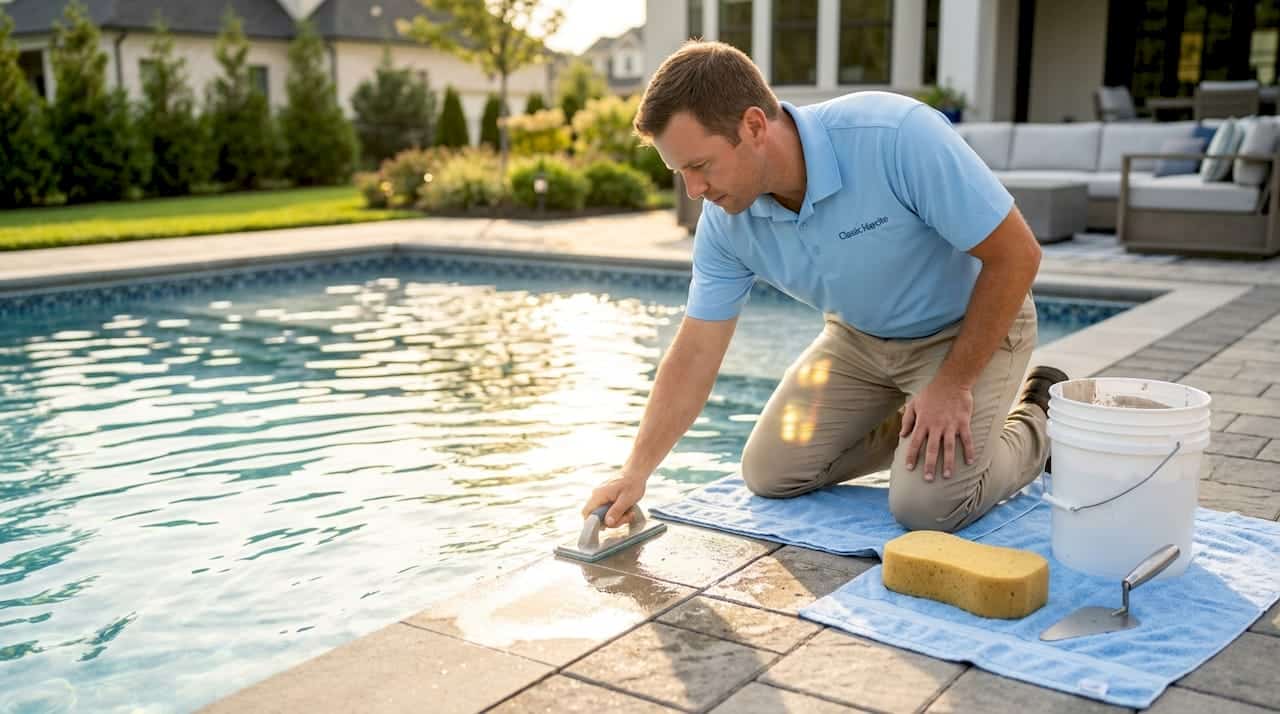
The waterline tile band might look like a decorative strip. It is actually one of the hardest-working elements in your entire pool. The waterline band sits half-submerged and half-exposed, making it the most aggressive zone for chemical exposure, mineral buildup, and, in northern climates, freeze-thaw damage. Without tile at this vulnerable seam, pool shells deteriorate far faster.
But here is where pool tile design impact goes beyond protection. The waterline band is the visual frame of the pool. It is the line your eye traces when you first look at the water. The importance of pool tiles at this specific location cannot be overstated. A 6-inch band of well-chosen tile sets the entire aesthetic tone before the plaster color, the deck material, or the surrounding plants even register.
Here is what the waterline tile actually does for you:
- Creates a clean, defined edge between the water and the surrounding hardscape
- Reflects and transmits light into the water, directly shifting perceived water color
- Protects the shell from calcium deposits, staining, and chemical erosion
- Provides a consistent surface that can be cleaned without damaging the pool interior
- Establishes the design language for the rest of the pool environment
Pro Tip: When choosing tiles for pools, start at the waterline. Select that tile first, then work outward to the deck and downward to the plaster. The waterline tile anchors everything else.
A common misconception worth addressing: many homeowners think they can skip quality tile in favor of spending more on plaster. The reality is that tile and plaster work together to define water appearance. Cutting corners on tile undercuts the entire investment.
How tile color and texture shape water mood
Tile color is perhaps the single most misunderstood variable in pool design. People choose tile for how it looks on a sample board, not for how it transforms the water above it. Those are two completely different things.
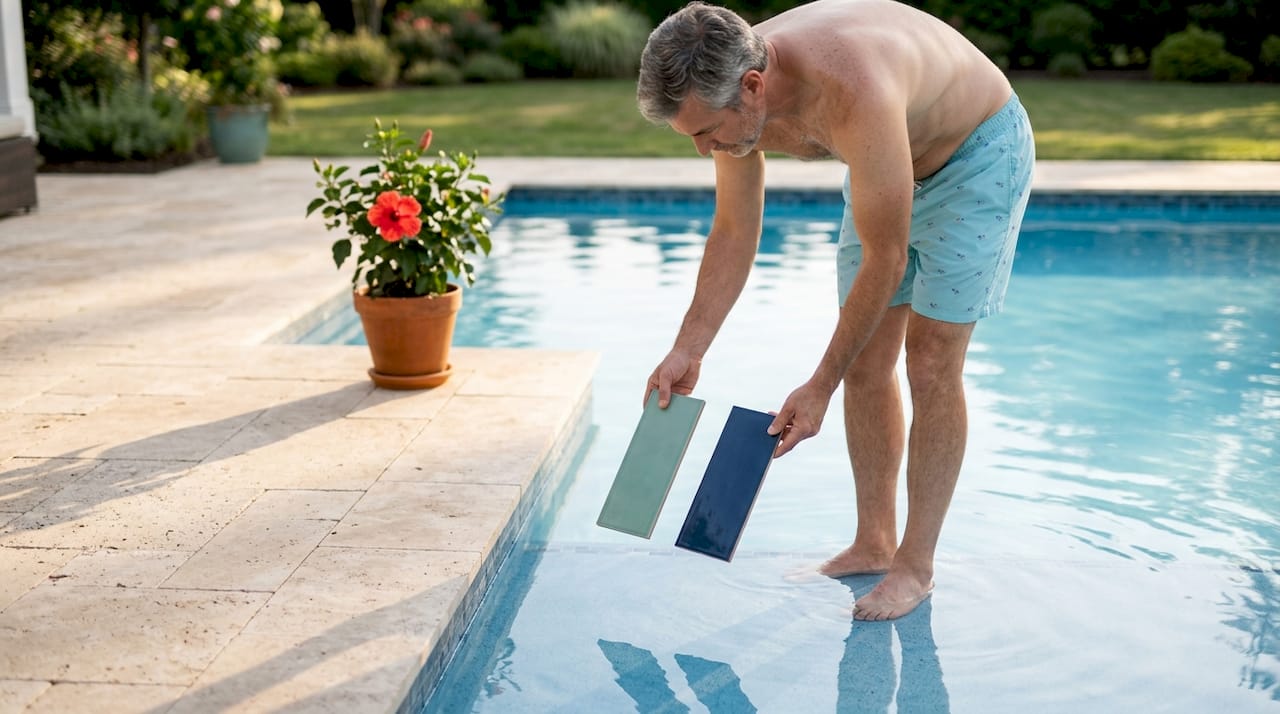
Tile color acts as a canvas for light, and the water above that canvas takes on the tile’s hue in ways that shift based on sunlight angle, pool depth, and surrounding reflections. Here is a quick reference for how different tile tones perform:
| Tile Color | Water Effect | Best For |
|---|---|---|
| Light blue or white | Bright, transparent, resort-like clarity | Family pools, shallow play areas |
| Deep cobalt blue | Rich lagoon depth, dramatic at night | Luxury pools, infinity edges |
| Green or teal | Natural, organic, pond-like warmth | Tropical or garden settings |
| Gray or charcoal | Sophisticated, moody, slate-like finish | Contemporary or minimalist designs |
| Beige or sand | Warm, shallow-appearing, Mediterranean feel | Coastal, resort, or naturalistic styles |
Beyond color, texture adds another dimension to aesthetic pool tiles. Stone-look porcelain with a matte or slightly rough surface mimics travertine or slate, pulling in an organic, earthy quality that plain ceramic cannot achieve. Textured tiles also scatter light differently, softening reflections and giving the water a more three-dimensional appearance.
That said, there is a real safety trade-off with darker tiles. Dark hues can obscure the pool bottom, making it harder to spot a swimmer in distress or assess water depth. Designers handling dark tile schemes typically offset this with lighter contrasting tiles on steps and ledges.
The best tiles for pool aesthetics in 2026 lean heavily into natural materials and earthy tones, with terracotta-inspired porcelain, sage greens, and warm grays gaining significant ground over the bright aqua blues that dominated earlier decades.
Pro Tip: Hold your tile sample over a bowl of water in the same lighting conditions as your pool area. The color you see at the bottom of that bowl is much closer to the actual water color you will get than anything you will see on a dry sample board.
Tile types and materials: what actually performs
Choosing the right material is where how tiles enhance pool design gets specific. Each material category brings a distinct combination of aesthetics, durability, and maintenance requirements.
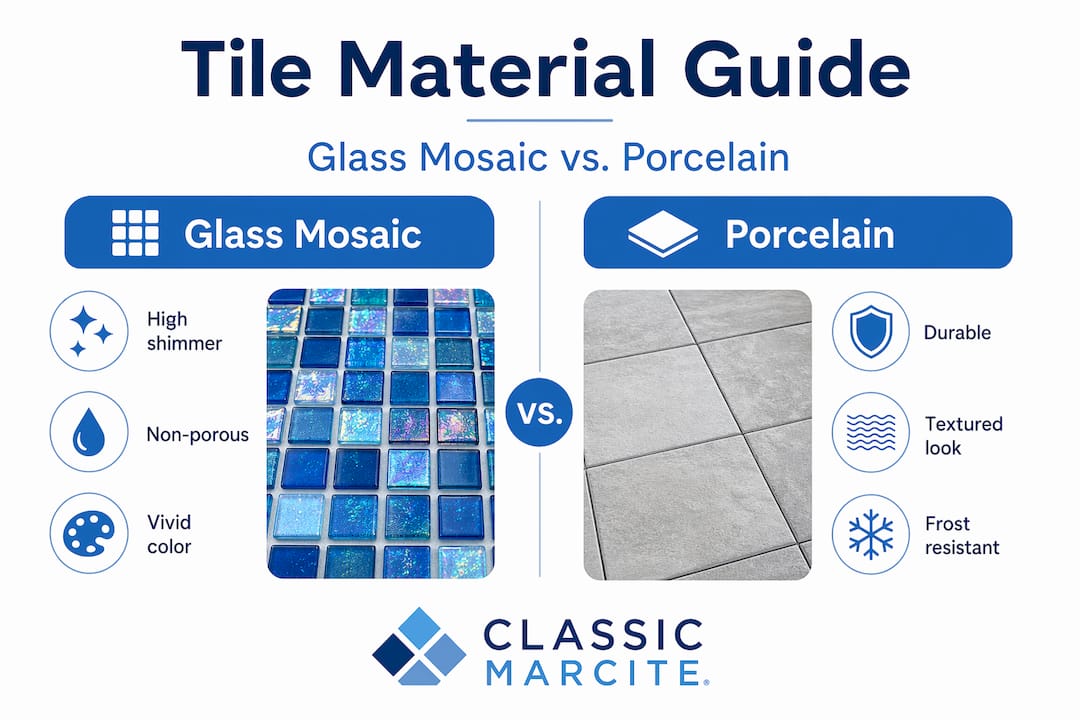
Glass mosaic tiles sit at the top of the luxury tier. They are non-porous, stain-resistant, and maintain color clarity for decades when properly installed. Their reflective quality creates a shimmering effect at night that no other material replicates. The trade-off is cost and installation precision. Glass tiles require skilled labor and the right mortar mix to prevent delamination. Small format mosaics, typically 1×1 or 2×2 inches, dominate this category.
Porcelain tile is the workhorse of pool design. It is dense, frost-resistant, and available in large format options that reduce grout lines and create a cleaner look. Slip-resistant textures are a standard manufacturing option, which matters considerably for coping and step applications. Porcelain also spans a huge range of looks, from polished stone replicas to rough concrete aesthetics.
Stone-look porcelain deserves its own mention because it solves one of natural stone’s biggest problems: porosity. Real travertine or slate absorbs chemicals and stains over time. Stone-look porcelain delivers the same organic visual appeal without that vulnerability.
Here is a direct comparison of common materials:
| Material | Aesthetics | Durability | Maintenance | Cost |
|---|---|---|---|---|
| Glass mosaic | High shimmer, jewel-like | High (if installed correctly) | Low, easy to clean | High |
| Porcelain | Versatile, modern | Very high | Very low | Moderate |
| Stone-look porcelain | Natural, organic | Very high | Low | Moderate to high |
| Ceramic | Basic, limited finishes | Moderate | Low | Low |
Luxury glass mosaics are particularly popular for their visual impact and ability to create shimmering, jewel-like surfaces in both daylight and under underwater lighting. If your goal is a pool that photographs dramatically and commands attention at a gathering, glass mosaic delivers that better than anything else on the market.
For maintenance perspective, explore how different tile types hold up over time with proper care in Florida’s specific climate conditions.
Innovative tile placement and design trends for 2026
Where tile goes on the pool is evolving just as much as which tile you choose. The traditional 6-inch horizontal band at the waterline is no longer the only approach. Forward-thinking designers are rethinking placement entirely.
- Vertical tile orientation. Running tile in a vertical format rather than the classic horizontal subway stack is gaining momentum in 2026. Narrow tiles like 1×2 or 2×4 inches placed vertically add visual height to the pool wall, make curved freeform pools look smoother, and give the waterline a distinctly architectural character.
- Extended waterline bands. Widening the waterline tile from the standard 6 inches to 12 or even 18 inches dramatically increases tile’s visual contribution. A taller band means more of the pool’s color story comes from tile rather than plaster, giving designers greater control over the final look.
- Safety accents on steps and ledges. Contrasting tile on underwater steps and ledges serves a dual purpose. Visually, it adds layered detail and depth. Functionally, it marks transition zones so swimmers can gauge depth and placement. This is one of the best places where beauty and safety genuinely reinforce each other.
- Repeating tile patterns on adjacent structures. Tying the waterline tile into the pool coping, a spa surround, or a feature wall creates an architectural design language that makes the entire backyard feel intentional rather than assembled from separate decisions.
- Coordinating tile with decking and plaster. Aligning waterline tile color with the pool deck and plaster avoids the jarring visual break at the water’s edge that makes a pool look dated. This tonal coordination is one of the fastest ways to modernize an existing pool without a full renovation.
Pro Tip: For freeform or curved pools, smaller mosaic tiles in the 1×1 or 1×2 inch range follow the curve far more cleanly than large format tiles. The visual result is a fluid, organic edge rather than a segmented, angular line.
Practical installation and maintenance standards
Beautiful tile means nothing if it fails structurally within a few seasons. And tile failure in pools is almost always traced back to one thing: the adhesive.
Organic adhesives like mastic are prohibited in pool applications. Constant water exposure breaks down organic compounds, and the result is delamination, where tiles pop off the wall in sheets. The correct standard is polymer-modified thinset mortar. ANSI A118.4 is the minimum required rating for wet areas. For large-format tiles over 15 inches on any side, ANSI A118.15 is recommended.
Key installation considerations to get right from the start:
- Use ANSI A118.4 or A118.15 rated thinset mortar based on tile size and substrate
- Back-butter large-format tiles to achieve full coverage and prevent hollow spots
- Select sanded grout for joints over 1/8 inch and unsanded for narrower joints
- Allow full cure time before filling the pool. Rushing this step causes premature failures
- Never install tile over a substrate with active moisture movement without proper membrane prep
Maintenance is where many homeowners lose the long-term aesthetic battle. Calcium carbonate deposits are the primary enemy of tile appearance in pools. These white, chalky buildups accumulate at the waterline and, over time, they dull even the most vibrant tile surface.
Maintaining your pool surface properly includes regular brushing at the waterline, balanced water chemistry to minimize calcium precipitation, and periodic use of a pumice stone or tile cleaner specifically rated for pool use. Grout lines deserve attention too. Discolored or cracked grout telegraphs neglect before the tile itself shows wear.
Pro Tip: Keep your water’s pH between 7.4 and 7.6 consistently. High pH accelerates calcium scaling at the waterline, which is the number one aesthetic complaint about pool tile.
My honest take on tile as a design decision
I have seen thousands of pool projects over the years, and I will say plainly: tile choice is the single decision with the most transformative impact on how a pool looks and feels. Not plaster. Not deck material. Tile.
The reason is that tile lives at the intersection of every major visual element. It frames the water, influences its color, connects to the deck, and sets expectations for the entire backyard environment. When I see a pool that feels off, that lacks a cohesive pull-together quality, the waterline tile is almost always the culprit. Either it was selected in isolation, or it was an afterthought.
The safety dimension is something I have seen underweighted repeatedly. Dark tiles are genuinely beautiful. They also genuinely reduce bottom visibility. My advice is not to avoid them, but to plan your step and ledge contrasts before you commit to a dark palette. The safety implications of dark tile choices are real, and they are worth designing around rather than discovering after the pool is filled.
What I keep coming back to is this: the best pools are designed from the waterline out, not from the deck in. When tile leads the decision process, everything else follows naturally. When tile gets decided last, the result is almost always a design that feels slightly disconnected.
Embrace the 2026 trends thoughtfully. Vertical tile, extended bands, safety accents on steps. They work because they have functional logic behind them, not just visual appeal.
— Classicmarcite
How professional resurfacing transforms tile results
If your current tile looks dull, dated, or is failing at the adhesive layer, no amount of cleaning will fix it. That is where professional pool renovation changes the outcome entirely.

Classic Marcite has resurfaced over 100,000 pools across Florida since 1988, and tile integration is central to every project. Whether you need full pool resurfacing services that pair new interior finishes with updated tile, or a targeted pool remodeling service that brings outdated tile into alignment with a fresh design vision, the process starts with expert assessment of what you actually have and what will perform best in your specific environment. A free estimate gives you a clear picture of what your pool needs to look its best for years to come.
FAQ
What is the main role of tile in pool aesthetics?
Tile frames the pool’s visual edge, influences perceived water color, and connects the pool to surrounding design elements. It serves both a protective and aesthetic function that no other pool component fully replaces.
How does tile color affect pool water color?
Tile acts as a canvas for light, and the water above it takes on the tile’s hue. Light blues create brightness and transparency, dark blues produce a lagoon effect, and greens add a natural tint to the water.
What tile material is best for pool aesthetics?
Glass mosaic tiles offer the highest visual impact with reflective brilliance, while porcelain provides durability and low maintenance across a wide range of styles. The best choice depends on your aesthetic goals, budget, and maintenance preferences.
Can you use any adhesive to install pool tiles?
No. Organic adhesives are prohibited in pool applications. Polymer-modified thinset mortar meeting ANSI A118.4 at minimum is required to prevent delamination under constant water exposure.
Are dark pool tiles a safety concern?
Dark tiles can reduce bottom visibility, which creates a safety trade-off. Designers address this by using lighter contrasting tiles on underwater steps and ledges to mark depth transitions clearly without abandoning the dark color palette elsewhere.