TL;DR:
- Maintaining a pool requires regular tasks such as testing water chemistry, cleaning debris, and operating circulation systems. Consistency in these routines prevents issues like cloudy water, algae growth, and equipment failure. Prioritizing circulation and cleaning before chemical dosing ensures effective sanitation and prolongs pool lifespan.
A green pool doesn’t happen overnight, but it can catch you off guard in less than a week. Whether you manage a single backyard pool in Orlando or oversee multiple properties across Central Florida, staying ahead of water problems is always easier than fixing them. That’s why a solid pool care must-do list is not optional. It’s the difference between a pool that works for you and one that costs you. This article breaks down what that list should look like, from daily habits to seasonal deep checks, with the tools and priorities that actually move the needle.
Table of Contents
- Key takeaways
- Your pool care must-do list: the foundational criteria
- Essential pool maintenance tasks by time frame
- Choosing the right tools for efficient upkeep
- Prioritizing tasks to protect water quality and equipment
- What I have learned about keeping a pool care list that actually works
- When your pool needs more than a checklist
- FAQ
Key takeaways
| Point | Details |
|---|---|
| Clean before you dose chemicals | Physical cleaning removes organic load so sanitizer works on water, not debris. |
| Test water 2–3 times per week | Consistent testing catches imbalances early before they become expensive problems. |
| Circulation comes before everything | Running your pump for at least one to two full turnovers daily makes every other task more effective. |
| Maintain pH between 7.4 and 7.6 | This range protects swimmer comfort and maximizes the effectiveness of your sanitizer. |
| Seasonal adjustments are non-negotiable | Heat and heavy use demand more frequent testing, longer pump runtimes, and closer equipment monitoring. |
Your pool care must-do list: the foundational criteria
Every effective pool cleaning checklist starts with four non-negotiables: water chemistry, filtration, physical cleaning, and consistency. Skip any one of them and the others start to break down.
Water chemistry is the backbone. The ideal pH sits between 7.4 and 7.6 for swimmer comfort and sanitizer performance. Alkalinity should hold at 80 to 120 ppm to buffer pH swings, and free chlorine typically stays between 1 and 3 ppm. When these numbers drift, you get cloudy water, irritated eyes, or worse: algae.
Filtration and circulation work together. Your pump needs to turn over the full pool volume at least once or twice a day. Chemicals distribute and activate properly only when water is moving. Stagnant water creates dead zones where algae and bacteria multiply unchecked.
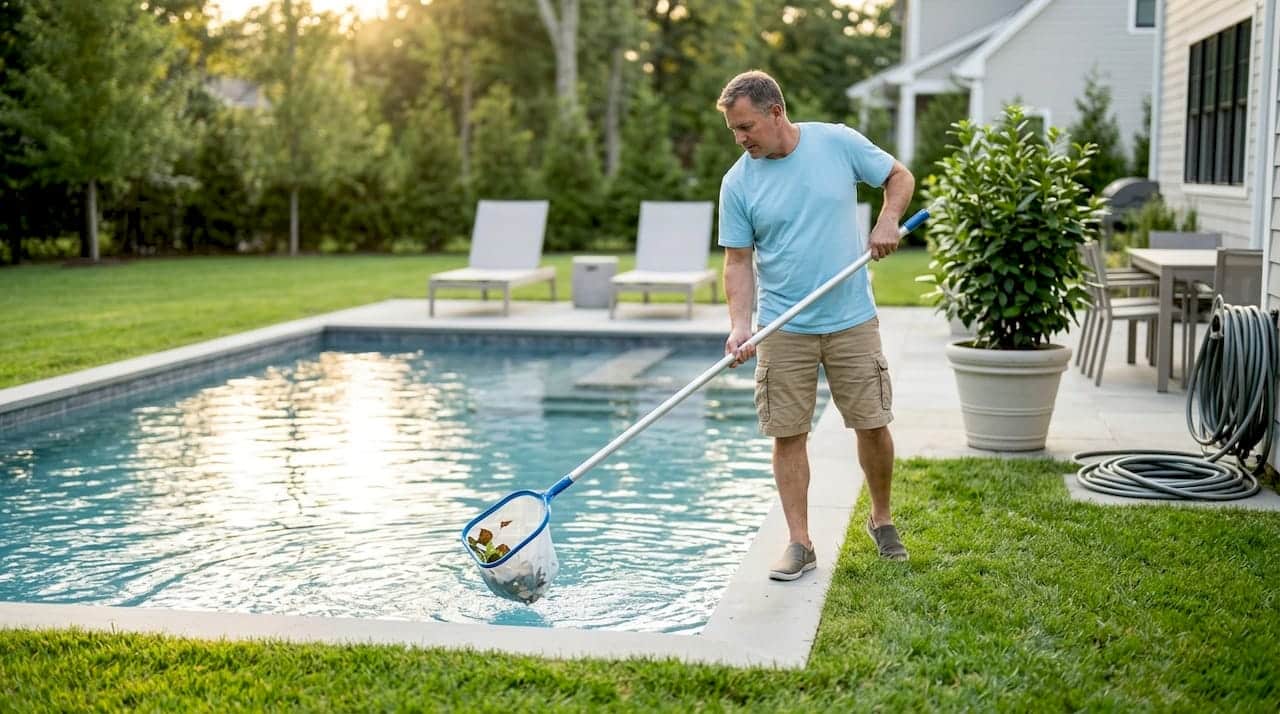
Physical cleaning comes before chemical adjustment, every single time. Sanitizer burns through organic debris like leaves, sunscreen, and body oils before it ever touches bacteria. Skim, brush, and vacuum first. Then test and dose.
Consistency is the factor most homeowners underestimate. Routine maintenance outperforms occasional intensive efforts in both water quality and long-term cost savings. A 20-minute weekly routine will always beat a four-hour monthly scramble.
- Check pH, chlorine, and alkalinity at least twice a week
- Run your pump long enough to complete a full water turnover daily
- Skim debris before any other task, every session
- Document your readings so you can spot trends, not just snapshots
Pro Tip: Set a recurring alarm on your phone for the same time each week. Pool chemistry problems almost always trace back to skipped testing days, not bad products.
Essential pool maintenance tasks by time frame
A structured pool cleaning checklist works best when it maps tasks to the right schedule. Here is how to break it down.
Daily tasks
- Skim the surface. Remove leaves, insects, and any floating debris before they sink and add to the organic load at the bottom.
- Check the water level. Evaporation and splash-out are constant in Florida heat. Low water levels expose the pump skimmer and can cause it to run dry.
- Scan for visible problems. Look for unusual color changes, foam, or cloudiness. These are early signals that chemistry or filtration is off.
Weekly tasks
- Brush walls, steps, and corners. Algae and scale start in low-circulation spots. A quick brush twice a week disrupts growth before it takes hold.
- Vacuum the pool floor. Manual vacuuming catches fine debris that settles overnight. Automatic cleaners help but do not fully replace a weekly manual pass.
- Test and balance water chemistry. Test at least 2 to 3 times per week under normal conditions. Adjust pH first, then alkalinity, then sanitizer. Always in that order.
- Inspect the pump and filter basket. A clogged basket reduces circulation. Empty it during every visit as part of your weekly pool care tips routine.
Monthly tasks
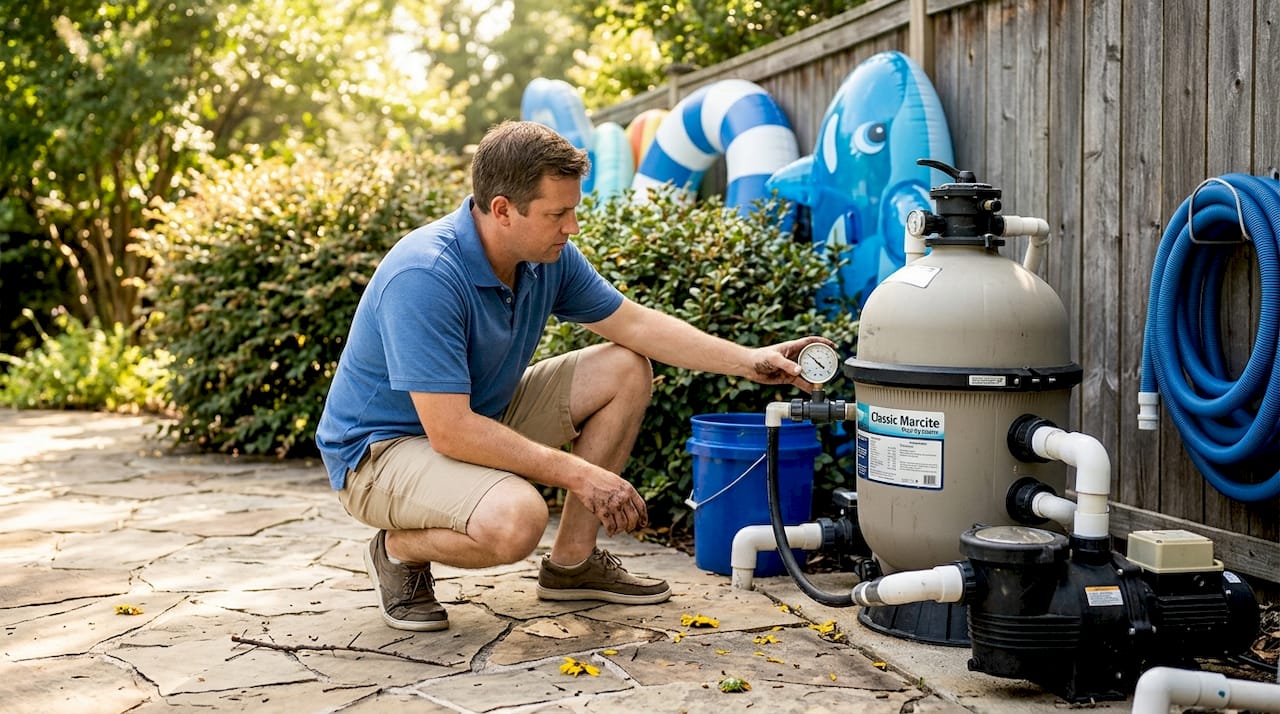
- Clean or backwash the filter. A filter pressure rise of 8 to 10 psi above its normal baseline is your signal to backwash or clean. Do not wait for visible flow problems.
- Test calcium hardness and stabilizer levels. These change slowly but have a big impact. Low calcium leads to surface etching. High stabilizer weakens chlorine’s effectiveness.
- Inspect equipment for wear. Check O-rings, hoses, and pump lids for cracks. Small fixes now prevent pump failures later.
Seasonal and annual tasks
- Deep clean the entire pool. Acid washing or enzyme treatments help remove staining and biofilm buildup that routine cleaning misses.
- Inspect pool surfaces. Look for cracks, rough patches, or delamination, especially on older plaster or marcite surfaces. Rough surfaces accelerate algae adhesion and make cleaning harder.
- Service the pump and heater. Annual professional servicing on mechanical equipment catches worn bearings, failing seals, and inefficiencies that spike energy costs.
Pro Tip: During Florida summers, increase filtration to 10 to 14 hours daily and bump your testing to three times a week. Heat accelerates chemical consumption and algae growth faster than most homeowners expect.
Choosing the right tools for efficient upkeep
The right equipment does not just make pool upkeep guidelines easier to follow. It makes them faster and more reliable.
| Tool Type | Options | Best For | Maintenance Note |
|---|---|---|---|
| Skimmer | Manual net, automatic surface skimmer | Daily debris removal | Empty basket weekly |
| Vacuum | Manual, robotic, suction-side | Floor and wall cleaning | Check hose and head weekly |
| Filter | Sand, cartridge, DE (diatomaceous earth) | Water filtration | Backwash or clean per pressure gauge |
| Test kit | Liquid reagent, test strips, digital meter | Chemistry monitoring | Replace reagents annually |
| Pump | Variable speed, single speed | Circulation and turnover | Service annually |
Sand filters are the lowest-maintenance option and tolerate moderate debris loads well. Cartridge filters offer finer filtration and skip the backwash step. DE filters provide the highest filtration quality but require more careful handling when recharging. For most Florida homeowners, a cartridge or sand filter paired with a variable-speed pump covers all the essential pool maintenance tasks without excessive complexity.
On the testing side, liquid reagent kits remain more accurate than strips for pH and chlorine. Digital testers are faster but need regular calibration. The best kit is the one you will actually use consistently.
- Robotic vacuums save time but do not eliminate the need to brush walls manually
- Variable-speed pumps cut energy costs significantly compared to single-speed models
- Replacing aging pool equipment before it fails saves both water and chemical waste
Prioritizing tasks to protect water quality and equipment
Knowing what to do is only half of it. Knowing what to do first is what separates a clear pool from a cloudy one.
Circulation and filtration take priority above everything else. Before you add a single chemical, your pump should already be running. Chemicals reach every corner of the pool only when water is actively moving. Adding chemicals to stagnant water creates hot spots that bleach surfaces or irritate swimmers.
After circulation is confirmed, cleaning comes next. Debris removal before dosing is not a preference. It is chemistry. Leaves, oils, and organic particles consume chlorine before it can sanitize the water. You end up spending more on chemicals while still getting poor results.
“Test first, dose second, wait for circulation, then retest. Small and measured adjustments prevent cloudy water and wasted product.” — Pool Maintenance for Beginners
When it comes to pool upkeep in high-use periods, adjust pump run time in 30 to 60 minute increments based on bather load and temperature. More swimmers and hotter days mean more organic load and faster chlorine depletion.
Common mistakes that break even good routines:
- Over-chlorinating as a shortcut when water turns cloudy, instead of identifying the root cause
- Ignoring filter pressure gauges until flow drops noticeably
- Adding pH increaser and chlorine at the same time, which reduces the effectiveness of both
- Delaying surface brushing until algae is visible instead of preventing it weekly
What I have learned about keeping a pool care list that actually works
I have watched hundreds of pool owners walk through the same cycle. They start strong, skip a week because life gets busy, then spend a Saturday fighting green water and wondering where it went wrong. The truth is not that the tasks are hard. It is that the list never got personal enough to stick.
What actually works is building a checklist around your pool’s specific patterns. A shaded pool in a quiet backyard needs a very different rhythm than an open pool in a heavily trafficked property. I have seen lightly used pools in perfect condition with minimal chemical input, simply because the owner ran the pump on a smart timer and skimmed every other day without fail.
The other thing I would push back on: do not ignore your pool surface. A deteriorating plaster or marcite surface grabs algae faster, makes vacuuming harder, and tells you something structural is off. No chemistry routine fully compensates for a surface that has outlived its lifespan. If your walls feel rough or your pool looks perpetually dingy despite clean water, the checklist cannot fix what needs a professional eye.
Small consistent efforts win every time. A 15-minute daily skim and a weekly test and brush will outperform a monthly marathon cleaning session in both results and cost. Build the habit small, and the pool takes care of itself.
— Classicmarcite
When your pool needs more than a checklist
Your pool care routine keeps water clean and equipment running, but some problems go deeper than what a checklist can address.

If your pool surface is rough, stained, or visibly deteriorating, no amount of brushing or chemical balancing will restore it. That is where Classicmarcite comes in. With over 35 years of experience and more than 100,000 pools resurfaced across Florida, Classic Marcite specializes in pool resurfacing solutions that make your pool easier to maintain, longer-lasting, and genuinely better-looking. Whether you are dealing with aging plaster in Winter Park or a commercial property in The Villages, the team offers free estimates and uses premium materials like Pebble Tec® to match your goals and budget. Explore resurfacing options in your area and see what your pool could look like with a fresh, durable surface underneath every maintenance routine you build.
FAQ
What should be on a basic pool care must-do list?
Your core list should include daily skimming and water level checks, weekly brushing, vacuuming, and chemistry testing, plus monthly filter cleaning and equipment inspection. Seasonal deep cleaning and surface checks round it out.
How often should I test pool water chemistry?
Test at least two to three times per week under normal conditions, and increase to daily testing during heat waves or periods of heavy use when chemical consumption accelerates.
What pH level should pool water be?
The optimal pH range is 7.4 to 7.6. This keeps water comfortable for swimmers and allows sanitizers like chlorine to work at peak effectiveness.
When should I backwash or clean my pool filter?
Backwash or clean your filter when the pressure gauge reads 8 to 10 psi above its normal baseline. Waiting longer reduces flow, increases chemical waste, and puts strain on the pump.
How long should I run my pool pump each day?
Run your pump long enough to turn over the full pool volume at least once daily. In hot summer months, that typically means 10 to 14 hours per day for optimal water quality and chemical distribution.