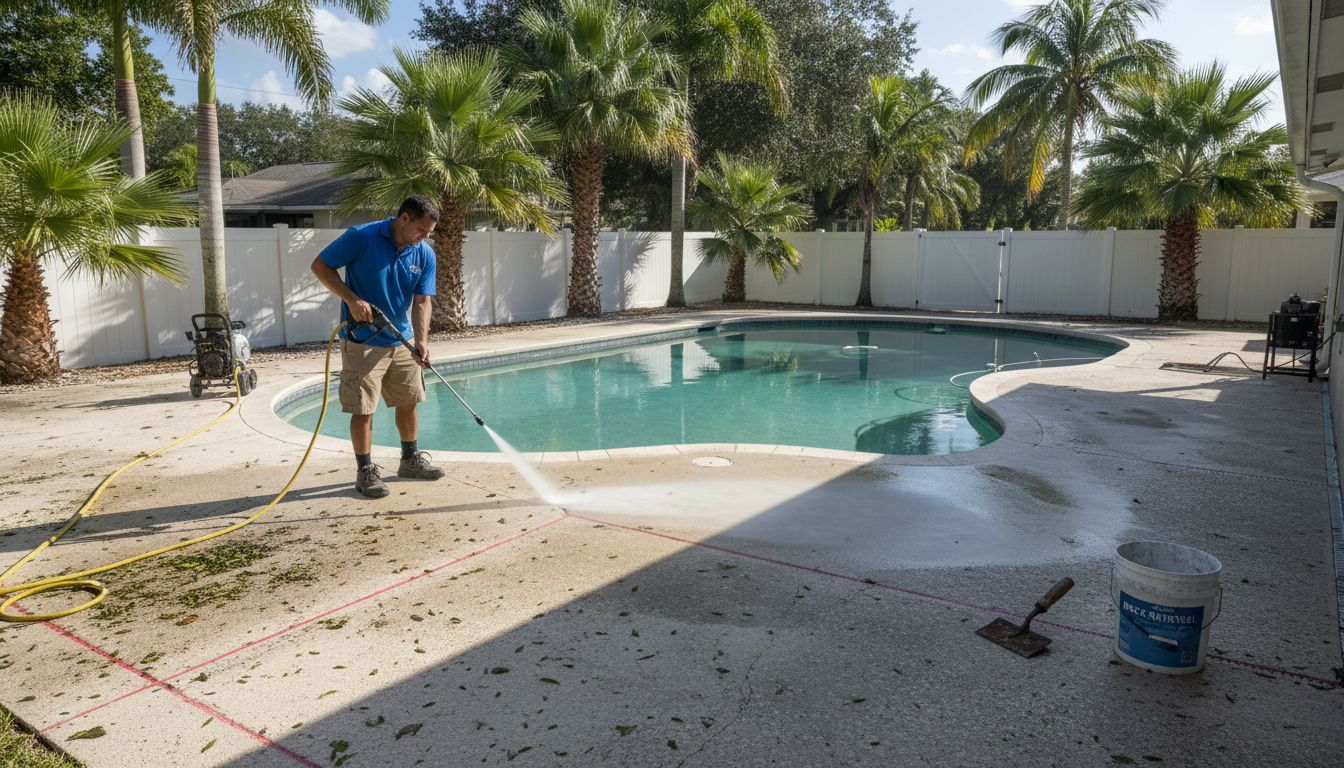
Seeing cracks and faded spots around your pool deck can make summer days in Orlando or Jacksonville less enjoyable. For many homeowners, confusion about resurfacing options leads to unnecessary worries about cost and complexity. By focusing on professional deck resurfacing with high-quality materials like Pebble Tec®, you can dramatically upgrade your pool’s look and longevity while preserving its foundation. Discover the real advantages of renewing your deck surface without the disruption and expense of full replacement.
Table of Contents
- Defining Deck Resurfacing And Common Myths
- Popular Deck Resurfacing Types And Materials
- How Deck Resurfacing Enhances Pool Safety
- Durability, Climate Challenges, And Maintenance
- Financial Impact: Costs Vs. Full Replacement
- Mistakes To Avoid When Resurfacing Your Deck
Key Takeaways
| Point | Details |
|---|---|
| Deck Resurfacing | It is a cost-effective home improvement method that revitalizes existing pool decks without the need for complete replacement. |
| Material Selection | Choosing the right resurfacing materials is essential for durability and aesthetics, particularly in Florida’s challenging climate. |
| Safety Enhancements | Resurfacing improves pool safety by addressing slip resistance, crack elimination, and water drainage. |
| Financial Considerations | Resurfacing is substantially cheaper than full deck replacement, making it a financially strategic option for homeowners. |
Defining Deck Resurfacing and Common Myths
Pool deck resurfacing represents a strategic home improvement technique that transforms aging outdoor surfaces into refreshed, durable spaces. Unlike complete deck replacement, deck resurfacing involves restoring existing surfaces) with new materials and finishes that enhance both aesthetics and functionality.
Homeowners often misunderstand deck resurfacing, believing it’s a complex, expensive process requiring total reconstruction. In reality, resurfacing is a targeted renovation approach that:
- Repairs surface imperfections
- Upgrades visual appearance
- Improves slip resistance
- Extends deck lifespan
- Prevents further structural deterioration
Many Florida pool owners mistakenly think resurfacing means completely removing and reinstalling their entire deck. Deck resurfacing actually involves carefully applying a new surface layer over the existing structure, preserving the original foundation while dramatically improving its performance and appearance.
Professional resurfacing transforms worn surfaces without the extensive cost and disruption of total replacement.
The process involves multiple strategic steps, including surface preparation, damage assessment, material selection, and precise application techniques. Each stage requires specialized knowledge to ensure optimal results and long-term durability.
Pro tip: Always consult professional pool deck specialists who understand Florida’s unique environmental challenges before beginning any resurfacing project.
Popular Deck Resurfacing Types and Materials
Florida pool owners have multiple options when considering deck resurfacing, each with unique advantages for combating the state’s challenging climate. Concrete overlays offer versatile surfacing solutions that can dramatically transform outdoor spaces while providing durability and aesthetic appeal.
The most popular deck resurfacing materials include:
- Concrete overlays: Seamless, customizable surface treatments
- Acrylic coatings: Slip-resistant and color-adaptable finishes
- Stamped concrete: Decorative options mimicking natural stone
- Spray texture: Provides excellent traction and visual interest
- Micro-surfacing: Enhances existing deck durability
Each material brings distinct benefits tailored to different aesthetic and functional requirements. Decorative finishes like stamped concrete can replicate expensive materials such as slate or flagstone, offering sophisticated design options without substantial cost increases.
Professional material selection ensures long-lasting pool deck performance and visual appeal.
When choosing a resurfacing material, homeowners should consider factors like climate resistance, maintenance requirements, slip resistance, and overall aesthetic compatibility with their existing landscape. Florida’s unique environmental conditions demand materials that can withstand intense sunlight, humidity, and occasional temperature fluctuations.
Here’s how top pool deck resurfacing materials compare for Florida conditions:
| Material Type | Main Advantage | Typical Lifespan | Maintenance Level |
|---|---|---|---|
| Concrete Overlay | Highly durable surface | 10-15 years | Moderate (reseal as needed) |
| Acrylic Coating | Excellent slip resistance | 7-10 years | Low (standard cleaning) |
| Stamped Concrete | Decorative, elegant finish | 10-12 years | Moderate (recolor/seal) |
| Spray Texture | Cool surface, good grip | 8-12 years | Low (periodic washing) |
| Micro-Surfacing | Boosts longevity | 10-15 years | Low (minimal touch-ups) |
Pro tip: Consult local pool deck professionals who understand Florida’s specific environmental challenges when selecting your resurfacing material.
How Deck Resurfacing Enhances Pool Safety
Pool safety in Florida begins with a well-maintained deck surface that prevents accidents and minimizes potential hazards. Deck resurfacing plays a critical role in meeting safety standards by addressing multiple risk factors that can compromise swimmer well-being.
Key safety improvements through deck resurfacing include:
- Slip resistance: Reducing fall risks with textured surfaces
- Crack elimination: Removing tripping hazards and uneven areas
- Water drainage: Preventing standing water accumulation
- Surface smoothness: Eliminating sharp edges and rough patches
- Structural integrity: Reinforcing deck stability and strength
Florida’s intense sunlight and frequent moisture create unique challenges for pool deck surfaces, accelerating wear and increasing potential safety risks. Proper resurfacing helps counteract these environmental stressors by creating a more resilient and reliable deck environment.
Proactive deck maintenance is the first line of defense against potential pool-related accidents.
Professional resurfacing techniques not only enhance aesthetic appeal but also implement critical safety features like improved traction and seamless surface transitions. Homeowners can significantly reduce the likelihood of slip and fall incidents by investing in quality deck resurfacing that meets professional safety standards.
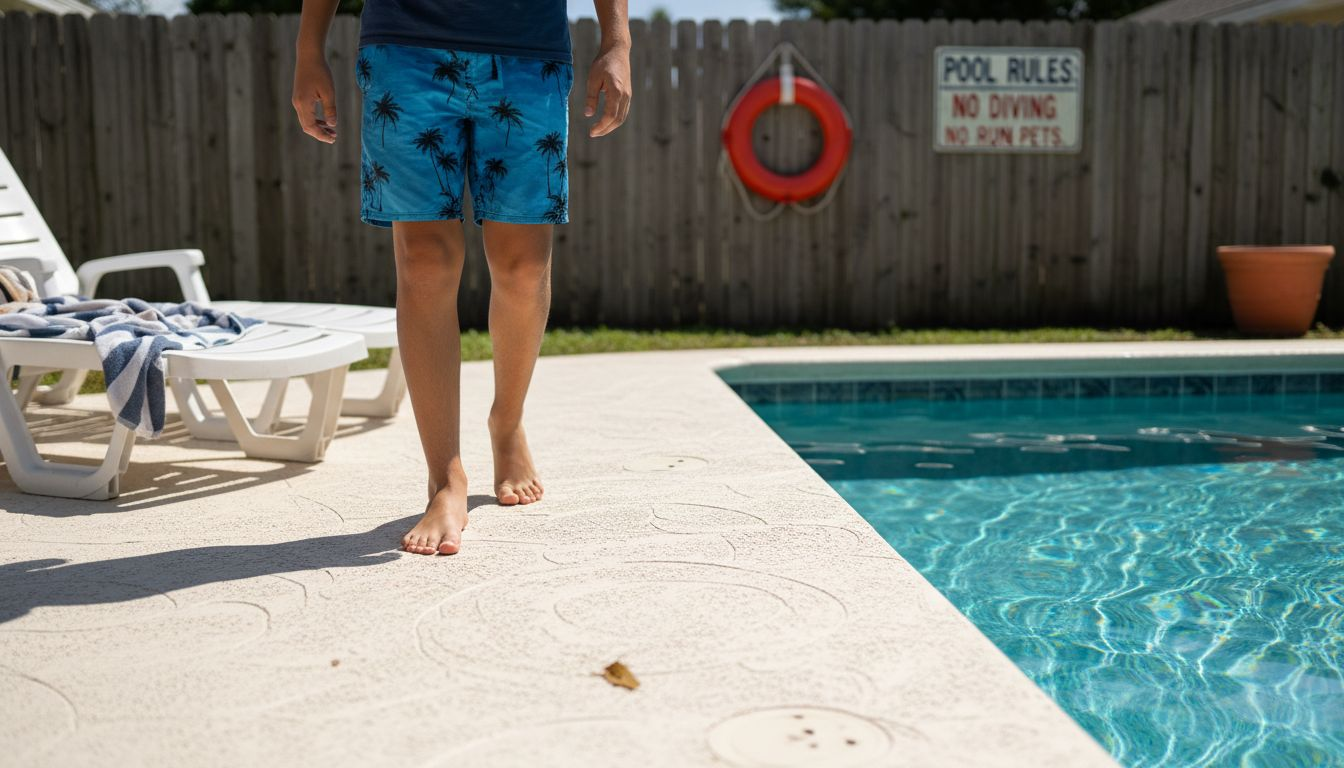
Pro tip: Schedule annual professional inspections to identify and address potential deck safety issues before they become serious risks.
Durability, Climate Challenges, and Maintenance
Florida’s extreme environmental conditions present unique challenges for pool deck surfaces, demanding specialized resurfacing strategies. Materials must withstand intense UV exposure and chemical interactions to maintain long-term structural integrity and aesthetic appeal.
Key durability considerations for Florida pool decks include:
- Material resistance: Selecting chemically inert surfaces
- UV protection: Preventing color fading and material breakdown
- Moisture management: Reducing potential for mold and mildew
- Thermal expansion: Accommodating temperature fluctuations
- Chemical compatibility: Withstanding pool treatment substances
Homeowners must recognize that standard resurfacing materials quickly deteriorate under Florida’s harsh conditions. Quartz and pebble finishes offer superior performance, providing enhanced durability and resistance to environmental stressors that typically compromise lesser materials.
Professional-grade materials are not an expense, but an investment in long-term pool deck performance.
Routine maintenance becomes critical in extending deck lifespan. Annual inspections, prompt repairs, and strategic resurfacing can prevent minor issues from escalating into significant structural problems that require expensive interventions.
Pro tip: Schedule professional evaluations twice yearly to catch and address potential deck degradation before it becomes a costly repair.
Financial Impact: Costs vs. Full Replacement
Deck resurfacing offers a financially strategic alternative to complete pool deck replacement, providing homeowners with a cost-effective solution for pool area renovation. Resurfacing costs range between $4 to $9 per square foot, significantly lower than the extensive expenses associated with total deck reconstruction.
Key financial advantages of resurfacing include:
- Lower initial investment: Reduces renovation costs by 50-70%
- Minimal disruption: Faster project completion
- Preservation of existing infrastructure: Maintains original deck foundation
- Customization options: Allows aesthetic upgrades at reduced prices
- Long-term cost savings: Prevents more expensive structural repairs
While full deck replacement might seem like a comprehensive solution, it often represents an unnecessary and financially burdensome approach. Most surface degradation can be effectively addressed through targeted resurfacing techniques that restore functionality and appearance without complete demolition and reconstruction.
Strategic resurfacing transforms your pool deck while protecting your financial investment.
Homeowners should carefully evaluate their specific deck condition, considering factors like structural integrity, surface damage extent, and long-term performance goals. Professional assessments can help determine whether resurfacing represents the most economical and practical renovation strategy.
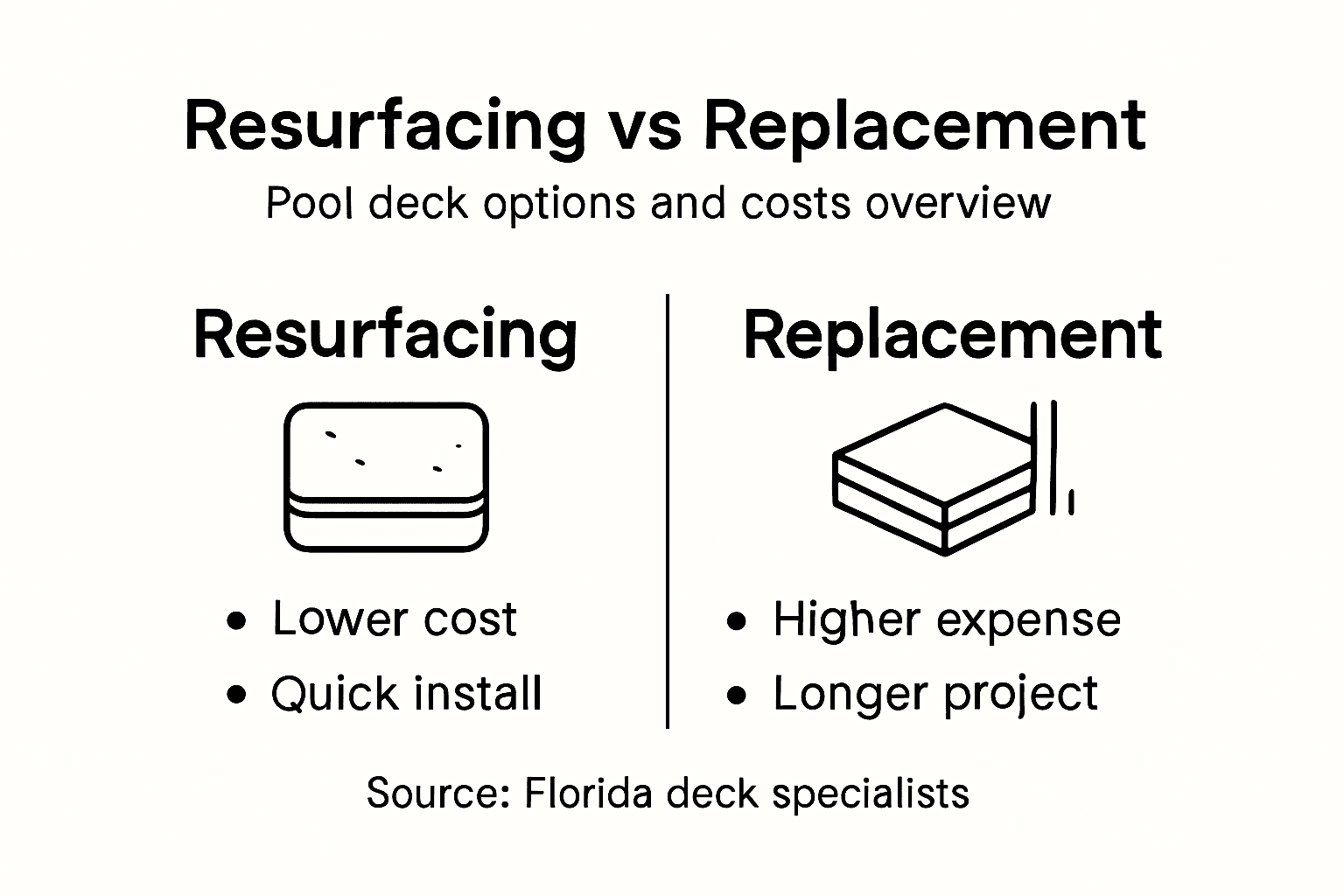
Compare the cost and impact of resurfacing vs. replacement:
| Approach | Typical Cost (per sq ft) | Project Duration | Impact on Existing Structure |
|---|---|---|---|
| Deck Resurfacing | $4 – $9 | 2–4 days | Preserves old foundation |
| Full Deck Replacement | $12 – $28 | 1–3 weeks | Removes and rebuilds deck |
Pro tip: Request multiple professional quotes and compare detailed resurfacing versus replacement estimates to make the most informed financial decision.
Mistakes to Avoid When Resurfacing Your Deck
Pool deck resurfacing requires careful planning and professional expertise to avoid costly errors that can compromise both aesthetics and functionality. Homeowners must thoroughly inspect structural integrity before attempting any surface renovation project.
Common mistakes to avoid during deck resurfacing include:
- Ignoring underlying structural issues: Failing to address foundational problems
- DIY without professional assessment: Risking improper material application
- Choosing inappropriate materials: Selecting finishes incompatible with Florida’s climate
- Overlooking drainage requirements: Creating potential water damage risks
- Skipping proper surface preparation: Compromising long-term finish durability
Many homeowners mistakenly believe that resurfacing is a simple cosmetic upgrade. In reality, it requires sophisticated understanding of surface preparation, material compatibility, and environmental challenges specific to Florida’s unique climate conditions.
Professional expertise transforms deck resurfacing from a potential disaster to a successful renovation.
Technical considerations like moisture resistance, thermal expansion, and chemical interactions play critical roles in determining the success of a deck resurfacing project. Cutting corners or attempting complex renovations without specialized knowledge can lead to expensive repairs and potential safety hazards.
Pro tip: Always hire certified professionals with specific experience in Florida pool deck resurfacing to ensure optimal results and avoid costly mistakes.
Transform Your Florida Pool with Expert Deck Resurfacing Solutions
The challenges of Florida’s harsh climate and pool safety demands make deck resurfacing an essential investment for any pool owner. If you want to prevent slip hazards, extend your deck’s durability, and enhance visual appeal with materials engineered for Florida conditions such as Pebble Tec®, Classic Marcite offers the proven experience you need. With over 100,000 pools resurfaced since 1988, we understand exactly how to combat UV damage, moisture, and structural wear while elevating your outdoor space.

Take action now to protect your pool deck and boost safety while increasing your property’s value. Contact Classic Marcite for a free estimate and discover how our specialized pool resurfacing services can revitalize your deck with unmatched craftsmanship. Explore our portfolio and customer reviews to see why we are Central Florida’s largest Pebble Tec® applicator and trusted pool renovation partner. Don’t wait for costly repairs—partner with experts who know Florida pools inside and out at Classic Marcite.
Frequently Asked Questions
What is deck resurfacing?
Deck resurfacing is a home improvement process that restores existing outdoor surfaces by applying a new layer of material, enhancing both aesthetics and functionality without the need for complete replacement.
How does deck resurfacing improve pool safety?
Deck resurfacing enhances pool safety by increasing slip resistance, eliminating cracks and tripping hazards, improving water drainage, and reinforcing the structural integrity of the deck, ultimately reducing the risk of accidents.
What materials are commonly used for deck resurfacing?
Common materials for deck resurfacing include concrete overlays, acrylic coatings, stamped concrete, spray texture, and micro-surfacing, each offering unique benefits tailored to different aesthetic and functional needs.
How can I extend the lifespan of my resurfaced pool deck?
To extend the lifespan of a resurfaced pool deck, regular maintenance is essential. This includes scheduling annual inspections, performing prompt repairs, and applying resealing treatments as necessary to protect against environmental stressors.
Recommended
- What Is Deck Resurfacing? Transforming Poolside Spaces
- 7 Essential Pool Deck Renovation Tips For Florida Homes
- How To Resurface Pool Deck For Lasting Results
- Pool Deck Coating: Protecting And Beautifying Surfaces
- Modern Construction Lead Generation Guide – Titan Blue Australia
- Pool Refinishing Windermere FL
- Pool Renovation Winter Park FL
- Swimming Pool Remodeling The Villages FL