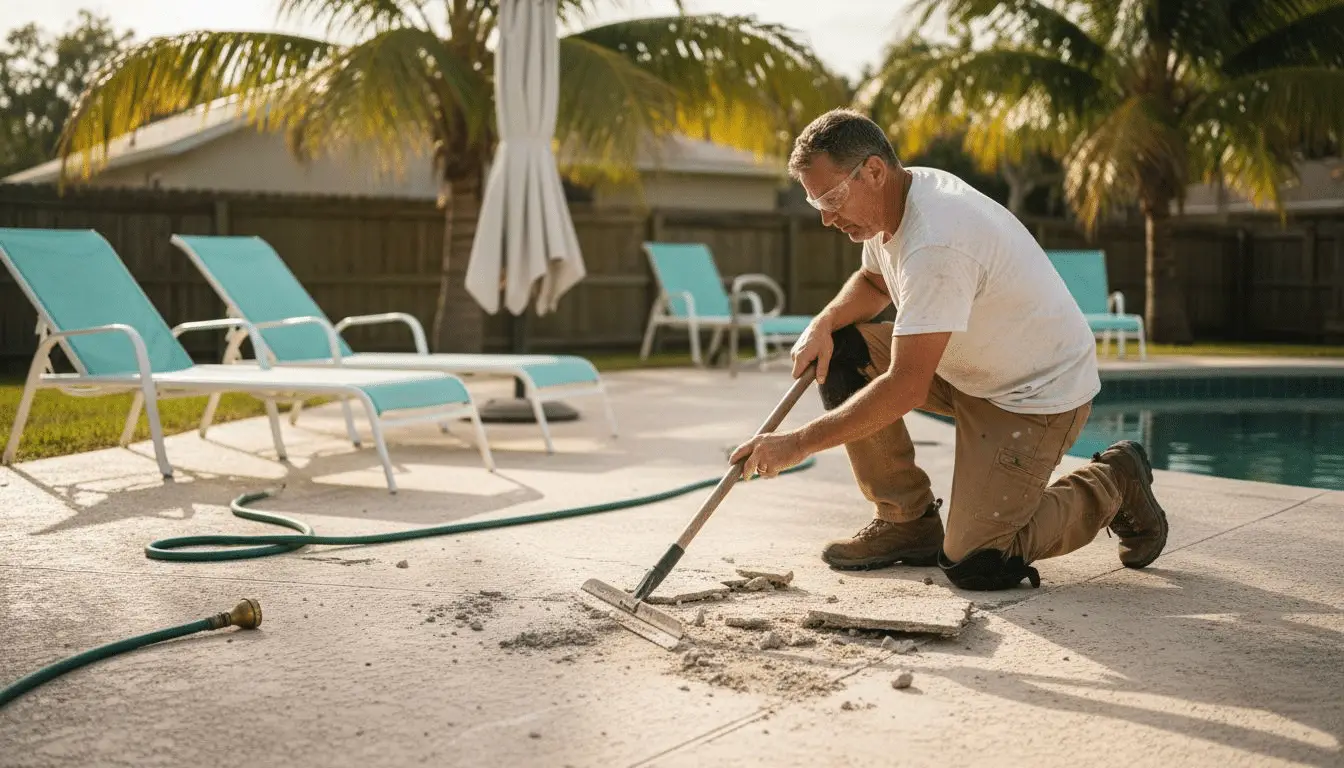
Nearly 80 percent of Florida homeowners cite pool deck wear as a top concern for maintaining property value and safety. Living in American cities like Orlando and Jacksonville means battling intense sun, frequent storms, and humidity that can deteriorate outdoor surfaces fast. Resurfacing your pool deck is more than a visual upgrade—it extends the life and protects your investment. Discover how proven resurfacing solutions dispel myths, address real structural risks, and help you choose the right material to withstand Florida’s especially tough climate.
Table of Contents
- Defining Deck Resurfacing And Common Myths
- Types Of Deck Resurfacing Materials Available
- How Deck Resurfacing Works Step By Step
- Signs Your Deck Needs Resurfacing
- Cost, Risks, And Alternatives To Resurfacing
Key Takeaways
| Point | Details |
|---|---|
| Understanding Deck Resurfacing | Deck resurfacing is not just cosmetic; it addresses structural issues while enhancing durability and safety. |
| Material Options | Homeowners should choose materials that withstand Florida’s climate for optimal performance and longevity. |
| Signs of Deterioration | Regularly inspect for cracks, mold, and pooling water to determine when resurfacing is necessary to avoid larger repairs. |
| Cost Considerations | Resurfacing costs range from $4 to $9 per square foot, providing a more affordable option compared to full deck replacement. |
Defining Deck Resurfacing and Common Myths
Deck resurfacing transforms aging pool decks by renewing their surface without complete replacement, addressing both aesthetic and functional challenges. This strategic renovation process involves carefully inspecting existing surfaces and applying protective new layers that restore durability and visual appeal. Homeowners in Florida frequently utilize deck resurfacing as a cost-effective alternative to total deck reconstruction.
The process goes far beyond simple cosmetic improvements. Deck resurfacing involves comprehensive inspection and repair that can resolve underlying structural concerns while protecting the surface from weathering and decay. Contrary to common misconceptions, resurfacing is not just about making a deck look better but also about extending its functional lifespan and ensuring safety.
Several persistent myths surround deck resurfacing that can mislead property owners. Many believe resurfacing is purely decorative, when in reality, it addresses critical structural issues like surface degradation, cracking, and potential safety hazards. Professional resurfacing techniques can reinforce existing materials, seal potential water damage entry points, and create a more resilient surface that withstands Florida’s intense sun and occasional severe weather conditions.
Pro Tip: Before scheduling deck resurfacing, always request a comprehensive inspection to understand the full scope of potential repairs and restoration needed for your specific pool deck.
Types of Deck Resurfacing Materials Available
Pool deck resurfacing offers homeowners a diverse range of material options, each with unique characteristics designed to enhance durability, aesthetics, and performance. Understanding these materials helps property owners make informed decisions that match their specific environmental conditions and design preferences. Florida’s challenging climate demands materials that can withstand intense sunlight, humidity, and occasional extreme weather.
Concrete overlays and resurfacing systems provide versatile solutions for pool deck transformations. These advanced materials offer exceptional resistance to pool chemicals, salt, UV exposure, and temperature fluctuations. Homeowners can choose from various decorative techniques like stamping and stenciling, which allow customization of texture, color, and pattern without complete deck replacement.
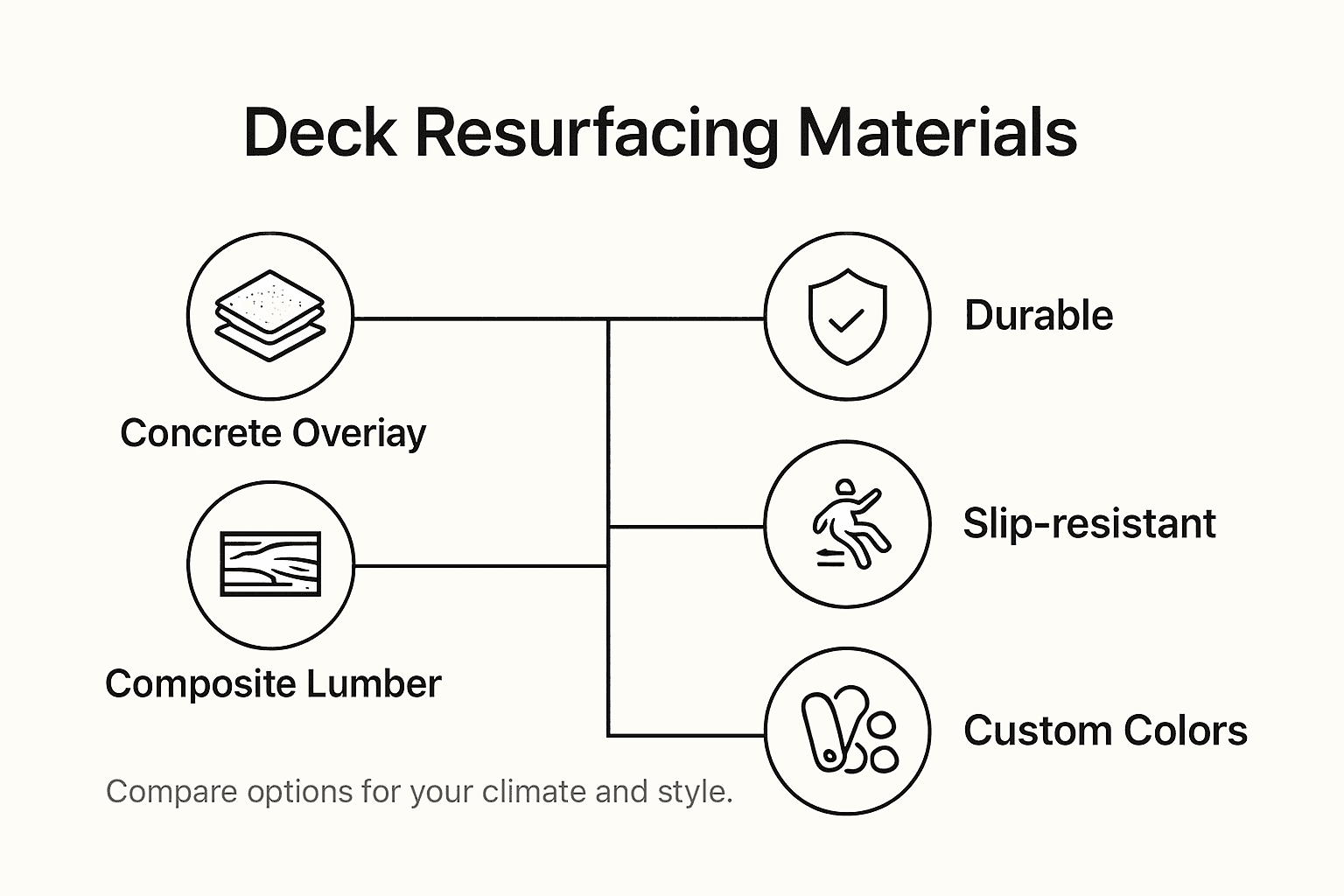
Modern deck resurfacing materials extend beyond traditional options. Composite lumber combines wood fiber and plastic to create a revolutionary surface that resists mold, reduces maintenance requirements, and provides superior longevity compared to conventional wood decking. Other innovative materials include synthetic planks, textured sealants, and specialized concrete overlays that can mimic natural stone or intricate design patterns while delivering robust performance in challenging outdoor environments.
Pro Tip: Always request material samples and discuss your specific climate and usage requirements with a professional resurfacing expert to select the most appropriate deck material for your unique setting.
Here’s a quick comparison of popular pool deck resurfacing materials and their unique advantages:
| Material Type | Key Benefit | Durability in Florida | Customization Options |
|---|---|---|---|
| Concrete Overlay | Withstands UV and pool chemicals | High | Stamping, coloring, patterns |
| Composite Lumber | Resists mold and fading | Very High | Limited colors and finishes |
| Synthetic Planks | Low maintenance required | High | Available in various textures |
| Textured Sealants | Provides slip resistance | Moderate | Multiple texture levels |
How Deck Resurfacing Works Step by Step
Deck resurfacing is a meticulous process that transforms worn pool decks through carefully orchestrated professional techniques. The initial phase focuses on comprehensive surface evaluation and preparation, which determines the ultimate success of the entire renovation project. Professionals conduct thorough inspections to identify structural vulnerabilities, surface damage, and potential underlying issues that might compromise the resurfacing outcome.
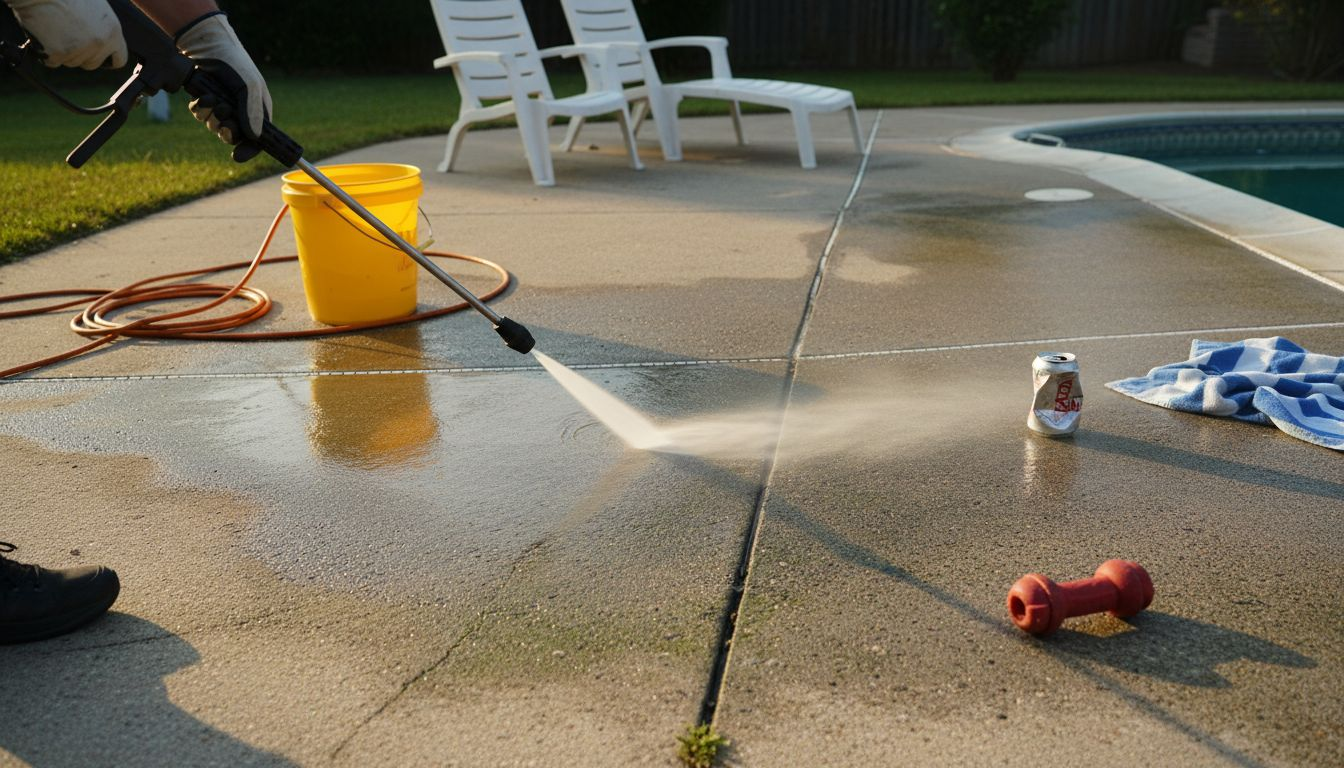
The deck resurfacing procedure begins with extensive surface preparation, which involves multiple critical steps. Technicians typically start by power washing the existing surface to remove dirt, debris, and loose materials. Next, they carefully inspect and repair any structural weaknesses, addressing cracks, uneven areas, or potential damage to the foundational layers. This preparatory stage might include sanding, grinding, or applying specialized repair compounds to create a smooth, stable base for the new surface materials.
After the preparation phase, professionals apply specialized resurfacing materials tailored to the specific deck requirements. The application process involves precise layering techniques, potentially including primer coats, base layers, and decorative finishes. Depending on the chosen materials, technicians might employ techniques like stamping, texturing, or colored overlays to achieve the desired aesthetic and functional characteristics. The final stage involves careful curing and sealing, which protects the new surface and ensures long-term durability against Florida’s challenging environmental conditions.
Pro Tip: Request a detailed written assessment of your deck’s condition before resurfacing, ensuring you understand the full scope of necessary repairs and potential restoration requirements.
Signs Your Deck Needs Resurfacing
Pool deck maintenance is critical for ensuring both safety and aesthetic appeal, especially in Florida’s challenging environmental conditions. Homeowners should remain vigilant about potential signs of deck deterioration that might compromise the surface’s integrity and functionality. Understanding these warning indicators can help prevent more extensive and expensive repairs down the line.
Deck surface evaluation requires careful attention to specific warning signs that signal potential structural and aesthetic problems. Visual indicators like visible cracks wider than 1/8 inch, extensive surface discoloration, persistent mold or algae growth, and areas of pooling water represent clear signals that professional resurfacing might be necessary. These symptoms suggest deeper underlying issues that could compromise the deck’s safety and performance if left unaddressed.
Structural red flags extend beyond surface-level concerns and require immediate professional assessment. Homeowners should watch for more serious signs such as loose or rotting boards, exposed or rusted fasteners, significant warping, and noticeable separation between deck components. These warning signs indicate potential structural weaknesses that could pose significant safety risks, especially around pool areas where water exposure and foot traffic create additional stress on surface materials. Prompt identification and professional intervention can prevent minor issues from escalating into major renovation projects.
Pro Tip: Schedule an annual professional deck inspection to catch potential resurfacing needs early and prevent more costly repairs in the future.
The following table summarizes warning signs indicating when deck resurfacing may be necessary:
| Condition Indicator | Why It Matters | Suggested Action |
|---|---|---|
| Cracks > 1/8 inch | Suggest structural weakness | Schedule professional repair |
| Persistent Mold/Algae | Indicates water penetration | Request assessment for leaks |
| Pooling Water | Can erode materials, create risk | Evaluate drainage and grade |
| Rusted Fasteners | Signals dangerous instability | Replace affected components |
Cost, Risks, and Alternatives to Resurfacing
Pool deck resurfacing represents a strategic investment for Florida homeowners seeking to restore and protect their outdoor spaces without undertaking complete reconstruction. Understanding the financial implications, potential risks, and alternative approaches helps property owners make informed decisions about their deck maintenance and renovation strategies.
Deck resurfacing costs typically range from $4 to $9 per square foot, with pricing influenced by factors like material quality, surface condition, and regional labor rates. These expenses are substantially lower than full deck replacement, which can exceed $10,000 for comprehensive renovations. The investment becomes particularly valuable when addressing structural vulnerabilities and preventing more extensive damage that could compromise the deck’s safety and functionality.
Professional resurfacing involves several inherent risks that homeowners must carefully consider. Improper surface preparation can lead to premature material failure, creating potential safety hazards and necessitating additional repairs. Alternative approaches include targeted board replacement, using composite materials for enhanced durability, or conducting partial repairs instead of complete resurfacing. Each option carries unique cost considerations and long-term performance implications, making a professional assessment crucial for determining the most appropriate solution for specific deck conditions.
Pro Tip: Obtain multiple professional quotes and request detailed assessments to compare resurfacing costs against alternative renovation strategies, ensuring you select the most cost-effective and sustainable solution for your pool deck.
Renew Your Pool Deck with Expert Resurfacing Solutions
Dealing with cracked surfaces, mold growth, or worn decking around your pool can be frustrating and unsafe. The article highlights how deck resurfacing is more than a cosmetic update. It is a crucial step to restore durability, enhance safety, and extend the life of your pool deck especially in Florida’s harsh climate. If you are noticing signs like surface cracks, pooling water, or fading materials it is time to consider professional pool deck resurfacing to protect your investment and elevate your outdoor space.

At Classic Marcite, we specialize in transforming poolside environments with high-quality resurfacing that withstands sun exposure, humidity, and heavy use. With over 100,000 pools resurfaced since 1988, including projects in Orlando and Jacksonville, we combine craftsmanship with premium materials like Pebble Tec® to deliver stunning, long-lasting results. Don’t wait for minor damage to become a costly problem. Visit Classic Marcite today, request your free estimate, and see how our trusted team can bring new life to your pool deck and increase safety for your family and guests.
Frequently Asked Questions
What is deck resurfacing?
Deck resurfacing is a renovation process that involves renewing the surface of an aging pool deck without full replacement. It addresses both aesthetic and functional issues, restoring the deck’s durability and visual appeal.
What materials are commonly used in deck resurfacing?
Common materials for deck resurfacing include concrete overlays, composite lumber, synthetic planks, and textured sealants. Each material offers unique advantages for durability, maintenance, and customization, suitable for various environmental conditions.
How can I tell if my pool deck needs resurfacing?
Signs that your pool deck may need resurfacing include visible cracks wider than 1/8 inch, persistent mold or algae growth, pooling water, and loose or rotting boards. These indicators suggest structural weaknesses that require professional assessment.
What are the costs associated with deck resurfacing?
Deck resurfacing typically costs between $4 and $9 per square foot, significantly less than total deck replacement. Factors like material quality and surface condition can influence the final pricing.
