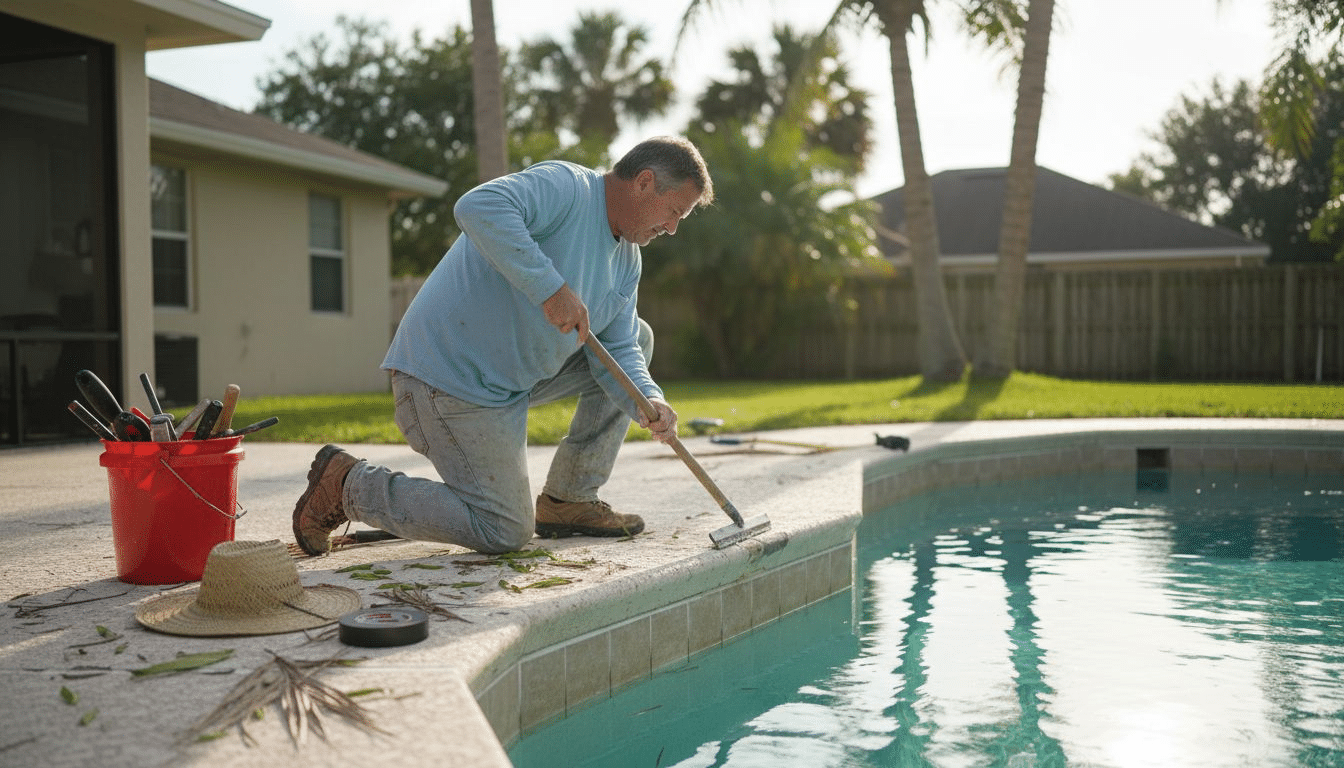
Most American homeowners are surprised to learn that even a simple pool resurfacing project in Orlando or Jacksonville can take anywhere from 3 to 10 days, sometimes stretching longer with Florida’s unpredictable weather. Timely renovations help protect both property value and family enjoyment, but confusing timelines frequently complicate planning. Understanding what factors shape each phase of a pool resurfacing timeline empowers property owners to minimize disruption and make decisions that balance efficiency, quality, and long-term results.
Table of Contents
- What Is A Pool Resurfacing Timeline?
- Typical Steps In Pool Resurfacing Projects
- Factors That Affect Project Duration
- How Florida’s Climate Impacts Timing
- Common Pitfalls And How To Avoid Delays
Key Takeaways
| Point | Details |
|---|---|
| Understanding the Timeline | A pool resurfacing project typically takes between 3 to 10 days, dependent on size, complexity, and selected materials. |
| Impact of Florida’s Climate | Schedule resurfacing during the dry season (November to April) to minimize disruptions from weather-related complications. |
| Critical Project Stages | Key phases include assessment, preparation, surface application, and curing, each essential for achieving long-lasting results. |
| Avoiding Common Pitfalls | Conduct thorough pre-project inspections and maintain flexible scheduling to mitigate delays caused by weather and material issues. |
What Is a Pool Resurfacing Timeline?
A pool resurfacing timeline represents the structured sequence of activities required to transform a worn swimming pool surface into a renewed, functional space. This comprehensive process goes beyond simple cosmetic updates, involving strategic planning and precise execution to restore your pool’s integrity and aesthetic appeal. Understanding pool resurfacing timelines helps Florida homeowners anticipate project duration, budget effectively, and minimize potential disruptions.
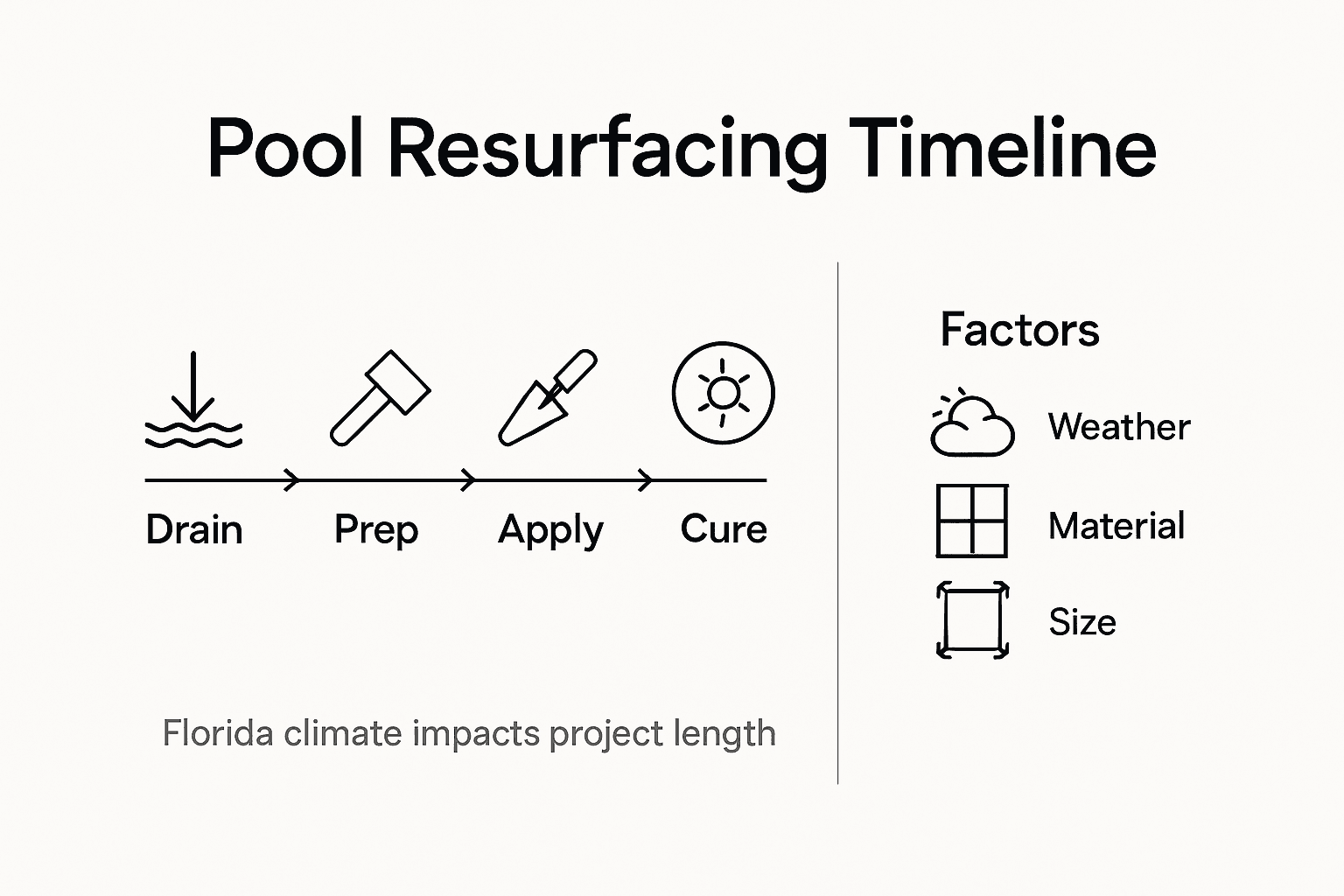
Typically, a pool resurfacing timeline encompasses several critical phases that determine overall project completion. These stages include initial assessment, surface preparation, material selection, removal of existing finish, structural repairs, application of new surface material, curing, and final finishing. The entire process can range from 3 to 10 days depending on pool size, complexity, and chosen resurfacing technique. Factors like pool dimensions, existing surface condition, selected materials, and local weather conditions significantly influence the timeline and project complexity.
Florida pool owners should expect a methodical approach that prioritizes structural integrity and long-term performance. The timeline generally breaks down into specific stages: initial consultation and inspection, draining the pool, surface removal, repairs to underlying structures, applying new finish materials, and final curing and testing. Professional pool resurfacing experts recommend scheduling these projects during mild weather conditions to ensure optimal material application and faster curing times.
Pro tip: Schedule your pool resurfacing project during Florida’s milder months like late fall or early spring to achieve faster curing times and minimize weather-related complications.
Typical Steps in Pool Resurfacing Projects
Pool resurfacing involves a systematic approach that transforms your swimming pool from worn and damaged to completely renewed. Comprehensive pool resurfacing processes typically follow a structured sequence of carefully planned steps designed to ensure long-lasting results and optimal pool performance. Understanding these stages helps Florida homeowners set realistic expectations and prepare for the renovation project.
The typical pool resurfacing project unfolds through several critical stages. These include:
- Initial Assessment and Design
- Comprehensive pool surface inspection
- Identifying structural damages
- Selecting appropriate resurfacing materials
- Developing a customized project plan
- Preparation and Demolition
- Draining the pool completely
- Removing existing surface materials
- Conducting detailed structural repairs
- Addressing any underlying structural issues
- Surface Application and Finishing
- Applying primer and bonding agents
- Installing new surface materials
- Smoothing and leveling the new surface
- Ensuring proper adhesion and quality
Florida pool owners should recognize that each resurfacing project is unique, with timelines and techniques varying based on pool condition, selected materials, and specific renovation requirements. Professional pool resurfacing techniques demand precision, expertise, and careful attention to detail to guarantee a successful transformation.
Pro tip: Always request a detailed written project plan from your pool resurfacing professional that outlines each specific step, expected timeline, and potential contingencies.
Factors That Affect Project Duration
Pool resurfacing timelines are complex and multifaceted, influenced by numerous interconnected variables that can significantly impact project completion. Comprehensive pool resurfacing analysis reveals that no two pool renovation projects are identical, with each presenting unique challenges and considerations that directly affect duration and complexity.
The primary factors influencing pool resurfacing project timelines include:
- Pool Size and Complexity
- Larger pools require more time and materials
- Irregular shapes demand specialized techniques
- Complex design features increase application difficulty
- Material Selection
- Different surface materials have varying application times
- Curing periods range from 3 to 7 days
- Some materials require more intricate preparation
- Structural Condition
- Extent of underlying damage impacts project length
- Significant repairs can extend timeline by days or weeks
- Hidden structural issues may require additional interventions
Weather conditions play a critical role in pool resurfacing projects, particularly in Florida’s unpredictable climate. Professional pool resurfacing techniques must account for humidity, temperature, and potential rainfall, which can dramatically affect material application and curing processes. Contractors often need to build flexibility into their schedules to accommodate these environmental challenges.
Pro tip: Schedule a detailed pre-project inspection to identify potential complications that could extend your pool resurfacing timeline, helping you plan more accurately and avoid unexpected delays.
Here’s a comparison of common pool resurfacing materials and their impact on project timelines:
| Material Type | Average Application Time | Durability | Typical Curing Period |
|---|---|---|---|
| Plaster | 1-2 days | Moderate | 4-7 days |
| Pebble Finish | 2-3 days | High | 5-7 days |
| Quartz Aggregate | 2 days | High | 4-6 days |
| Tile | 3-5 days | Very High | 7 days |
How Florida’s Climate Impacts Timing
Florida’s subtropical climate presents unique challenges for pool resurfacing projects, making strategic timing absolutely critical. Climate-specific pool renovation considerations demonstrate how weather patterns can dramatically influence the entire resurfacing process, turning what seems like a straightforward project into a complex scheduling endeavor.
The state’s seasonal variations create distinct windows of opportunity for pool renovation:
- Wet Season (June-September)
- High humidity levels slow material curing
- Frequent afternoon thunderstorms interrupt work
- Increased risk of moisture-related complications
- Potential for project delays up to several weeks
- Dry Season (October-May)
- More stable weather conditions
- Lower humidity supports faster material application
- Reduced rainfall minimizes unexpected interruptions
- Optimal window for pool resurfacing projects
Regional weather patterns in Southeast Florida demand extraordinary flexibility from pool renovation professionals. Temperature fluctuations, sudden rain showers, and high humidity levels can compromise material application, requiring contractors to continuously monitor weather forecasts and adjust project timelines accordingly. Experienced professionals often build buffer periods into their schedules to accommodate these unpredictable environmental factors.
Pro tip: Schedule your pool resurfacing project during Florida’s dry season, preferably between November and April, to maximize chances of uninterrupted work and optimal material curing.
Here’s a summary of how Florida seasons impact pool resurfacing schedules:
| Season | Typical Weather | Work Disruption Risk | Recommended Scheduling |
|---|---|---|---|
| Wet Season | Rain, high humidity | High | Not recommended |
| Dry Season | Mild, low humidity | Low | Highly recommended |
Common Pitfalls and How to Avoid Delays
Pool resurfacing projects are intricate undertakings with numerous potential points of failure that can significantly extend project timelines. Project management strategies for pool renovations reveal that proactive planning and strategic approaches can dramatically reduce the risk of unexpected complications.
The most common pitfalls Florida pool owners encounter include:
- Inadequate Initial Assessment
- Overlooking underlying structural damage
- Underestimating repair complexity
- Failing to identify potential moisture issues
- Skipping comprehensive pre-project inspections
- Weather-Related Challenges
- Unexpected rainfall interrupting work
- High humidity compromising material curing
- Sudden temperature fluctuations affecting application
- Lack of flexible scheduling
- Material and Supply Issues
- Delayed material shipments
- Incorrect material specifications
- Incompatible surface preparation products
- Limited availability of specialized resurfacing materials
Comprehensive project planning techniques demonstrate that successful pool resurfacing requires meticulous attention to detail and proactive problem solving. Experienced contractors build substantial buffer times into their schedules, maintain open communication channels, and develop contingency plans to address potential disruptions before they become significant obstacles.
Pro tip: Request a detailed, written project timeline from your contractor that includes specific contingency plans for potential weather disruptions and material supply challenges.
Restore Your Florida Pool with Confidence Using Expert Resurfacing Solutions
Pool resurfacing projects in Florida can be complex due to factors like weather delays, material curing times, and unexpected structural repairs. If you want to avoid costly delays and ensure a smooth transformation of your pool, understanding the full pool resurfacing timeline is just the start. Many Florida homeowners face challenges such as high humidity slowing curing, hidden damage extending work time, or choosing the right materials that balance durability and aesthetics. Classic Marcite specializes in navigating these exact obstacles with precision and decades of experience.

Take control of your pool renovation today by trusting the leading experts at Classic Marcite. As the largest Pebble Tec® applicator in Central Florida with over 100,000 pools resurfaced, we bring unmatched craftsmanship and weather-resistant solutions that match Florida’s unique climate challenges. Don’t let unpredictable weather or unforeseen repairs push your project back. Get a free estimate and a detailed project plan that sets clear expectations and safeguards your pool’s future. Explore our comprehensive services for pool resurfacing, remodeling, and repairs at Classic Marcite and take the first step towards a beautifully renewed pool that lasts for years.
Frequently Asked Questions
What is the typical duration for a pool resurfacing project?
The duration for a pool resurfacing project typically ranges from 3 to 10 days, depending on factors such as pool size, complexity, and the chosen resurfacing technique.
What are the main steps involved in a pool resurfacing project?
The main steps include initial assessment and design, preparation and demolition, and surface application and finishing. Each step ensures a thorough and satisfactory transformation of the pool.
How does weather impact the timeline of pool resurfacing?
Weather conditions, particularly humidity and rainfall, can significantly affect material application and curing times. Scheduling the project during dry seasons can minimize potential disruptions.
What factors can extend the timeline of a pool resurfacing project?
Factors such as pool size, complexity, the condition of the surface, chosen materials, and unexpected structural repairs can all contribute to extending the timeline for a pool resurfacing project.