TL;DR:
- Pool finish mottling appears as uneven color or texture patches caused mainly by application technique and curing conditions, not water chemistry. While mild variations may stabilize over time, severe mottling often requires professional resurfacing, especially if caused by calcium chloride or poor application practices. Proper diagnosis through tests and informed contractor choices can prevent unnecessary treatments and improve long-term pool surface appearance.
Pool finish mottling is defined as uneven color or texture patches in cementitious pool plaster, caused primarily by application technique and curing conditions rather than water chemistry alone. The National Plasterers Council (NPC) classifies mottling as a recognized interior finish tolerance, placing it alongside smoothness and levelness as expected variation in plaster work. Most homeowners notice it within the first few weeks after a pool is filled, which leads to the common but incorrect assumption that water balance is the culprit. Understanding what pool finish mottling actually is saves you from expensive chemical treatments that will not fix the underlying problem.
What is pool finish mottling and why does it happen?
Pool finish mottling is the industry term for blotchy, irregular color variation across a plaster surface. The NPC treats it as a finish tolerance, not a defect requiring immediate repair, which means some degree of mottling is considered normal in cementitious finishes. That said, understanding its root causes tells you whether you are looking at a cosmetic variation or a sign of a deeper application problem.
The two primary drivers are plastering technique and additive chemistry. When a crew uses a wet troweling or splash-and-trowel method, they introduce water back into the surface during finishing. This weakens the top layer, creating porous zones that absorb water differently once the pool is filled. Those zones appear as lighter or darker patches. The pattern is random and diffuse, which is one of the clearest visual clues that you are dealing with mottling and not a stain.
Calcium chloride accelerators compound the problem significantly. Plasterers add calcium chloride to speed up the curing process, especially in cooler weather or when project timelines are tight. The chloride ions cause uneven cement setting, push soluble salts toward the surface through a process called efflorescence, and increase pore formation throughout the plaster layer. The result is a mottled, discolored surface that appears even when water chemistry is perfectly balanced.
Environmental conditions during curing add another layer of complexity. High humidity, direct sun exposure, and inconsistent temperatures all affect how pigments cure and how cement hydrates. Uneven pigment dispersion under variable heat and humidity produces blotchy or streaked colors that no amount of brushing will correct. Florida’s climate, with its intense sun and afternoon humidity swings, makes this a particularly common issue for homeowners in Orlando and Jacksonville.
- Wet troweling and splash troweling introduce excess water into the surface layer, creating porous zones
- Calcium chloride accelerators cause uneven hydration and salt migration to the surface
- Inconsistent pigment mixing leads to streaked or blotchy color distribution
- Environmental factors including sun, heat, and humidity affect curing uniformity
- Thin troweling layers correlate with higher mottling prevalence over time
Pro Tip: Before adjusting your water chemistry in response to discoloration, run a simple touch test on the affected areas. If the surface feels rough or gritty in the discolored zones, you are likely dealing with application-related mottling. Changing your pH will not fix a porosity problem.
How does water chemistry affect pool finish discoloration?
Water chemistry does not cause mottling, but it absolutely determines how fast a mottled or porous finish deteriorates. The NPC specifies that pH, calcium hardness, and alkalinity must be maintained within ANSI/APSP ideal levels to protect plaster durability. Aggressive water, meaning water that is low in calcium hardness or pH, etches the plaster surface. That etching is a separate problem from mottling, though the two are frequently confused.
Metals dissolved in pool water add another dimension to pool finish discoloration. Iron and copper, whether from source water, corroding equipment, or algaecides, deposit on plaster surfaces and create stains that can look similar to mottling at first glance. The key difference is that metal stains respond to ascorbic acid or sequestrant treatments, while true mottling does not. Efflorescence from calcium chloride use can also appear as white, chalky patches that homeowners mistake for scale or calcium buildup.
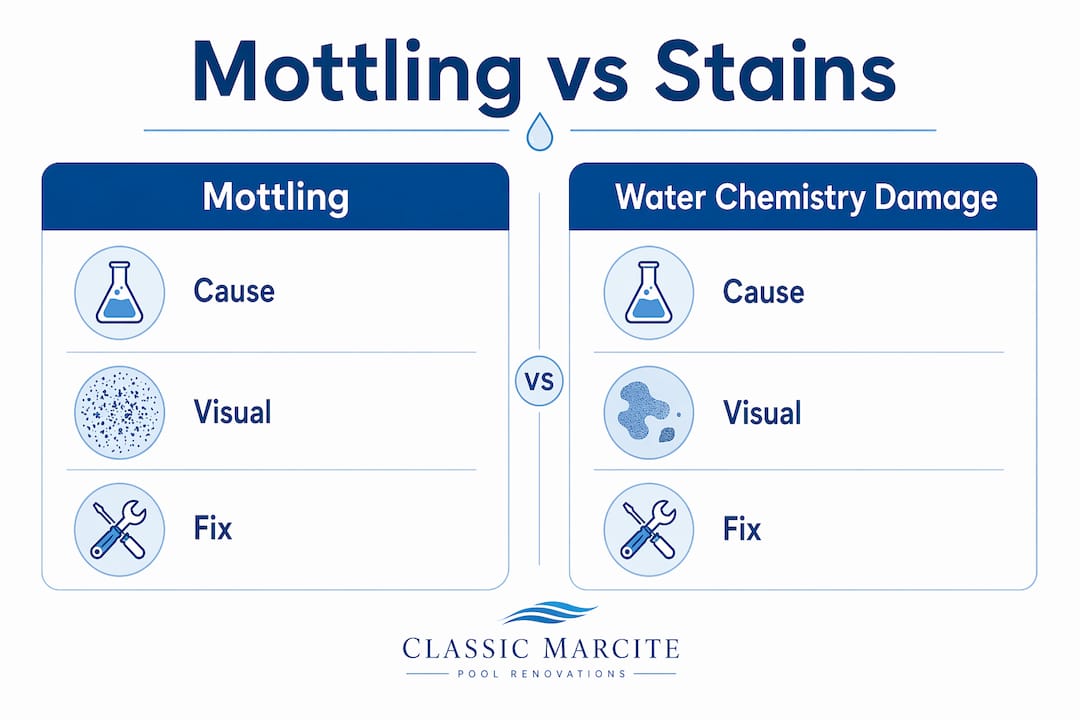
The table below separates mottling from water chemistry damage so you can diagnose your pool accurately before spending money on the wrong fix.
| Issue | Primary cause | Visual pattern | Responds to chemistry fix? |
|---|---|---|---|
| Mottling | Application technique, calcium chloride, curing | Diffuse, random, blotchy | No |
| Chemical etching | Low pH, aggressive water | Uniform roughness, dull surface | Partially |
| Metal staining | Iron, copper in water | Defined spots or streaks | Yes |
| Efflorescence | Salt migration from plaster | White chalky patches | Partially |
| Scale buildup | High calcium, high pH | Rough white deposits | Yes |
Maintaining balanced water chemistry is still the right practice. It protects your pool finish longevity and prevents secondary damage from compounding an already mottled surface. But balanced water will not reverse mottling that originated during plastering.
How to identify mottling versus stains or other finish problems
Mottling produces a diffuse, random color distribution across the plaster surface. There is no clear flow path, no defined edge, and no concentration around a specific point of contact. This distinguishes it visually from metal stains, which tend to follow waterline patterns or appear where debris sat on the surface, and from algae staining, which clusters in shaded or low-circulation areas.
Mottling differs from stains in one critical practical way: it does not respond to brushing or targeted chemical treatment. If you scrub a discolored area and the color does not shift at all, or if you apply a vitamin C tablet (ascorbic acid) to a spot and nothing happens, you are almost certainly looking at mottling rather than a metal or organic stain. This simple test saves homeowners from purchasing unnecessary stain removal products.
Surface porosity is another diagnostic indicator. Wet troweling leaves behind zones where the plaster surface is slightly more open and absorbent. When you run your hand across a mottled area, it may feel subtly different from the surrounding surface. Smooth areas that are uniformly colored were finished correctly. Rougher or more porous zones that appear lighter or darker were likely over-troweled with water during application.
Common misconceptions about mottling include the belief that it will fade on its own with time and proper water balance. Mild color variation during the first 30 days of curing is normal and may stabilize as the plaster fully hydrates. However, mottling caused by structural porosity or calcium chloride use does not self-correct. Homeowners who wait six months hoping the blotchiness will disappear are often disappointed.
Pro Tip: Photograph your pool surface from the same angle every two weeks during the first 60 days after plastering. If the pattern changes or fades, you are likely seeing normal curing variation. If it stays fixed and defined, the cause is structural and worth a professional evaluation.
What are the realistic options for fixing a mottled pool finish?
The right fix depends entirely on the severity and cause of the mottling. Mild cases, especially those appearing during the first month of curing, often stabilize without intervention. Here is a practical progression from least to most invasive:
- Wait and monitor. Give new plaster at least 30 days before drawing conclusions. Early appearance changes during curing are normal and may resolve as the plaster fully hydrates and the pool water stabilizes.
- Brush the surface consistently. Daily brushing during the first two weeks of a new plaster job removes loose calcium and helps even out the surface. This is standard pool maintenance after resurfacing and reduces the chance of deposits locking in uneven color.
- Perform an acid wash. A diluted acid wash can lighten surface discoloration and remove efflorescence. This is a professional procedure that removes a thin layer of plaster. It improves appearance in mild cases but does not fix underlying porosity.
- Adjust and balance water chemistry. Correct any imbalances in pH, calcium hardness, and total alkalinity. This will not reverse mottling but prevents the finish from deteriorating further due to aggressive water conditions.
- Consult a professional for evaluation. Porous spots from plastering remain visible despite balanced pool water. A qualified plasterer can assess whether the mottling is cosmetic or indicates a compromised surface layer.
- Resurface or replaster. Severe mottling caused by widespread wet troweling or heavy calcium chloride use often requires full resurfacing. Aggregate finishes like Pebble Tec® are less prone to visible mottling than standard white plaster because the texture variation naturally masks minor color inconsistencies.
When selecting a new finish, choosing the right pool finish matters for long-term appearance. Quartz aggregate and pebble finishes distribute color more evenly than plain plaster and tolerate minor application variation without showing obvious mottling. If your pool has mottled repeatedly across multiple plaster jobs, the finish type itself may be part of the answer.
Key takeaways
Pool finish mottling is an application and curing problem, not a water chemistry problem, and fixing it requires diagnosing the actual cause before spending money on treatments.
| Point | Details |
|---|---|
| Mottling defined | Uneven color patches in pool plaster caused by application technique and curing conditions. |
| Primary causes | Wet troweling, calcium chloride accelerators, and inconsistent pigment mixing drive most mottling. |
| Not a water chemistry fix | Balanced water protects finish durability but does not reverse mottling from application defects. |
| Diagnosis first | Use the touch test and ascorbic acid spot test to distinguish mottling from metal stains before treating. |
| Resurfacing as final option | Severe or structural mottling requires professional resurfacing; aggregate finishes reduce future risk. |
What experience actually teaches about pool finish mottling
Most homeowners I talk to have already spent money on the wrong fix before they understand what mottling actually is. They have added chemicals, shocked the pool, and called their water chemistry service, all because the plaster looks blotchy. The water was fine. The plaster application was not.
The uncomfortable reality is that mottling is largely a construction quality issue. Calcium chloride use speeds up a plasterer’s schedule but increases your risk of a discolored finish. Wet troweling is a shortcut that shows up on your pool surface for years. These are decisions made during a few hours of work that you live with for a decade.
That does not mean every mottled pool needs to be replastered. Mild variation is genuinely tolerable, and many pools with minor mottling look perfectly fine once the water is clear and the curing is complete. The mistake is assuming chemistry will fix what chemistry did not cause.
My honest advice: have a direct conversation with your plasterer before the job starts. Ask specifically whether calcium chloride will be used and what finishing technique they apply. Request that the pool be filled within 24 hours of plastering to minimize surface drying. These are reasonable questions that any experienced contractor should answer without hesitation. If they cannot, that tells you something important before a single trowel hits the surface.
— Classicmarcite
How Classic Marcite approaches pool finish problems
If your pool shows persistent mottling or uneven discoloration that has not responded to water chemistry corrections, the surface itself needs professional attention.

Classic Marcite has resurfaced over 100,000 pools across Florida since 1988, including residential pools, commercial facilities, and resort properties. The team evaluates finish problems at the source, distinguishing application defects from water damage before recommending a repair path. For homeowners in Central Florida, pool resurfacing in The Villages and surrounding areas is available with finishes including Pebble Tec®, which reduces visible mottling risk compared to standard plaster. Classic Marcite also offers pool resurfacing basics guidance to help you understand your options before committing to a solution. Contact Classic Marcite for a free estimate and a clear diagnosis of what your pool actually needs.
FAQ
What is pool finish mottling?
Pool finish mottling is uneven color or texture variation in cementitious pool plaster, classified by the National Plasterers Council as a recognized finish tolerance. It results primarily from application technique, calcium chloride use, and curing conditions rather than water chemistry imbalance.
Does mottling go away on its own?
Mild color variation during the first 30 days of curing may stabilize as plaster fully hydrates. Mottling caused by structural porosity or calcium chloride accelerators does not self-correct and typically requires acid washing or resurfacing.
Can I fix pool mottling by adjusting water chemistry?
Water chemistry adjustments protect your finish from further deterioration but do not reverse mottling caused by application defects. Porous zones created during plastering remain visible regardless of how well-balanced your pool water is.
How do I tell mottling apart from a metal stain?
Apply an ascorbic acid tablet directly to the discolored area. Metal stains lighten or disappear on contact with ascorbic acid. Mottling shows no response. Mottling also appears as a diffuse, random pattern rather than defined spots or streaks.
What pool finish is least prone to mottling?
Aggregate finishes like Pebble Tec® and quartz blends are less prone to visible mottling than standard white plaster because their textured surfaces naturally mask minor color inconsistencies from the application process.