TL;DR:
- A pool skimmer continuously removes debris from the water’s surface before it reaches the pump or filter. Regular maintenance of the basket and weir door improves water quality, protects equipment, and extends the pool’s finish life. Neglecting skimmer parts or proper flow balance can cause equipment strain, cloudy water, and surface damage, requiring costly repairs or resurfacing.
A pool skimmer is the wall-mounted intake that continuously pulls the top layer of water and floating debris into your circulation system before any of it reaches the pump or filter. Every residential pool has at least one, and it does more work than most homeowners realize. The main parts are the weir door (a hinged flap at the mouth), the skimmer basket (which catches leaves and debris), the throat (the channel connecting mouth to plumbing), and the skimmer line (the pipe running to the pump). When skimming is neglected, water turns cloudy, filters clog faster, and interior finishes degrade sooner, which means earlier and more expensive resurfacing.
- Weir door: Regulates how much surface water enters; floats up to seal the opening when the pump stops
- Skimmer basket: Traps leaves, insects, and debris before they reach the pump
- Throat: The internal channel that directs water from the basket into the plumbing
- Skimmer line: The suction pipe connecting the skimmer to the pump
Table of Contents
- How does a pool skimmer work?
- Why surface skimming protects your pool and its finish
- Practical skimmer maintenance you can do yourself
- Common skimmer problems and quick fixes to try first
- How many skimmers does your pool need, and where should they go?
- When should you call a pool technician?
- Key Takeaways
- The part most renovation projects get wrong
- Ready to pair skimmer repair with a resurfacing estimate?
- Useful sources
How does a pool skimmer work?
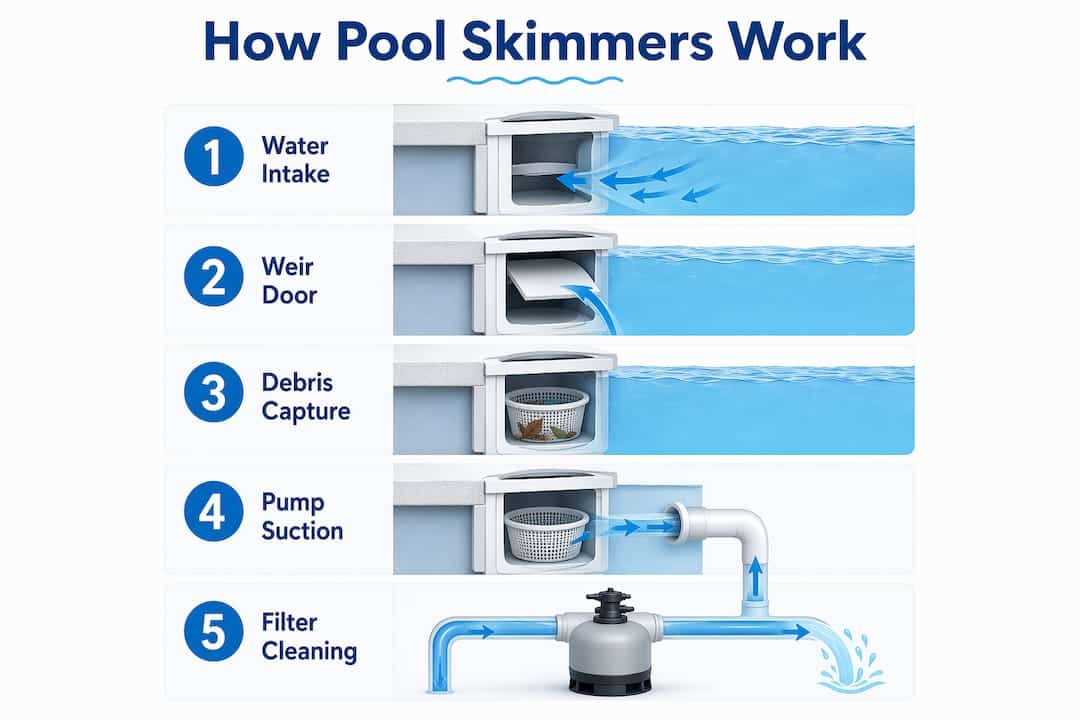
The pump creates negative pressure on the suction side of your plumbing. That vacuum draws water across the pool’s surface, through the skimmer mouth, past the weir door, through the basket, down the skimmer line, into the pump, and then through the filter before clean water returns through the jets.
The weir door is the part most homeowners overlook. It’s a small hinged flap that floats to regulate surface draw and seals the opening when the pump shuts off, so captured debris can’t drift back into the pool. A stuck or missing weir door means debris returns every time the pump cycles off.
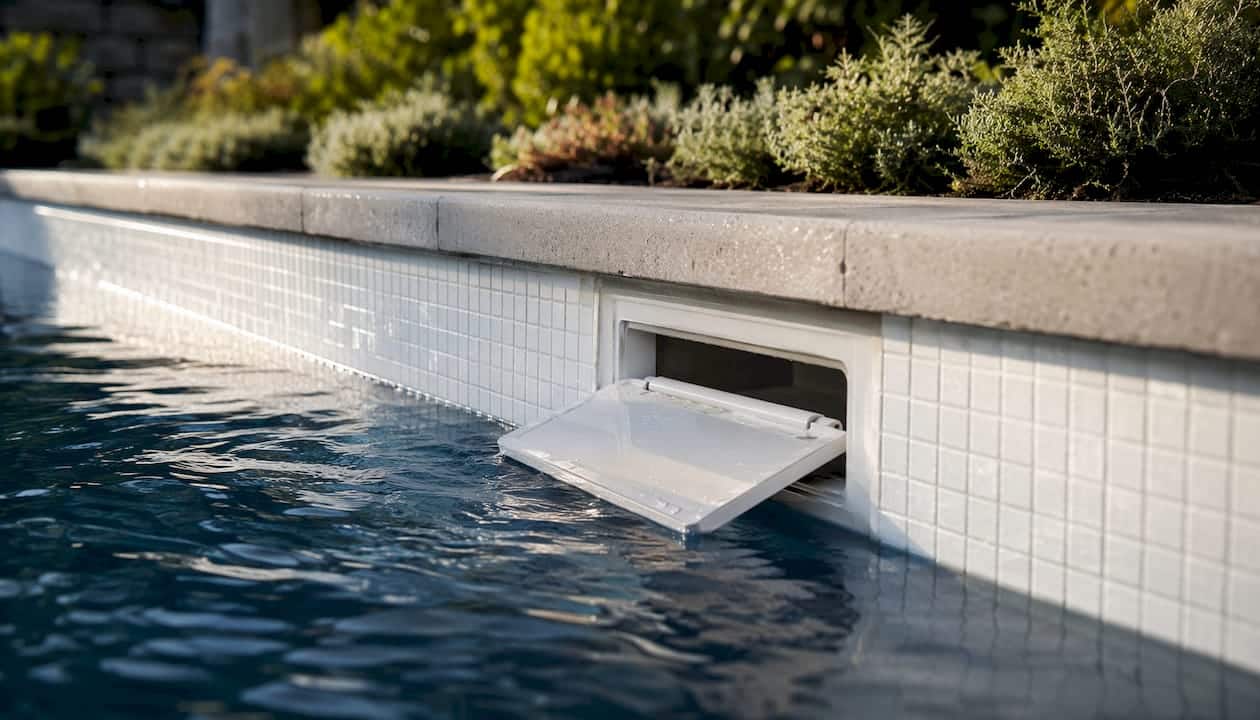
Flow balance matters too. Most filtered water enters through the skimmer rather than the main drain. If that ratio is off, surface debris lingers even with a clean basket. The target skimmer flow share is 75–80% of total flow, with the main drain handling the rest. Valve position between the two lines controls this balance.
Pro Tip: With the pump running, watch the weir door flutter gently. If it’s pinned flat or missing entirely, suction is either too high or the door needs replacement. Check the basket at the same time — a basket more than half full is already restricting flow.
Why surface skimming protects your pool and its finish
Oils, sunscreen, and organic matter concentrate at the waterline. Removing them quickly prevents chloramine formation and reduces the chemical volatility that makes pool water harsh and hard to balance. That’s not a cosmetic issue; it’s a chemistry problem that compounds over time.
A neglected skimmer basket forces the pump to work against restricted flow, raising the risk of motor burnout. Debris that isn’t skimmed off the surface sinks, feeds algae, and accelerates filter clogging. For pools with marcite plaster or Pebble Tec® finishes, persistent chemistry imbalances etch and stain the surface, shortening the finish life and moving up your next resurfacing project.
- Oils and sunscreen at the surface feed chloramine formation when left unremoved
- Restricted skimmer flow strains the pump motor and shortens its service life
- Debris that sinks feeds algae and increases chemical demand
- Waterline chemistry imbalances etch interior finishes and accelerate wear
Pro Tip: Pair your pool maintenance routine with a quick waterline wipe using a tile brush once a week. Oils that haven’t entered the skimmer yet sit right at the tile line and contribute to staining.
Practical skimmer maintenance you can do yourself
Most of this takes under five minutes. The payoff is a longer-lived pump, cleaner water, and a finish that holds up between resurfacing cycles.
Weekly tasks:
- Empty the skimmer basket; during windy or high-debris conditions, check it more frequently than once a week
- Confirm water level sits approximately halfway up the skimmer opening; too low pulls air into the pump, too high reduces skimming velocity
- Verify the weir door moves freely
Monthly tasks:
- Inspect the skimmer lid and O-ring for cracks or brittleness
- Check visible plumbing around the skimmer for moisture or mineral deposits
- Confirm valve positions haven’t shifted (skimmer vs. main drain balance)
- Look for air bubbles returning through the jets, which can signal a lid or O-ring leak
Seasonal and resurfacing-related tasks:
- Winterize by clearing the skimmer line and installing a freeze plug if your region requires it
- When reopening after a drain or refill, confirm the basket is seated correctly before running the pump
- Before any resurfacing work, note the current skimmer throat height relative to the waterline so your contractor can verify alignment with the new finish depth
Pro Tip: Air bubbles in the return jets with no obvious cause almost always point to a cracked skimmer lid or a worn O-ring. Replace both at the same time; they’re inexpensive and the labor is the same either way.
Common skimmer problems and quick fixes to try first
Most skimmer symptoms have a short list of causes. Work through these before scheduling a service call.
| Symptom | Likely cause | Quick fix |
|---|---|---|
| Weak suction at jets | Clogged basket or low water level | Empty basket; add water to mid-skimmer |
| Debris washing back into pool | Stuck or missing weir door | Move weir by hand (pump off); replace if broken |
| Pump sounds like it’s straining | Air entering suction line | Check lid O-ring; check water level |
| Floating debris not clearing | Valve imbalance (too much main drain flow) | Adjust valve toward skimmer side |
| Pump loses prime repeatedly | Cracked skimmer housing or plumbing leak | Call a technician |
For the first four symptoms, the fix is usually a $5–$15 part or a water-level adjustment. A pump that repeatedly loses prime after you’ve ruled out the basket and water level points to a structural problem, such as a cracked skimmer housing or a plumbing restriction, that needs professional diagnosis.
Never run the pump dry. If the water level drops below the skimmer mouth and the pump is pulling air, shut it off immediately. Cavitation damages the pump seal and impeller within minutes.
Pro Tip: Before calling a technician, photograph the basket, weir door, and lid, then note the last time you replaced the O-ring. That information cuts diagnostic time and often reduces the service bill.
How many skimmers does your pool need, and where should they go?
The ANSI/APSP/ICC-1 standard caps skimmer load at one skimmer per 800 square feet of pool surface. In practice, many builders target closer to one per 500 square feet to provide redundancy, especially on leafy or high-use properties.
Return jet placement works with skimmer placement. Jets angled to push water in a circular pattern direct floating debris toward the skimmer mouth rather than letting it settle. For pools where that rotation is off, debris accumulates in dead zones regardless of how clean the basket is.
- Inground pools: Typically use double-port skimmers built into the shell; skimmer throat is integral to the wall
- Above-ground pools: Use single-port skimmers that hang over the wall or mount through it; simpler but less flow-balanced
- Commercial and high-bather pools: Often use perimeter overflow gutters instead of skimmers for continuous surface removal; vanishing-edge residential pools use a similar catch-basin approach
Before resurfacing, confirm with your contractor that the new finish depth won’t alter the skimmer throat alignment. A finish that’s even slightly thicker or thinner than the original changes the effective waterline position and can create chronic skimming problems after the job is done.
When should you call a pool technician?
Some skimmer issues are genuinely beyond a homeowner fix. Call a professional when:
- The skimmer housing is visibly cracked or the throat is misaligned with the waterline
- Air bubbles persist after you’ve replaced the lid and O-ring
- The pump loses prime repeatedly despite a full basket and correct water level
- The weir door is broken or missing and you can’t source the correct replacement part
- Suction loss is unexplained after checking all valves and the basket
A technician will inspect the skimmer throat and housing, test valve balance between the skimmer and main drain, check pump seals and motor health, and verify the lid and O-ring integrity. For pools approaching resurfacing, scheduling the inspection alongside the estimate lets the contractor confirm skimmer alignment before any finish work begins, avoiding post-resurfacing skimming problems.
Pro Tip: Ask your technician to check the skimmer-to-main-drain valve balance during any service visit. Many circulation problems that look like pump or filter failures are actually a valve that’s drifted toward the main drain side.
Key Takeaways
A pool skimmer is your circulation system’s first line of defense, and keeping it clear is the single lowest-cost action that protects your pump, your filter, and your pool’s interior finish.
| Point | Details |
|---|---|
| Weekly basket check | Empty the skimmer basket at least once a week; more often during heavy debris periods. |
| Water level discipline | Keep water halfway up the skimmer opening to prevent air ingestion and maintain skimming velocity. |
| Skimmer count guideline | One skimmer per 800 sq ft is the code minimum; professional practice often targets one per 500 sq ft. |
| Weir door function | A working weir door seals when the pump stops, preventing debris from drifting back into the pool. |
| Classicmarcite resurfacing tie-in | Classicmarcite verifies skimmer throat alignment during every resurfacing project to prevent post-finish skimming problems. |
The part most renovation projects get wrong
Skimmer care gets treated as a maintenance afterthought, but it’s actually a renovation variable. Every time a pool is resurfaced, the new finish changes the effective interior depth by a small but meaningful amount. If no one checks the skimmer throat position against the new waterline, the pool can come out of a full resurfacing project with a chronic skimming problem that wasn’t there before.
The same logic applies in reverse. A pool with a neglected skimmer, persistent chemistry imbalances, and a strained pump is going to need resurfacing sooner than one that’s been properly maintained. The finish doesn’t fail in isolation; it fails because the water conditions around it were never right. Routine skimmer maintenance, specifically keeping the basket clear, the weir door moving, and the water level correct, is one of the few things a homeowner can do that directly extends the interval between resurfacing projects.
Ready to pair skimmer repair with a resurfacing estimate?
Classic Marcite has resurfaced more than 100,000 pools across Orlando, Jacksonville, and Central Florida since 1988. When skimmer issues and finish wear show up together, handling both in one project saves time, reduces disruption, and guarantees the new surface is installed at the correct waterline depth.

Services include skimmer inspection and repair, equipment replacement, and full interior resurfacing using materials like marcite plaster and Pebble Tec®, the finish Classicmarcite installs as the largest Pebble Tec® applicator in Central Florida. Whether your pool needs a single skimmer lid replaced or a complete pool resurfacing in Orlando, the process starts with a free estimate. Request yours today and get a clear picture of what your pool actually needs.
Useful sources
- Pool Skimmer — Wikipedia
- The Skinny on Skimmers — Pool Inspections
- What Is a Pool Skimmer — CPSA
- What Is a Pool Skimmer — HomeInDepth
- Skimmers, Gutters, and Surface Water Removal — Florida’s Best Pool Service
- Pool Skimmer Maintenance — Pool & Landscaping of Vistancia
- How Does a Pool Skimmer Help Maintain the Life of a Pool — Pool Icons
- Pool Skimmer: How It Works and Which Type to Choose — Zwembadwijzer
- Pool Skimmer Problems Explained — Benchmark Pool Supply
- Pool Maintenance Checklist for Homeowners — Classicmarcite
- Top DIY Pool Cleaning Hacks That Actually Work — Ocean Care Store