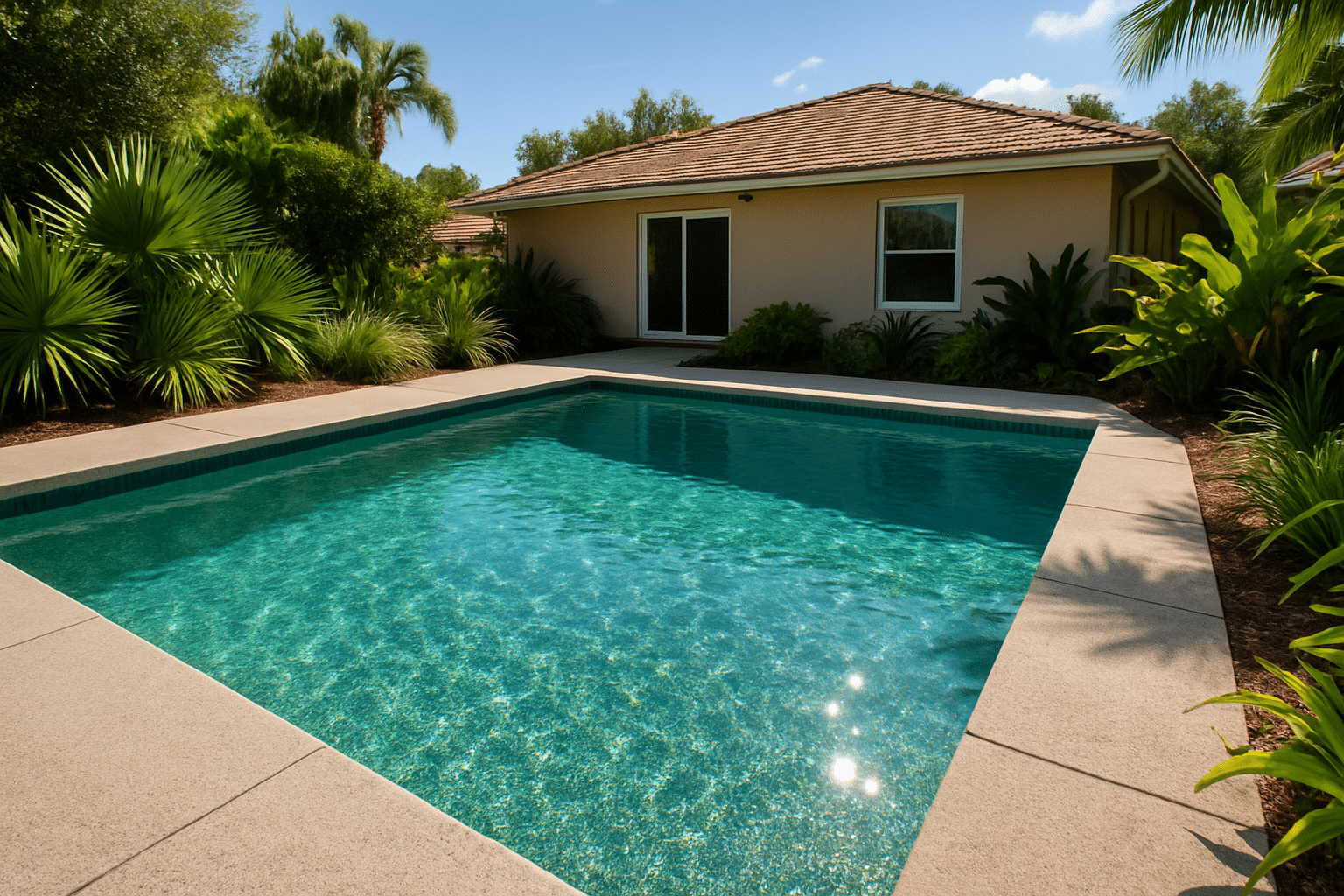
TL;DR: Beadcrete is a patented pool finish made of solid glass beads locked into a polymer-modified cement matrix — smoother than pebble, more reflective than plaster. It offers strong visual appeal and easier cleaning, but its longevity depends heavily on proper installation and water chemistry. Classic Marcite is a licensed Beadcrete® installer serving Central Florida and Jacksonville.
If you’ve been researching pool resurfacing options, you may have come across the name Beadcrete® and wondered what, exactly, makes it different from plaster or pebble finishes. It’s not just marketing language — it’s a genuinely distinct category of pool surface with its own appearance, feel, and performance profile.
Here’s everything you need to know before you decide whether Beadcrete belongs in your pool.
What Is Beadcrete?
Beadcrete® contains solid, inert glass spheres that are locked in a carefully graded aggregate matrix by polymer-modified cements. The result is a surface that sits in its own category — not quite plaster, not quite pebble — but drawing on the best qualities of both.
Instead of using only natural stones as aggregate, Beadcrete adds small, colored glass beads to produce a unique finish that shimmers and changes colors in the sunlight. With colors that range from mild to wild, Beadcrete can produce dramatic effects with incredible strength, as the tiny glass beads of 2–3 mm are locked into a matrix of aggregates and polymer-modified cement.
Beadcrete is a relatively new type of interior finishing product, first invented in the 1990s in Sydney. A pool plasterer was looking for an alternative method to coat the concrete shell of a pool — one with an easy-to-clean product and a smoother finish compared to pebblecrete. The result of his experimenting was Beadcrete.
Today, Beadcrete® is licensed to Pebble Tec by an Australian producer, which is why you’ll find it offered alongside other premium finishes like Pebble Tec®, Pebble Sheen®, and Pebble Fina® at authorized applicators.
How Beadcrete Works: The Science Behind the Shine
Designer Beadcrete is a patented exposed reflective aggregate that produces a concrete pool interior finish of stunning aesthetic color and water clarity when exposed to light.
Like pozzolans, polymer-modified cements have increased strength and durability, but they also slow the rate of moisture evaporation and give applicators improved workability and adhesion.
Each product incorporates the latest development in polymer-modified cement-based pool renders and is factory-batched for quality assurance and consistency. That factory batching matters: it means the mix ratio is controlled before it ever arrives on your job site, reducing the variability that can compromise other finishes.
The product mix design melds to any pool shape and to the tightest curves. That flexibility makes Beadcrete practical for freeform pools, spas, and water features — not just rectangular lap pools.
How Beadcrete Looks and Feels
Beadcrete® is an architectural surface finish that looks remarkable under both natural and artificial lights. The glass spheres act as tiny retroreflectors — they bounce light back toward the viewer, creating a shimmer effect that changes with the time of day and sun angle.
Beadcrete offers a unique 3-dimensional effect which appears to shimmer along with the water, and creates a truly spectacular and one-of-a-kind appearance — especially when paired with custom waterline tiles.
On the texture front, the finish is superior and significantly less coarse than traditional exposed aggregate, providing a lower risk of skin abrasions to pool owners. Swimmers who find standard pebble finishes rough on their feet typically find Beadcrete noticeably more comfortable.
Beadcrete vs. Other Pool Finishes
Understanding where Beadcrete fits requires a quick comparison against the other main options. If you want a broader look at how premium aggregate finishes stack up against each other, see our guide on Pebble Sheen vs. Pebble Fina vs. Pebble Tec.
Beadcrete vs. Standard Plaster (Marcite)
Standard white plaster is the most affordable option, but it has the shortest lifespan. On average, a standard white plaster pool finish lasts around 5–12 years, with heavy-use commercial surfaces lasting closer to 5 years. Beadcrete’s glass-bead composition is inherently more durable and visually distinctive — though it does cost more upfront. You can explore the full plaster-vs.-premium debate in our Pebble Tec vs. Marcite guide.
Beadcrete vs. Pebble Finishes
Beadcrete is often mistaken for Pebblecrete, a similar product that is a mix of pebbles and cement. While modern Pebblecrete is smaller and more refined in comparison to the older style, you can still have a lot of coarse edges. With the glass in Beadcrete, the touch and feel is improved and makes it hard for algae to grow because it’s so smooth.
Pebble finishes like Pebble Tec® use natural river stones; Beadcrete uses manufactured glass spheres. Both are aggregate finishes set in cementitious binders, but Beadcrete’s glass delivers reflectivity and smoothness that natural pebble cannot match. The trade-off: generally, pebble will last longer than quartz, but with proper water chemistry management, either will last decades.
Pros of Beadcrete
- Exceptional visual impact. The retroreflective glass beads create color depth and shimmer that flat plaster simply cannot replicate.
- Smoother surface. The finish is significantly less coarse than traditional exposed aggregate, reducing the risk of skin abrasions.
- Easier to keep clean. The smooth, non-porous nature of Beadcrete makes it significantly easier to clean and maintain compared to textured finishes. Algae, dirt, and debris have fewer places to hide, making routine cleaning more efficient and effective.
- Chemical stability. The glass beads are inert — they don’t react with pool chemicals the way cement paste alone does, which helps resist staining.
- Compressive strength. Excellent compressive strength enhances durability and abrasion resistance.
- Works on new and existing pools. Beadcrete’s patented glass finish can be applied like a pebble finish to both new and prepared masonry surfaces such as swimming pools, spas, water features, and fountains.
- Ideal for commercial properties. The maintenance advantage is crucial for commercial properties where pools see heavy daily use and must maintain pristine conditions. Reduced maintenance requirements also translate to lower long-term operating costs.
Cons of Beadcrete
- Higher upfront cost. While the initial installation cost may be higher, the benefits — including improved comfort, enhanced water color, and reduced maintenance — often outweigh the upfront investment.
- Color variance is possible. Finish color and consistency may vary due to variations in natural materials, plastering techniques, and pool water chemistry. Always select your color from a physical sample, not a screen.
- Cement matrix can discolor. While the glass beads in Beadcrete are generally resistant to fading, the cementitious portion of the finish may be susceptible to discoloration over time due to chemical exposure and UV rays, resulting in a less vibrant appearance in the long run.
- Bead retention depends on installation quality. It can be difficult for the rough cement to ‘grab’ the smooth glass beads. As the cement deteriorates slowly with age and wear, the likelihood of beads falling out of the surface increases. This is precisely why licensed, experienced applicators matter.
- Water chemistry is non-negotiable. With poor water management, a finish could need to be refinished in as little as 5 years due to scaling or etching. Proper installation, start-up, and water management is much more important than which finish you select.
How Long Does Beadcrete Last?
Beadcrete’s engineered composition typically delivers a lifespan of 15–25 years or more with proper maintenance — significantly longer than traditional plaster finishes that may require refinishing every 7–12 years.
That said, longevity is not guaranteed by the material alone. The National Plasterers Council (NPC) recommends that pool water pH, carbonate alkalinity, calcium hardness, and total dissolved solids be frequently monitored and maintained — testing one to two times per week for pH, total alkalinity, and chlorine, and once a month for calcium hardness, stabilizer, and TDS.
The ANSI/APSP/ICC/NPC–12 2016 standard for the plastering of swimming pools and spas also establishes application and finishing methodologies based on accepted trade practice. It is important that water chemistry is maintained to proper industry standards to maximize the long-term durability and aesthetics of the pool’s interior finish.
Who Should Choose Beadcrete?
Beadcrete is a strong fit when one or more of the following apply:
- You want a premium, high-gloss look without the cost of full glass tile.
- You’re upgrading a luxury residential pool and want something visually distinctive.
- You manage a hotel, resort, or apartment community pool that needs to look pristine and clean easily.
- Swimmers in your household — especially children — find standard pebble finishes too rough underfoot.
- You’re renovating a pool that already shows the warning signs it needs resurfacing and want to upgrade rather than replaster at the same level.
Beadcrete may not be the best fit if you’re working with a tight renovation budget, or if the pool’s water chemistry historically goes unmanaged for long stretches — in that case, a more forgiving finish may serve you better.
The Installation Process
Beadcrete is applied similarly to other cementitious aggregate finishes, but the glass bead component demands skilled hands. The concrete pool shell must be cured for at least 14 days before the finish is applied. Surface preparation — removing deteriorated areas down to bare concrete — is critical to bond integrity.
Each product incorporates the latest development in polymer-modified cement-based pool renders and is factory-batched for quality assurance and consistency. Once applied and exposed, the pool is filled and the start-up water chemistry process begins — arguably the most important phase for long-term performance.
Applicator experience is the single biggest variable. Because the smooth glass beads require the cement to bond tightly, any shortcut in mixing, application, or curing directly increases the risk of bead loss or delamination down the road. At Classic Marcite, every crew member is a direct employee — not a subcontractor — which is how we maintain consistent technique across every Beadcrete project.
Beadcrete and Florida Pools: What to Know
Florida’s climate — intense UV, high humidity, and pools used year-round — puts any finish under greater stress than a pool used seasonally. The glass beads are inherently UV-resistant and fade-proof, while the polymer-modified cement matrix offers superior adhesion and flexibility. That makes Beadcrete a reasonable choice for Florida conditions, provided water chemistry is actively managed.
The cement matrix, however, is not immune to UV or chemical exposure over time, so waterline tile — which Beadcrete pairs naturally with — is strongly recommended to protect the upper portion of the finish from repeated wet/dry cycling and sun exposure.
Classic Marcite is a licensed Beadcrete® applicator serving homeowners, HOAs, hotels, and commercial properties across Orlando and Central Florida, and throughout Jacksonville and Northeast Florida. We’ve resurfaced more than 100,000 pools since 1988, and we offer free estimates with transparent pricing.
If you’re weighing your options and want to understand the full scope and cost of a resurfacing project, our 2026 pool resurfacing cost guide for Central Florida breaks down what you can realistically expect to pay for each finish type.
Recommended Reads
- Pebble Tec vs. Marcite: Which Pool Finish Is Right for Your Florida Pool?
- Pebble Sheen vs. Pebble Fina vs. Pebble Tec: Choosing the Best Finish for Your Pool
- 7 Warning Signs Your Pool Needs Resurfacing